




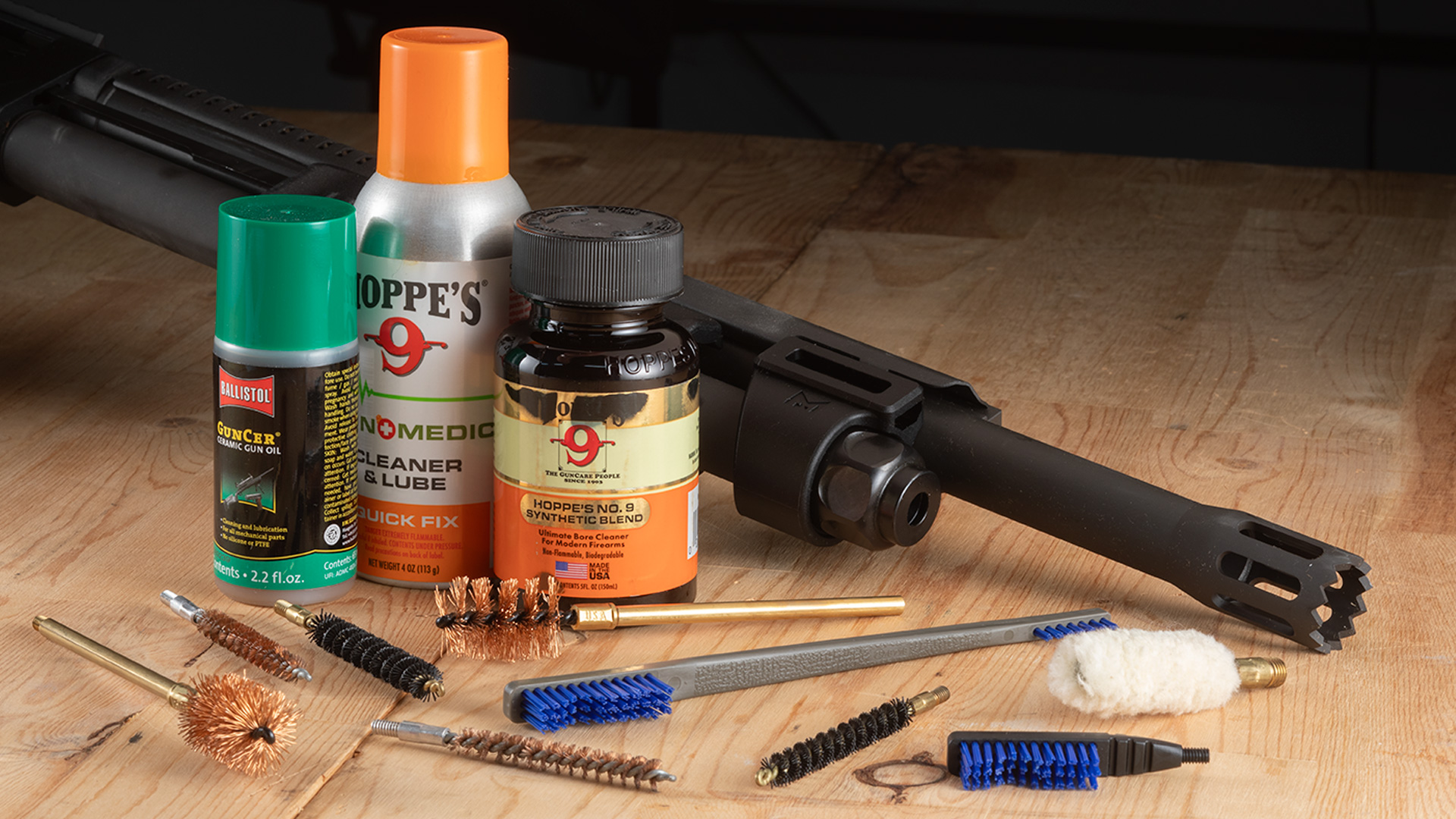
Growing up, the house rule was that if you shot a gun, you cleaned a gun. As a youngster, this was great, because I thought cleaning guns was fun. Now, as a busy adult? Not so much; it’s just another necessary chore. But, there’s a difference between cleaning your duck-hunting shotgun and your shotgun meant for home defense: One might cause you to be one shy of a limit of ducks; the other might cost you dearly. The point is, most modern shotguns, even semi-automatics, are extremely reliable—when kept clean. We all know this, and so excuse me if I sound preachy, but this is how to clean your shotgun in the best way I’ve found:
Three Levels of Gun Uncleanliness
Level 1: This refers to an internally clean gun that has been handled and/or has collected dust. If time is of the essence, this shotgun can undergo a quick and routine cleaning which consists of running a swab or Boresnake down the barrel to remove the grime and coat the barrel with a film of protective oil. The action can be cleaned by hand, using an oily rag in every crevice that the fingers can reach. The barrel extension (where the bolt locks into the barrel) should be quickly scrubbed with a toothbrush, and finally, all external metal should be wiped down with a light protective film (see below) or a dry or ceramic-based protective coating to remove salty fingerprints and to protect your scattergun from rust—all while not attracting and holding lint and dust.
Before we get to Level 2 and 3 cleaning, here’s a word on cleaning solutions: Although there are many products that are intended to clean, lubricate and protect (CLP is the trademarked name for this, and it is good if you can only choose one), cleaning—meaning degreasing and removing carbon fouling, protecting and lubricating—is best served by individual products specifically designed to perform these different tasks. For removing carbon, lead and degreasing metal parts, a solvent like Hoppe’s No. 9, Gun Scrubber and many others are recommended, but then a lubricant should be applied. For lubricating moving parts, a basic, high-temperature, machine-grade lubricating oil is best. And then, for the final wipe down (level 1 cleaning), a thin, protective, lubricating-but-not-too-sticky product like Ballistol (this German-engineered product can also be used on metal, rubber and leather), Rem Oil or Barricade is suggested. Finally, if your shotgun is used or stored in particularly dusty or freezing environments, a ceramic-based or dry lube product is recommended for all metal parts. (Ballistol’s ceramic GunCer product is great.) Conversely, if your shotgun is kept in humid or salty areas, use a thicker, heavier lubricant for the final wipe down.
Level 2: This shotgun has been fired a few times. Shotshells are notoriously dirty and leave powder, grime and carbon fouling in the barrel as well as the gas ports (on semi-autos) and in the action. This shotgun will show a grimy barrel when you look through it, and light indications of carbon fouling around the chamber and gas rings/ports. The black fouling is visible, but not caked-on, and the action still feels fairly smooth. This gun needs to be broken down into its major components, which requires removing the fore-end, the barrel and the bolt assembly from the action. Remove the choke tube. Scrub all fouled parts and brush/swab the bore with a solvent until clean. Then lubricate all moving parts, reassemble and give it a final wipe down, including a barrel swab, for protection.
Level 3: This shotgun has been fired a ton without cleaning; caked-on fouling is visible, and it may be jamming. Its action may feel sticky or even gritty when it’s worked. It might even be showing signs of rust. This gun needs to be fully disassembled and thoroughly cleaned, including the removal of the trigger assembly, the barrel, the gas system (on semi-autos) and the buttstock if the buttstock contains a recoil spring, like most Benellis. All components without wood or rubber should be soaked in a solvent and then scrubbed until clean. Soak the gas ports if possible, or at least spray/scrub them vigorously. Remove the magazine-tube spring and recoil spring and scrub both the springs and inside of the tube. Soak or liberally spray the trigger assembly. Allow all parts to drip dry before drying with a cloth. Next, lubricate all metal moving parts, then assemble and give a final protective wipe down, per above. Finally, fire several shots to make sure the gun is functioning properly, then give it a final Level 1 cleaning.
Now you can rest assured your defensive shotgun is ready to serve.
Read the full article here