




The Office of Strategic Services (OSS) was the United States’ first centralized intelligence agency, established during World War II to coordinate espionage, sabotage and psychological warfare against Axis powers. It laid the foundation for modern intelligence operations and was the direct precursor to the Central Intelligence Agency (CIA).
The OSS was instrumental in shaping the future of American intelligence, employing a diverse range of operatives, including military personnel, academics, journalists, and even Hollywood celebrities.
Origins and Formation
Before the OSS, intelligence gathering in the U.S. was fragmented, with various departments. including the State Department, Treasury, Navy and War Department, conducting intelligence operations independently. Recognizing the need for a unified intelligence service, President Franklin D. Roosevelt established the Coordinator of Information (COI) in July 1941, appointing Colonel William J. Donovan, a decorated war hero, to lead the effort.

Following the Japanese attack on Pearl Harbor in December 1941, Roosevelt sought to strengthen U.S. intelligence capabilities. On June 13, 1942, he issued an executive order creating the OSS, replacing the COI and placing it under the Joint Chiefs of Staff (JCS). Donovan, known as “Wild Bill,” envisioned an intelligence agency that could conduct covert operations, gather intelligence, and support resistance movements in occupied territories. Donovan was elevated to Brigadier General in March 1943 and promoted to the rank of Major General in November 1944.
Structure and Operations
Under Donovan, the OSS developed into a highly organized and sophisticated intelligence organization with multiple branches, each responsible for different aspects of intelligence gathering, covert operations, and strategic analysis.

Secret Intelligence (SI) Branch
The Secret Intelligence (SI) Branch was responsible for gathering intelligence behind enemy lines. OSS operatives infiltrated Axis-controlled territories, recruited local informants, and conducted surveillance on enemy movements. SI agents often worked undercover, posing as diplomats, businessmen, or journalists.
Special Operations (SO) Branch
The Special Operations (SO) Branch focused on sabotage and guerrilla warfare. This division trained and deployed operatives to work with resistance movements in occupied countries, disrupting enemy supply lines, destroying infrastructure, and carrying out assassinations of key Axis figures.

Research and Analysis (R&A) Branch
The Research and Analysis (R&A) Branch was composed of scholars, economists, and scientists who provided strategic assessments for military planning. This division analyzed intercepted communications, economic data, and political developments to predict enemy actions and advise Allied commanders.
Morale Operations (MO) Branch
The Morale Operations (MO) Branch specialized in psychological warfare. This division spread propaganda to undermine enemy morale, using radio broadcasts, leaflets, and forged documents to create confusion and dissent among Axis forces.

Live The Armory Life. The latest content straight to your inbox plus an automatic entry to each of our monthly gun giveaways!
X-2 Counterintelligence Branch
The X-2 Counterintelligence Branch focused on identifying and neutralizing enemy spies. This division worked closely with British intelligence agencies to detect and dismantle Axis espionage networks operating in Allied territories.
Maritime Unit
The Maritime Unit conducted amphibious operations, underwater sabotage, and reconnaissance missions. This division developed specialized diving equipment and trained operatives for naval intelligence missions.

Operational Groups
The Operational Groups were small teams of highly trained commandos who carried out direct-action missions, including raids, demolitions, and assassinations. These teams worked closely with local resistance fighters to maximize their impact.
Training
OSS operatives underwent some of the most demanding and unconventional training of World War II, designed to prepare them for covert missions behind enemy lines. Their preparation included parachuting and amphibious infiltration techniques, enabling agents to enter hostile territory by air or sea. Recruits were rigorously trained in hand-to-hand combat, firearms, explosives, and close-quarters tactics, often under the guidance of British instructors like the legendary William E. Fairbairn who emphasized ruthless efficiency.

Espionage training covered cryptography, disguise, surveillance, and evasion, equipping agents to operate undetected in enemy environments. Psychological warfare and propaganda were also key components, with specialists learning how to manipulate enemy morale and spread disinformation.
Training took place at several secret facilities. This included Camp X in Ontario, Canada. It was a joint British-Canadian installation officially known as “Special Training School No. 103”, and it was here where OSS agents learned sabotage, silent killing, and radio operations. In the United States, major sites included Catoctin Mountain Park, Maryland, and Prince William Forest Park, Virginia. These locations offered isolated terrain for live-fire exercises, demolitions, and simulated espionage scenarios. The OSS sought recruits with a rare blend of intellect, creativity, and grit once described as “a Ph.D. who can win a bar fight,” and their training reflected the high stakes and improvisational nature of wartime intelligence work.
The Glorious Amateurs
The OSS recruited a remarkably diverse group of operatives, including scholars, soldiers, artists, and celebrities. Each contributed unique skills to the organization’s missions in espionage, sabotage, and psychological warfare. General William Donovan referred to them as “glorious amateurs,” a nod to their unconventional backgrounds. Below are some of the most notable individuals who served in the OSS, several of whom may surprise you.
Moe Berg — The Scholar Spy
A professional baseball catcher turned spy, Morris “Moe” Berg was fluent in over a dozen languages. Initially sent to Yugoslavia to assess resistance groups, Berg later undertook one of the OSS’s most sensitive missions, evaluating Nazi Germany’s atomic bomb program.

In 1944, he attended a lecture by physicist Werner Heisenberg in Switzerland. Armed with a pistol and carrying a cyanide capsule as a last resort measure in case he was captured by the Nazis, he had orders to assassinate Heisenberg if he believed Germany was close to developing a nuclear weapon. Berg’s espionage efforts helped confirm that the Nazi atomic program was not an imminent threat.
John Steinbeck — The Literary Commando
Pulitzer Prize-winning author John Steinbeck contributed to the OSS as a war correspondent and intelligence asset. He embedded with Allied forces, participated in commando raids, and reportedly helped capture Axis prisoners.

His novel The Moon Is Down, which depicted resistance against an occupying force, was translated and distributed by European underground movements to inspire rebellion.
Marlene Dietrich — The Voice of Resistance
German-born actress and singer Marlene Dietrich was a fierce critic of the Nazi regime. She collaborated with the OSS by recording anti-Nazi propaganda broadcasts and performing for Allied troops across Europe. Her charisma and defiance made her a powerful morale booster and symbol of resistance.

Julia Child — The Culinary Analyst
Before becoming a beloved chef, Julia Child, who was too tall to join the Women’s Army Corps, volunteered for the OSS. She began as a research assistant in the Secret Intelligence division, where she meticulously typed thousands of names onto small white note cards, a vital system for tracking officers in the pre-digital age. Later, she joined the Emergency Sea Rescue Equipment Section, contributing to the development of shark repellent.
From 1944 to 1945, she served overseas in Ceylon (now Sri Lanka) and China as Chief of the OSS Registry, handling top-secret communications and supporting classified operations across Asia.
Sterling Hayden — The Guerrilla Sailor
Hollywood actor Sterling Hayden, known for Dr. Strangelove and The Asphalt Jungle, served in the OSS under the alias “John Hamilton.” He conducted covert maritime operations in the Adriatic, ferrying supplies to Yugoslav Partisans and rescuing downed Allied airmen. His bravery earned him the Silver Star, and his wartime experience deeply influenced his postwar life.
John Ford — The Combat Cameraman
Legendary director John Ford was recruited by the OSS to head its Field Photographic Branch. Ford commanded a team of combat cameramen and technicians who captured extensive footage across multiple theaters of war. His unit produced millions of feet of film, ranging from public morale-boosting documentaries to classified training films.

Among his most notable works included The Battle of Midway (1942), December 7th (1943), and How to Operate Behind Enemy Lines (1943). This final one was used to train OSS agents in covert operations.
Bob Broughton — The Disney Technician
A camera effects artist at Disney, Bob Broughton applied his technical skills to OSS training films and documentation. His work helped standardize the use of film in intelligence operations, laying the groundwork for visual analysis techniques later adopted by the CIA.
Richard Maibaum — The Bond Architect
Screenwriter Richard Maibaum, who’s best known for his work on many of the classic James Bond films, served in the OSS producing morale-building films and war documentaries. His storytelling skills were instrumental in crafting persuasive media that supported Allied psychological operations and fostered troop morale.
Peter Ortiz — The Legionnaire Spy
Colonel Peter J. Ortiz was one of the most decorated Marines of World War II and among the few to serve in combat in Europe. Fluent in 10 languages and a veteran of the French Foreign Legion, Ortiz joined the OSS and parachuted into occupied France to organize resistance cells and conduct sabotage missions. His daring exploits behind enemy lines earned him two Navy Crosses and a reputation as a real-life action hero. Ortiz’s blend of linguistic skill, battlefield experience, and fearless charisma made him one of the OSS’s most valuable operatives.

R. Joe Savoldi — The Wrestling Operative
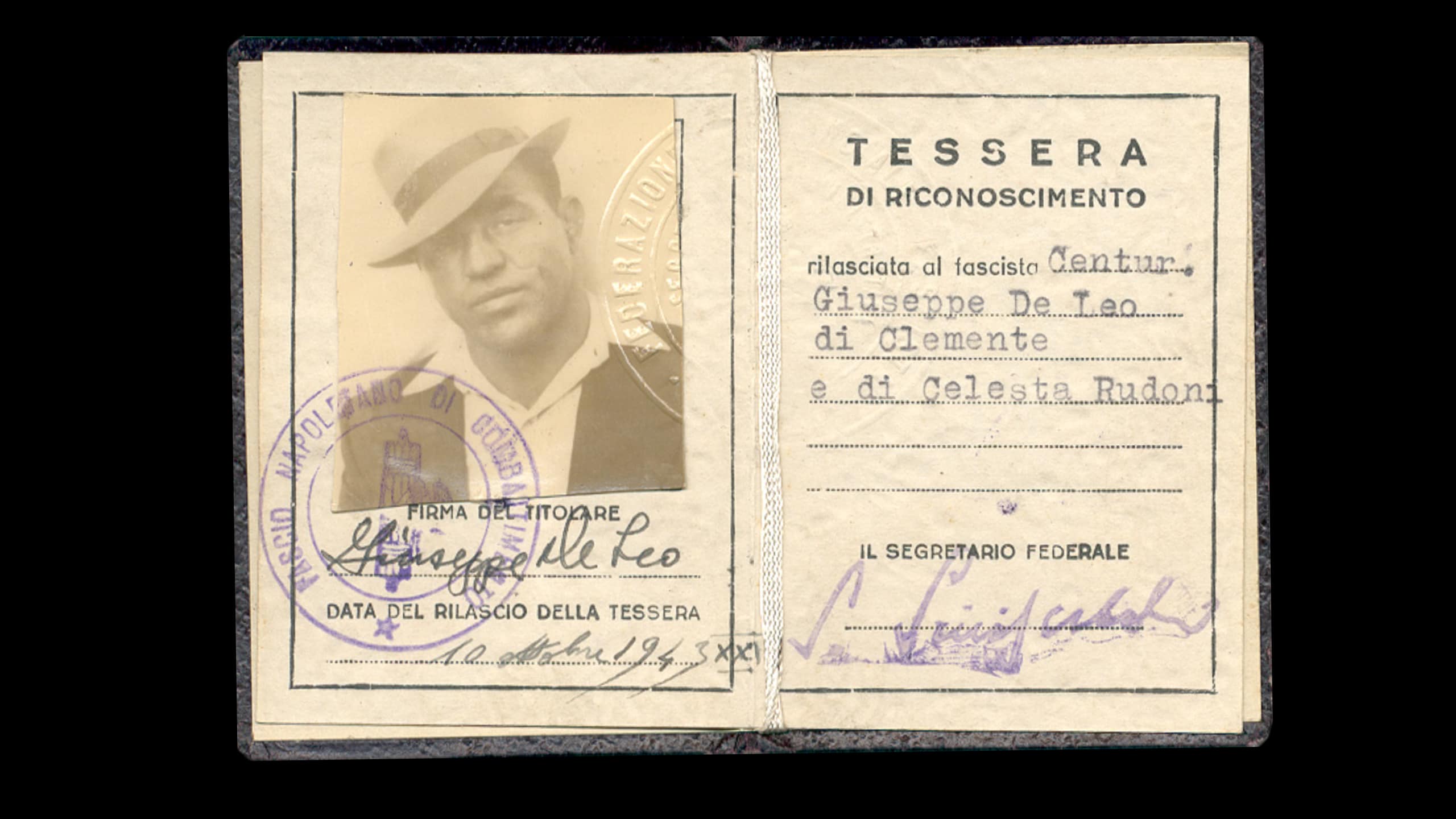
Known as “Jumping Joe” in the wrestling ring, R. Joe Savoldi was a former Notre Dame football star turned professional wrestler who brought his physical prowess and multilingual fluency to the OSS. During World War II, Savoldi conducted covert missions in Italy, leveraging his Italian heritage and athleticism to infiltrate enemy lines, extract intelligence, and assist in sabotage operations. His OSS work remained classified for decades, but his contributions were vital to Allied efforts in the Mediterranean theater.
Notable OSS Operations
The OSS conducted a wide array of covert missions that significantly contributed to the Allied victory. Here are a few of those that had a major impact on the war:
Operation Torch (1942)
OSS agents were deployed to North Africa ahead of the Allied invasion to build intelligence networks and coordinate with local resistance. Their groundwork helped ensure the success of the campaign against Axis forces in Algeria and Morocco.
Operation Jedburgh (1944)
In preparation for D-Day, the OSS partnered with British SOE and Free French forces to form Jedburgh teams. These three-man units parachuted into occupied France, Belgium, and the Netherlands to train resistance fighters, sabotage German infrastructure, and support the Allied advance.

Operation Carbon (1944)
OSS operatives infiltrated Norway to disrupt German supply lines and sabotage infrastructure. These missions hindered Nazi operations in Scandinavia and supported broader Allied efforts in the region.
Operation Sunrise (1945)
OSS officers played a pivotal role in negotiating the surrender of German forces in Italy, working behind the scenes with Swiss intermediaries and German commanders. This diplomatic success helped shorten the war in southern Europe.
Dissolution and Legacy
Despite its achievements, the OSS faced resistance from rival agencies like J. Edgar Hoover’s FBI and the Military Intelligence Division. After World War II, President Harry S. Truman dissolved the OSS on September 20, 1945. Its core intelligence functions were absorbed by successor organizations, including the Strategic Services Unit (SSU) and the Central Intelligence Group (CIG), which evolved into the CIA in 1947.

Final Thoughts
The OSS transformed intelligence operations and laid the foundation for modern espionage. Its legacy endures in the CIA, which continues to shape global intelligence and national security. More than a pioneering agency, the OSS was a hub of brilliant, unconventional minds who proved that diverse talents could play a vital role in wartime intelligence.
Editor’s Note: Please be sure to check out The Armory Life Forum, where you can comment about our daily articles, as well as just talk guns and gear. Click the “Go To Forum Thread” link below to jump in and discuss this article and much more!
Join the Discussion
Read the full article here