




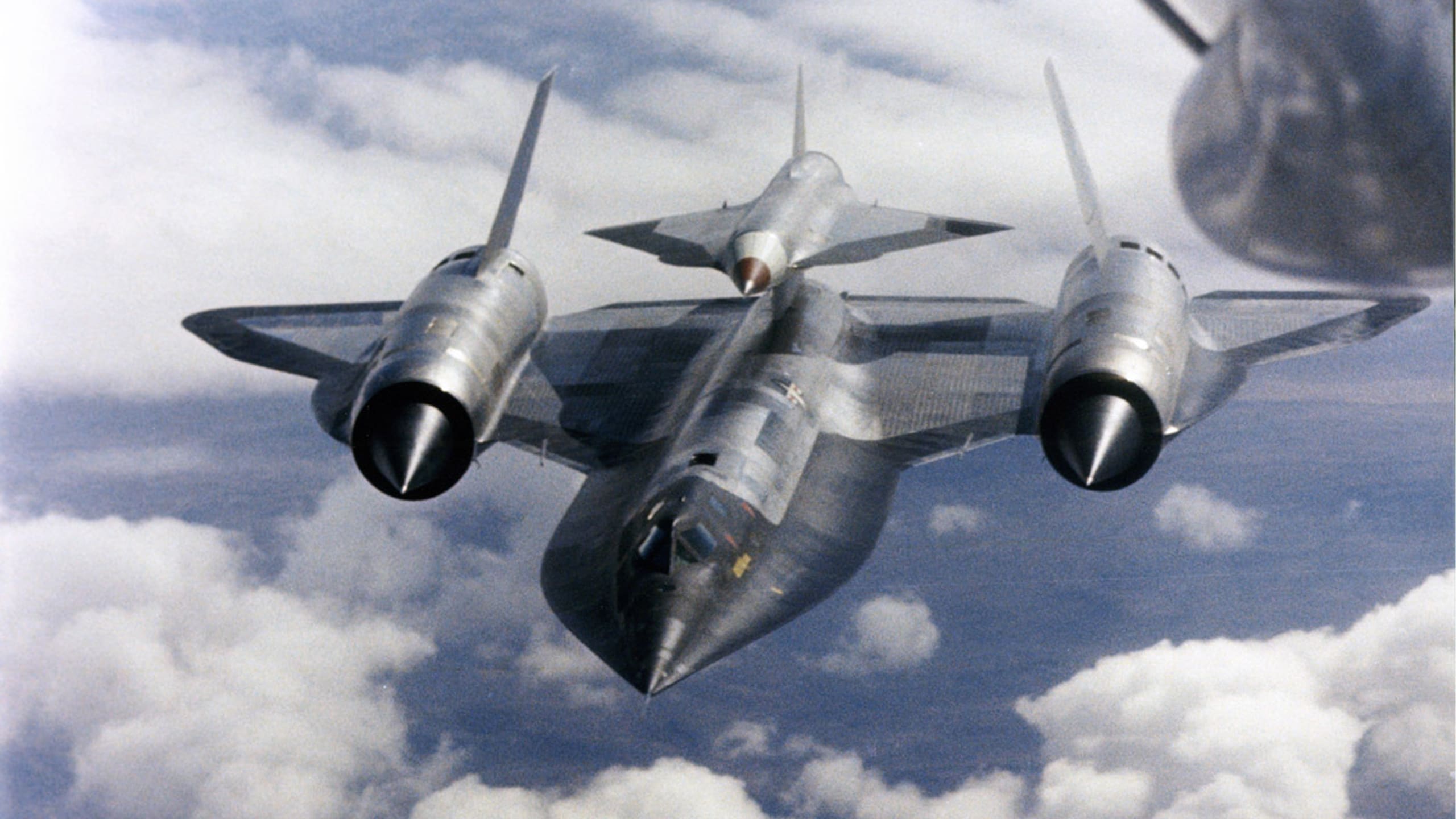
In October 1962, the C.I.A. and the U.S.A.F. requested that Lockheed study a high-speed, high-altitude drone concept for reconnaissance flights over particularly hostile territories to avoid endangering aircrews. Created during the height of the Cold War and following the shootdown of a U-2 spy plane piloted by Francis Gary Powers, the Lockheed D-21, initially designated as the Q-12, utilized technology derived from the A-12 Oxcart and SR-71 Blackbird programs.
Skunkworks chief Clarence Kelly Johnson specified speeds of Mach 3.3–3.5, with an operational altitude of 87,000–95,000 feet, and a range of 3,000 nautical miles. The drone would launch from the A-12 Oxcart, make a one-way trip to the target using a pre-planned flight path, gather intelligence, then head into international airspace and begin an unpowered descent. When the drone reached 60,000 feet, it would jettison its top-secret payload, which consisted of the camera, photographs, and the drone’s navigational system. The payload would either be recovered while airborne using a JC-130 Hercules aircraft to snag its parachute mid-air, or retrieved by ship after a water landing. When the drone reached an altitude of 52,000 feet, it would self-destruct.
Mother and Daughter: the MD-21

The Q-12 would be launched from a modified A-12 Oxcart, and two airframes from the original 18 were pulled from the A-12 program. The A-12 was a two-seat version fitted with a pylon on top of the fuselage centerline where the drone would be mounted, between the vertical stabilizers, and was designated the M-21. The Q-12 became the D-21, and when combined, the pair became known as the MD-21 (M for mother and D for daughter).
Propulsion
Unlike the turbojet engines used in the Blackbird program, the D-21 was powered by a single Marquardt RJ43 ramjet, producing 12,000 pounds of thrust, which propelled the D-21 to a speed of 2,000 miles per hour.
Testing Begins

The drone’s testing did not go well. In late December 1964, under the codename “Tagboard,” the M-21 flew with the D-21 mounted piggyback. The first separation test, conducted in March 1966, went as planned. The second test launch suffered a hydraulic failure, resulting in the loss of the drone. The third launch failed due to an electronics module malfunction. Testing continued, but Skunkworks Chief Kelly Johnson still had reservations about the separation procedure.
Disaster Strikes
The fourth and final test launch from an M-21 in July 1966 ended in disaster. Unlike the three previous launches, which were performed using an outside loop to assist with separation, this one was performed with the M-21 flying straight and level.

During separation, the D-21 suffered an engine unstart and struck the M-21’s right side. The mothership pitched sharply, and the forward fuselage/cockpit section broke off, leading to the destruction of both aircraft.

Live The Armory Life. The latest content straight to your inbox plus an automatic entry to each of our monthly gun giveaways!
The pilot and launch control officer ejected and landed in the Pacific. The pilot, Bill Park, survived, but the Launch Control Officer, Ray Torick, had been severely injured during the Mach three ejection and drowned before rescue arrived.
The BUFF Enters The Chat
After the crash, the MD-21 program was cancelled, but in late 1966, the Director of the National Reconnaissance Office requested that the program be restarted, using a B-52H Stratofortress to launch the drone. The request was approved, and in January 1967, contractors began to implement the changes.

The decision was made to reconfigure the B-52H to carry the drone, and two H models were modified to carry two drones mounted on external pylons.
However, this change created another problem. To launch the D-21, a large solid rocket booster was required to achieve the necessary speed for the ramjet engine to start. This version was designated the D-21B.
The booster was both larger and heavier than the drone, measuring 44 feet long and weighing 13,286 pounds. It had a burn time of 87 seconds and a thrust of 27,300 pounds.

Drones were also modified by adding attachment points on the spine for loading to the B-52 pylon, while the existing belly attachment points were used to mount the solid rocket booster.
Other modifications included the tail gunner’s and electronic warfare officer’s stations, which were replaced with two launch control stations. Command and telemetry systems were added, and high-speed cameras were installed to track the drones during separation. The launch control officer could also communicate with the D-21B and initiate its self-destruct sequence.
More Test Failures of the D-21
The revamped program got off to a rocky start. The first attempted launch of a D-21B in September 1967 ended before it began when the drone fell off due to a stripped nut on the launch pylon before the aircraft reached its intended launch point!

The next launch, in April 1968, failed because the engine did not ignite. In June, the D-21B finally made a completely successful flight, and the camera payload was recovered. The subsequent two launches were failures, followed by a successful flight in December. A test in February 1969 to check the inertial navigation system failed. The last two flights in May and July 1969 were successful.
Operational Flights
Although the majority of test flights were failures, the project continued, and the first operational mission to spy on Chinese nuclear tests at Lop Nor commenced in November 1969. D-21Bs were used on four flights over communist China under the code name “Senior Bowl”. Four missions were completed, with none being successful.
The first drone went off course and disappeared. The fate of the drone was unknown until 1986, when a C.I.A. official met with Kelly Johnson’s Skunkworks successor, Ben Rich, and returned one of the drone’s panels that they received from a KGB agent. It seems the drone crash-landed in Siberia and was recovered by the Russians.

The second flight performed well, but the electronics module was damaged during ejection and plunged to the bottom of the sea.
The third flight was perfect. However, when the US Navy arrived to retrieve the electronics payload, the ship ran over it, and like the module from the second flight, it sank to the bottom of the sea.
The fourth flight, in March 1970, crashed in Yunnan Province, China. The wreckage was recovered and is currently displayed in a military museum in Beijing.
As with all Top Secret programs, only certain information is released. According to U.S.A.F. Lt. Col. Alfred Crane, at least two more flights over China were made with intel being collected from at least one mission.
Lockheed D-21 Cancellation
In July 1971, the project was cancelled due to its dismal success rate, the development of new, powerful satellites, and President Nixon’s improvement in diplomatic relations with China. The U.S. Air Force put the remaining D-21s in storage.
Between July 1976 and January 1977, seventeen D-21s were delivered for long-term storage at AMARC/Davis-Monthan AFB. Since then, many have been displayed at various museums across the USA.
Editor’s Note: Please be sure to check out The Armory Life Forum, where you can comment about our daily articles, as well as just talk guns and gear. Click the “Go To Forum Thread” link below to jump in!
Join the Discussion
Read the full article here