




When I was 10 years old, I read Jeff Cooper’s articles in Guns & Ammo magazine in which he extolled the 1911 “.45 automatic” as the ultimate gunfighting/self-defense handgun. What he wrote made a great deal of sense to me.
All these years later, it still does.
Slim and flat, among the easiest of full-size “fighting handguns” to discreetly, accessibly carry concealed. It’s unarguably adequate in power for its task, all the more so today with improved ammunition. Long-since proven reliable. It has a low bore axis to minimize muzzle rise and contribute to accurate rapid fire, and with a straight-back, short, easy-to-control trigger pull to enhance rapid-fire hit potential under the highest stress imaginable. And, thanks to the genius of John Moses Browning, its redundant safety features.
Since 1911 — and really, mostly, since 1960 or so — gunsmiths and master pistoleros found ways to enhance the original pistol. Today we have a broad assortment of calibers to choose from, and higher cartridge capacity versions. We have target sights, we have optical sights, we have laser sights. Clever gunsmiths came up with accessories that reduced both muzzle rise and rearward recoil impulse, colloquially known as “kick.”
But you know what? While today’s 1911’s may have more flavors than Howard Johnson’s famous ice cream, plain vanilla still works pretty darn well.
Be sure to read Massad Ayoob’s Springfield 1911 Mil-Spec review.
The Choice of (1911) Flavors
When I was a kid, it was a big deal that Howard Johnson’s had 28 flavors of ice cream. Heck, there are way more than 28 flavors of 1911 when you factor in calibers, sizes, and manufacturers.
Let’s look at just one manufacturer, Springfield Armory. You can get your 1911 in a double-stack 9mm like the Prodigy, holding all the rounds you want. You can get numerous models already cut for optic sights if you shoot better with those. Want something small and light? Turn the catalog page to the EMP (Enhanced Micro Pistol) series. Fancy? They have those, too.
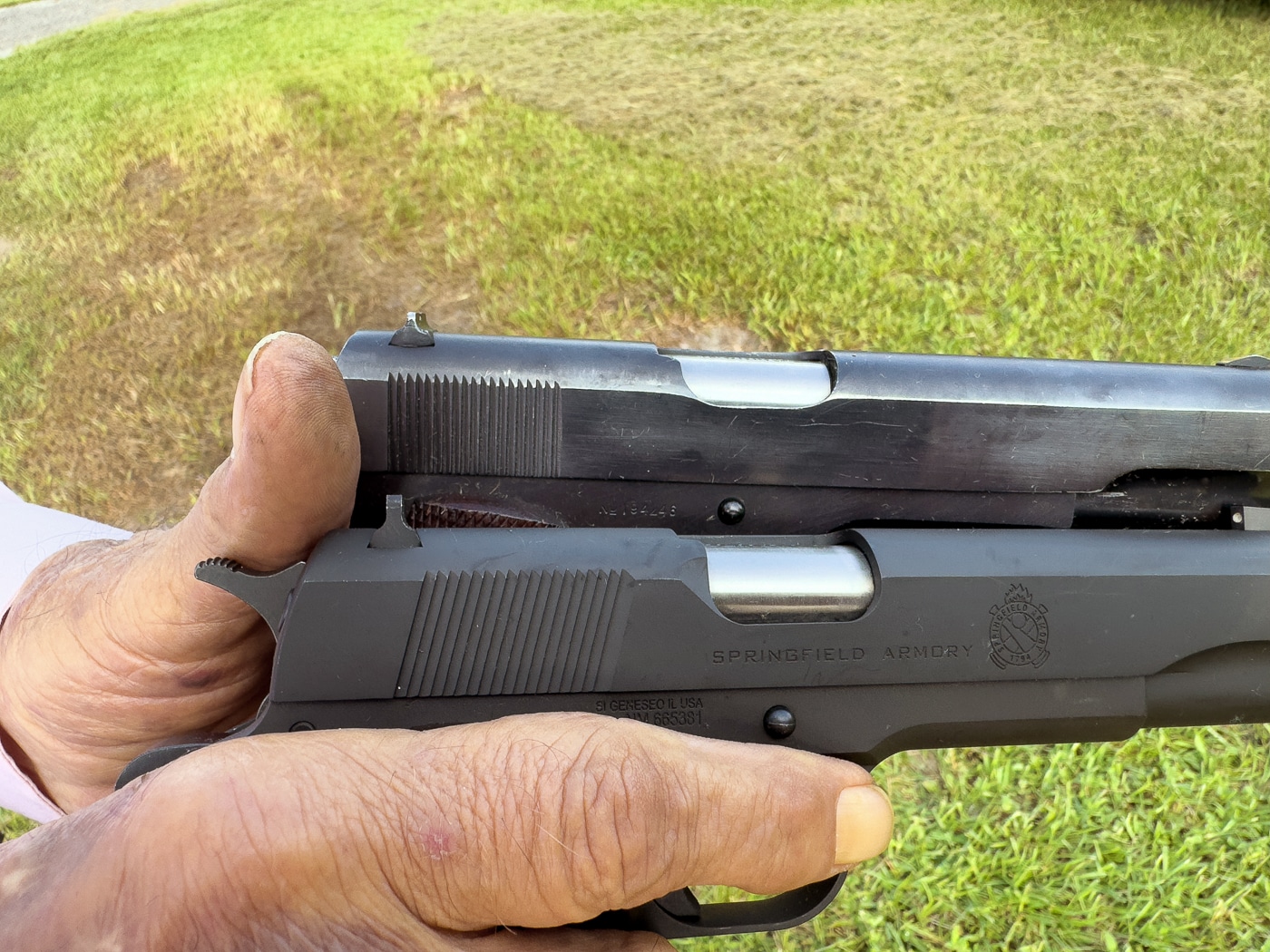
Still and all, for many shooters’ needs a “plain Jane” version will suffice. Your basic 5”-barreled, all-steel 1911 .45 auto is the gun that earned its rep from the trenches of World War I to the proverbial sands of Iwo Jima to the tunnels of Vietnam, and even found its way into the 21st century’s war on terror. In its standard configuration it was carried in the holsters of many Texas Rangers and other lawmen, and protected the homes of countless Americans. Pistol-packers discovered early on that its slim profile made it easy, comfortable, and surprisingly concealable in everyday carry.
Features You Need
One thing that drives the purchase of a basic 1911 is economy, simply because additional bells and whistles are expensive for the manufacturer to produce. The exemplar of a simple 1911 that I’ll use here is the Springfield Armory Mil-Spec, which carries a manufacturer’s suggested retail price starting at $725. Many makers’ top-of-the-line 1911’s will run $3,000 or more. For three grand you can buy three Mil-Specs and have money left over for holsters and ammo.
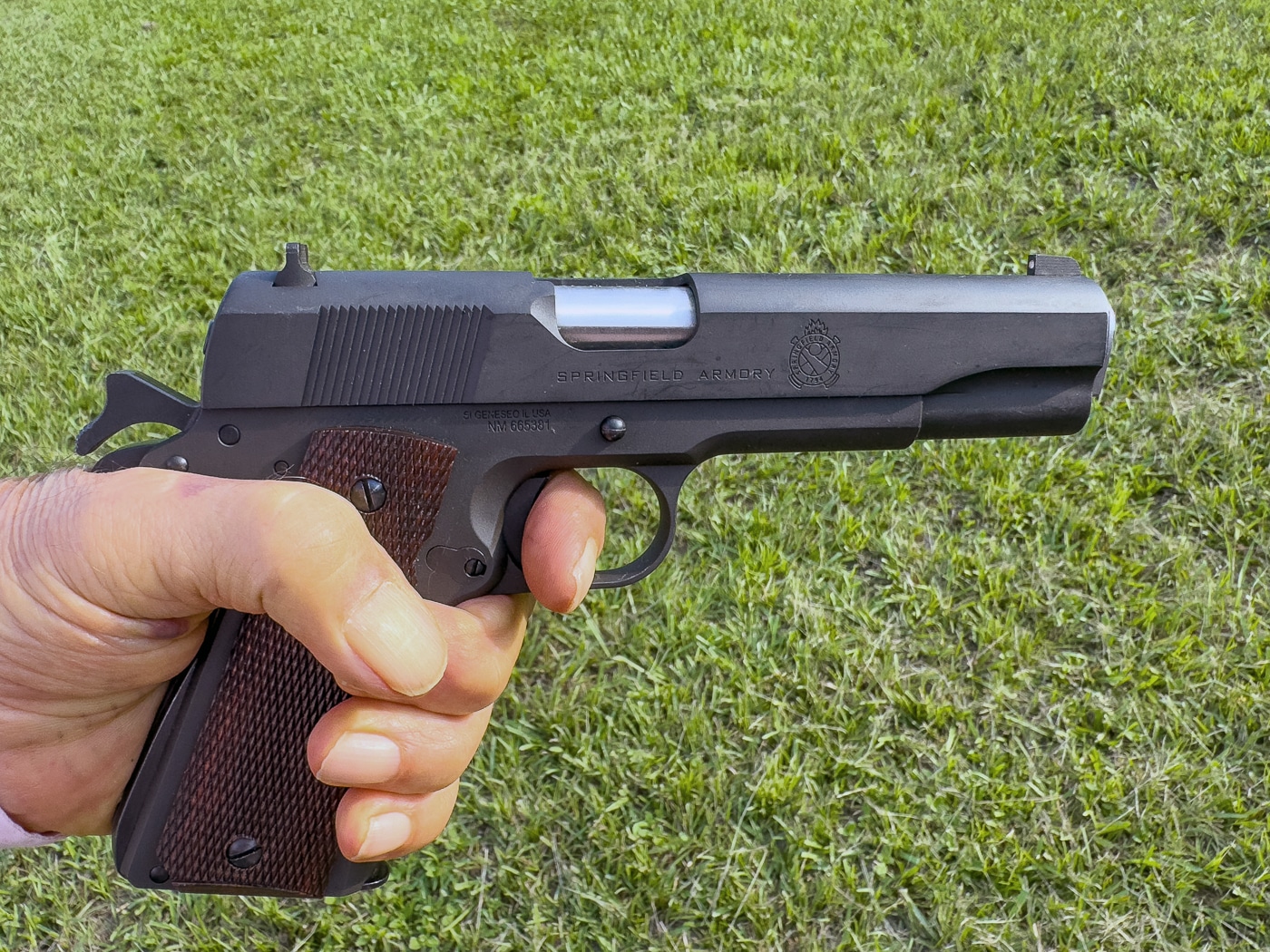
Reliability of function is a non-negotiable baseline for any firearm, particularly so with one intended for self-defense purposes. A lot of the old military surplus 1911 .45’s were designed only for round-nose full metal jacket ball ammunition and might malfunction if fed most hollow points, and the same has been true for many foreign-made 1911 clones. The Springfield Mil-Spec is factory “throated” to feed the desirable-for-defense jacketed hollow point. My sample has been satisfyingly reliable in that respect.

Live The Armory Life. The latest content straight to your inbox plus an automatic entry to each of our monthly gun giveaways!
Adequate power is another definite need in a defensive handgun. Certainly, the general consensus of both military and law enforcement today is that with modern ammunition the 9mm is not inadequate. However, in its original caliber of .45 ACP, no one questions that as handguns go it has an adequate power level. Generations of Americans dubbed it a “manstopper” for a reason.
As For Wants…
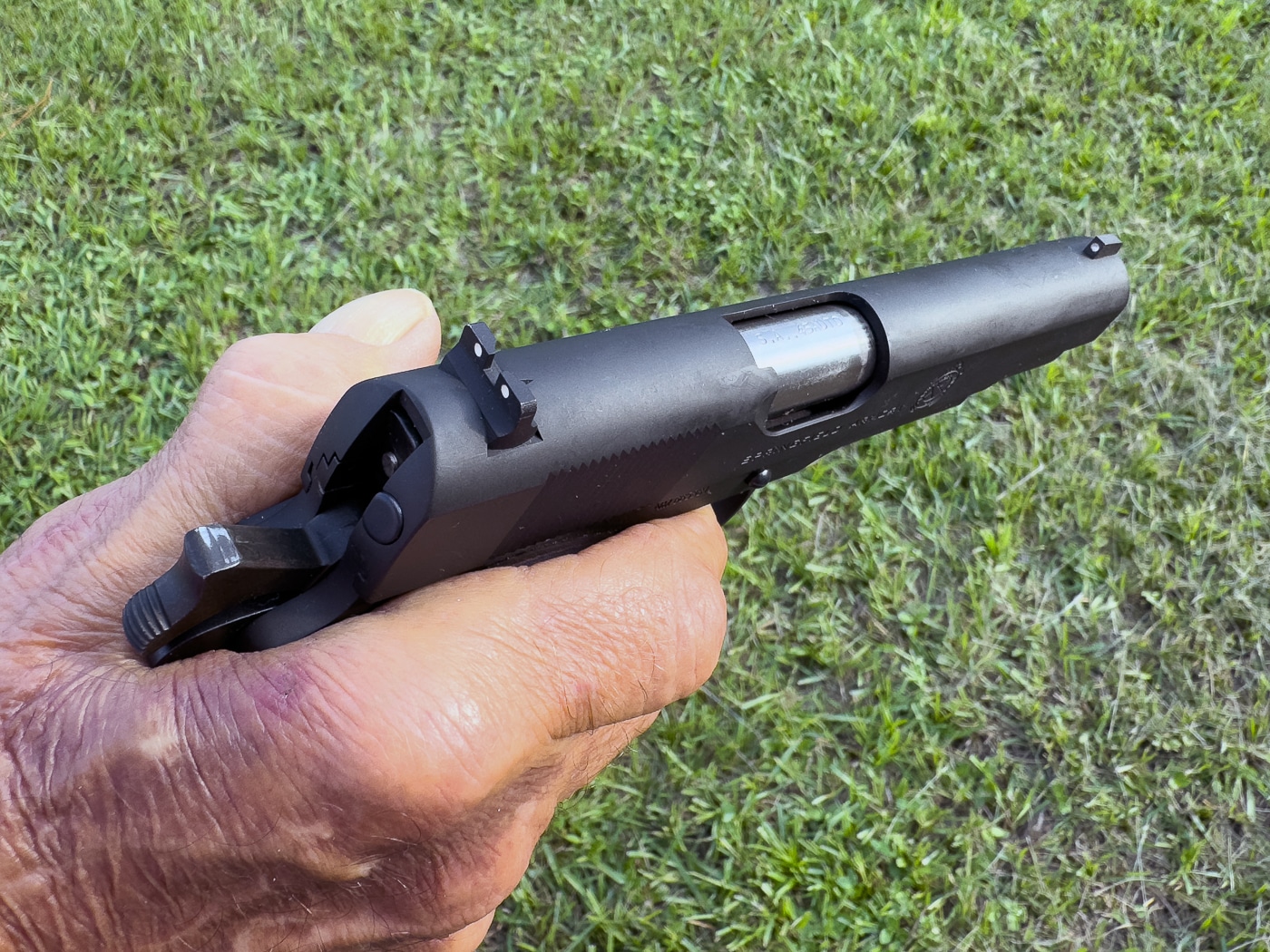
I for one like adjustable sights. That said, I don’t consider them essential. Our military has never issued adjustable sight service pistols except to pistol teams and, when they had revolvers, U.S. Air Force police. Modern police service autos didn’t generally have adjustable sighting until the recent trend to carry optics, and I’ve won IDPA and police PPC Service Pistol matches with fixed sight guns, as have a great many others.
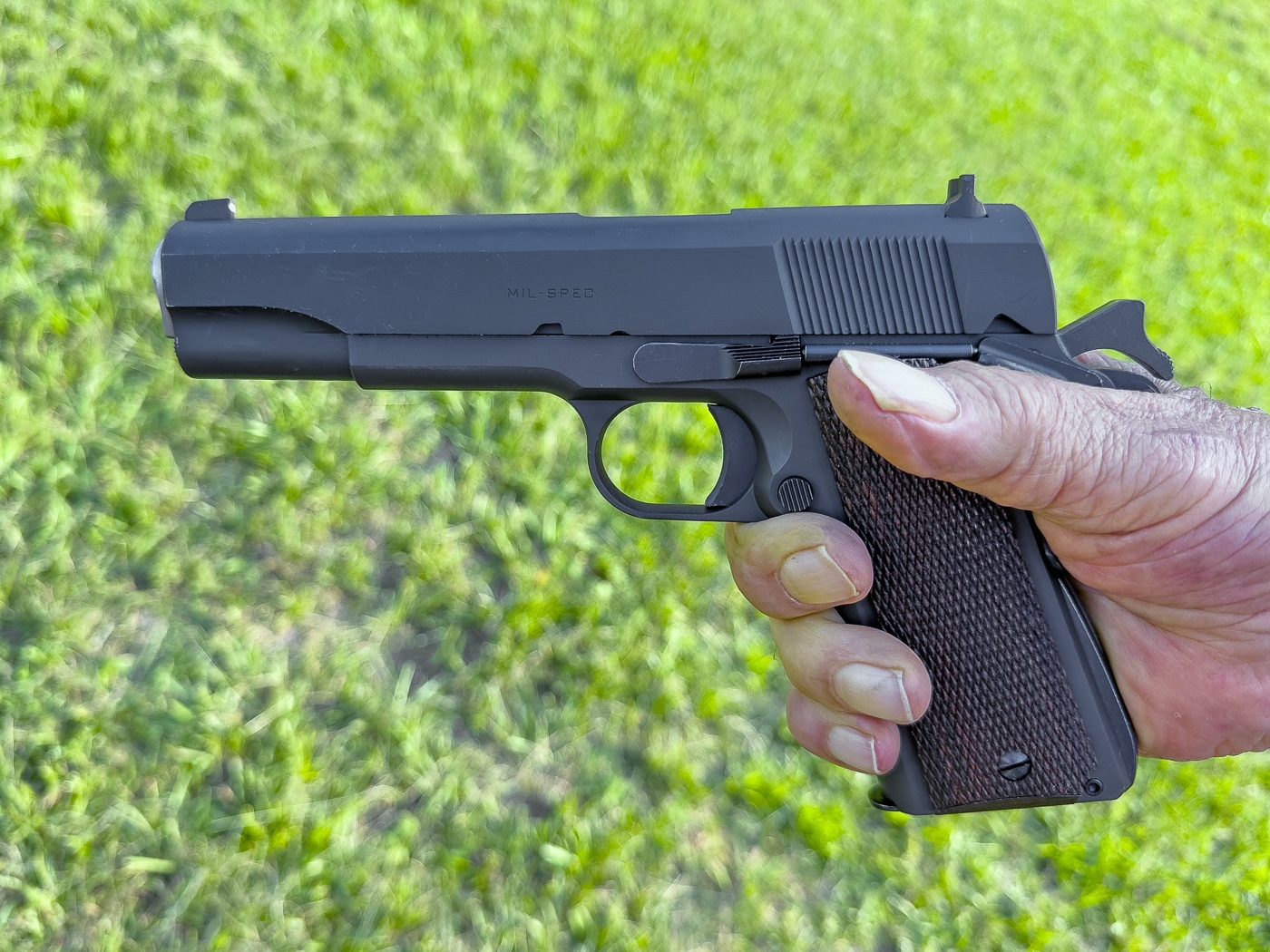
The rear fixed sight on a Mil-Spec 1911 sits in a dovetail, and can be drifted laterally to adjust for windage. If a fixed-sight 1911 “shoots low,” a little judicious filing of the top of the fixed front sight can bring point of impact up to point of aim.
Weapon-mounted lights? You can pay a little more and have a 1911 with extended dust cover cut for mounting of an “on-board flashlight.” However, its holster will be necessarily bulkier and harder to conceal. Before WML’s became popular, we all got by learning to mate a pistol in the dominant hand with a flashlight held in the support hand, and those techniques still work. Moreover, us old gun guys who’ve been doing this for a while have accumulated lots of 1911 holsters which fit standard configuration pistols but not those shaped to mount light attachments.
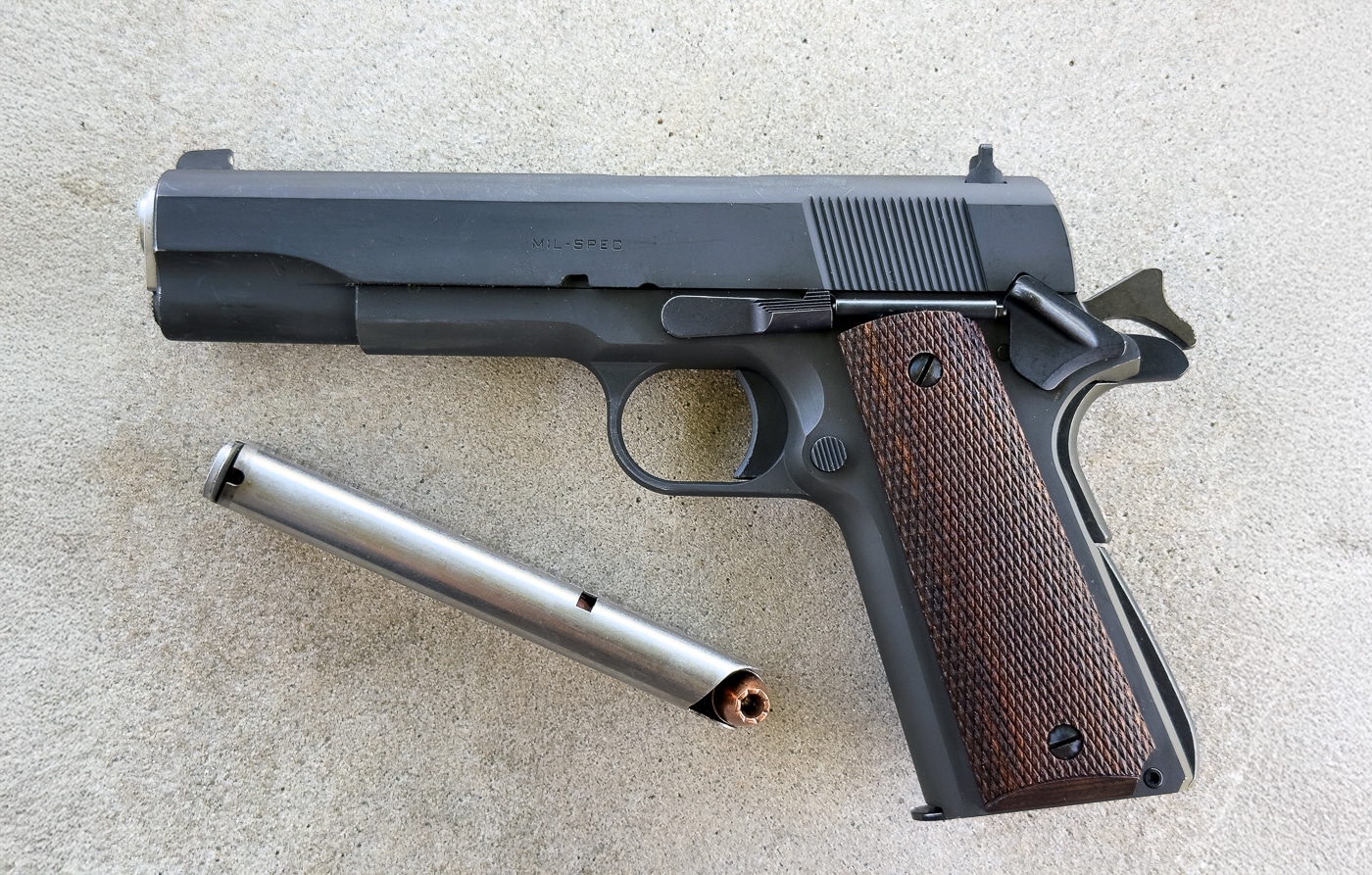
In summary, the plain vanilla 1911 .45 has served to protect very well for well over a century. It can obviously continue to do so. It does for me.
Editor’s Note: Please be sure to check out The Armory Life Forum, where you can comment about our daily articles, as well as just talk guns and gear. Click the “Go To Forum Thread” link below to jump in and discuss this article and much more!
Join the Discussion
Go to forum thread
Featured in this article
45ACP
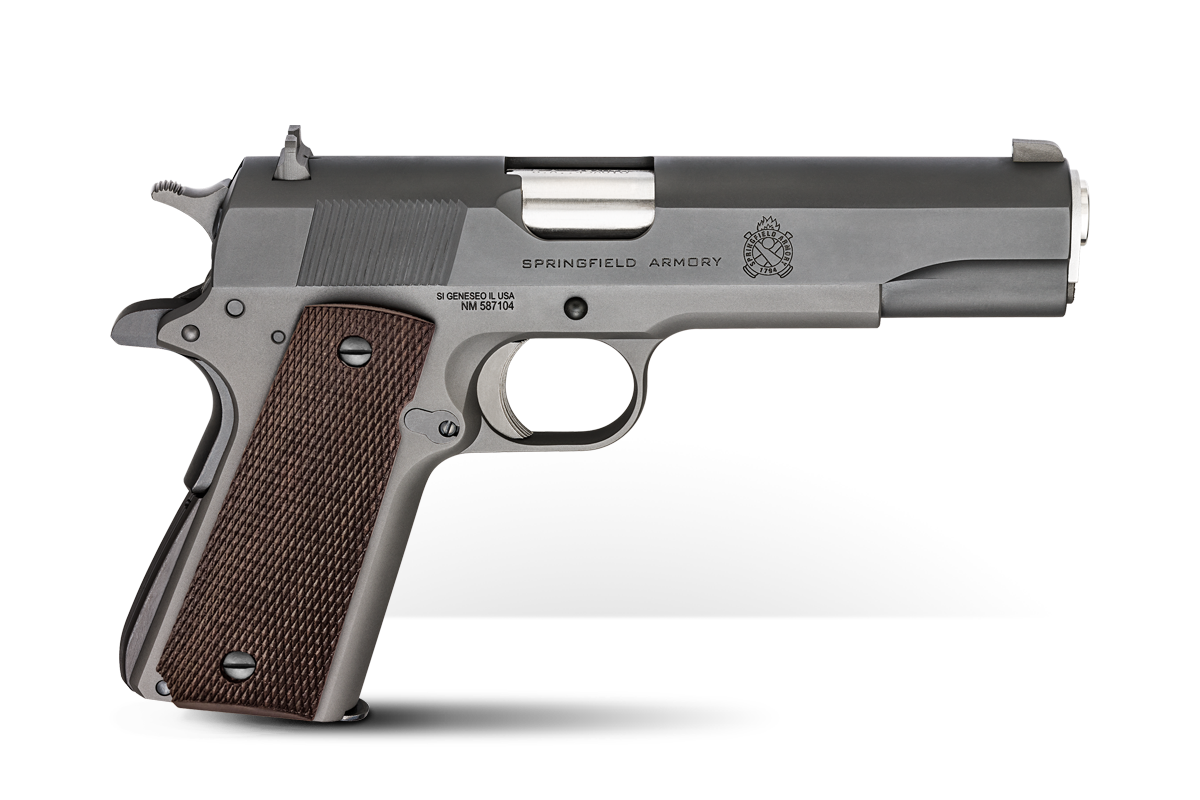
1911 Mil-Spec
Read the full article here