




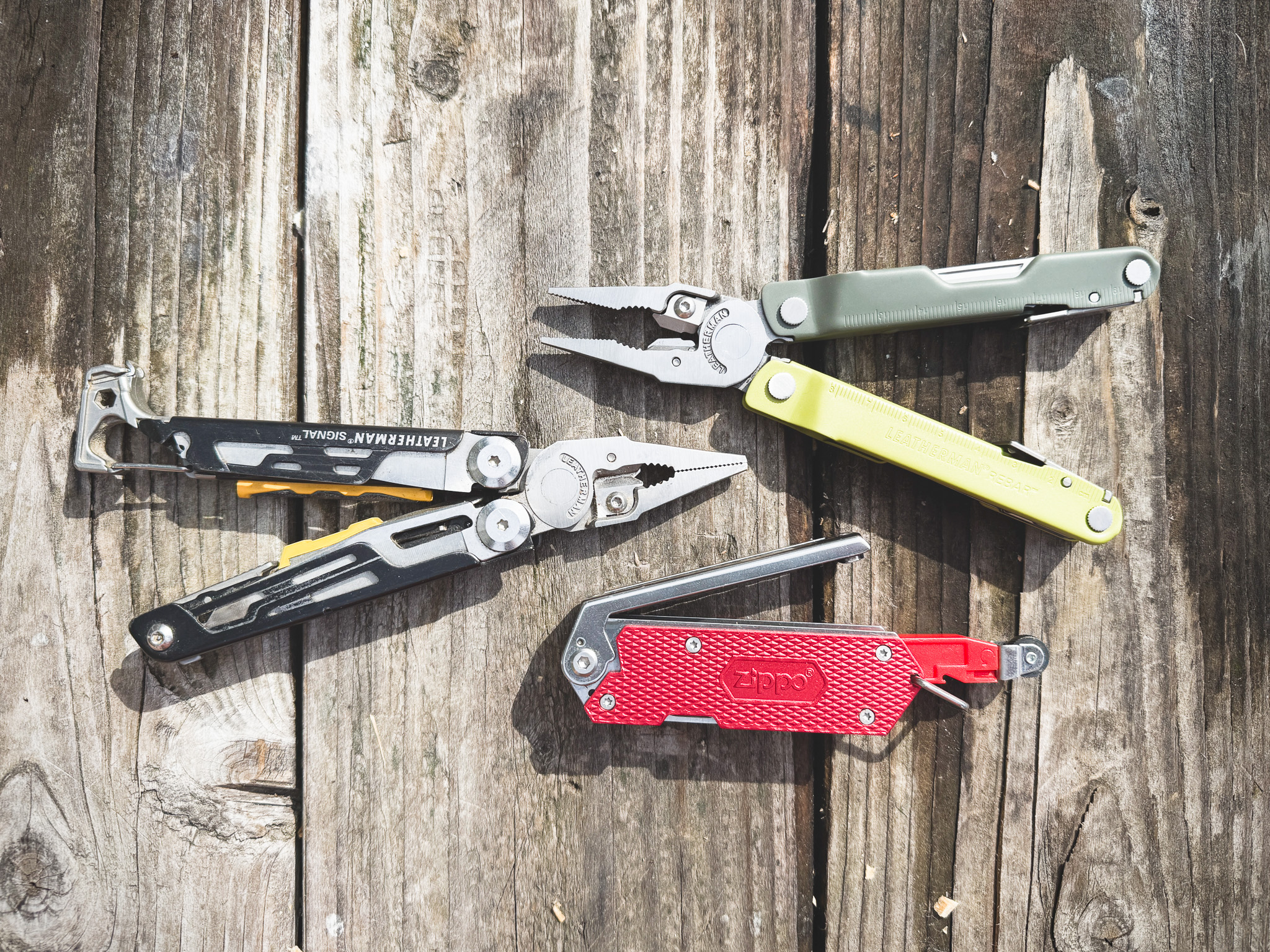
You never realize how much you need a multitool until you start carrying one. Anyone who does can tell you they find themselves using theirs all the time. Sure, there’s a little bit of eagerness when you have one in your pocket or pack.
There are only a handful of brands that have consistently put out tools over the years that are easy to use, durable, and dependable. Those are Leatherman, Gerber, SOG, and Victorinox. These brands have become synonymous with the term “multitool” over the years and have been adopted by civilians, military personnel, first responders, and anyone in between looking to be prepared for any situation.
Now that we’ve got that part of the process out of the way, it’s time to figure out just what you need. Since we don’t know all of you, we’ve taken the time to test and recommend what we believe would best suit your needs.
To reach our conclusions, we took into account the overall build of the tool, its tool assortment, and materials, and we balanced that against ease of use and price. The Leatherman Wave+ takes the cake here, and the Leatherman Rebar is a good, affordable alternative.
In the end, we had a ton of fun. But we’re also confident in making the following recommendations because these tools got us out of a few jams that we may or may not have gotten ourselves into on purpose.
Editor’s Note: We updated this guide on December 18 2025 to add the surprisingly decent Harbor Freight Gordon 20-in-1 Multi-Tool — a budget-minded tool that packs on much of the functionality of higher-end multitools. We’ve also added ratings to each tool for better comparison.
The Best Multitools of 2025
Best Overall Multitool
9.0/10 Rating
Best Budget Multitool
6.8/10 Rating
Best Travel Multitool
7.9/10 Rating
Best Camping Multitool
7.5/10 Rating
Best Premium Multitool
8.0/10 Rating
Best Survival Multitool
8.1/10 Rating
Best Beat-Around Multitool For Your Glovebox
6.4/10 Rating
See more picks
The award winners above are the tools we lean on the most in our day-to-day, but they aren’t the only solid options on the market. Check out the selection of runner-up multitools below for a few other options that we’ve tested and given the nod to.
-
Compact size -
Classic design -
Excellent tool selection
-
Lack of pliers -
Too small for large tasks
-
Locking D2 Tool Steel Blade -
Compound Leverage gear-drive pliers -
Deep carry pocket clip -
Lightweight
-
High overall build quality -
Wide tool assortment -
Replaceable carbide saw blade and wire cutters
-
Doesn’t work well with gloves -
Favors bigger/wider hands -
High price
-
420HC stainless steel -
Solid in-hand ergonomics -
Included pocket clip -
Same 25-year warranty as the Wave+
-
Reduced toolset -
Lack of replaceable wire cutters -
No swappable bit driver
-
Innovative design -
Good screwdriver -
Budget-friendly
-
Inconsistent QA/QC -
Cheap steel
-
2-position slip-lock pliers -
Center-drive bit driver reduces fatigue -
Can hold three bits for the center-drive
-
Three separate bit driver -
Fit and finish isn’t great
Multitool Comparison Chart
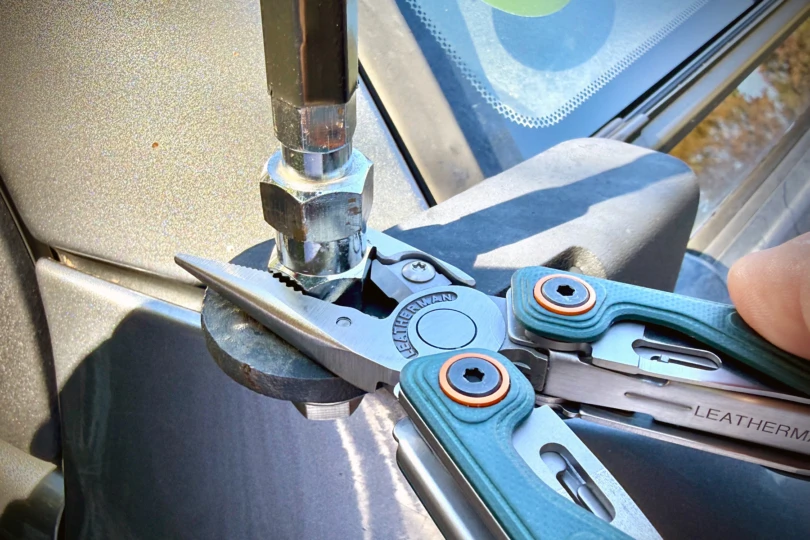
Multitools are one of those necessary things that should be part of your kit from day one. They’re so critical to your life and time in the outdoors that it would make sense for the stork to stuff one in your bassinet when they deliver you to your parents. For more coverage of our favorite blades and bladed tools, check out GearJunkie’s guides to the best pocket knives, survival knives, and bushcraft knives.
That said, when it comes down to multitools, it’s a lifestyle thing that you end up experiencing naturally. One day, they’re in your pocket, and the next day you’re lining up all the screws on the wall plates at your parents’ house. Then you’re fixing your ski bindings, repairing your camp stove, and even performing something as simple as cutting up sausage and cheese for a trailside snack. Multitools are ubiquitous with the outdoor crowd.
- Field use: We fold these multitools into our everyday carries in order to see how they tackle tasks as they come naturally, whether that’s using them to dig around under your dashboard when your auxiliary lights stop working or putting together IKEA furniture with them.
- Tool comparison and function testing: We also hit the bench with these multitools, aiming to compare like tools to see which company does it best, and ensure that the functionality lives up the tool name (a compact bit driver won’t always work as well as a real screwdriver).
- Our multitool rating system:
- Tool Utility: 30% weighted. This is a combination of our everyday testing as well as a consideration of overall number of tools, their function, and the steel used to make them.
- Fit & Finish: 30% weighted. We look at meach multitool and consider the overall craftsmanship and fitup of the tool. Do the tools open and close easily, or are they dragging or offset? Is there any machining debris left in the pivot points? Do the tool scales accumulate scratches and wear easily?
- Size & Weight: 20% weighted. Multitools are meant to be minimal versions of many different tools, meaning they ought to be as small and light as feasibly possible. We break out our own scales to weight these tools, and measure they ourselves to verify manufactuer specifications.
- Durability: 20% weighted. Finally, we use these tools for as long as possible before rendering a verdict on them, and allowing for any issues to develop. Durability against these issues yeilds a high score, while loose or jammed tools rate low.
Our Expert Testers
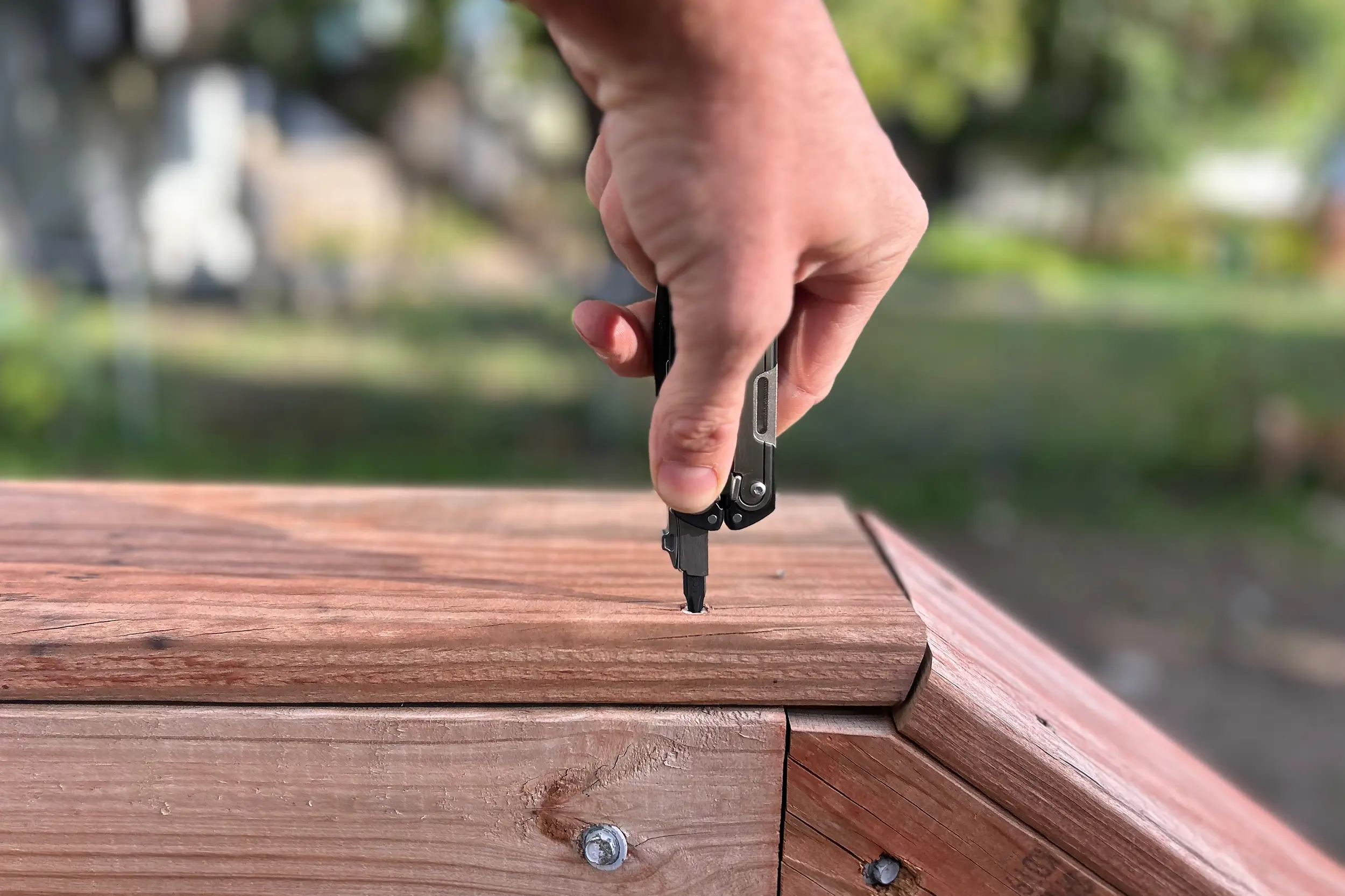
We’ve tapped Nick LeFort to pick out what multitools should go on this list. LeFort, who has become something of a multitool himself here at GearJunkie, was given his first Swiss Army Knife when he was a kid, and the idea of having a tool in his pocket stuck. He’s been carrying one multitool or another for 30 years.
Before becoming an engineer and knifemaker himself, LeFort spent years working in a local camping store, outfitting people for their adventures. There, he familiarized himself with the variety of knives and tools people needed and drew his own conclusions as to what a multitool needed to be. He’s been updating that internal notepad ever since. He wasn’t kidding when he said he was still carrying that original Leatherman Signal 9 years after initially reviewing it. But he’s carried and tested many more in the time between.
Buyer’s Guide: How to Choose a Multitool
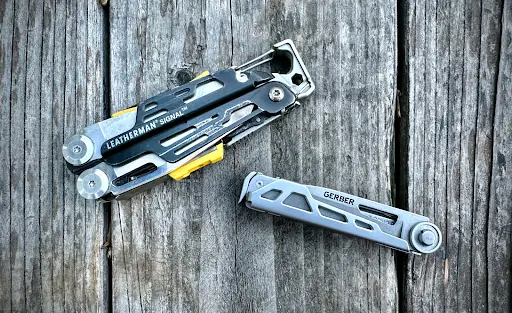
The last thing you need is a bloated multitool that has a bunch of tools you don’t need. Do you spend a lot of time prying and pinching? Get the tool with the best pair of pliers. Are you more focused on snipping and cutting? Leatherman offers several models with replaceable wire cutters and multiple blades.
But sometimes, things you didn’t anticipate become the most valuable. Take the eyeglass screwdriver on the Wave+. This precision instrument has seen a ton of use, serving as the perfect complement to the rest of the kit. Or how about a pocket clip? Who knew how much that could benefit you? How about the tent stake puller on the Gerber Stakeout Spark?
You want to pick the multitool with the highest number of features that you can see yourself using while considering the fact that there may be a couple of tools on there that you might not think you’ll need. It’s a balance, and it’ll never be perfect unless you go into business for yourself and start making multitools.
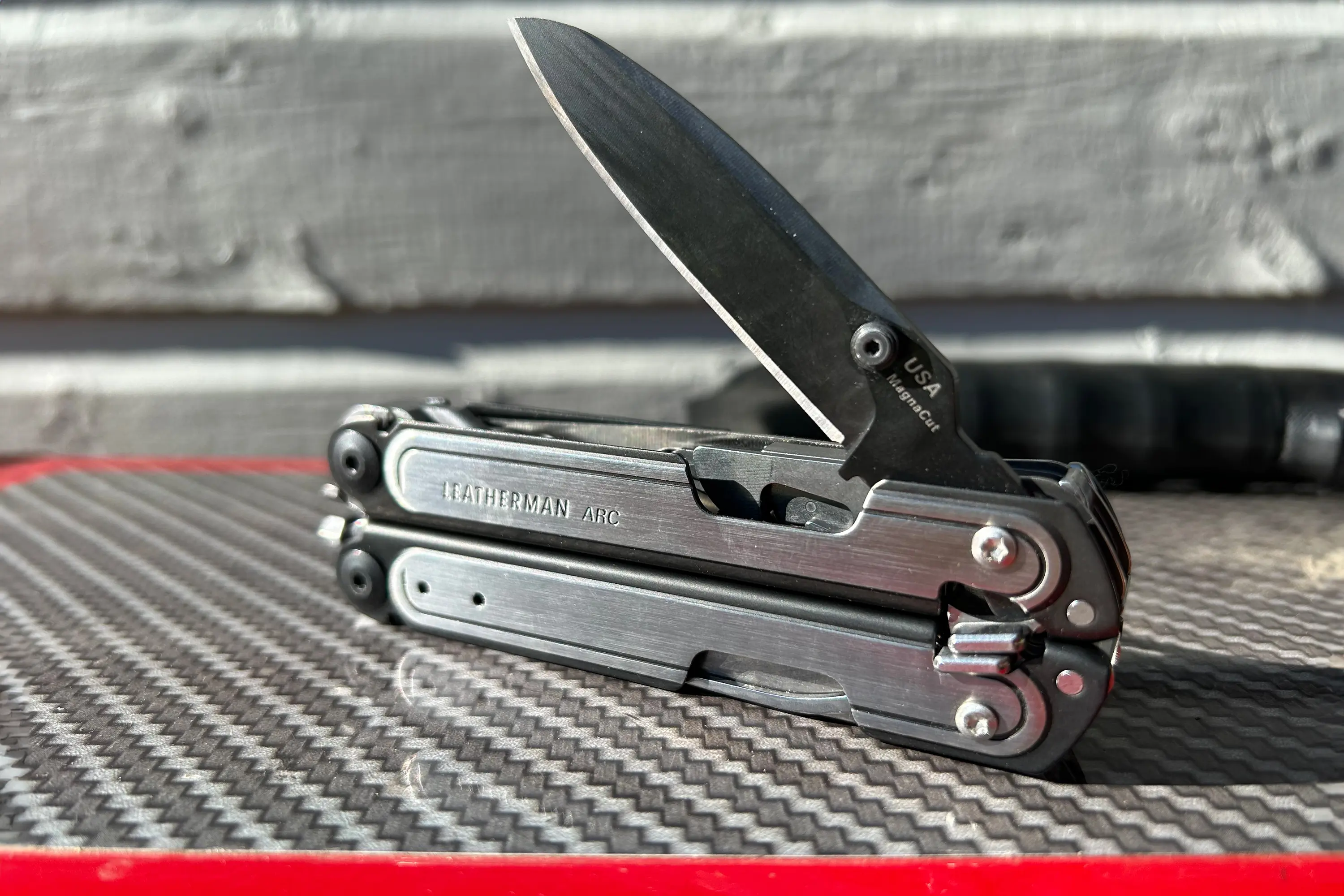
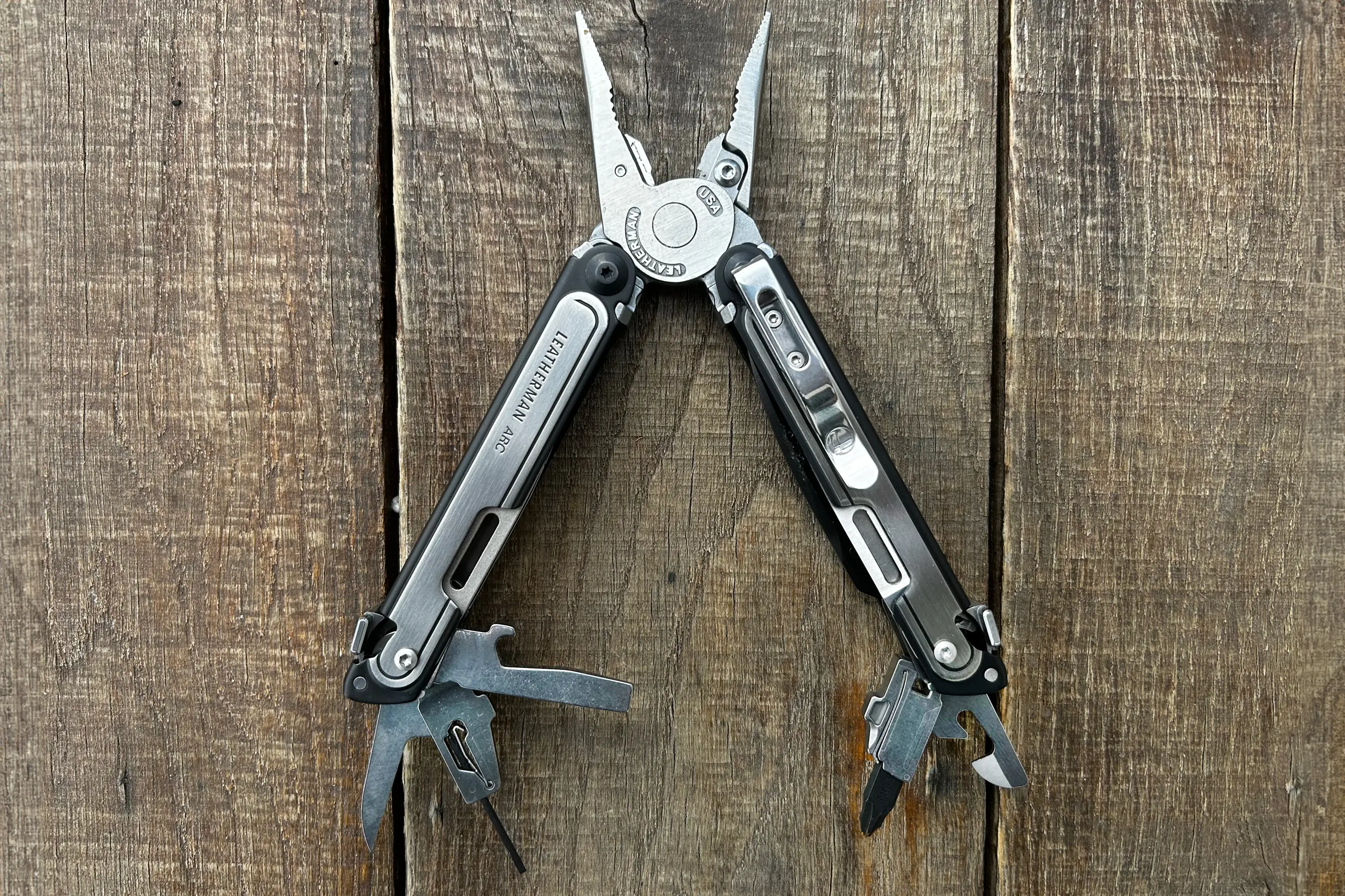
Take the Leatherman Arc ($250), for example. Yes, it has everything you need. But do you need 38 tools? Maybe you’re better off with a Rebar ($90). In the world of multitools, more isn’t always better.
Materials
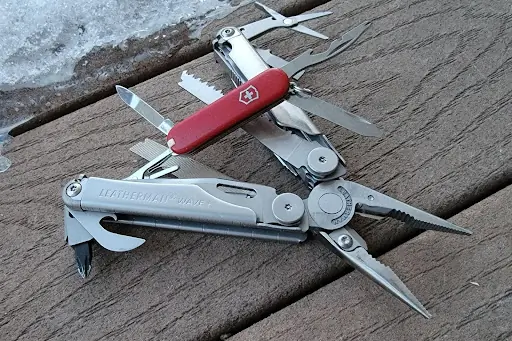
When shopping for a multitool, your objective should be to get the best components possible within your given budget. This is one of the places where Leatherman shines.
Though they do offer budget models with semi-questionable steels, the big names (Wave+, Rebar, Sidekick, Signal, etc.) all feature 420HC steel or better on their blades and components. With the introduction of the Arc, they’ve set the bar for other brands to meet or exceed.
That said, Victorinox doesn’t go out of its way to put a label on its metal. Over the years and through experience, we’ve come to trust in the provenance and performance of the Swiss Army’s INOX-branded steel.
If you can help it, don’t settle for no-name “stainless steel,” especially on cheaper multitools hailing from Amazon or the big-box stores. These start with poor materials and end with slipshod construction.
By skimping with one of these purchases, you’re asking to be let down when the need for the multitool arises. Named steels and trusted brands are your friends. The bargain bin and deal-of-the-day offerings are not.
Carry

The whole idea behind a multitool is accessibility. Whether you carry it in your pocket or on your belt is a personal preference. So is if you carry it in your pack or leave it in your glove box. However you carry your pocket tool, it shouldn’t be a chore to get your hands on it and get to work.
The benefit of carrying a multitool in a belt pouch is that you’ve got a place to carry the tool itself, as well as a variety of accessories. A variety of Leatherman’s top-tier tools come with a sheath that has a slot for the Bit Kit Set as well as room for the Bit Driver Extender and even a pen. This whole kit can be taken off your belt and transferred to your pack.
In the instances where you don’t need all those extra bells and whistles, or you’re confident that the tool assortment on the multitool you’ve chosen is sufficient for your needs, nothing beats a good pocket clip or carabiner.
Looking at the list above, each one of those tools, except the Victorinox Rambler and the Gerber Armbar Drive has either a pocket clip or carabiner. In the case of the Leatherman Signal and Gerber Stakeout Spark, you get both. The Rambler and Armbar Drive are small enough to swim around in your pocket without weighing you down.
Warranty

This is a vital consideration for anyone putting their multitool to its intended purpose. If you’re going to be cutting, prying, driving, and pinching with it long enough, even the best-made product can wear out. That’s where guarantees like Leatherman’s 25-year warranty come into play.
People are forever ruining the wire strippers on their Leatherman tools. And whether they’re replaceable or part of the pliers, Leatherman will take care of their customers, generally without question. Its warranty program has inspired Gerber to extend its warranty out to 25 years as well.
We’re unsure just how long Victorinox will warranty its knives and tools, but it says that they’re good for a lifetime. I guess it all depends on how long you plan on hanging around.
Overall, as great as all of these warranties may seem — that doesn’t mean you should rely on them if you plan on using or abusing your tools outside of the realm of usual use. All three aforementioned companies have been in business for a long time. They can tell if you misused their tools and will deny a claim without even so much as a handshake.
The Leatherman Factor
You may have noticed that five of the seven multitools we’ve deemed the best are Leatherman tools. That’s because the genesis of the multitool was in 1983 when Tim Leatherman released the first Leatherman, the PST.
Since then, the brand has continued to produce new, innovative tools that are durable and dependable. What’s more, is that it’s hard to argue with the allure of a 25-year warranty. Which, if we’re being open and honest, is generally hassle-free with minimal questions asked.
Leatherman’s impact has been so profound that “Leatherman” and “multitool” are synonymous. In fact, you’re more likely to hear someone ask what kind of Leatherman someone carries instead of what kind of multitool they carry.
By no means is Leatherman’s success and popularity a knock on any of the other brands on this list. SOG, Gerber, and Victorinox are major players in the multitool game. If they weren’t, their tools wouldn’t be on this list.
Price & Value
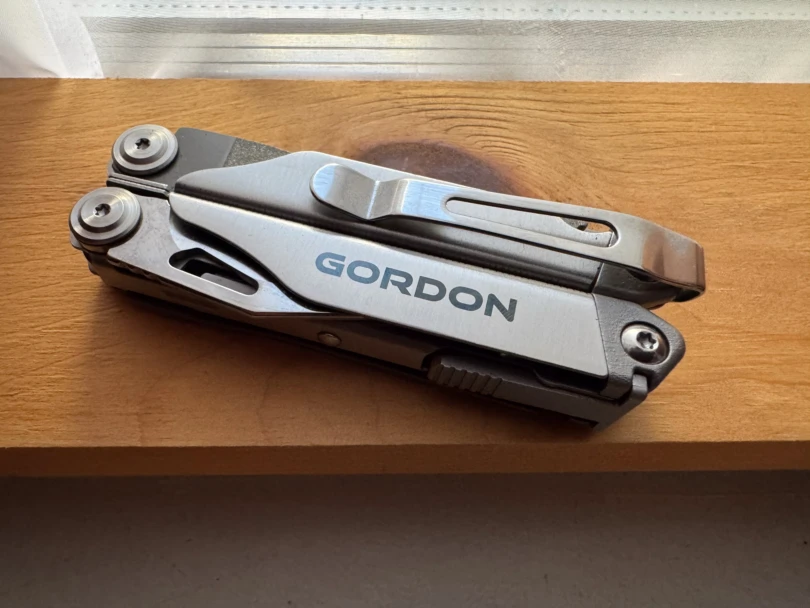
The multitools we’ve chosen range from $38 to $230. Though you can find lower prices shopping around the internet, that’s still a considerable gap caused by a variety of things.
Budget
Both the Victorinox Rambler and Gerber Armbar Drive are plier-less tools that could really be considered knives with accessories. However, by definition, they’re multitools. Because they are simple tools aimed at a smaller number of tasks, there’s no need for them to be expensive to be effective.
The SOG Flash MT is minimal by nature. It’s meant to be an EDC tool with pliers and an abridged assortment of other onboard tools. It actually uses a D2 steel blade, which will outperform the 420HC blades common on more expensive multitools. But its simple form and function factor help keep it under a hundo.
Rounding out the pack is the Leatherman Sidekick, which is actually an anomaly. Leatherman designed this tool to be a value-based multitool, but then they gave it spring-loaded pliers and a full assortment of on-board tools that make it one of the most universal multitools on the list.
In our opinion, it gives the Wave+ a run for its money, it’s just not as ergonomic and lacks a bit driver. However, if you’re looking for a pocket tool that can perform a lot of different tasks without breaking the bank — the Sidekick might be the tool for you.
Mid-Tier
Mid-range multitools are no less effective than higher-cost variants, but they may not be made from premium materials, aren’t as focused on ergonomics, or could even be so successful that they’ve been on the market long enough to keep their overall price down.
That last point is the case with the Leatherman Wave+. That tool has been on the market for two decades and has been lauded for being the bestselling multitool, year after year. When a brand sells that many of one tool, it can keep the cost down or lower it over time.
When it comes to both the Gerber Dual-Force and the Leatherman Signal, both of those tools earned their spot on this list, but they are made from common materials that require you to maintain them a little more closely. Additionally, both are purpose-built tools aimed at a particular set of tasks and, therefore, particular consumers.
The Dual Force is meant for big jobs and is more industrial by nature. The Signal tucks away tools that are less EDC-oriented and more for survivalists and Scouts. Being that they’re not being marketed to be as universal as some of the other multitools on this list could be keeping their prices down.
Premium
In the world of multitools, materials, ease of use, and adaptability are three of the biggest factors that need to be considered when justifying the cost.
When the Leatherman Arc was released in 2023, people were up in arms about the $230 price tag (it’s now $250). However, when you consider that the tool is built on Leatherman’s one-hand-operable Free platform and is the first multitool on the planet to feature a MagnaCut knife blade, the retail price starts to make sense. Additional features like an included but separate set of bits also play into the overall price of this premium tool because they allow the tool to be adapted to myriad scenarios.
In regards to the Gerber Multi-Plier 800 Legend, the same can be said about its $182 price tag. The Legend uses a stainless steel frame and advanced ergonomics for ease of use, and its replaceable RemGrit saw makes it easy to use and adaptable. It is important to note that with this particular multitool, the sheath is made in the United States, which also increases its retail price.
Frequently Asked Questions
Yes, absolutely. Dollar for dollar, you’d be hard-pressed to find a better bang for your buck in the world of everyday gear. While fancy pocket knives are fun, multitools offer a wealth of utility in addition to cutting power.
And if your budget allows, this is one area where you’ll be rewarded by spending a bit more. The gap in quality of materials and construction between a full-size $40 multitool and a $120 Leatherman Wave+ is vast.
That’s a tricky question. As you’ll see in the list above, the Wave+ and Arc hold prominent places on our list. Their selection, quality, and warranty pretty much cement Leatherman as king.
But if you’re looking for something a little off the beaten path, both Gerber and Victorinox make some quality offerings. The Gerber Center-Drive and Victorinox Rambler are great, though they sit at opposite sides of the spectrum.
Our current favorite is the Victorinox Rambler. If you’re after something that pries, pinches, and flies (i.e. no blade), the Leatherman Style PS could also be the way to go. Its bladeless setup makes it acceptable to take through the airport. And another editor proclaims his love for the Gerber Shard, so long as you keep it outside the pocket.
But if you need something with a blade or just have a soft spot for the classics, the Rambler is a great option. It adds some great functionality to the iconic Victorinox keychain tool without much additional price or weight.
As many as you can fit! But seriously, this depends on your use case. We prefer to have a mix. That’s one of the reasons the Wave+ tops our list. Its serrated blade and saw provide a wonderful complement to the plain-edge 420HC found in its main cutting tool.
But if you mostly spend your time slicing through cardboard, the single edges of the Signal may be more your speed. Or are you one of those people who tackle a lot of cordage or rope? In that case, partial serrations such as those on the Wave+ or Center-Drive will definitely come in handy.
The Leatherman Signal nabs the top spot when it comes to “Survival” multitools, due to the inclusion of its many outdoor-friendly features. But if overall weight is a consideration, something like the Victorinox Rambler or perhaps the Armbar would be a nice ounce-saving choice.
This wasn’t a quick recommendation, to be honest. I went around for quite a while on whether or not the Signal was a gimmick or genuinely useful backpacking tool. And frankly, I’ve settled somewhere in the middle. The overall toolkit is wonderful, and at least half of the outdoors-focused tools (emergency whistle, sharpening system) work well, though the ferro rod and hammer are less than ideal.
But I’ve genuinely come around on the Signal, and feel that buyers would be well-served by its charms if the weight of something like the Wave+ is out of the question.
Known by many names, a tactical knife generally refers to a hardworking, do-all blade. Here, we review the best folding and fixed-blade knives for every budget and use.
GearJunkie knows a thing or two about knives. We’ve sorted through dozens of blades to bring you the best survival knives of 2024.
Read the full article here