



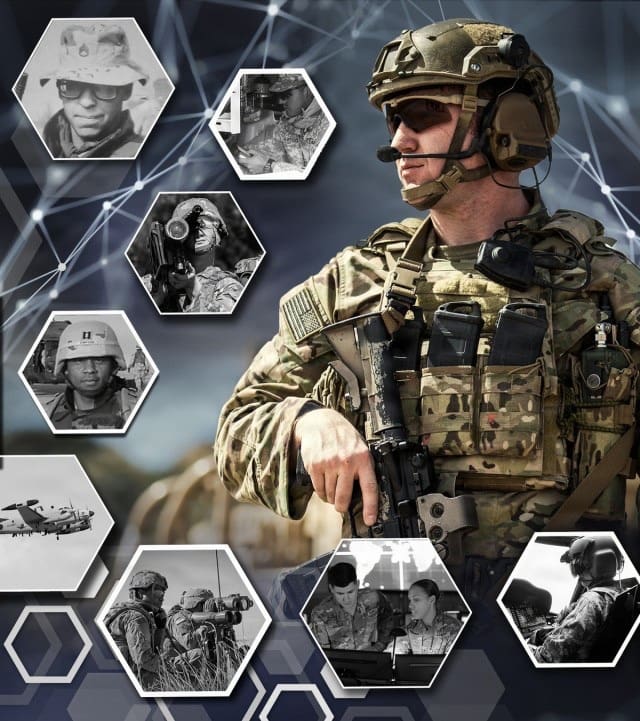
For more than four decades, the U.S. Army Communications-Electronics Command Software Engineering Center has been a cornerstone of the Army’s technological advantage. Now marking a new era of service, the center has embarked on an exciting new chapter, adopting a new name that reflects its ongoing mission and future direction?the Army Software & Innovation Center. Building on its support?center origins, CECOM ASIC now plays a central role in giving American Soldiers a decisive edge on the digital battlefield.
The Early Days: A Foundation in a Hardware World
Throughout its history, the Army’s software offices demonstrated the ability to adapt and evolve in a constantly changing environment. The SEC’s story began in 1983 with the establishment of the Software Development and Support Center at Fort Monmouth, New Jersey, created to centralize software management for the Army’s Battlefield Automated Systems. In these early years, the world ran on hardware. Software, while important, was not yet the pivotal force it is today.
The center’s creation was driven by the need to support massive, hardware-based programs that required extensive, coordinated software engineering. Early large-scale initiatives highlighted growing software demands, particularly the Tactical Fire system for automating truck-based artillery fire and the Joint Tactical Communications program for digitizing tri-service communications. These were followed by programs like?Mobile Subscriber Equipment, a multi-billion-dollar initiative that underscored the critical need for a dedicated organization to manage the complex software lifecycle.
“In the 1990s, software did not drive systems the way it does today,” Jennifer Swanson, who began her career as an SEC intern in 1992 and later served as its Director from 2017 to 2022, said. “It was a hardware-focused environment where development cycles stretched for years. Now, the only way to evolve on the battlefield is through software that can be updated daily, if needed. That is a very different need.”
Despite this, the center, under various names, quickly proved its value. It played a key role in Operations Desert Shield and Desert Storm, earning the prestigious Association of Old Crows award for its electronic warfare support. In 1991, it became the first Army Materiel Command group to earn a Capability Maturity Model Level 3 certification, a significant achievement that underscored its advanced software capabilities at the time.
A Shifting Battlefield: Dominance Through Digital Agility
A major shift in 1996 consolidated Army software operations under CECOM SEC, boosting efficiency and cost-effectiveness. The SEC became a microcosm of CECOM from a software perspective, handling everything from research and development to project management and logistics. “They were responsible for full life-cycle efforts … they did it all, for every system, from a software perspective,” Ed Thomas, former Director from 2000-2007, said. “The SEC was such a unique organization … a rare combination of engineering, development, and operational capabilities, with the ability to go forward. Not many organizations have that lifecycle capability.” Thomas said. This comprehensive role was vital as the SEC led Y2K readiness efforts to ensure the uninterrupted operation of critical Army systems.
In 2008, the SEC relocated its headquarters to Aberdeen Proving Ground, Maryland. The move shifted its mission from Fort Monmouth, New Jersey, due to the Base Realignment and Closure Commission. The SEC provided life-cycle software products and services for a broad range of Army and Joint systems, including avionics, communications, logistics, and intelligence. The center’s work ensures warfighters have the advanced tools needed to succeed in any environment.
“The organization is not stagnant; it actively moves to where the Army is going,” Stephen Kovacs, former SEC Acting Director from 2007 to 2008, said. This ethos guided the SEC through decades of rapid modernization.
Key accomplishments during this era include:
Revolutionized Aircraft and Ground Protection: During the Gulf War, the SEC’s Army Reprogramming Analysis Team completely revamped the process for updating aircraft software that protects against surface-to-air threats. This overhaul reduced the reprogramming turnaround time from several weeks to 24-48 hours, providing a lifesaving, rapid-response capability. This process was later applied to ground-based systems, such as the Counter Remote-Controlled Improvised Explosive Device Electronic Warfare?Duke system.
Delivered Critical Infrared Countermeasures: When Army helicopters were attacked by shoulder-fired missiles in Iraq, the SEC delivered critical software updates to enable infrared countermeasures. These software systems enabled aircraft to automatically deploy evasive countermeasures, directly protecting aircrews in combat.
Received Commendation for Y2K Efforts: The SEC’s work on over 165 battlespace systems was so successful that it earned a Letter of Commendation from the Army Chief Information Officer/G6, Lt. Gen. William Campbell.
Pioneered Acquisition Efficiency: In the early 2000s, the center developed a new acquisition strategy by consolidating over 50 individual software support contracts into two large omnibus contracts called Software Support and Engineering Support. This innovative approach eliminated duplication, reduced contract management overhead, and improved overall support for soldiers.
Logistics Modernization Program:?The center was integral to the initial deployment of LMP, a massive undertaking to modernize the Army’s supply chain. Based on its foundational success and deep expertise, the SEC was then tasked with establishing the Army Shared Services Center, a new organization designed to provide permanent, dedicated software support for the LMP system and its users.
Intelligence & Electronic Warfare Support: During Operations Iraqi Freedom and Enduring Freedom, the SEC executed a mission-critical software overhaul of the Guardrail intelligence software. The system was originally designed for a conventional battlefield and to look across a defined front line from friendly territory. To meet the demands of asymmetric warfare, the center’s engineers re-architected the software, enabling the platform to conduct 360-degree surveillance. This fundamental transformation allowed Guardrail to continue its vital intelligence-gathering mission in a new operational environment without traditional battle lines.
Received the Army Superior Unit Award: The SEC earned the prestigious Army Superior Unit Award for its performance of providing software sustainment and technical support to the Army during the 2007 calendar year.
Centralized and Enhanced Field Support: The SEC fused all its forward-deployed personnel—including field support engineers, help desks, and call centers—into a single organization with a direct reporting line to its headquarters. This restructuring significantly improved operational performance and efficiency, leading to the transfer of the Digital System Engineer mission from Program Executive Office Command, Control, Communications-Tactical’s Technical Support Facility to the SEC.
The Modern Era: Forging the Army’s Tech Company
By the 2010s, the strategic importance of software in military operations had become paramount. The ability to update systems on the fly was essential for battlefield evolution, and cybersecurity had never been more critical. The organization’s focus shifted to modernization to meet these new demands.
Field Support & Continuous Delivery:?The SEC placed Software Readiness Officers with every active Army division and corps. These officers provided on-the-ground technical support. They ensured that software delivered through the modern repository is effective and user-friendly in real-world conditions.
Artificial Intelligence and Machine Learning: The center developed and deployed AI Flow, a secure, Army-owned generative AI platform. It automates and accelerates tasks for users across the Army. Work that once took days or weeks can now be accomplished in minutes.
Joint Service Collaboration: The center’s Army Reprogramming Analysis Team started a working group with the Navy and Air Force. This group shares threat analysis software, reduces redundant work, and enables faster responses to new and evolving enemy capabilities.
Cybersecurity and Zero Trust Architecture:?The SEC took a leading role in policy development for the Army’s Zero Trust cybersecurity framework, a crucial initiative to protect the service’s data and networks from advanced cyber threats by adhering to a “never trust, always verify” principle.
Army Food Management Information System: The SEC modernized the Army’s web-based food service platform, which oversees operations for more than 800 dining facilities globally. The center developed custom Application Programming Interfaces to connect the legacy system to modern platforms, successfully enabling advanced data analytics, automated supply ordering, and convenient CAC meal purchases.
This evolution was put to the ultimate test by global events. When Russia first invaded Ukraine, the organization’s agility and readiness were paramount. The SEC deployed a team to Germany to operationalize all Joint Battle Command Platform systems, ensuring full mission support capability.
The Heart of the Mission: People, Culture, and Leadership
Throughout its history, the SEC’s greatest asset has been its people. The organization has long been recognized for a culture that fosters growth and builds leaders from within.
“It is a family-type organization where everyone tries to look out for each other,” Kovacs said, adding that a guiding principle was always, “You can do no wrong by doing the right thing.”
This environment was crucial for talent development. The Software Engineering Intern Program has been a cornerstone for decades, bringing in new engineers and providing them with hands-on experience and advanced education.
“I am grateful I had the opportunity to grow as a leader at a place like SEC,” Swanson said. “It allowed me to learn. We all make mistakes, but I never felt a mistake was something I was going to get punished for. That helps you become a more confident leader.”
This practice of “leaders building leaders” created a foundation of trust and empowerment that remains central to the organization’s success, a success recognized with the prestigious Army Superior Unit Award.
The Future is Now
Today, as CECOM ASIC, the organization is the Army’s premier tech hub. Software has never been more important to the Army and CECOM ASIC is its tech company. There are many skilled professionals at the forefront of delivering cutting-edge solutions in AI, cybersecurity, and data analytics.
“We are incredibly proud of our history, because those decades of experience serve as the launchpad for what comes next,”?Garrett Shoemaker, Director of CECOM ASIC, said.?”Software is the foundation of the modern battlefield, and CECOM ASIC is drawing on that legacy to lead this future transformation for the Army as a whole. We are paving the way forward, ensuring our Soldiers have the agile, innovative digital capabilities they need to dominate tomorrow’s fight.”
From its origins as a small support directorate to its current role as a center of innovation, CECOM ASIC’s 40-year journey is a story of evolution. Its unwavering dedication to the mission and its ability to adapt and lead in a constantly changing technological landscape will continue to shape the future of warfare.
By SCOTT HOCHENBERG
Both comments and pings are currently closed.
Read the full article here