





If you’ve spent any time shooting suppressed, you’ve probably noticed something odd about that first shot after threading on your can.
Instead of the consistent muffled thump you expect from subsequent rounds, the initial shot often carries a sharper, louder crack. This phenomenon has a name: first round pop, commonly abbreviated as FRP in suppressor circles.
Understanding the Chemistry Behind First Round Pop
First-round pop stems from basic chemistry and physics interacting within your suppressor. When you attach a can to your muzzle, the internal volume fills with ambient air containing approximately 21% oxygen. That first shot sends superheated propellant gases racing into the suppressor at extreme temperatures often exceeding 2,000 degrees Fahrenheit. These gases mix with the oxygen-rich air already present, creating conditions for secondary combustion.
Think of it like fanning a fire. The additional oxygen makes flames burn hotter and more extensively. Within the suppressor, a similar reaction occurs when the combustion gases contact the trapped oxygen. The result is a brief but noticeable secondary ignition that produces extra noise beyond normal suppression. After this initial shot, the oxygen is consumed and replaced by inert combustion gases.
Subsequent shots cycle through an environment already depleted of oxygen, producing the quieter report you expect from suppressed shooting.
Temperature and Pressure Dynamics
The intensity of the first-round pop depends heavily on the dynamics of temperature and pressure. High-pressure cartridges such as 5.56 NATO and 6.5 Creedmoor typically produce more pronounced FRP than lower-pressure rounds. The violent expansion of these high-pressure gases creates ideal conditions for rapid oxygen combustion.
Conversely, subsonic ammunition produces a less pronounced first-round pop. Rounds such as the subsonic 300 Blackout, .22 LR, or 9mm operate at lower pressures and temperatures, reducing the likelihood of aggressive secondary combustion. The gases expand more gradually, reducing the sudden, violent reaction that characterizes FRP in rifle cartridges. That said, I have still observed FRP at times with subsonic 300 Blackout in some suppressors. When it occurs, it’s still noticeable compared with how quiet the suppressed subsonic 300 Blackout is.
Environmental Factors That Affect First Round Pop
Shooting environments influence FRP intensity in ways that may not be expected. Humidity levels affect the phenomenon, with higher humidity actually reducing first-round pop severity. Water vapor in humid air displaces oxygen, reducing the fuel available for secondary combustion.
Temperature also impacts FRP through air density. Colder temperatures produce denser air with more oxygen molecules per unit volume inside the suppressor. This creates a slightly more pronounced first-round pop compared to shooting in hot weather when air density decreases.
Altitude plays a similar role. Higher elevations have less dense air and lower partial oxygen pressure, potentially reducing FRP. However, the article sources I referenced contained an error on this point. Higher altitudes should theoretically reduce FRP due to lower oxygen concentrations, not increase it as one source claimed.
How Baffle Design Influences First Round Pop
Suppressor architecture plays an important role in FRP severity. The internal design determines how gases flow, mix, and interact with trapped oxygen. Several design elements directly impact first-round pop intensity.
Larger internal-volume suppressors typically exhibit more pronounced FRP because they contain more oxygen before firing. More oxygen means more fuel for secondary combustion. Manufacturers must balance internal volume for sound suppression with the minimization of trapped oxygen to reduce FRP.
Baffle stack configuration also affects gas flow patterns and mixing. Traditional stacked baffles with expansion chambers can trap oxygen in pockets throughout the suppressor. When the first shot fires, gases strike these pockets sequentially, producing multiple small combustion events that compound the overall FRP effect.
Suppressors Designed to Minimize First Round Pop
Several suppressors on the market specifically address first-round pop through innovative baffle design and internal geometry. While no suppressor completely eliminates FRP across all calibers and conditions, these cans represent the current state of the art for shooters who prioritize minimizing that initial sharp report.
The Dead Air Mask stands out in the rimfire category for its minimal first-round pop. Dead Air engineered the baffle stack to optimize gas flow patterns and minimize oxygen pockets. Shooters consistently report that the Mask produces one of the quietest initial shots in the rimfire suppressor market.
Thunder Beast’s Dominus-SR suppressor leverages proprietary baffle geometry to combat FRP in rifle calibers. The design creates specific gas-flow patterns that reduce oxygen combustion during the critical first shot. Thunder Beast’s reputation for engineering excellence is evident in its approach to this challenging problem.
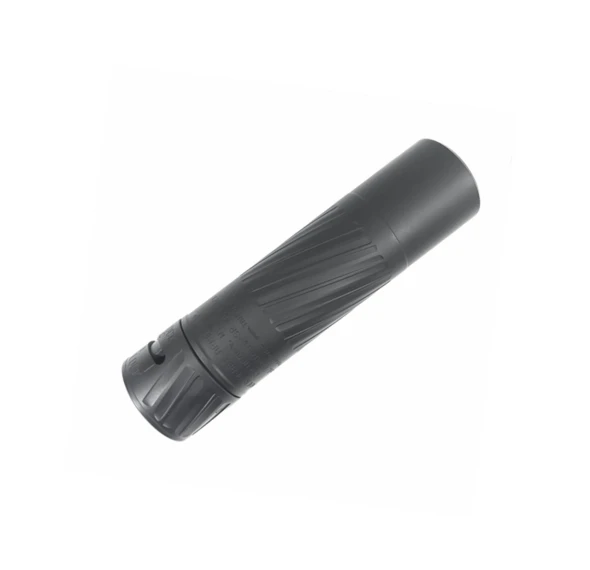
The CGS MOD9X pistol suppressor (rated for 9mm and other calibers below 850 ft-lbs of energy) is noted for its high performance and minimal first-round pop, making it a strong choice for those prioritizing quiet shooting.
These suppressors share common design principles: an optimized internal volume, strategically placed baffles to minimize oxygen pockets, and gas-flow patterns that reduce combustion intensity. Flow-through suppressor designs also show promise for reducing first-round pop through fundamentally different gas management approaches. These suppressors redirect gases differently from traditional baffle stacks, minimizing oxygen interaction.
The “Wet” Shooting Method
Shooters have developed practical techniques to minimize first round pop beyond suppressor selection. The most common approach involves shooting the suppressor “wet” by adding a small amount of liquid before firing.
This method uses water, wire-pulling gel, or similar substances placed inside the suppressor before shooting. Typically, just a bottle cap worth of liquid suffices. When that first shot fires, the extreme heat instantly vaporizes the liquid, creating steam. This steam expansion helps counteract the oxygen combustion, significantly reducing or eliminating first round pop.
NOTE: Only low-pressure rounds, such as pistol caliber silencers, should be shot wet. Never shoot rifle suppressors wet, particularly with high-pressure centerfire ammunition. The pressure and temperature extremes could cause dangerous conditions for the shooter or damage to the suppressor. Always check your suppressor manufacturer’s guidelines before attempting wet shooting.
Setting Realistic Expectations
Understanding first-round pop helps set appropriate expectations for suppressed shooting. The phenomenon represents a fundamental physical limitation of current suppressor technology rather than a defect.
Every suppressor experiences some degree of FRP because every suppressor contains oxygen before that first shot. Current suppressors that minimize FRP do so through clever engineering that reduces but doesn’t completely eliminate the effect.
It’s also worth noting that first-round pop is not that much louder than a regular suppressed shot; you’ll hear a small difference, but it is not significant enough to cause hearing damage like an unsuppressed gunshot in most instances.
Focus suppressor selection on overall performance characteristics and needs rather than obsessing over first-round pop alone. Overall sound suppression, back pressure, mounting system, durability, length, and weight are all important factors to consider.
Read the full article here