




NEWYou can now listen to Fox News articles!
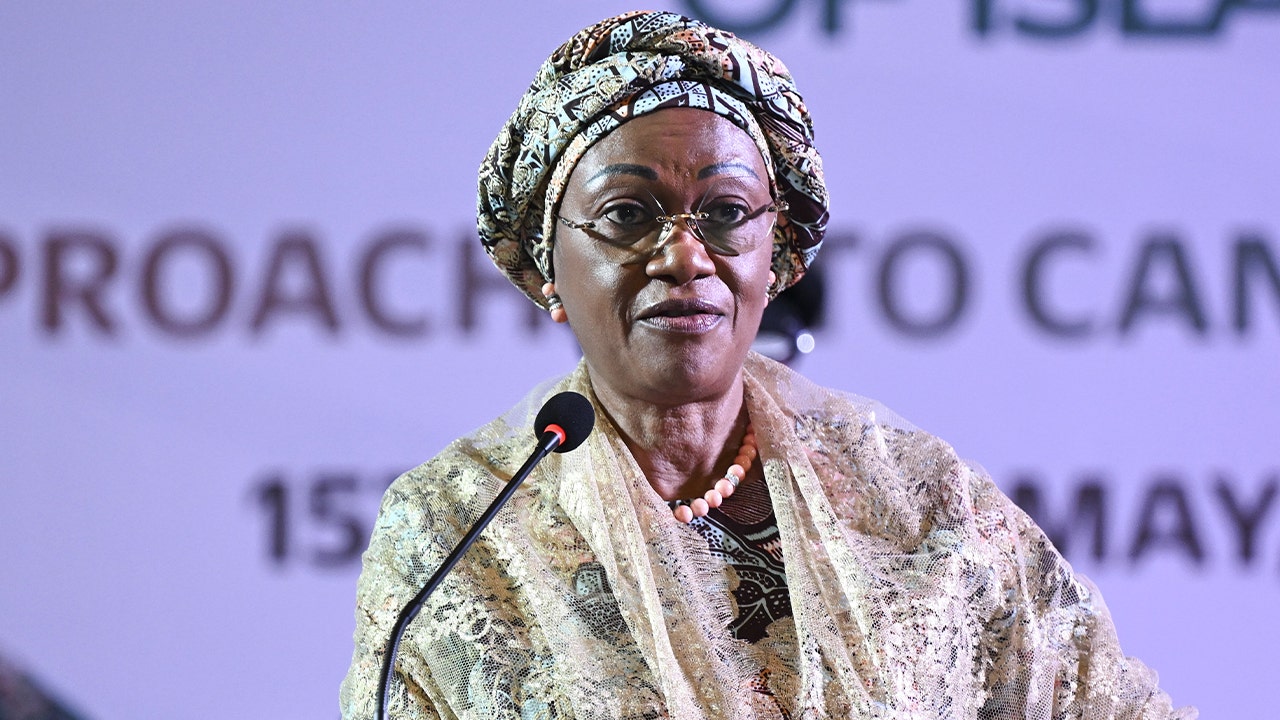
Nigeria and some U.S. lawmakers have not always seen eye to eye on terrorism and the violence affecting Christian communities in Africa’s largest nation. This week, First Lady Oluremi Tinubu arrived in Washington to clear the air.
America’s Christmas Day strike on Islamist militants in northwest Nigeria was a “blessing,” Tinubu said, signaling that her husband’s government welcomes further U.S. involvement as it confronts insurgents and criminal gangs.
“The intervention of the U.S. was quite a welcome development,” Tinubu told Fox News Digital during a week-long visit to Washington, D.C.
“Nigeria is looking forward to collaboration” with the U.S. on security issues. “We are expecting that there will be more.”
ANOTHER CHRISTIAN COMMUNITY AT RISK IN AFRICA AS EXTREMISTS AND WAR TAKE THEIR TOLL
The fight against Islamist militants — whose attacks have included the kidnapping and killing of Christians and the desecration of churches — has become a focal point in U.S. political debate, drawing attention from President Donald Trump and some of his most vocal supporters.
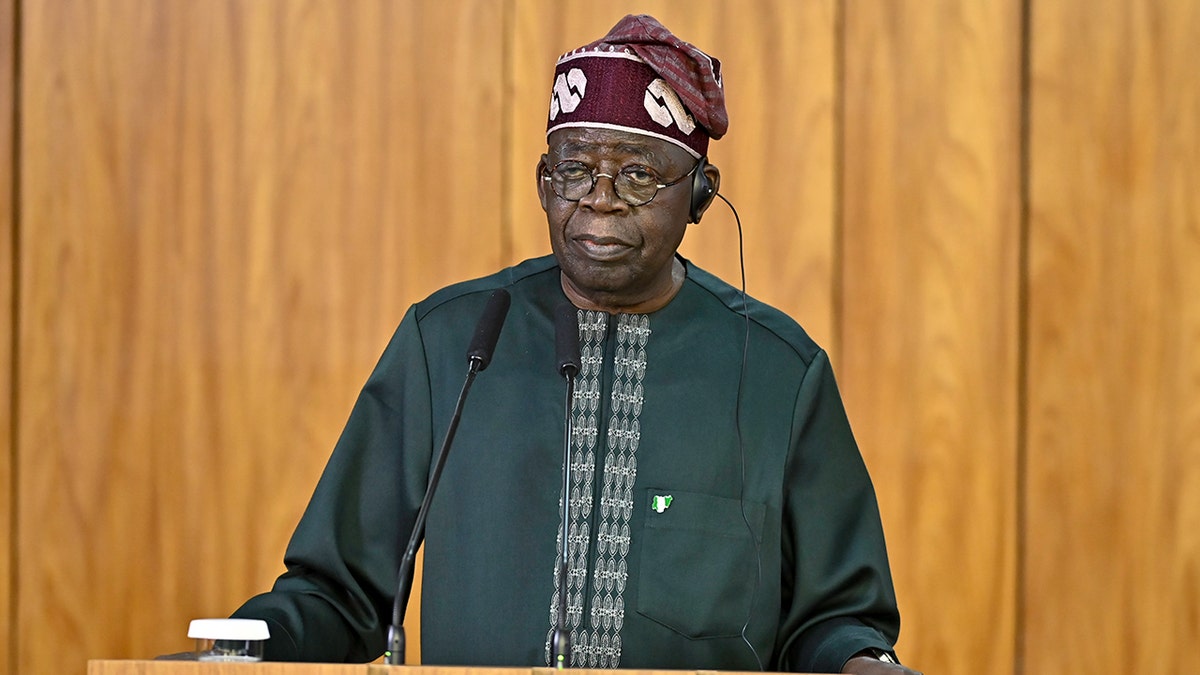
Trump designated Nigeria a “country of particular concern” over violations of religious freedom. Tinubu and her husband, President Bola Ahmed Tinubu, have pushed back on that characterization, arguing that the violence plaguing the country is real and severe, but not limited to any one faith.
Gunmen believed to be Islamic extremists killed at least 162 people in Nigeria’s Kwara state earlier this year, torching homes and looting shops in Muslim-majority villages where residents were targeted for refusing extremist ideology — an attack that underscored how the violence now cuts across regions and religious lines.
TRUMP TARGETS ISIS IN NIGERIA AMID WARNINGS SAHEL REGION IS BECOMING ‘EPICENTER OF TERRORISM’
“Terrorist groups hide in the forest, and also bandits and other people are kidnapping for ransom,” Tinubu said.
“We are concerned about our people’s safety,” she added, pointing to steps taken by the Nigerian government, including a nationwide security emergency, plans to recruit 50,000 new police officers and the redeployment of more than 11,000 officers from VIP protection duties to conflict-prone areas.
Despite the negative attention, the U.S.’s focus on Christian killings kicked off conversations between Nigeria and the U.S., according to Tinubu.
“We have that attention. We have the conversation going. And we are expecting that there will be more. You know, it’s going to yield better fruit for us, and both for us and also America.”
During her Washington visit, Tinubu met with senior administration officials, where she said she sought to explain the realities of Nigeria’s security crisis. “We live in Nigeria. We know the situation on the ground,” she said.
A political figure in her own right, Tinubu served as a senator until 2023. She is also part of an interfaith marriage at a time of deep religious tension in Nigeria: Tinubu is a Christian and an ordained pastor at the Redeemed Christian Church of God, one of the country’s largest megachurches, while her husband is Muslim.
NIGERIA NAMED EPICENTER OF GLOBAL KILLINGS OF CHRISTIANS OVER FAITH IN 2025, REPORT SAYS
Tinubu hosts a Christian podcast and carries out much of her outreach through the Renewed Hope Initiative, a nonprofit aligned with her husband’s agenda to support vulnerable communities. But this week, her presence in Washington places a prominent Christian voice at the center of Nigeria’s response to U.S. scrutiny over religious violence.
With a population of more than 230 million, Nigeria’s bustling and sometimes turbulent cities and villages are home to people of strikingly diverse backgrounds. The country’s more than 500 languages and mix of Islam, Christianity and traditional indigenous faiths have long been marred by tension, with Muslims dominating the northern regions and Christians concentrated in the south.
Despite vast oil and mineral wealth, decades of corruption and mismanagement have left much of the nation impoverished. Tinubu, whose husband took office in 2023, said his government inherited those missteps and is now trying to dig out of them.
NIGERIAN CHILDREN AS YOUNG AS 5 AMONG HUNDREDS KIDNAPPED, NUN SAYS
Nigeria’s growing cache of lithium, cobalt, nickel and other rare minerals has drawn quiet U.S. attention as Washington looks to counter China’s dominance in Africa’s critical-minerals market. The Commerce Department and U.S. International Development Finance Corp. have eyed investment opportunities in Nigeria’s nascent lithium industry, but persistent insecurity in mining regions threatens Western access and future development.

Addressing security concerns, Tinubu said, goes hand in hand with attracting foreign investment. She linked her trip not only to counterterrorism cooperation but also to reassuring investors that Nigeria is open for business.
“We’re doing all we can to make sure that when investors come, they can feel comfortable and their investment can yield,” she said.
Violence tied to Islamist insurgencies and criminal militias has killed tens of thousands of Nigerians over the past decade, destabilizing large swaths of the country. Groups such as Boko Haram and Islamic State West Africa Province, alongside bandit networks that often overlap with extremist elements, have carried out mass killings, kidnappings and raids.
CLICK HERE TO DOWNLOAD THE FOX NEWS APP
Christian advocacy organizations argue that Christians have borne a disproportionate share of the bloodshed, especially in rural communities where attacks on churches and clergy have been frequent. The International Society for Civil Liberties and Rule of Law estimates that more than 50,000 Christians have been killed and tens of thousands abducted since 2009 — figures that are difficult to independently verify but widely cited by U.S. religious freedom advocates pressing Washington to take a harder line.
Tinubu’s government has paired its security push with painful economic reforms, including the removal of fuel subsidies and efforts to stabilize the currency, arguing that restoring growth and attracting investment will ultimately reduce the conditions that fuel violence.
Read the full article here