





Hot days call for cool, comfortable feet, whether on or off the trail. Just like any other footwear, a reliable pair of sandals can ensure a seamless transition through your day, no matter the summer activity. We’ve been testing the best hiking sandals for women for years now, and we’ve learned a thing or two along the way.
Led by our sandal expert Rebecca Ross, our dedicated team of athletes has spent months in challenging craggy terrain, over river crossings, on beaches, and during everyday activities to determine the best pairs. Based on our personal experiences, we focused on maximum comfort, traction, and durability to key in on the best hiking sandals to free your feet.
Additional consideration was also given to the finer details, such as support, water compatibility, adjustments, style, and weight. After compiling our expertise in footwear, we created a list of the best sandals for multiple occasions — whether that’s a solid all-arounder like the Chaco Z/Clouds or a budget-friendly hiker like the Teva Original Universals.
Editor’s Note: We updated our Women’s Hiking Sandals guide on January 5, 2026 to add the Teva Hydratrek Sandal, our new choice in hiking sandals for river use. To see other water-ready footwear we’ve tested and recommend, check out our Best Water Shoes for Women Buyer’s Guide.
The Best Hiking Sandals for Women of 2026
Best Overall Hiking Sandal for Women
9.0/10 Rating
Best Budget Hiking Sandal for Women
6.3/10 Rating
Best High-Support Hiking Sandal for Women
7.9/10 Rating
Best All-Terrain Hiking Sandal for Women
8.2/10 Rating
Best Camping Sandal for Women
7.5/10 Rating
Best Sandal for Maximum Foot Protection for Women
7.9/10 Rating
Best River Hiking Sandal
7.8/10 Rating
See more picks
-
Great no-slip traction sole -
Amazing comfort -
Multidirectional adjustment -
Fun strap designs
-
A little heavy at over 1 pound -
Webbing slightly abrasive before wear-in -
No half sizes available
-
Affordable price -
Lightweight -
Comfortable -
Fun color palette -
Made for water
-
Doesn’t feel incredibly durable -
No half sizes
-
Multiple adjustment points -
Excellent support -
Great traction -
Contoured footbed -
Impressive comfort
-
Slightly clunky -
Not designed for extended water usage
-
Impressive traction from the Vibram outsole -
Good amount of cushioning with thicker ‘C’ sole -
Three adjustment points -
Soles can be replaced
-
Y-strap design takes some getting used to, won’t be for everyone -
On the pricier side
-
Highly durable -
High-quality -
Comes in half sizes and different widths -
Comfortable and form-fitting right out of the gate
-
Price -
Require maintenance -
Not vegan friendly
-
Excellent wet-terrain traction -
Extra padding added under straps provides good comfort -
Webbing made from recycled polyester -
Footbed is heavily textured for good grip
-
Bit heavier than average hiking sandals -
Better performance in water, and gives up some on long hikes
Other Hiking Sandals to Romp Around In
The seven hiking sandals above are the ones we think anyone would enjoy hiking in, but the lineup doesn’t stop there. With different styles, traction, and fit to consider, there are shelves of other sandals to consider for your next hike. The five below are excellent alternatives to consider.
-
Great traction -
Stylish and cute design -
Lightweight -
Available in multiple colroways and designs
-
Toe loops aren’t for everyone, and no heel adjustment -
Design isn’t the most secure -
No half sizes
-
Barely there feel -
Surprisingly sturdy and capable -
Unisex sizing -
Rugged Vibram outsole and deep lugs
-
On the expensive side -
Run a bit small -
No half sizes available
-
Barefoot design -
Comfortable heel strap -
Great no-slip traction sole -
Extremely durable
-
Expensive -
Not much variety in styles -
Slippery when wet
-
No break-in period required -
Comfortable and cushioned -
Lightweight -
Versatile use cases -
Eye-catching design -
Makes use of recycled materials
-
Not enough responsiveness -
Cushioning and foam can feel unsteady on trail -
Not as technical as traditional trail running shoes -
Unique design isn’t for everyone
-
Barely there feel -
Eco friendly -
Ultra lightweight -
Comfortable
-
Not ideal for uneven, bumpy terrain -
Not as durable as other sandals -
No half sizes
Women’s Hiking Sandals Comparison Chart
| Hiking Sandals | Price | Weight (per pair) | Adjustment Zones | Closure | Outsole |
|---|---|---|---|---|---|
| Chaco Z/Cloud | $105 | 1 lb., 3.4 oz. | One | Strap (buckle) | 1″ thick ChacoGrip rubber with 3 mm lugs |
| Teva Original Universal | $60 | 11 oz. | Two | Strap (Velcro) | 1″ thick Teva rubber outsole |
| Teva Tirra | $90 | 1 lb., 2 oz. | Three | Strap (Velcro) | 1″ thick Teva Spider rubber |
| Bedrock Cairn Evo C | $135 | 1 lb., 3.2 oz. | Three | Strap (buckle) | 3/4″ thick Vibram XS Trek EVO with 3 mm lugs |
| Birkenstock Arizona | $140 | 14.2 oz. | Two | Strap (buckle) | 3/4″ thick EVA with 3 mm lugs |
| Keen Women’s Whisper | $115 | 1 lb., 1 oz. | One | Bungee lace | 1″ thick KEEN.Fusion rubber |
| Teva Hydratrek Sandal | $85 | 1 lb., 0.7 oz. | Three | Strap (Velcro) | Teva Spider rubber |
| Chaco Bodhi | $100 | 14.6 oz. | One | Strap (buckle) | 3/4″ thick ChacoGrip rubber with 3 mm lugs |
| Bedrock Cairn Evo | $115 | 1 lb. | Two | Strap (buckle/Velcro) | 1/2″ thick XS Trek EVO Vibram sole with 3 mm lugs |
| Luna Middle Bear | $120 | 1 lb., 0.4 oz. | One | Strap (buckle) | Vibram Megagrip Outsole with 4.5 mm lugs |
| Teva Aventrail | $145 | 1 lb. 3.8 oz. | Three | Strap (Velcro) | 1″ thick Teva Spider rubber |
| Xero Z-Trail EV | $80 | 8.6 oz. | Two | Strap (buckle/Velcro) | 1/2″ thick FeelLite with rubber grip pods and 3 mm lugs |
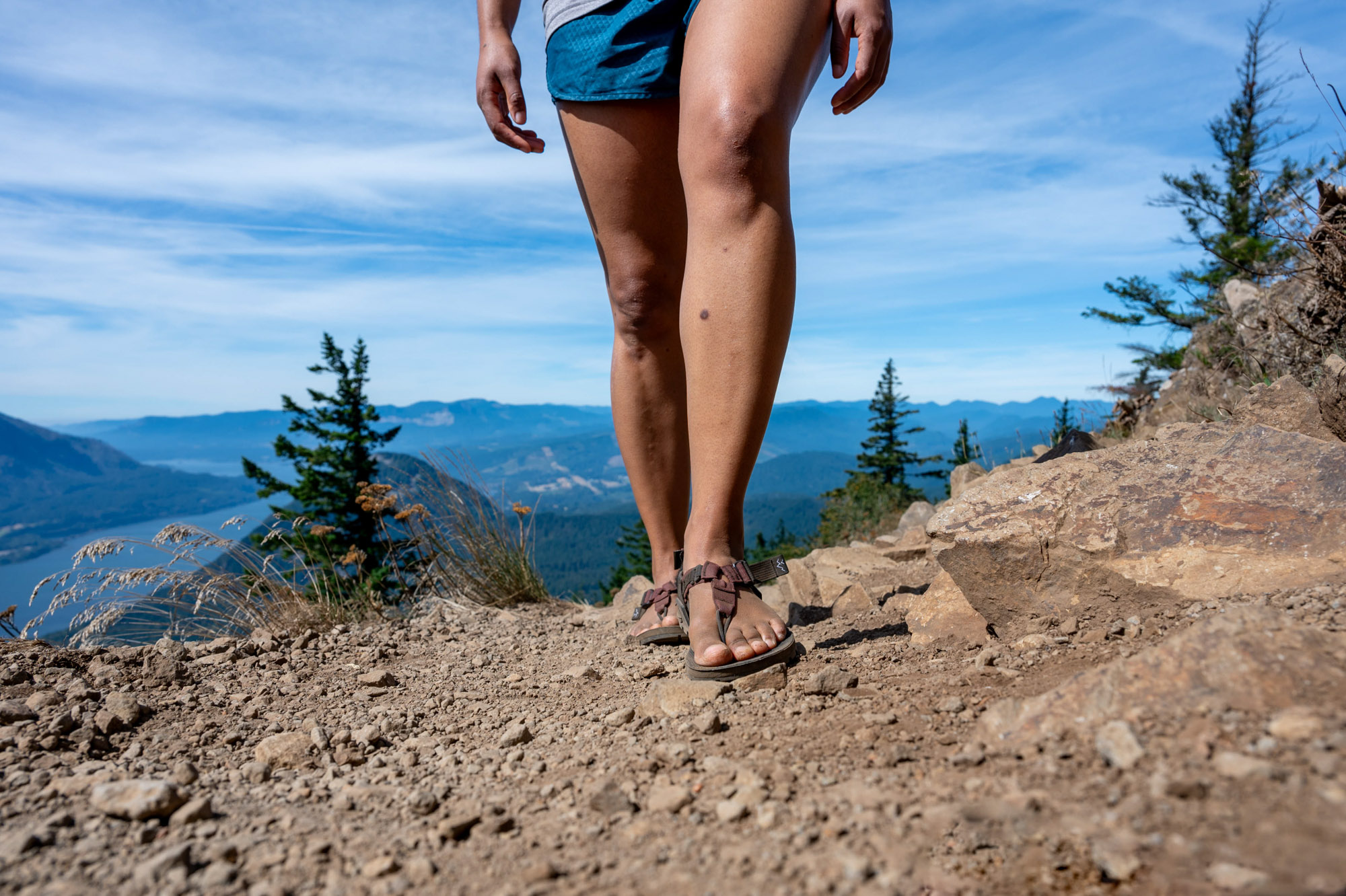
How We Tested the Best Women’s Hiking Sandals
For our deep dive into women’s hiking sandals in 2026, we’ve narrowed down a list of the best from across the spectrum — from casual kicks that can be worn on beachy adventure days or mellow hikes to adaptable and comfy trail hounds that can put up with a few more miles. We then dove straight in, slinging these sandals across the PNW and testing them against one another.
Our Testing Process and Testing Grounds
- Field testing: While testing these recommended sandals on ourselves, we ensured that we examined comfort, grip, stability, and durability, and developed a comprehensive testing regimen to ensure reliable and consistent results. Each pair was worn on hikes of at least 10 miles, including both well-maintained trails and off-trail scrambles. This approach allowed us to assess their performance individually and in comparison to one another.
- Wet traction and control: When evaluating the sandals’ security, we tested them on varied terrain, checking for foot slippage, strap security, and how well our feet stayed in the footbed in different conditions. Grip was put to the test on rocky trails, sandy beaches, and challenging routes. To quantify traction, we tackled a 45-degree slope and noted where slipping happened. For wet conditions, each sandal was subjected to various water activities, including river crossings, stream traverses, beach activities, and kayaking.
- Material durability monitoring: We tested the durability of the sandals by subjecting them to challenging conditions, including boulder fields, uneven terrain, and bushwhacking. The straps and arch support were closely evaluated for wear and tear, with attention to how well the sandals held up in wet and sweaty environments. Each pair was pulled, stretched, and put through rough handling to see how they fared. We also examined the outsoles after several miles of use, noting any signs of damage or degradation.
- Our hiking sandal rating system:
- Comfort: 30% weighted. After both our field testing and fitment tests on a few different hikers, we rate these sandals based on comfort both on and off the trail, as well as how nicely they play with wearing socks (a low-key power move for hiking sandals).
- Traction: 30% weighted. Our field testing is the most important value when rating for traction, but we also factor in a few bench tests on a 45-degree slope to compare outsole rubbers and traction patterns.
- Style: 20% weighted. While style is subjective, we consulted the trusted fashionistas on the GJ staff when rating these sandals and scored them based on how well they can be dressed up for an after-hike occasion.
- Adjustability: 20% weighted. Finally, we rate these sandals based on the adjustability of the strap systems. This and traction are the most important aspects that dictate how well a sandal hikes. Generally, the more adjustable (three-buckle systems versus bungee lacing), the better the performance and fit.
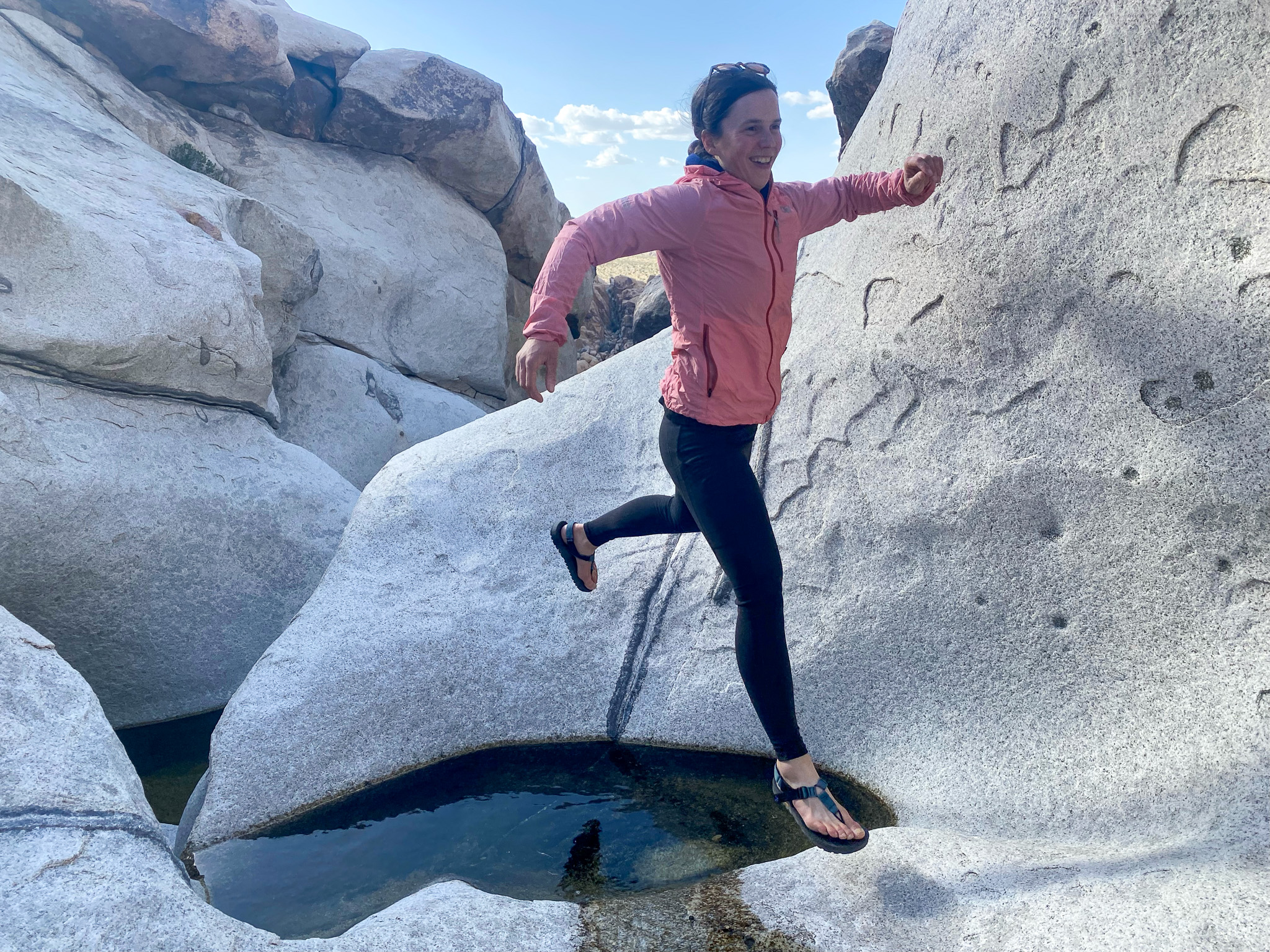
Our Expert Testers
Our GearJunkie hiking sandal testing team is a stacked roster and includes Rebecca Ross, a longstanding resident of the Pacific Northwest who has the Cascades, Columbia Gorge, and the Pacific Coast at her disposal. She put these sandals to the test while using them for water sports, steep hiking approaches in the North and Central Cascades, and even the tough approach to Mt. Baker.
Tester Maddie Downie also calls the Pacific Northwest home, and though her hiking days started in a much drier Colorado, she’s adapted quickly to long treks along the west coasts and tricky ranges. She tested these sandals on a variety of terrain including sandy beaches, walking trails, and a rather intense and especially wet bushwhack through the Olympic forest. She even kicked things up a notch and tested them on a few trail runs.

Buyer’s Guide: How to Choose the Best Women’s Hiking Sandal
No two hiking sandals are identical, and we wouldn’t want them to be — which means selecting the ideal sandal can be a challenging endeavor. Each one of us has a unique foot shape and needs, whether we’re hiking, running errands, or just relaxing.
And that’s why below we’ve compiled a list of helpful features that will assist you in finding the right sandal based on your preferences. We’ll note that hiking sandals today are good enough to hike all day in — some folks even complete thru-hikes in them — but they also do just as well as after-hike cool-down wear. If you need something for an entire backpacking trip, consider our Best Hiking Boots gear guide. If something between the two is more your speed, our Best Trail Runners selections fit the bill, and for pure water use? Our Best Water Shoes selection should get you on a steady footing.
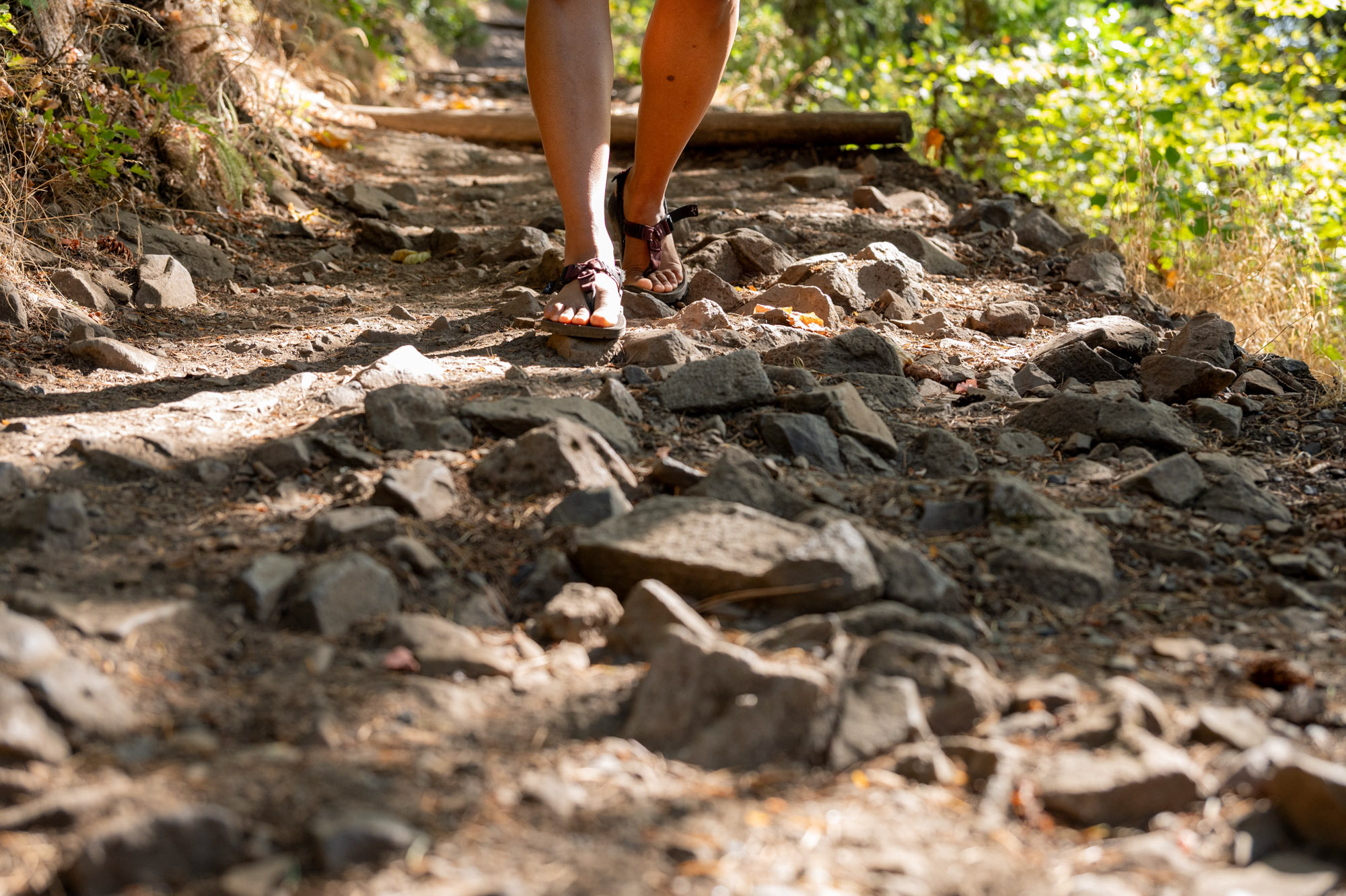
Sandal Types
Adventure Sandals: Adventure sandals are designed for all-day comfort, toughness, and excellent traction to handle different kinds of trails. These sandals will often be a bit heavier, like the Teva Tirra or Bedrock Cairn Evo C, because they’ll have thicker outsoles to shield your feet from the uneven, rocky terrain and prevent bruising and fatigue.
Additionally, these trail-ready sandals will sport multiple adjustment points to make sure they stay on your feet securely and comfortably without friction. Although many of our sandals are geared toward hiking, we often wear them just about everywhere.
Watersport Sandals: Water-ready sandals are specially made to handle both water and trails while maintaining their structural integrity — with no shrinking or wearing out faster than anticipated. They will also incorporate the grippiest outsoles with water-friendly rubbers that won’t give up the ghost when walking through water.
Many sandals can handle the water, but if you want a sandal that will see its fair share of water and dry land, then we recommend a hybrid sandal like the Bedrock Cairn Evo, or ones that specifically state they are water-friendly, like the Teva Hydratrek Sandal.
Closure Configuration
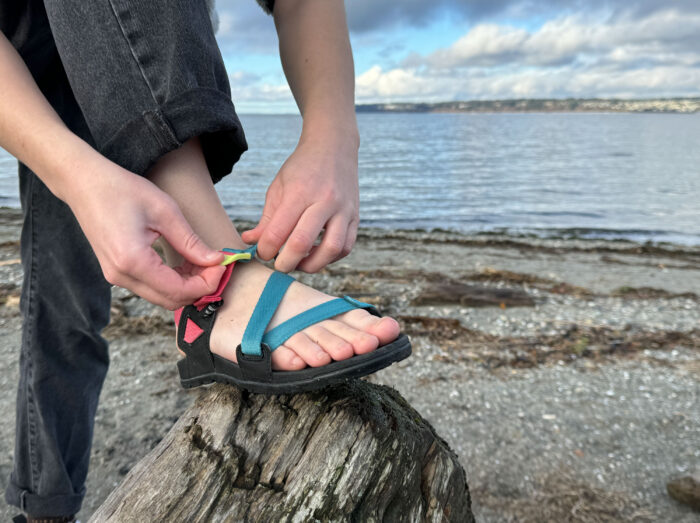
Slides
Free your feet! The Birkenstock Arizona sandals are all about simplicity and comfort. Featuring a classic slide-in design with two adjustable straps, they eliminate the need for complicated closures. This minimalist approach ensures a secure fit while offering effortless convenience, so you can easily prepare for your next adventure.
Straps (Buckle and Velcro)
This is the most common closure configuration on our list. Straps can be closed with either buckles, like the Chaco Women’s Z/Cloud, Velcro, like the Teva Original Universal, or utilize both like the Xero Z-Trail EV.
The best closure system to use is largely a question of preference. Of the two strap options, we prefer buckles since they don’t fray or collect debris, which could eventually lessen their effectiveness over time. Velcro, though, is usually a little quicker to put on.
Bungee Closures
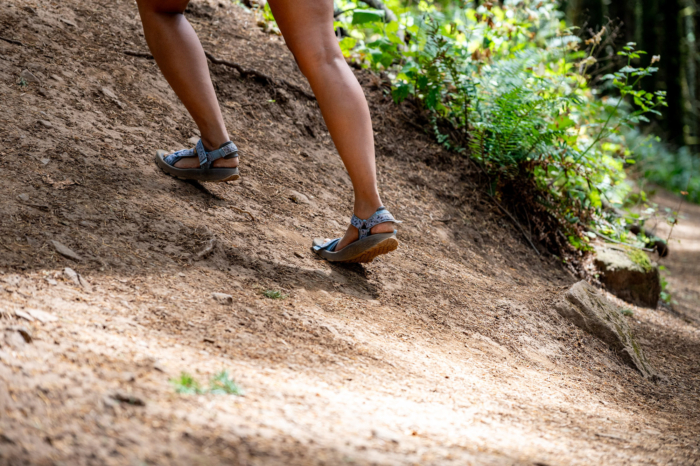
Strap systems involving elastic cord like those found on the Keen Women’s Whisper are less common, but are remarkably efficient at anchoring and locking your feet into place without coming undone. Sandals with these types of closure systems are often excellent for water use, as the sandals tend to move with you and won’t degrade when in contact with water.
T-Style Straps
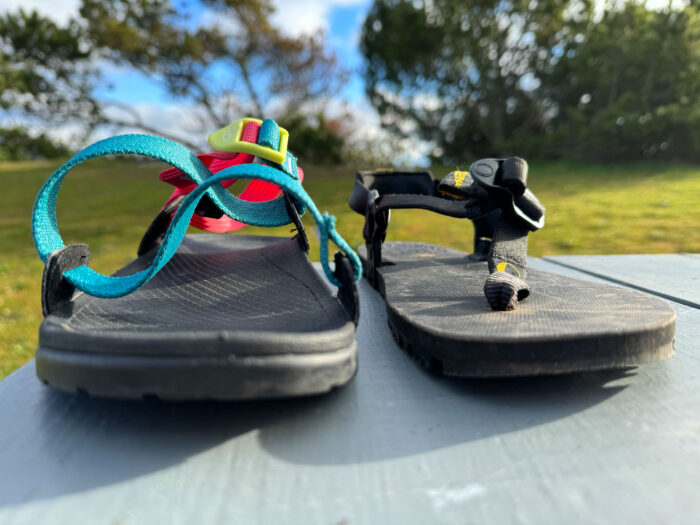
Passing between your first and second toes, T-style straps are a bit unique and provide a stripped-down feeling that some will love, and some not so much. This style of sandal gives your feet the most wiggle room, but the drawback is that it has less support to keep your feet from slipping off the footbed.
Look to the sandal offerings from Bedrock to provide this type of hang-ten foot freedom, which incorporates the T-style strap as well as a multiple-point adjustment system to ensure that the straps lie on your foot in the most comfortable way possible.

Floating Straps
These designs are unquestionably noteworthy because, even though both the Chaco Bodhi and the Chaco Women’s Z/Cloud make use of the buckle, they incorporate a unique single sole and single adjustable strap design — a feature our tester raved about while testing them on Mt. Baker.
With this style, you can adjust the webbing in several places for a custom, secure fit. The drawback is that it takes some getting used to, but once you do, you’ll be able to adjust when needed.
Fit & Sizing
Like most footwear, you want a secure fit for ultimate comfort and stability. Several sandals on our list don’t come in half sizes, which is why we advise trying them on in person to know which size is the best fit, especially while moving around. When worst comes to worst, we almost always advise sizing up a bit. Your exposed toes will thank you.
Another thing to remember while trying on sandals is to identify any hotspots or pressure areas. In some cases, straps and outsoles are not designed for everyone’s toes, leaving some people’s toes to pinch while others hang over the edges. You’ll want to ensure your entire foot is well covered and secured without any discomfort.

Sandal adjustments are another feature to consider. For the most optimal fit, you’ll want something that has multiple adjustment zones so that you can get a secure fit over the entire foot.
Lastly, arch support can play another role. While some people prefer high-support shoes with high arch profiles, others prefer a zero-drop shoe with little to no support. Most Chaco shoes have high arch supports, such as the Chaco Z/Clouds. Some zero-drop options are the Bedrock Cairn or the Luna Middle Bears. It’s recommended that you try on a few styles before committing, and know that if your foot is used to a certain style, it might take extra time to break in a shoe with the opposite style.
Weight & Packability

When it comes to weight, sandals can vary depending on their purpose. Hiking sandals tend to be heavier on the scale because they are designed for durability, have thicker soles, and may include arch support, deep lugs, and more coverage across your feet like the Teva Tirra (18 ounces), which is made for all-day wear and will provide protection for your feet across various terrains. They also tend to last longer.
On the lighter end of the spectrum, sandals like the Xero Z-Trail EV weigh a scant 8.6 ounces and are great for watersports, blazing around town, or bringing them along to base camp to give your feet a reprieve from your heavy mountaineering or hiking boots. Although keep in mind that the lighter and more bare-bones the sandals are, the less durable they will be for long distances, rough terrain, or heavy wear.
In general, we tend to aim for the middle-of-the-road option, like the Chaco Bodhi (14.6 ounces) or Teva Original Universal (11 ounces), which aren’t the heaviest on our list nor the lightest, but their packability and functionality are something we put high praise on.
Sandal Outsoles

A sandal’s outsole is the rubber that protects your feet from the abrasive, hot terrain. And when considering which outsole is best for you, it depends on a few different factors.
Decide what kind of activity you want to do first. For an active hiking sandal, you should consider deep lugs for traction over varied terrain. The Luna Middle Bears, for instance, have incredibly deep lugs that help them grip a variety of terrains. For even better traction in any direction, we suggest multidirectional lugs.
Another thing you’ll want to consider is the thickness of the outsole for durability. The harder and more inflexible the rubber composite is, the longer your sandals will last. For example, we love the Xero Z-Trail EV sandals because of their comfort and minimal feel when we want our feet unencumbered, but they wouldn’t have the same lasting power as the KEEN Women’s Whisper or even the Birkenstock Arizonas would. The good news is that most sandals can now be resoled, which will save you money and is eco-friendly.
Last but not least, we tend to favor outsoles that feature the bright yellow Vibram label. And the reason for that is that Vibram soles are recognized for their quality, toughness, and traction. As a result, the Bedrock Cairn Evo, Cairn Evo C, and the Luna Middle Bears blew us away with their traction.
Support & Comfort

Compared to hiking boots, sandals don’t offer as much support. However, there are many sandals available that are designed primarily for hiking but can also accommodate support and comfort, such as most of the Chaco lineup, including the Z/Clouds, which offer a lot of support and comfort for extended wear.
For increased comfort and a less abrasive feel, some sandals like the Teva Tirra and KEEN Whispers have a molded footbed and soft nylon lining underneath the straps for even longer wear.
While the lighter, more simplistic sandals on our list are still comfortable, they don’t provide the same level of support as the ones we’ve already highlighted. This puts you in contact with bumps and other objects on the ground, like the XERO’s Z-Trail EV, because they have thinner soles.
Overall, it depends on how much support you need, but if you need a solid walking or hiking shoe, seek a sandal with a sturdy sole.

Foot protection is generally a good feature to have if you plan on taking your sandals over rocky terrain where there’s a chance of stubbing or injuring your toes.
On our list, the only sandal that has foot protection is the Keen Women’s Whisper, which is closed-toed and can be worn for pretty extreme adventures while giving you peace of mind on protection. Our testers particularly like the closed-toed feature when crossing big boulder fields. But be aware that a rubberized toe guard is liable to add some bulk and weight to the sandal.
Durability

Sandals with deeper lugs, thicker outsoles, and strong straps will typically hold up better over time than sandals made of less material. For instance, we love the Teva Original Universal sandals for both being comfortable and budget-friendly, but their less-than-durable outsole is more prone to damage than some of the other sandals on our list.
A sturdy outsole and footbed are other signs of durability. And when it comes to toughness, we instantly think of the Chaco Women’s Z/Cloud because it impressed us all with its capacity to withstand the approach to Cascade volcanoes with no issues.
Sustainability
The outdoor clothing and footwear market has increased its use of sustainability practices over the years, moving toward eco-friendly alternatives like recycled and vegan-friendly materials.
Among several, Teva is a company that uses webbing from recycled plastic by using REPREVE yarns. The brand also went all out on their use of recycled material in its Teva Aventrail. Every part of this sandal is made with partially or 100% recycled materials, such as the straps which are made entirely from recycled plastic.
We also like KEEN’s utilization of recycled and durable materials while avoiding the use of harmful “forever chemicals.” Last but not least, we admire Bedrock’s resole and repair program, plastic-free shipping, and the use of material printed with algal and soy inks for a more environmentally friendly approach.
Socks & Sandals
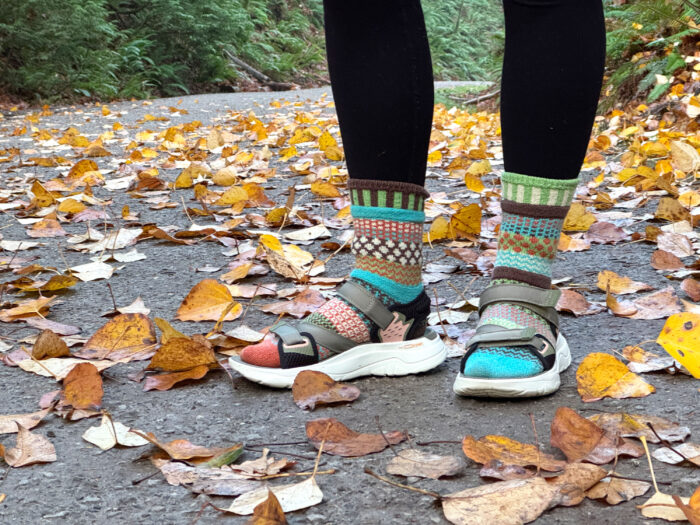
If you want a sandal that can be worn all year around, even when the weather dips into the freezing range, then we recommend sandals without toe loops or the T-shaped strap between the toes for an easier, less bulky, and more comfortable wear.
While we don’t think all sandals can accommodate socks, there are some sandals that pair well with socks, like the Birkenstock Arizona, which is a good one to consider because its suede material allows for better stretch than nylon or recycled material does.
Or, if you want a different style, consider the Teva Aventrail. These sandals are already super cozy and supportive, and pairing them with a thick pair of socks makes them a perfect choice for fall hikes. However, we suggest sizing up, especially if you plan to use bulky wool socks.

Price & Value
While you’re likely to spend more on your hiking boots, that doesn’t mean you have to skimp on your hiking sandals. That said, there is a wide range of different hiking sandals out there for different uses, and this is the first step in determining just how much you should pay for a set.
If you only need a beater pair for quick romps on day trips, avoid the high-dollar name-brand technologies. Alternatively, if you’re depending on the traction to get where you’re going, consider spending a bit more to get better rubber outsoles, more comfortable strap systems, and more support.
Budget
A set of budget hiking sandals will likely run you between $60 and $70, and will make excellent day hikers or back-up pairs for leaving in your trailhead-mobile. Material differences will be the biggest indicator of the cuts made to keep prices down, and in-house versions of rubber outsoles are prime examples.
The soft Teva rubber used in our best budget pick, the Teva Original Universal ($60), isn’t quite as robust as the Spider rubber the brand uses in its higher-end sandals, but it gets the job done. You’ll also likely only see a minimum number of adjustment points on sandals in this price range.
Mid-Tier
Spending between $70 and $100 gets you into the meat of the hiking sandal market, and with that you you gain a good bit in comfort, traction, and durability. You’ll still see proprietary rubbers used in the outsoles, but laid out in chunkier lug patterns that will grip better, such as on the Chaco Women’s Z/Cloud ($105) or the Teva Tirra ($90).
Adjustability, too, will be better on these sandals, with two or three-point adjustable straps being common, and the Tirra was one of the most comfortable sandals to strap into in our experience.
Premium
Specialty hiking sandals prioritize traction and comfort, but you’ll pay for the premium trim to the tune of $100+ per pair. This can be close to what you might spend on a pair of trail runners, but you do get an impressive set of kicks for the money. Premium Vibram outsoles like those on the Bedrock Cairn Evo C ($135) or Luna Middle Bear ($130) provide the best traction we’ve experienced and well justify the price.
Frequently Asked Questions
The most comfortable sandals are the ones that make your feet feel good while wearing them all day and won’t give your feet blisters, hot spots, sores, or any pressure points. And once you’re done wearing them, your feet should still feel good afterward.
Finding the most comfortable sandal depends on your activity. A bare minimal sandal will feel great on your feet but wouldn’t provide support on long hikes, while hiking sandals can be great for hiking but won’t offer the same amount of plushness as a recovery sandal can.
Your choice of sandal will depend on the activity you intend to engage in. Good support, a thick outsole, good traction, and one to three adjustment points are necessary for a hiking sandal. A sandal that simply complements your style and still feels lightweight and comfy is a terrific option if you want to wear it every day. Finally, if you want a sandal for around the house that will provide you with the most comfort, consider a recovery sandal.
Sometimes, there isn’t just one sandal that works for everyone. If you’re like us, you might think about buying a few different kinds that suit several of your needs.
The most comfortable lightweight sandals are those that keep your feet secure and prevent sliding or slipping. The Xero Z-Trail EV is a great option because of its outstanding lightness (4.3 ounces per sandal), comfort, coverage, packability, and natural flex.

Not all sandals are designed to be worn frequently in water, despite the fact that many of them can. Additionally, even if some sandals can get wet, they may cause your feet to slip and slide around. And some like Birkenstocks may be composed of suede, which is not water-friendly.
Consider sandals that are explicitly made for water or are regarded as hybrids if you’re looking for one that can handle watersports. Our Best Water Shoes and Best Water Shoes for Women Buyer’s Guides are an excellent place to start when looking for minimal footwear for water use.

From burly mountain scrambles to forested singletrack, we highlight the best women’s trail running shoes from Hoka, Salomon, Brooks, and more.

We tested the best hiking boots for women from Scarpa, Merrell, Salomon, La Sportiva, and more to help you find the best option for your needs and budget.
Read the full article here