





Music and workouts go hand-in-hand — but you’ll need some personal Hi-Fi to really get in the zone. To find the best workout headphones and earbuds, we spent hours listening and comparing during stationary workouts, road bike rides, and long runs.
For more than a decade, we’ve been testing workout audio, evaluating audio quality, durability, wireless connectivity, and app integration to compile this list of the top options. There are all-around high-quality options like the Soundcore AeroFit Pro, our top pick, as well as budget-wise headphones like the JLab GO Air Sport that get the job done with no fuss.
Lead tester Paul Mandell is a certified strength coach, and he’s hit the weight bench, track, and trail for our headphone testing. We field-test these earbuds and over-ear varieties by integrating them into our daily workouts and also challenging them on the bench in audio quality comparisons. While there isn’t a single best earbud for every user, we’ve broken this list into categories to help you find the best headphones for your particular workout style.
Scroll through to see all of our recommended buys that’ll keep the jams coming while you break a sweat. At the end of our list, be sure to check out our comprehensive workout headphones Buyer’s Guide, as well as our Comparison Chart for weighing headphones against one another, and our Price & Value section for quick-hit answers on how far your dollar goes.
Editor’s Note: We updated this guide on February 4, 2026, to include the Soundcore AeroFit Pro, JLab Epic Air Sport, and the H2O Audio Tri 2 Pro.
The Best Workout Headphones of 2026
Best Overall Sports Headphones
8.6/10 Rating
Best Budget Headphones
7.6/10 Rating
Best Value Headphones
8.1/10 Rating
Best Over-Ear Headphones
8.4/10 Rating
Best Headphones for Situational Awareness
8.5/10 Rating
Best-Fitting Headphones
7.8/10 Rating
Best Waterproof Headphones
7.8/10 Rating
Best of the Rest
7.4/10 Rating
See more picks
-
No pressure points -
Good balance between earphone sound and ambient sound -
Comfortable adjustable neckband design -
Long battery life
-
Loose fit without neckband
-
Budget pricing -
Great ear hold during active exercises -
IP55 sweat and splashproof -
App-free EQ changing with three modes
-
Charging case is a bit bulky, and integrated USB cord isn’t ideal -
Tap functionality isn’t always perfect
-
Quality sound with good bass -
IP67 rating means these buds can be dunked -
Excellent mid-tier price with good value for the specs -
USB-C charging -
Compatible with app to change EQ settings
-
Clunky touch control isn’t the most accurate -
Fit can be finicky to get perfect
-
Interchangeable ear cushions stay fresh between workouts, and can be laundered -
Solid audio performance -
IPX4 water resistance -
Multipoint Bluetooth pairing -
USB-C charging
-
Headphones don’t start in ANC mode -
Folded state is a little annoying to use
-
Class-leading battery life -
Quick charging adds 1.5 hours of play time in 5 minutes -
Top-notch bone conduction sound quality -
Intuitive button setup -
Perfect for all forms of exercise
-
Expensive -
Not fully waterproof
-
Secure over-ear fit -
Loud -
Good voice call function
-
The case takes up lots of room -
Little difference between ANC/non-ANC
-
Very easy to hear surrounding noise -
Tight waterproofing -
Listening doesn’t require paired device -
High voice call quality
-
Sound not as clear as other headphones on this list -
Proprietary charging port
-
Quality fit & finish -
Excellent sound & call quality -
Good ANC -
iOS ‘Find My’ compatible to locate lost buds
-
Poor support for non-Apple devices -
Troublesome connectivity -
Lackluster battery -
Pricey
-
Premium sound -
Accurate fitness tracking of heart rate and body temp -
Ability to adjust a seemingly limitless amount of settings -
Simple and reliable connectivity
-
Battery life could be longer -
Rubber hinge on case doesn’t seem durable -
Pricey
-
Long-lasting battery life and quick USB-C charging -
Comfortable ear cups -
Obtainable price
-
Active noise cancellation isn’t the most refined
-
Very comfortable open-ear fit -
Situational awareness is enhanced -
Good sound quality -
Easy to fit and use
-
Does not cancel external sound -
Minimal water resistance
-
Adjustable fit -
Great sound -
Noise cancellation -
Headset features
-
Pricey -
Questionable long-term battery life
-
IPX5 sweatproof -
Inexpensive -
Tangle-resistant
Workout Headphones Comparison Chart
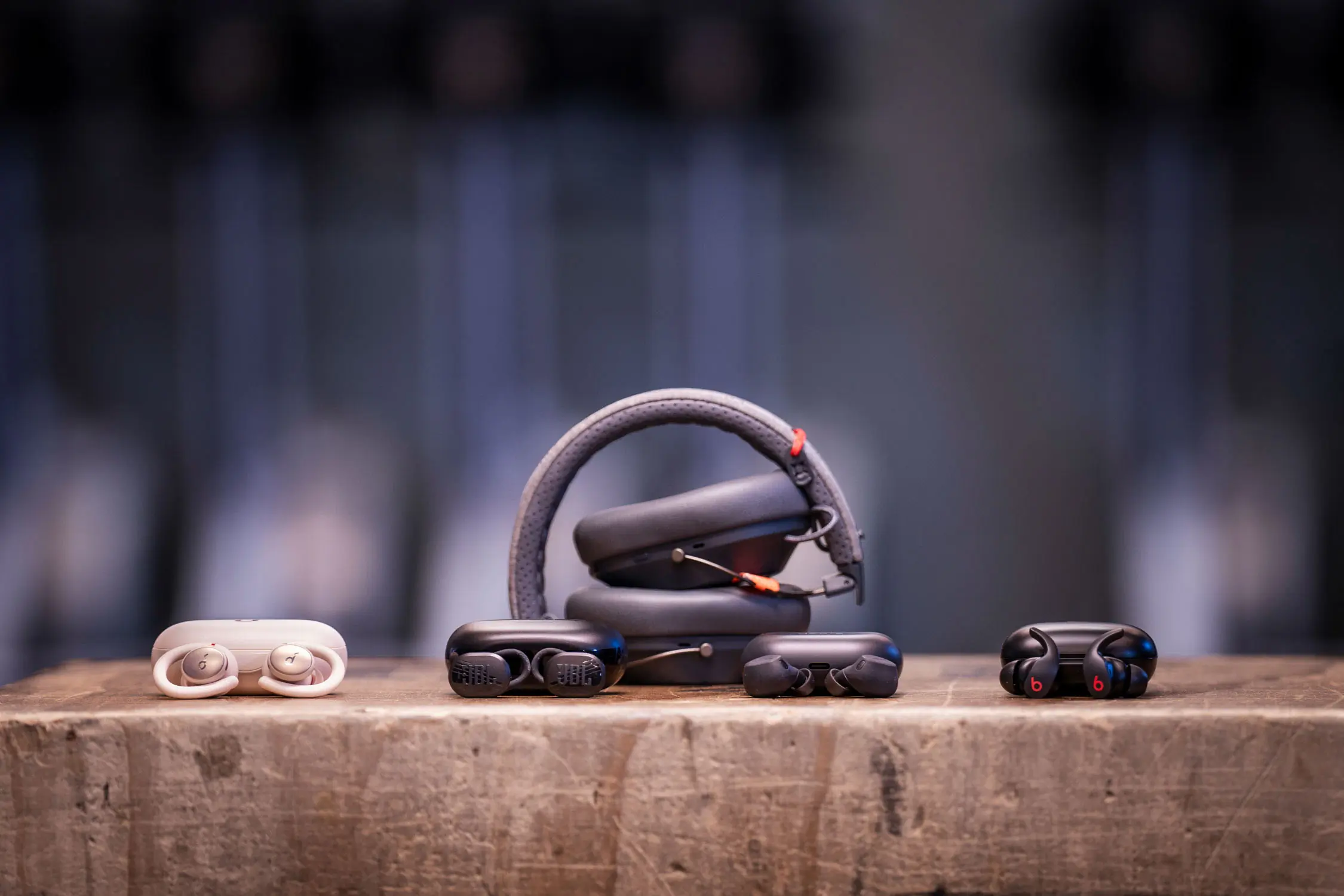
How We Tested the Best Workout Headphones
Our Expert Testers
Our lead tester, Paul Mandell, is a strength and conditioning coach based in Bishop, Calif., and spends most of his week on the gym floor either coaching or doing his own training, so he’s had plenty of opportunity to put this round of headphones through the paces. We began testing workout headphones in 2021 with an initial slate of 9 products, and continue today searching out the best of the best.
Assisting Paul is a backbench of GearJunkie fitness enthusiasts, including Sean McCoy, an ultramarathon racer who values a good downbeat to keep him on pace. Sean’s testing most often takes him into the alpine of Colorado, and he’s constantly on the lookout for the new hot ticket in workout audio.
GearJunkie’s runners have tested hundreds of men’s and women’s products on trails, in busy urban centers, and during competitive Adventure Racing. 2024’s running headphones tests built on that theme, with our testers ranging from Texas trails to central California, Singapore, and Thailand.
The testers for this article have a combined experience of over 20 years in middle-distance trail running, competitive track racing, and multi-sport activities such as CrossFit. Our editorial team includes GearJunkie Adventure Racing team members, and iRunFar.com editors provided product consultation.
We’re also real people, so we use headphones just like everyone else — running errands, attending meetings, and taking phone calls. We worked out, traveled, and vibed out to music in our running headphones. One improvised water-resistance test occurred when we forgot a pair of earbuds in a shorts pocket and threw the shorts into the washing machine.
We’re confident that any headphones on our list will work admirably in any workout you put them through, and our selection isn’t set in stone, either. As new headphones hit the market, we’ll cycle them into our routines and test them in the same manner.
Our Workout Heaphone Rating System
Each workout headphone in this guide was tested and scored in four main categories: Sound, Battery Life, Comfort/Stability, and Value.
Sound considers the headphones’ audio quality. We considered factors such as clarity, audio quality, noise cancellation, and more, and graded each headphone accordingly.
Battery Life examines how long a battery lasts and how charging logistics work. Headphones with charging cases or universal charging cords received higher ratings.
Comfort/Stability measures how comfortable the headphones are during long runs and workouts and how stable they are during runs and other movements. Are there any pressure points? Those headphones were dinged. If they slid around or fell out during a workout, those headphones received a lower rating as well.
Value evaluates whether a headphone’s cost is justified by its utility. If a headphone had a higher price, but we felt it was justified, it would receive a positive ranking, while a cheaper headphone that doesn’t hold up to scrutiny might get a lower ranking.
The overall score is not a simple average of these categories. Instead, it reflects our editorial judgment based on the complete user experience. That means a headphone with zero organization can still score high overall if it excels in capacity and reliability, while a high-volume backpack might rank lower if it’s made with less durable materials.

Our Testing Process
Testing periods ranged from months to years. Our first priority for testing was to evaluate setup and connectivity. Headphones scored points for easy pairing and an intuitive setup and navigation, and received bonus points for being charged and ready to go in the box.
Next, we looked at fit and security. All the headphones tested offer some way to customize the fit to our preferences, but not all of them hit the mark. The best headphones offered multiple silicone tips to get fit dialed in and didn’t require frequent readjustment or need to be regularly snugged back up.
Once we were connected and had a secure fit, we could head to the gym and test the actual performance while working out. Here, we performed a variety of exercises, including lifting, rowing, and running; CrossFit-style WODs; and a handful of other outdoor activities like mountain biking and skiing. We looked at sound quality, battery life, button navigation, noise cancellation, sound passthrough, phone calls, and Bluetooth range.
To test these headphones in more detail, we consulted our resident audiophiles, who created a playlist of headphone-testing tracks for us to pit against one another. We listened to everything from classical music’s vaulting staccato to modern house music’s slamming beats. Audio quality isn’t the be-all and end-all for workout headphones, but you at least want it to sound good.
Performance also demanded resilience under extreme heat (up to 95 degrees at 80% humidity on the Singapore streets) and during travel. City traffic, sweaty ears, and logistics of battery life and case carrying were constant factors. Testers put water resistance to the test in events including moderate-distance swim training and sauna & cold plunge recovery sessions.
Buyer’s Guide: How to Choose the Best Earbuds & Headphones for Your Workout

There are many workout headphones on the market, and it can be challenging to select the perfect pair for your needs. In this handy how-to-choose guide, we’ll explain all of the key factors that you should consider as you prepare to make a purchase.
In our testing, we prioritized the interrelated factors of fit and comfort, which ultimately affect sound quality. An improper fit will likely create a muffled, underwater sound.
Features like phone calls aren’t major factors for workouts — we hope — though we understand that you’ll want to use your headphones for more than just exercise. In addition to fit and comfort, many other important features can contribute to overall functionality and safety.
Fit and Comfort
The first goal of fit is to keep the earbuds or headphones in/on the ear. Ideally, your earbuds or headphones will fit comfortably and securely. Ears come in many different shapes, so finding the best fit for you may require some trial and error.
In-ear headphones typically have a stem that wedges into the ear canal, while a “fin” or “wing” tucks into the concha part of the outer ear to prevent lateral movement. Most modern earbuds come with silicone tips that form a seal inside your ear canal and prevent the unit from falling out. Many pairs of earbuds come with multiple tip sizes that can be quickly swapped.
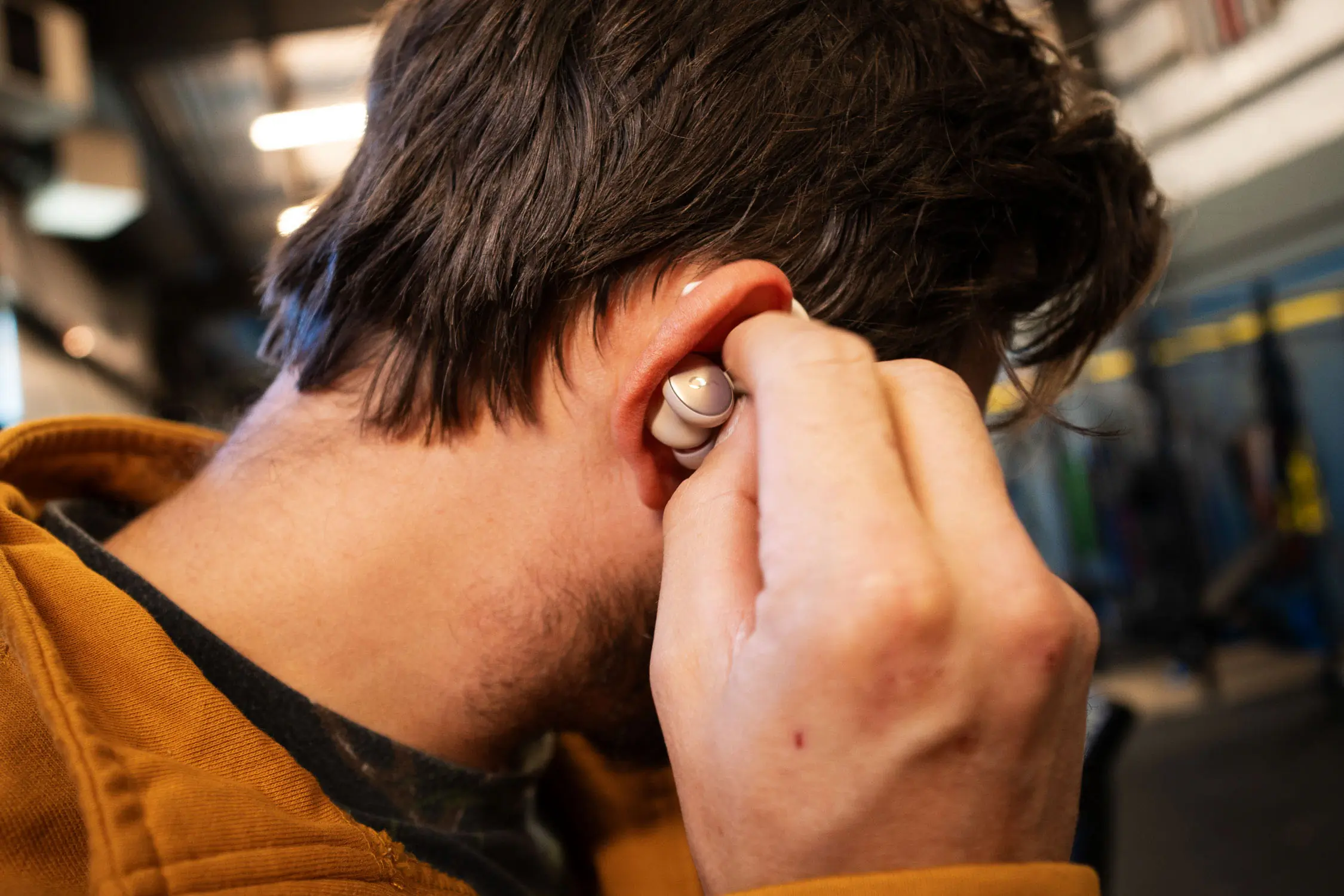
For other types of headphones (including open-ear buds, bone-conduction headphones, and over-the-head headphones), the fit is equally important. Getting a great fit is crucial to both comfort and sound quality — especially during a workout.
Comfort and fit are directly related. In short, a properly fitted pair of earbuds or headphones will also be the most comfortable.
Especially while working out, many people find silicone-tipped earbuds more comfortable than hard-plastic models. While personal preferences vary, we’ve found that silicone-tipped earbuds tend to maintain their comfort better than hard plastic earbuds during exercise.
Headphone Types
There are multiple types of headphones and earbuds on the market. From bone conduction to open-ear to over-the-head, it’s helpful to understand the various categories before you make a purchase.
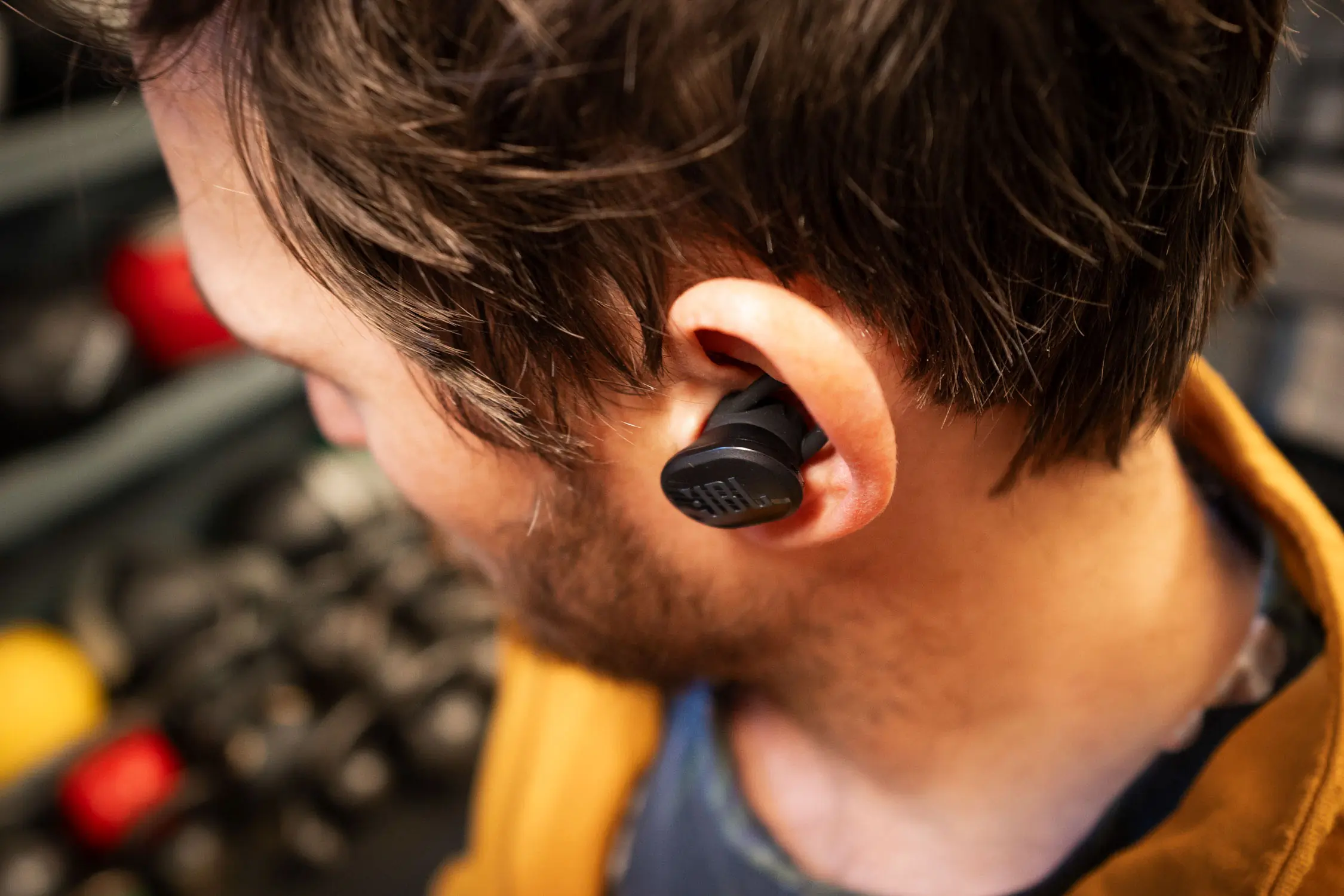
Wired vs. Wireless
Wired headphones have been around for generations. For many, these work fine, but an athlete’s sweat can quickly gunk up the wires — if they don’t snag one on gym equipment or a branch first.
Once you experience the freedom of wireless earbuds, the annoyance of cords may be worth the expense. The truly wireless versions tend to be favorites for workouts. Some runners prefer banded wireless earbuds for the peace of mind of knowing that if an earbud falls out mid-run, it’s still within reach.
In general, truly wireless earbuds have a (slightly) shorter battery life, though this gap is quickly closing.
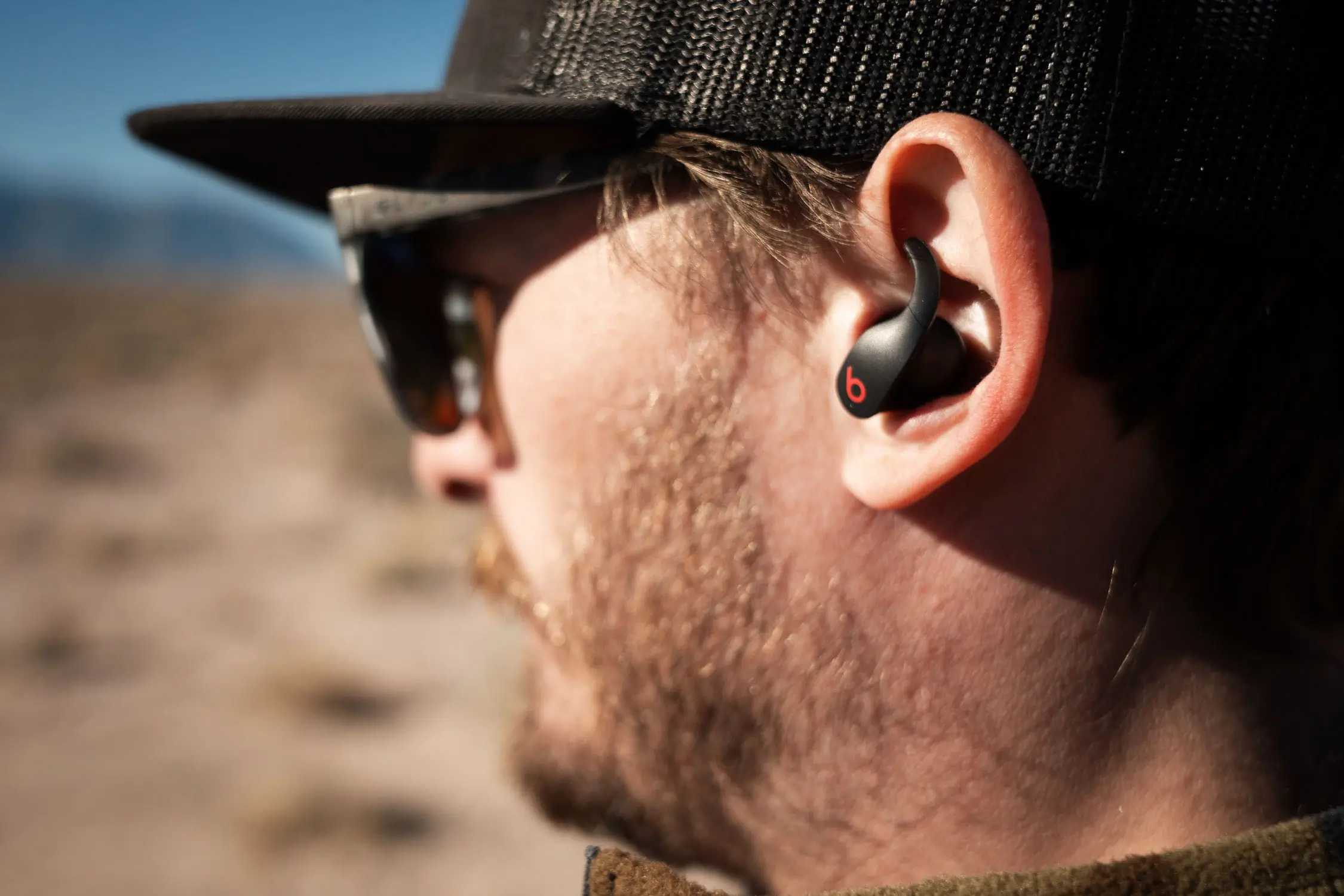
In-Ear Earbuds
In-ear earbuds are the most common style. Earbuds in this category have a stem that holds a small speaker and fits inside your ear canal.
The advantages of this popular style include comfort (for some), sound quality, and noise cancellation. In 2025, most gyms and running trails are filled with people using in-ear earbuds.
Open-Ear Earbuds
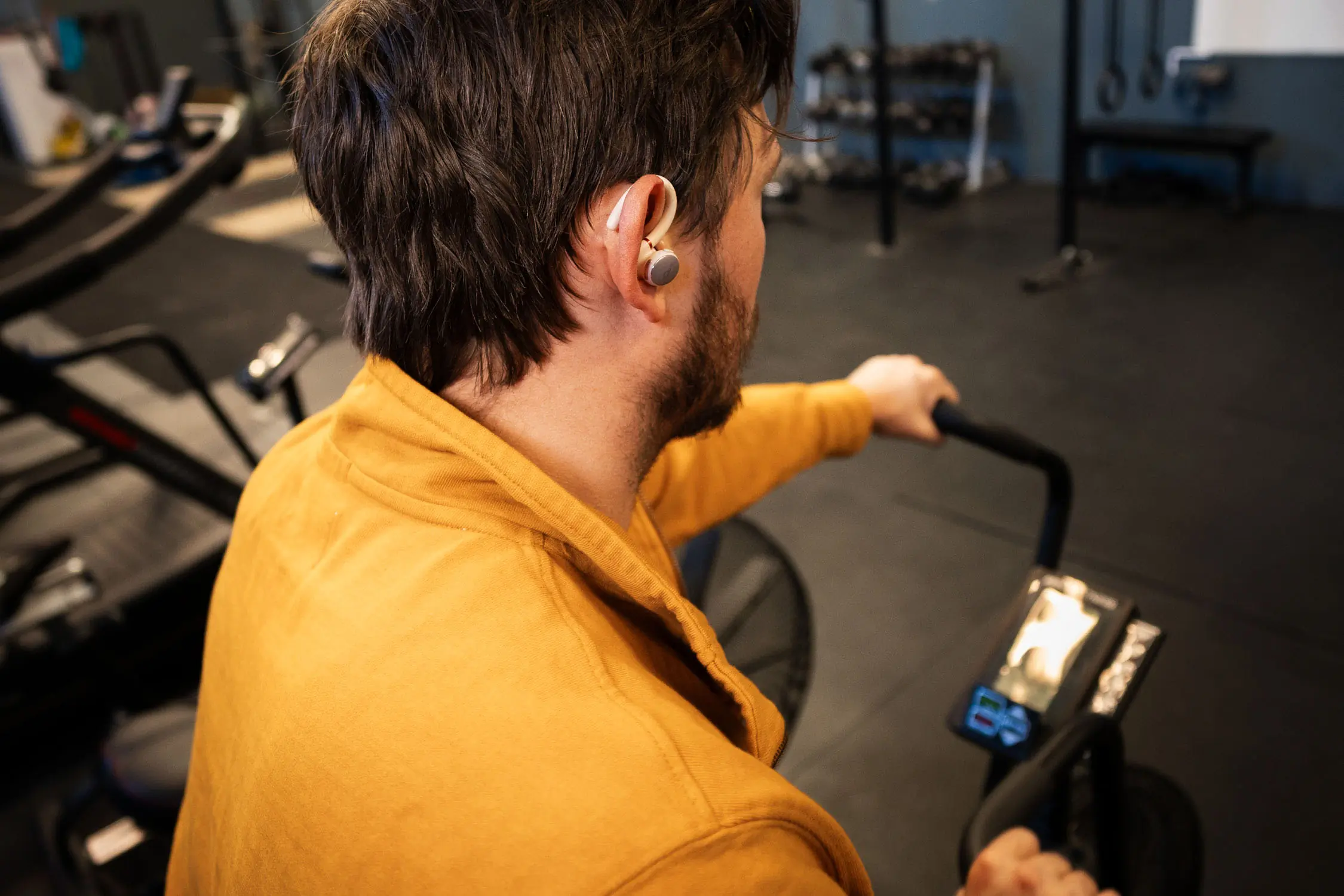
Open-ear earbuds do not cover your ear canal. Instead, this style of earbuds fits onto another part of your ear and sends sound waves through the air and toward your ear canal.
While open-ear styles typically cannot match the sound quality or noise cancellation of in-ear models, many runners and cyclists prefer them because they keep you alert to your surroundings.

Bone-Conduction Headphones
Bone-conduction headphones rest directly on the user’s cheekbones. Unlike traditional earbuds and headphones, bone-conduction headphones send vibrations to the cochlea through the wearer’s bones.
Bone-conduction technology can be a great choice for those with hearing loss. Additionally, bone-conduction headphones allow the wearer to remain aware of their surroundings, which can be a major safety benefit while running or cycling.
Unfortunately, bone-conduction headphones have a few drawbacks. First, many of the existing models can be uncomfortable during prolonged use.
Additionally, bone-conduction headphones simply cannot match the sound quality of high-end in-ear earbuds or noise-canceling headphones. Still, for certain users and applications, bone-conduction headphones are an awesome tool.
Over-Ear Headphones
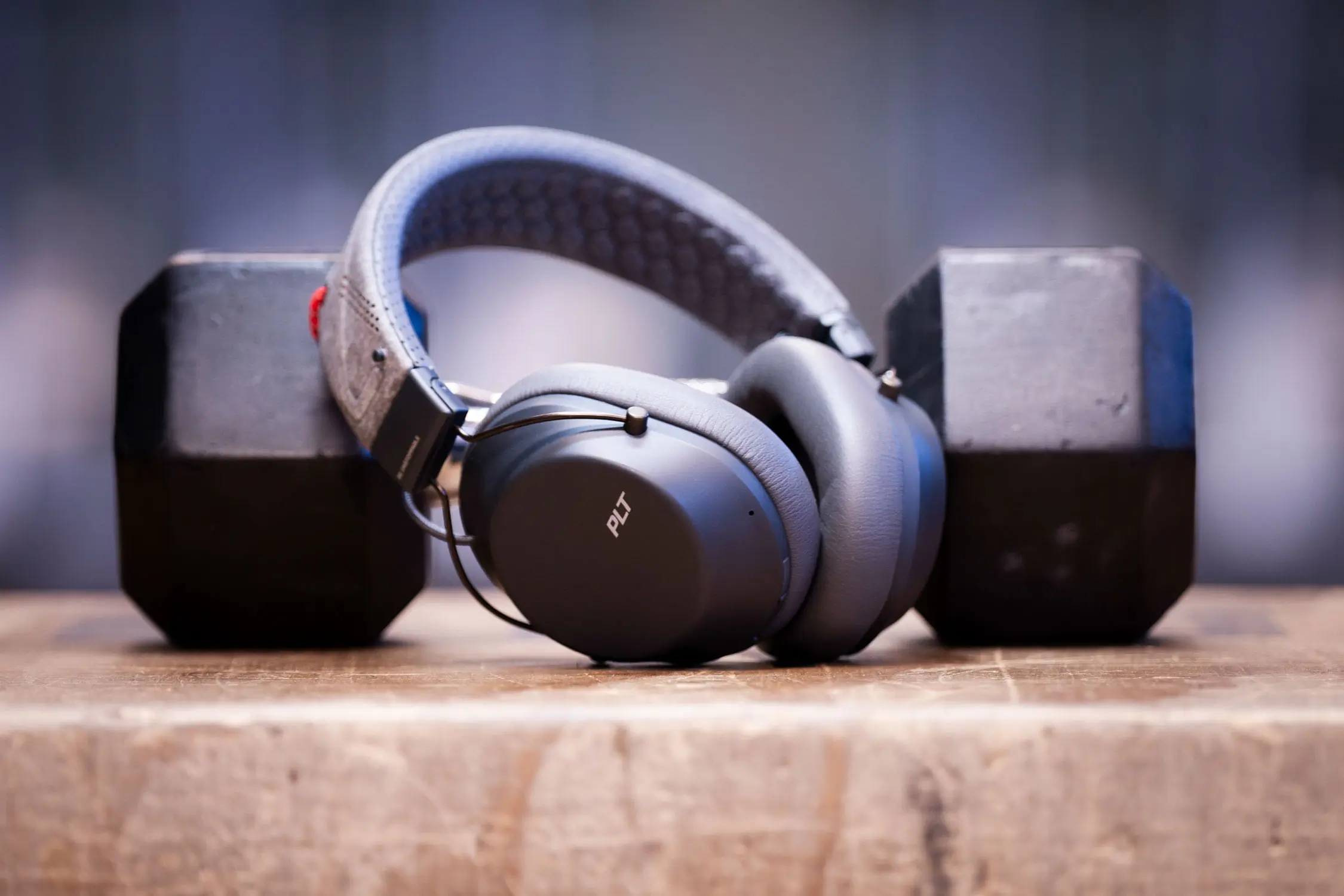
While in-ear earbuds may be the dominant headphones these days, many users still prefer over-ear headphones. If you find the right pair, over-ear headphones can provide unmatched sound quality, noise cancellation, and bass response.
In 2025, top-notch over-ear headphones will feature reliable batteries, Bluetooth connectivity, and microphones for gaming and calls. While working out, many users enjoy over-ear headphones for their easy on-and-off design.
If sound quality is a must for your workout, consider over-ear headphones. However, this timeless style comes with some clear drawbacks too. Over-ear headphones tend to be significantly heavier than earbuds.
Plus, over-ear headphones tend to be less resistant to rain and sweat. During a run on a warm day, over-ear headphones can quickly become uncomfortable.
Sound Quality
Like all speakers, headphones, and earbuds distort different parts of the audio spectrum. No two pairs of headphones will sound the same. While several objective factors separate high-quality and low-quality sound, personal preference is perhaps the most important consideration.
Sound drivers, at their most basic, are the physical components inside the earbuds that move air, resulting in pressure waves that then translate to sound within your ear canal. There are a handful of different drivers out there, but dynamic drivers are the most common and cost-effective.
These work by using a static magnetic field paired against an active coil. The coil generates an electrical current that disrupts the magnet’s static current when a signal is applied. That coil is attached to a membrane that vibrates and amplifies those vibrations, resulting in sound waves.
Voilà! Electricity becomes sound. Audiophiles will nerd out endlessly about the other types of drivers available, but for the purpose and scope of our review, we’ll be sticking to dynamic drivers.

Bluetooth sound quality is another widely debated topic on the interwebs — but does it matter? The answer is yes, kind of, but probably less than you might think. To transmit music data over Bluetooth, the data needs to be compressed using a codec—an algorithm that processes audio data to make it smaller, thereby making it easier to transmit.
Codecs discard data to compress it, which some folks would argue causes a loss in sound quality, but what probably matters more is if both devices (sending and receiving) have the same codecs. If the codecs are mismatched, the audio will need to be decompressed and recompressed, which may result in a loss in sound quality. As long as both devices can process data at a high rate, you likely won’t run into issues.
We didn’t experience any latency issues with any of the headphones on our list, and with all of them sporting Bluetooth 5.0 or better, we doubt we’ll run into any sound-quality issues due to Bluetooth.
EQ is short for equalization. By adjusting the loudness of the frequencies within a given sound, users can choose a soundscape that suits their preferences. You’ve likely done this before on your car’s radio, toggling through the different preset EQs like “Rock” or “Classical.”

Many headphone companies offer EQ customization through their downloadable apps, allowing users to adjust the audio profiles of their favorite songs and podcasts. You can also do this in the settings menu on Apple Music and Spotify.
While changing these settings may help fine-tune your listening experience, it won’t compensate for poor-quality speaker components. If you want the best sound, you’ll want to choose a headphone with a quality driver and fast Bluetooth.
Active Noise Canceling & Passthrough
Active noise canceling (ANC) headphones have skyrocketed in popularity as the technology has improved in smaller and smaller packages. ANC uses one or more microphones to collect, measure, and “cancel” incoming sound by producing counteracting sound waves.
So, do you need ANC in running headphones? Safety-conscious, urban runners or those who just like listening to the birds and the bees may resist it. As our testing revealed, some of today’s ANC is extremely potent, making it impossible to hear normal noises anywhere nearby. It can be intimidating.
However, audiophiles or runners who prefer to zone out can revel in the sonic focus ANC provides. To jam out on music and let the vibes take over (testing or otherwise), our testers reach for the loudest pair of ANC headphones. The technology pairs especially well with the surge in custom equalizer tools for headphones . And if you’re ably sighted, you can always keep your head on a swivel to keep yourself safe.
Passthrough technologies let ambient sound pass through the headphones, cueing you into what’s going on around you.
Ultimately, many users find that they do not need workout headphones with elite sound quality. For most users, a few sonic flaws are reasonable. The most important goal is to enjoy your music while exercising.
Button Navigation
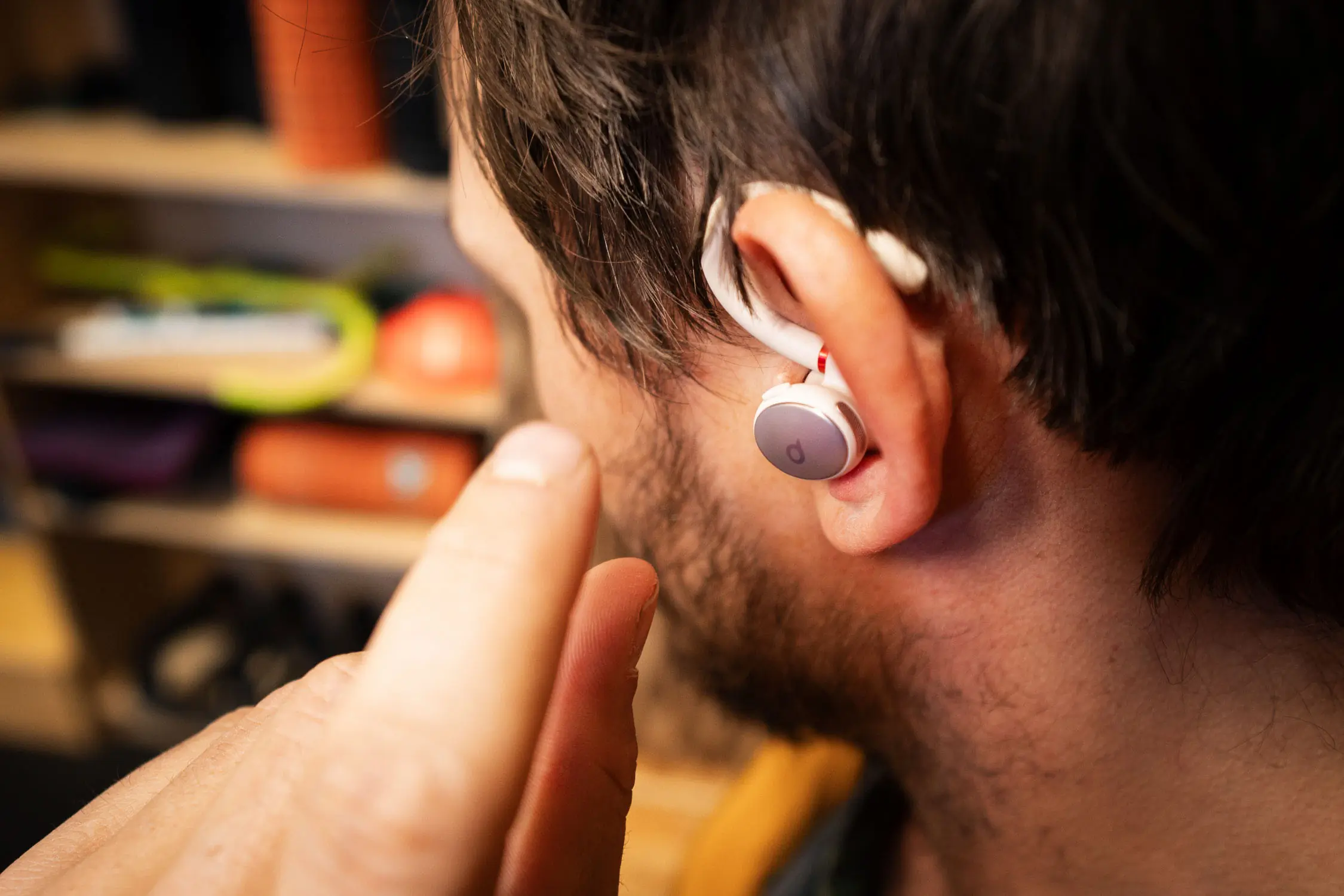
Button navigation has become an important factor in how we evaluate headphones. A handful of the headphones on our list lost points for clunky touch navigation. In general, it seems that the new tap-to-navigate tech is still undergoing refinement, and while it works for the most part, it’s not fully fleshed out yet.
During testing, we looked for easy and intuitive navigation — powering on, starting, pausing, skipping, and adjusting the volume should all be straightforward. Call alerts need to be obvious, and answering or declining should be a simple tap, touch, or click.
Some manufacturers offer users the option of customizing their button layout, which can be an especially useful feature for folks who might not be able to reach one side of their head. The headphones that scored highest here consistently offered simple, reliable navigation.
Battery Life & Charging
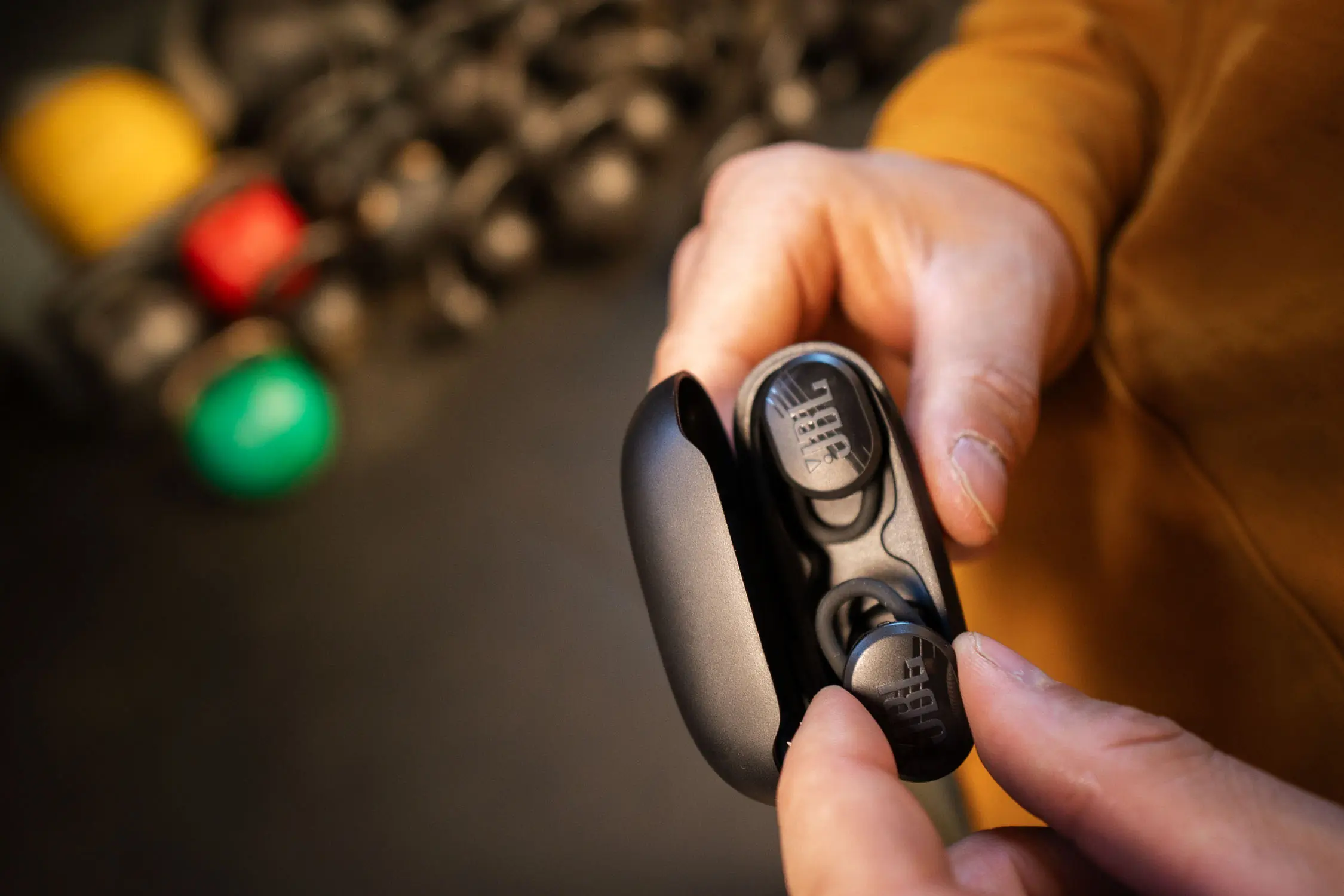
Like all wireless devices, workout headphones need to be charged from time to time. When you’re in the middle of your workout, you certainly don’t want your headphones to suddenly die. For this reason, it’s worth seeking headphones with reasonable battery life and a quality battery.
The battery life of headphones depends on various factors, including surrounding air temperature and audio volume. To get the most life out of your fully charged headphones, keep the volume in the low to mid range.
In 2025, a good pair of wireless headphones may last 6 to 8 hours on a single charge. Most pairs come with a nifty charging case that lets you charge the headphones on the go.
If you’re a daily commuter with an office job and an after-work running routine, consider headphones with long battery life on a single charge. It’s possible you’ll want more than 4 to 6 hours of listening time per day, and it’s easiest not to recharge unless you have to.
If you’re a marathoner, we’d encourage the same thing — start your run or race with a full charge and save precious grams by leaving the case behind.
If you’re a hardcore adventure runner who can do 30, 50, or 100+ miles, look for quick recharge time and a well-built, compact case. You might not hit 0% on your run, but your headphones likely will.
Call Quality
Most high-quality workout headphones can handle quick phone calls. A built-in microphone, user-friendly controls, and decent sound quality are essential for taking calls via your headphones.
However, if you plan to use your headphones for long work calls, your workout pair might not be the best option.
Waterproofing & Durability
If you’re going to be wearing your headphones while working out, durability and a reasonable degree of water resistance are crucial. If your exercise regimen includes outdoor activities such as running, cycling, or rowing, we recommend headphones with a solid waterproof rating. Even if you don’t plan on being out in the rain, it’s wise to be prepared.
Though all the headphones on this list are durable enough for exercise, some will withstand wear and tear better than others. Though cheap headphones are easy on the wallet, there is certainly a relationship between price and build quality.
To handle the perspiration that inevitably occurs during exercise, workout headphones need to be reasonably water-resistant. Many headphones come with an IP rating for water resistance that serves as a helpful guide.
Basically, headphones exist on a spectrum from IPX1 to IPX9. IPX1 headphones should be able to withstand sweat and occasional light rain. IPX9 headphones can withstand a direct stream of hot water from a pressure nozzle. The IPX rating system can feel a little confusing, and we recommend that you don’t think too hard about it.
Simply put, headphones with any IPX rating should be able to handle the demands of any dry-land form of exercise. If you plan to use your headphones in wet environments — like a scullboat or a paddleboard — we recommend a higher IPX rating.

Situational Awareness
In certain scenarios, it’s important to maintain situational awareness while working out. Whether you’re skiing, running, or cycling, the ability to hear the world around you can be essential for maintaining safety.
In general, any headphones that do not fully block or cover your ear canal will preserve your situational awareness. Bone-conduction headphones, like the Shokz OpenRun Pro, send sound waves through the bones and do not block your ear canal, and are a popular choice for runners and cyclists who need to contend with busy city streets. Other open-ear headphones like the Shokz OpenFit Air also help you maintain situational awareness without bone conduction.
Unfortunately, headphones that prioritize situational awareness often do not offer the highest sound quality. The ability to hear your surroundings is simply not compatible with an immersive audio experience and noise-canceling technology.

Price & Value
Workout headphones range in price from $30 to $300, and there’s a pretty broad selection of what you get for the money, but most of the time you are paying for audio quality, battery life, and functionality.
Spending a bit more will get you larger speaker transducers, which can deliver deeper bass (important since most workout headphones are earbuds). You also will get a range of battery life for what you spend, with run times on the low end of 4.5 hours, all the way to 60 hours in larger over-ear sets. Consider how often you’ll be using your headphones, as well as the activities you like to do, when choosing a headphone that’s right for you.
Budget
Budget headphones commonly cost between $30 and $70, and run times are around 8-10 hours for earbuds and closer to 30-40 hours for over-ear options. These are still great run times for modern electronics, but if you work out every day, you may find you need to top off your headphones before the week is out.
The JLab GO Air Sport ($30) headphones are a great budget option that doesn’t cut too many corners and offers a solid grip with a soft ear loop. It’ll take a little longer to charge these at 2 hours, but the 32-hour run time when used with the charging case gets us through even a heavy workout week. The Anker Life Soundcore Q20+ is a great budget over-ear option that still hosts solid ANC but isn’t as easy to clean as some.
Mid-Tier
Spending a bit more will get you an investment piece that’ll last you a good many years of exercise. The Bluetooth version will be modern (and may include multi-point pairing with additional devices). You will also get extended run times, better charging cases, and modern USB-C ports to charge from. Apps, too, can be used to control the EQ settings of these headphones.
Expect mid-tier headphones to cost anywhere from $70 to $200. With these prices, you can also get into bone conduction headphones, and the Shokz OpenRun Pro ($180) is the best option we’ve tried to date.
Premium
Paying $200 or more for a set of workout headphones means you’re either paying for a brand name or some heightened tech that makes your life easier. Expect to see the latest Bluetooth codecs here, the longest battery life, and the best sound quality.
For Apple users, the Apple AirPods Pro 2 ($249) pack in a lot of brand-specific functionality like a ‘Find My’ feature to locate lost earbuds, and instant connection to Apple devices.
Frequently Asked Questions
They can last anywhere from 6 to 14 hours on a single charge and at least 24 with a fully charged case. The JLab Epic Air Sport claims the burliest battery in our test, at 15 hours in the buds and 50+ combined with the case.
Not all workout headphones are waterproof, and some are more water-resistant than others.
Most workout headphones come with a water-resistance rating from IPX1 to IPX9. IPX1 headphones can generally withstand moisture from sweat but not much more. If you’re going to be exposing your headphones to wet and rainy conditions, look for a pair with a strong rating of around IPX4 or higher.
Though we’ve heard stories of some especially slimy athletes killing headphones with sweat, most of us won’t come anywhere close.
Most running headphones are built to survive light rain, and some go beyond that. There’s plenty of crossover between running, triathlon, and paddling sports, and standards for water resistance can be very high. Check out the H2O Audio Tri Pro’s IPX8 rating, which helps it survive permanent submersion in water up to 13 feet.
Sweat hits different, though — can the salty, particulate discharge from our pores corrode earbud components even worse? The upshot is that prolonged exposure to moisture can cause electrical problems, like refusal to charge. This can take years.
Your best bet is to let your headphones air dry, outside the case, after a soggy run. This should keep the connections and any ingress points clean and functional — both on the buds and inside the case.
Runners need headphones that fit well and don’t fall out. Headphones with rubber or silicone hooks that loop over the top of the ear are likely to inspire the most confident fit in the category. But that doesn’t mean other types will just fall out willy-nilly.
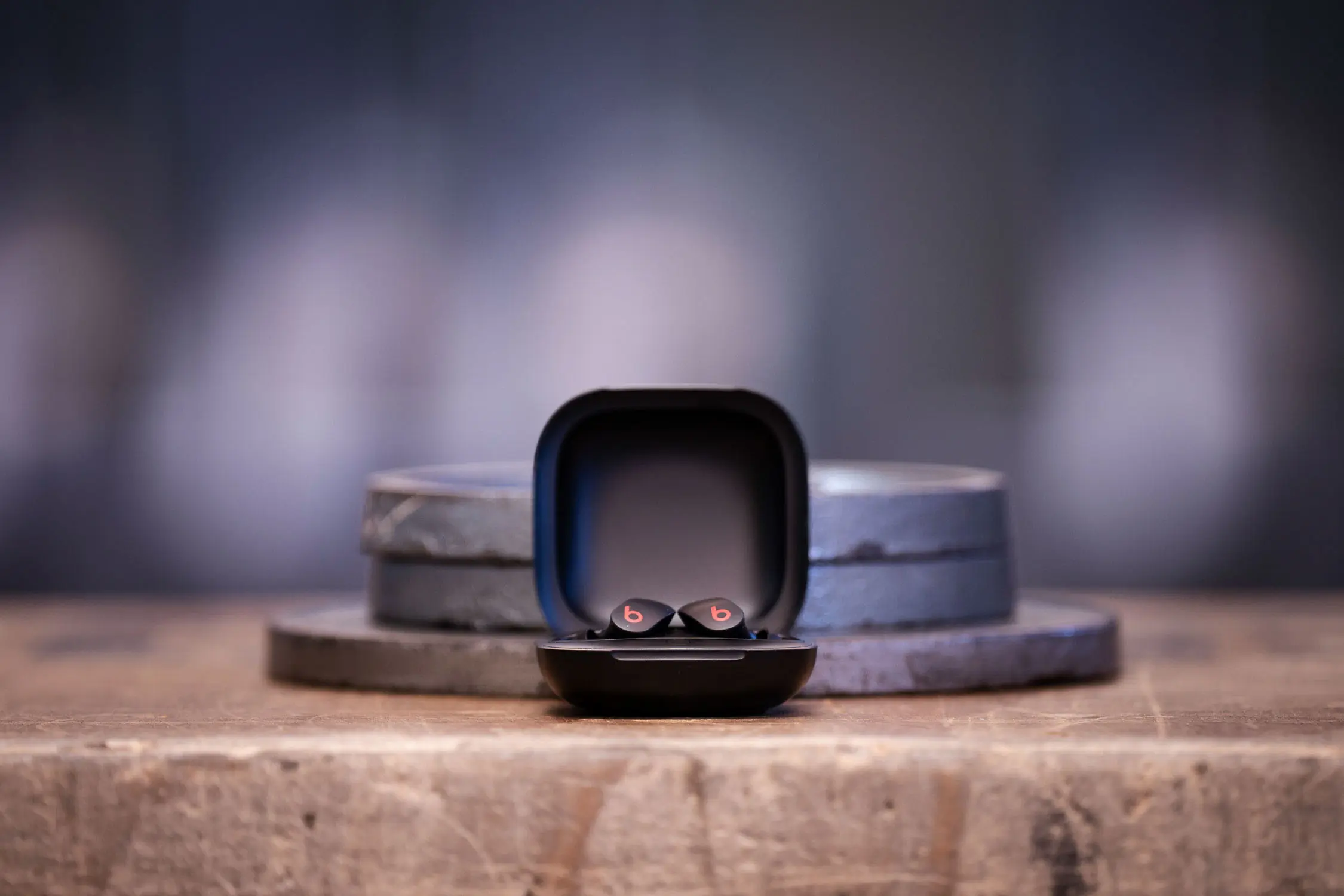
Beats Fit Pro’s “wingtips” provided a tight fit in our testing. The tips hold pressure against the inner ear ridge which, while not super comfortable over time, was unquestionably secure.
In open-ear sets, neckbands not only help keep a set together if you take a tumble, but also add positional stability. The H2O Audio Tri Pro even includes a rubber leash you can attach to your glasses or goggles during races or swimming.
Because people have different ear shapes, the process of identifying a good pair may require some trial and error.
If you plan to run on the streets or in a public setting, we recommend a pair of headphones that allow you to maintain situational awareness. Bone conduction and open-ear headphones are two excellent choices.
Running safety questions virtually always have situational answers. (Is it safe to run without water? If you’re in a busy city, sure — if you’re in the Moroccan desert, not so much. And so on.) This is one of those questions.
Depending on your running conditions, you could need a pretty disparate kit to keep yourself safe. Let’s say you’re in the suburbs, running on straight-line sidewalks that border 45 mph traffic. In this case, our testers reach for an open-ear set. It’s safety first in traffic, and we want to key in on it as far in advance as possible.
While testing trail running in a remote area, our testers might pick up their favorite ANC headphones and let the trail lead the way. That could change, though, depending on traffic. Mountain bikers or one-wheel riders can come up quick — especially on switchback terrain or in narrow corridors — and nobody wants to jam up traffic or, worse, hit the dirt in a heap.
Also be smart about wildlife. Make noise as you run in remote areas with large predators, and stay aware of your surroundings.
High-quality noise-canceling headphones truly do cancel out sound waves before they can reach your ears. Not all noise-canceling headphones are created equal, and the top-notch models don’t come cheap.
Carefully and according to the manufacturer’s instructions. Tools of the trade basically include lint-free cloths and/or Q-tips, warm water, and isopropyl alcohol (in some cases). Cleaning eartips is simple enough. One tester sometimes uses a toothbrush or paperclip to gently lift out any grime inside microphone ports or speaker housings.
Unit-specific instructions from most manufacturers are available via a basic Google search.
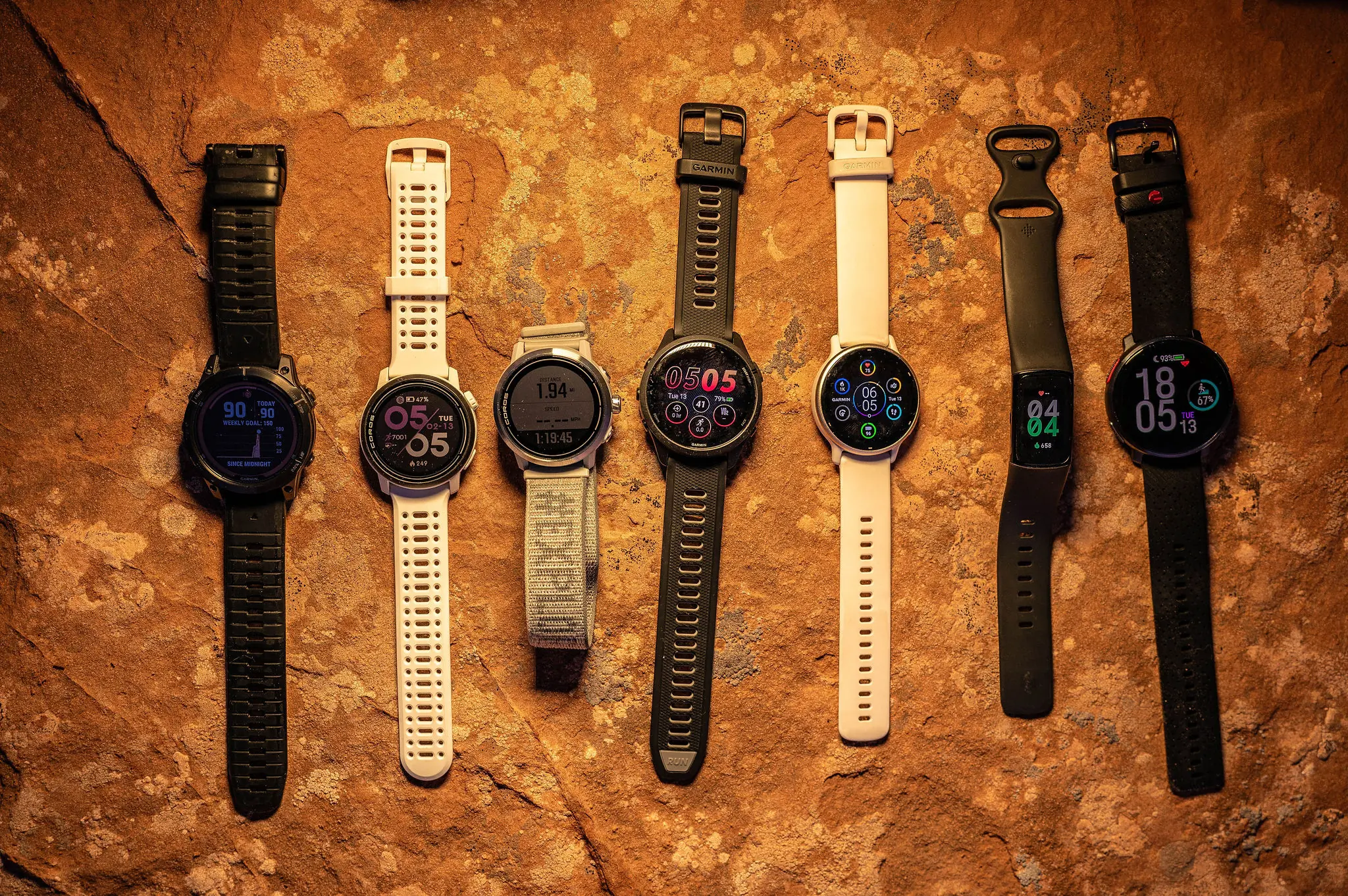
We tested the best fitness watches of 2025 with options for every budget. Our top picks include Garmin, COROS, and more!

Rock out to your playlist while staying aware of your surroundings. These are the best bone conduction headphones of 2025.
Read the full article here