





The best fleece jackets earn their keep fast. The right one adds warmth without smothering you, breathes when the pace picks up, and feels so comfortable that it ends up on your back far beyond the trail.
Our team has spent years living in fleece. Authors Ryan Kempfer and Chris Kassar have tested more than 20 models over the past year and hundreds overall, wearing them through climbing days, long hikes, ski tours, cold mornings at camp, and everyday mountain life. We have pulled these layers on for everything from fingertip moves high off the ground to endless trail miles and quiet nights by the fire, all to narrow the field to the absolute best options.
This guide includes a fleece for nearly every kind of outing and user. Our top performance pick, the Patagonia R1 Air Full-Zip Hoody, stands out for high-output days when breathability matters most. If you are looking for exceptional value, the REI Co-op Trailmade Fleece Jacket proves you do not have to spend a fortune to get a cozy, reliable layer for campfires and chilly morning commutes. You will also find alpine-specific, technical all-rounder, and casual crossover options built for everything from high-alpine summits to town laps.
Editor’s Note: On April 1, 2026, we refreshed our award categories to focus on real-world use cases, added a new comparison chart, and included Quick & Dirty summaries to guide you to the right fleece faster. We also officially elevated the Patagonia Better Sweater as our top pick for casual wear, thanks to its comfort, versatility, and strong crossover appeal.
The Best Fleece Jackets of 2026
Weight
12.9 oz. (men’s size M); 10.9 oz. (women’s size S)
Fabric
100% recycled polyester fleece
Weather resistance
No weather treatment
Pockets
Two handwarming, one on chest
Pros
- Super-breathable zig-zag grid fleece
- Lightweight
- Wide range of sizes
- Cozy on-skin feel with snug fit
Cons
- Not very much static warmth
- Wind resistance isn’t great
- No thumb loops
The Quick & Dirty: The airy specialist of the bunch, this fleece shines when you’re moving hard and sweating plenty. However, don’t expect much weather protection or standstill warmth.
Patagonia’s R1 line has been an absolute staple in the outdoor industry for years and has set the standard for lightweight, performance-oriented fleece layers. The R1 Air ($189) offers even greater breathability and mobility, given its unique zig-zag pattern of hollow fiber yarns.
This construction does a fantastic job of trapping heat during cold adventures, while also providing stellar ventilation when you pick up the pace. While the R1 Air is a little more comfortable and breathable than something like the TechFace hoodie, this comes at a slight cost of durability. We found that the R1 Air accrued holes and tears easier than the TechFace during extended use, and we used it more as a midlayer than an outer layer.
We think this jacket shines as a breathable, extremely comfortable fleece for long-distance thru-hiking or lightweight alpine missions. At 12.9 ounces, it packs slightly lighter than the TechFace and many similar jackets and offers a high warmth-to-weight ratio.
We recently put the R1 Air to the test on thru-hikes of the Appalachian Trail and the Tahoe Rim Trail, using this as our primary midlayer. From week-long freezing rain storms to chilly Sierra climbs, it kept us toasty yet ventilated, and was a perfect layer for all sorts of weather and temps.
While you lose a slight amount of durability, the extra weight savings, breathability, and added comfort make the R1 Air a great addition to Patagonia’s already stellar performance-oriented R series. For performance, we’re confident this is the best fleece jacket on the market.
Fabric
100% recycled polyester fleece
Weather resistance
No weather treatment
Pros
- Extremely low price
- Lightweight
- Cozy, loose fit
- Plethora of colors to choose from
Cons
- Doesn’t shield wind, rain, or snow
- While it’s soft, not everyone loves polyester against the skin
The Quick & Dirty: Budget-friendly, cozy, and easy to love. This is the fleece you throw on for campfires, commutes, and mellow days, rather than windy ridgelines or high-output missions.
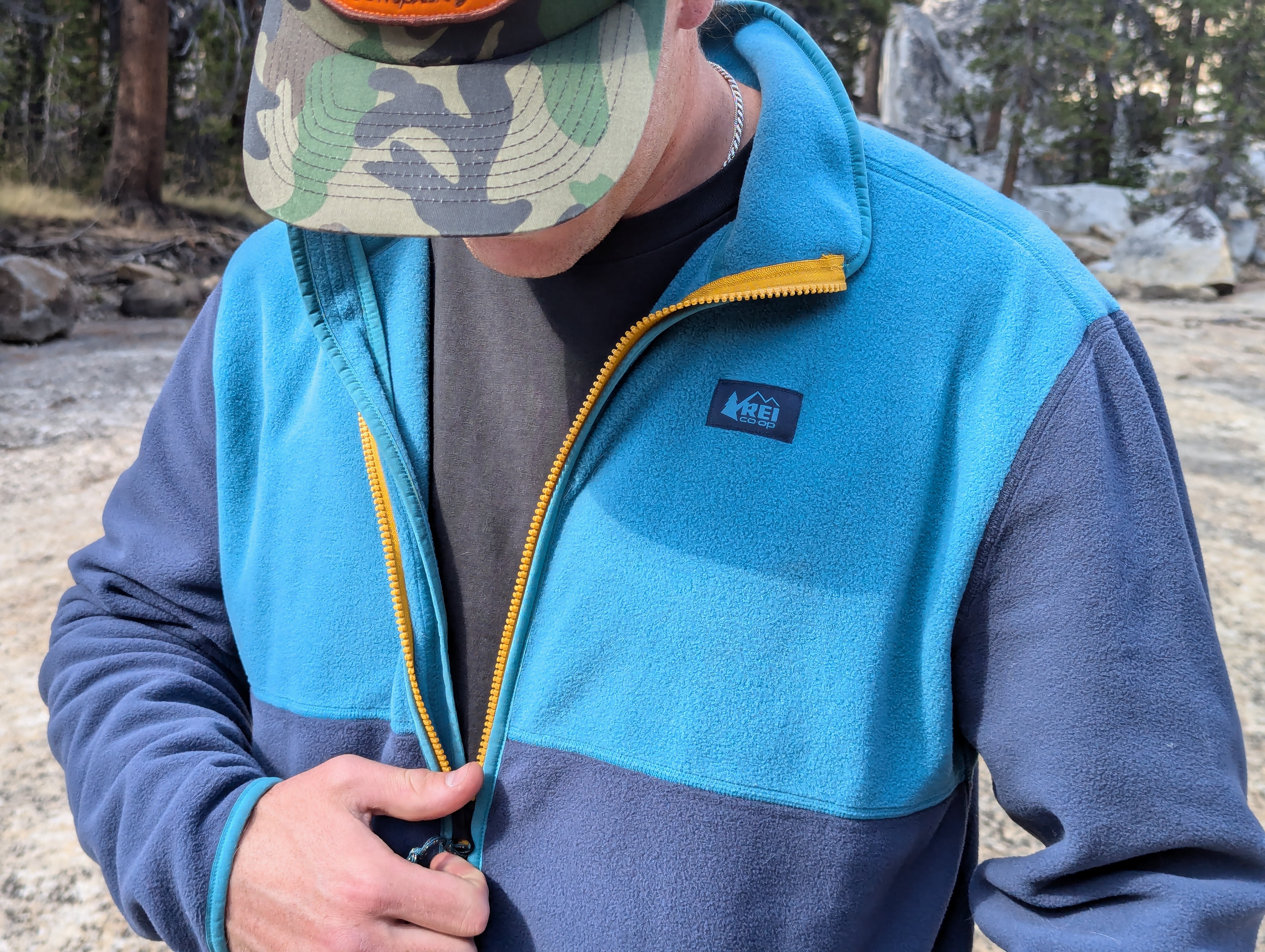
With several colorways on sale right now, the REI Co-op Trailmade Fleece Jacket ($60) was an easy pick for the best bargain fleece on the market. The recycled polyester is incredibly cozy on the skin, and we received numerous compliments on the color scheme we tested.
Recycled polyester is becoming a trend in fleece materials. It’s not exactly ‘natural’, but the recycled aspect is appealing. The softness does decline if you happen to accidentally dry it on high heat, but it’s not the type of fleece you’ll be getting dirty (though it would function just fine if you decided to do so).
Traditional fleece jackets aren’t ideal for the backcountry, so we’d recommend the Trailmade Fleece for casual wear and mild jaunts in cool weather. They don’t pack up well and aren’t breathable if you’re exerting much effort, but they still find their way into most outdoor athlete’s wardrobes.
After a long day in the mountains, there’s nothing better than a soft fleece to wear by the fire when you want to unwind. For the price, the Trailmade Fleece is an undeniably good score, and the numerous colorways and trendy color-blocking options allow you to choose a style that matches your aesthetic.
The Trailmade Fleece fit as expected, and we appreciate the elastic cuffs and interior phone pocket. We wouldn’t recommend it for jaunts where you’re wearing a backpack that might cause you to break a sweat, but it’s up to the task for active commuters and casual use.
It was perfect over a T-shirt when bouldering.
On a brisk day, we shed it while on the rock and put it back on when we were chilling on the pads or brushing holds. A contender for the most stylish fleece jacket, the Trailmade was a no-brainer as the best budget option on this list.
Material
124 g/m² Teijin Octa FUTUREFLEECE — 55% polyester, 45% recycled polyester
Pros
- Octa fleece is highly breathable, but holds warmth well when under a layer
- Extremely lightweight
- Versatile layering option
- Stretchy material is easy to move in
Cons
- Not enough pockets
- No wind resistance
- Thumb loops are a little fragile
The Quick & Dirty: So light it practically disappears in your pack, making it a stellar layer for fast-moving mountain days, though the sparse pocket setup feels like a missed opportunity.
If you’re in need of a temperature-optimizing fleece layer that allows you to move freely and breathe easily while skinning, hiking, or running, look no further than The North Face Summit Series FUTUREFLEECE Full-Zip Hoodie ($170).
From the moment we unpacked it, we were impressed by its comfortable feel. This packable, lightweight hoodie hosts a fleece-lined interior that provides just the right amount of warmth for various activities — whether it’s an early morning June hike above the tree line, a fall run between high-altitude lakes, or layering up on freezing days while ski touring in the Teton backcountry.
We love the slim fit; it’s comfortable without limiting mobility, even during scrambling. What’s more, at 6.2 ounces, it’s incredibly lightweight for a full-zip hoodie. We recall one testing session where we started in a T-shirt on a warm September morning. By the time we reached our destination — a glacial lake at 9,500 feet — clouds rolled in, and the temperature dropped quickly.
Pulling out the FUTUREFLEECE Hoodie, which is so light that we forgot it was in our pack, truly saved the day. A month later, during the same run on a much chillier day, it breathed so well that we didn’t need to avoid layer changes even while gaining 3,000 feet.
One downside is that we wish there were more pockets. The only pocket is a small zippered chest pocket. While this isn’t a major issue when paired with an outer jacket, it becomes inconvenient when wearing it on its own, as we often find ourselves searching for non-existent hand pockets.
Another consideration is that this fleece doesn’t provide much protection against the wind. It works well in a light breeze, but during strong, sustained gusts, we find ourselves needing a windbreaker. However, this lack of wind resistance also has an advantage: it makes the FUTUREFLEECE more breathable and, therefore, versatile.
Overall, the FUTUREFLEECE Hoodie deserves a spot in your gear closet if you’re looking for a lightweight, high-performance jacket that’s versatile enough for all seasons.
Fabric
51% polyester/36% nylon/13% elastane
Weather resistance
Moisture proof zipper lining
Pros
- Great breathability
- Free-ranging flexibility
- Gridded interior promotes warmth retention
- Thumb loops for mobility and coziness
- Moisture-wicking fabric
The Quick & Dirty: Built for movement and made to breathe, this trim active layer thrives under a shell in cold conditions but offers almost zero resistance when bad weather rolls in.
The Black Diamond Coefficient Hoody ($199) is a multisport active layer that excels when pushed to the limit in cold temperatures. Best when paired under a wind or waterproof shell, it’s an ideal permanent layer beneath a jacket you may take on and off, depending on the conditions.
A gridded interior and exterior retains warmth and provides a cozy, seamless feel on the skin. The athletic fit forms to the body, and the fabric has just enough stretch to maximize free movement without holding you back.
We took the Coefficient Hoody on an alpine bouldering trip and finished the day with a sunset summit of Clouds Rest in Yosemite. We used it as a standalone layer for climbing, but when the cold wind pummeled us at the summit that evening, we applied a wind jacket that fit easily over the hoodie and provided additional protection. As night fell and temperatures dropped on our brisk hike out, the Coefficient Hoody moderated our body temperature to perfection.
In cold temps, the upper zipper reached a perfect height to work as a neck gaiter. It’s an ideal layer for climbing and skiing, where you might shed a waterproof shell throughout the day. If you have an outer shell with a helmet-compatible hood, the Coefficient Hoody truly excels with its form-fitting, under-the-helmet hood. Your head will stay warm while your shell deflects any moisture from the outside.
Since its inception, this hoody has gained popularity among winter adventurers who rely on retaining core heat in their endeavors. The hip-length fit allows you to secure a harness over the jacket without worrying about it getting in the way of draws or your belay device. The zipper chest pocket is spacious, with enough room to keep a phone warm and protected beneath an outer layer.
An apt competitor to the more expensive active layers on the list, the Coefficient Hoody is one of the best fleece jackets available for outdoor athletes who rely on functional layers.
Fabric
56% recyced polyester/44% polyester
Pros
- Warm without bulk
- Breathes and dries quickly
- Stretchy fit allows easy movement
- True-to-size cut with hood and cuffs that seal in warmth
- Stays fresher on multi-day trips
Cons
- Only resists light rain; needs a shell in bad weather
- No chest pocket or thumb loops
The Quick & Dirty: Warm without the usual midweight bulk, the Evolute is a breathable workhorse for big days out, only falling short when you need robust features or real weather protection.
When we first spotted the plush interior of the Rab Evolute Hoody ($165), we assumed it would run too hot for big days. Instead, it’s proven to be one of the most breathable midlayers we’ve used. This lightly insulated piece delivers impressive warmth without bulk and manages temperature exceptionally well, whether you’re skinning uphill, hiking windy ridgelines, or running frosty trails at dawn.
We’ve worn it for ski touring in the Tetons, on long fall hikes, and for early-season bike rides, and it’s consistently kept us comfortable by moving moisture quickly and drying fast after exertion. The true-to-size fit layers easily over a base layer but still feels trim and stretchy enough for climbing moves, while the under-helmet hood and elasticated cuffs and hem seal in warmth when the breeze picks up. A soft brushed interior ups comfort on bare arms, and the odor-control treatment keeps it fresher on multi-day trips.
It sheds a light shower but wets out in anything heavier, so you’ll want to pair it with a shell in real weather. The lack of a large chest pocket and thumb loops to keep cold air out are minor drawbacks that would bump up its rating. Overall, it’s a versatile, packable piece that works year-round as a breathable, comfortable midlayer for hiking, alpine climbing, ski touring, trail running, or just throwing on around town between adventures.
Weight
22.5 oz. (men’s size M); 15.8 oz. (women’s size S)
Fabric
100% recycled polyester knit fleece
Weather resistance
No weather treatment
Pros
- Unmatched crossover appeal for everyday & casual outdoor wear
- Cozy, 100% recycled knit-fleece construction
- Highly durable & holds its shape well over years of use
Cons
- Heavy compared to true technical mountain fleeces
- Subpar wind resistance
- Tight sleeves
The Quick & Dirty: Equal parts trail-town uniform and everyday staple, the Better Sweater wins on crossover appeal, though it feels heavier and less weather-ready than its rugged looks suggest.
For essentially any adventure, climate, or terrain, Patagonia has a fleece jacket that fits perfectly into your layering system. Falling somewhere in the middle of the spectrum between purely performance pieces (like the R1 lineup) and beefy comfort (the Synchilla Snap-T), the Better Sweater ($159) is a stylish, middle-of-the-road jacket that dominates as light activewear and the ultimate around-town staple.
Its recycled polyester knit-fleece fabric offers cozy, next-to-skin comfort and adequate warmth for shoulder-season adventures or as a midlayer for colder days. However, compared to more technical fleeces, we found it offers subpar wind resistance. Additionally, while the raglan sleeves look great, they are somewhat tight along the arms, limiting the layers you can add underneath or your ability to roll the sleeves up to dump heat.
We absolutely love the versatility of this jacket, though. It looks equally at home on a casual autumn hike or while catching up with a friend over coffee. While it isn’t as warm or breathable as some of Patagonia’s other offerings, we think it’s the undisputed best fleece jacket for outdoor enthusiasts who want a solid, handsome crossover piece that can be worn every single day.
More Fleece Jackets For Your Next Adventure
Fabric
69% recycled nylon, 23% polyester, 8% spandex double-weave
Weather resistance
DWR treatment
Pros
- Versatile midlayer
- Weather-resistant and durable
- Lightweight and breathable
- Comfortably moves with the body
- Hood enhances the jacket as a standalone piece
Cons
- Machine washing eventually leads to fabric pilling
- For some body types, the cut is too slim
- Hood can feel cumbersome beneath outerwear
- Zippers felt a bit cheap
The Quick & Dirty: Part fleece, part softshell, this highly versatile mountain layer handles variable weather beautifully. Keep in mind, the slim cut and eventual pilling take a little shine off.
The Patagonia R1 TechFace ($219) can be seen pretty much anywhere serious mountain athletes are getting after it. This technical hooded zip-up is a lightweight, soft fleece that’s thoroughly armored.
The snag-free synthetic material is treated with durable water repellent (DWR), allowing precipitation to drip off while being air-permeable yet capable of barricading a breeze.
While this layer isn’t a burly shield for blizzards or rainstorms by itself, it works as an outer layer for variable weather and as a sleek piece beneath a jacket. The double-weave fabric is stretchy and breathable and can manage a range of conditions.
One of the authors of this guide used the TechFace as his primary midlayer for his thru-hikes of the Continental Divide Trail and Appalachian Trail. It kept him cozy and warm, from snowy whiteouts in the San Juans to endless days of rain through the mid-Atlantic. Paired with a lightweight rain jacket and synthetic puffy, he considers this one of the best fleece jackets for long journeys that require versatile layers.
Two hand pockets with zip closures are smartly placed a few inches above the hem, allowing space for a climbing harness. An internal chest pocket with a streamlined zipper is a great stowaway for an ID or credit card.
The hood is spacious enough to fit over a helmet yet contoured to sandwich beneath one, too. Plus, the hood has an integrated laminated visor to help prevent obstruction of vision. The stretch-knit cuffs aren’t bulky. Overall, this layer is comfortable and articulates well during big-movement activities, from skinning to climbing.
As a breathable jacket, this isn’t the warmest fleece on the list but excels as an integral, lightweight part of your layering system on high-output adventures in the mountains.
Fabric
Polartec Power Stretch Pro: 53% polyester, 38% nylon, 9% elastane
Weather resistance
No weather treatment
Pros
- Stellar next-to-skin comfort
- Four-way stretch fabric delivers great mobility
- Streamlined, stylish design
- Solid warmth-to-weight ratio
Cons
- Not very weather resistant
- No thumb loops
The Quick & Dirty: Soft, stretchy, and seriously comfortable, the Kyanite feels like pure luxury for cool days. It is not, however, the piece we would choose for nasty weather or all-out effort.
When you see that bird, you know it’s going to be cozy. After testing an absurd number of jackets, we know it takes a lot to “wow” us when donning a fleece, but the Arc’teryx Kyanite Hoody ($200) felt like a soft hug right out of the box. This may be the crème de la crème of comfort.
Polartec Power Stretch Pro fabric and a brushed line interior join forces in this technical midlayer to deliver stellar warmth and maximum mobility. This is great for casual outdoor use — like light hiking, climbing, or belaying — but the Kyanite AR can often be too warm for intense activity and isn’t the most breathable jacket out there.
This piece’s athletic fit and no-lift gusseted underarms contribute to its overall comfort. It seems to contour perfectly to your body while hopping over downed trees or navigating a tricky boulder problem, and the streamlined design makes layering a breeze.
This jacket does an adequate job of holding off weather, but didn’t perform as well as others in our test. The tight weave of the fabric provides some wind resistance, but when it really picked up, we found ourselves quickly needing to throw on a windbreaker or rain jacket. It also doesn’t have thumb loops, which we found ourselves wishing for on several occasions.
At around 15 ounces for a men’s medium, the Kyanite leans toward the heavier end of the spectrum but offers enough warmth to make up for it. This isn’t the most packable, lightweight jacket for fast backpacking missions, so if ultralight minimalism is what you’re after, this may not be the one.
However, as a toasty, crazy comfortable fleece for backcountry use and front-country style alike, you’d be hard-pressed to find a better option.
Fabric
Alfpaca Gold: 78% acrylic, 22% polyester; Kashmira side panels: 70% acrylic, 30% polyester
Weather resistance
No weather treatment
Pros
- Sleek, stylish design
- Warm, comfortable fabric
- Slim fit allows for layering
Cons
- On the heavy side
- Not very breathable
The Quick & Dirty: Sleek and quietly premium, this is a good-looking crossover fleece that brings solid warmth for casual adventures, just without the breathability needed for truly active use.
Something subtle about KÜHL products gives its seemingly ordinary jackets a stylish, premium touch. It’s hard to put a finger on it, but the Interceptr ($139) is a prime example of this.
A close-cut fit, ventilated Kashmira side panels, and hidden thumb loops make this a fine choice for casual backcountry use, with a muted aesthetic for the front country. While it would be better to find a more technical midlayer for purely active use, the Interceptr is no slouch on the trail.
The Alfpaca Gold performance fleece used in this jacket provides noticeable next-to-skin comfort. Though it’s not as warm as jackets like Cotopaxi’s Teca Fleece Hooded Full-Zip Jacket, it delivers solid heat for how packable it is.
While not a purely athletic fit, it has a form-fitting design, making this an easy jacket to layer with. It’s not quite as breathable as comparable models like Patagonia’s Better Sweater, but it does offer adequate ventilation during light activity, and keeps you nice and toasty when stopped.
If you’re looking for a high-performance fleece jacket for demanding alpine summits, this probably isn’t the one for you. However, as a durable, stylish crossover piece that looks equally good in the mountains and around town, the Interceptr is hard to beat.
Fabric
Polartec Power Grid: 60% Recycled Polyester, 33% Polyester, 7% Elastane
Weather resistance
No weather treatment
Pros
- Fantastic thumb loop design
- Solid breathability-to-warmth ratio
- Soft next-to-skin feel
- Cozy, snug-fitting three-piece hood
Cons
- No cinch cord at hem
- Fits a bit large
The Quick & Dirty: A hardworking, high-output layer with excellent thumb loops and a soft grid-fleece interior. It does almost everything well, even if it lacks the sleekest modern profile.
Who remembers Mountain Hardwear’s Monkey Man Fleece? We know — we miss it too. While it doesn’t hold the same “cult-classic” allure (or high loft) as that legendary coat, many are calling this cozy layer its closest successor. The Polartec Power Grid Full Zip Fleece ($160) has been causing a stir in the outdoor community, and after testing it all over the country for a few months, we understand why.
We dangled off tiny crimps hundreds of feet in the air, scrambled across loose scree in the alpine, cruised mellow singletrack, and bopped around town wearing this jacket, and we’re yet to find a situation it doesn’t perform well in. It has an attractive, somewhat stylish snug fit, without being too “athletic” and close cut to layer underneath. It does fit a tad large, though, so make an effort to try it on in-store before settling on a size.
Similar to Patagonia’s R1 TechFace above, it has a hard-backed fleece on the outside, and a soft grid-fleece pattern underneath, boosting durability while prioritizing breathability on high-output activities. Polartec Power Grid fabric has been a fan favorite among adventurers for a while, as its exceptional moisture-wicking abilities, breathability, and thermal efficiency make it perfect for demanding outdoor missions.
We found that this fleece moved with us well while contorting our bodies on technical rock climbs or vaulting over blowdowns on the trail. Discrete thumb loops are attached to an ergonomically shaped stretch-knit fabric panel at the cuff, which hugs the hand well and pulls the sleeves in tight along your arms. Elasticated cuffs, hem, and hood help seal in warmth, but we do wish there was a cinch cord at the hem or hood to help with the process.
We experienced similar warmth and breathability as we do with our R1 TechFace, but the Polartec Power Grid weighs a couple of ounces more. It’s not necessarily a “heavy” jacket, but it isn’t as streamlined and packable as others on this list.
In short, this fleece gave us an overall positive impression during our testing period. A few small quibbles kept it from snagging our top spot, but we still grab this hardworking layer for just about any adventure we drum up.
Fabric
Polartec, 100% recycled polyester knit fleece (body); 100% recycled nylon (overlays)
Weather resistance
DWR treatment on nylon overlays
Pros
- Stylish, adventurous design
- Incredibly warm
- Weather resistant and durable
Cons
- Fit is a bit boxy
- On the heavy side
- Bulky
The Quick & Dirty: A warm, durable classic with real heritage and all-weather chops. The Denali still holds its own, but it definitely feels bulky and boxy beside today’s more technical fleeces.
Though it doesn’t win any awards in the breathability, mobility, or layering department, few jackets can compete with the time-tested legacy of The North Face Denali 2 ($180). While this fleece has become a staple in hipster coffee shops and college campuses for its stylish design and cozy warmth, it’s far from just a casual fashion statement.
The Denali has a rich history of being worn on notable first ascents (such as Todd Skinner’s first free ascent of Yosemite’s Salathé Wall in 1988) and groundbreaking alpine expeditions (like Conrad Anker’s winter ascent of Nepal’s Ama Dablam in 1990) since its original release in 1988. The abrasion patches on the shoulders and elbows, weather resistance, and next-to-skin comfort made this a top midlayer pick for mountain athletes at the time.
While lighter, comparably warm fleece jackets now flood the market, the new reswizzled Denali 2 carries the torch, and makes this alpine classic still relevant to this day. It remains a symbol of exploration and adventure.
Burly Polartec 300 series fleece, with 100% recycled fibers, seals in warmth, while the two-ply nylon overlays on the chest, elbows, and shoulders boost weather resistance and durability. Two chest pockets and deep handwarmer pockets help with organization, and a drawstring cinched hem and elasticated cuffs help retain heat.
All the reinforcement and extras do add up, though, and the Denali 2 tips the scales at around 25 ounces, making this one of the heavier options on the list.
Though this still stands as a solid adventure layer, with all the technical fleeces out there, the Denali 2 is probably best suited as a standalone jacket for casual wear in chilly temps. Its above-average wind and rain resistance, coupled with its stellar warmth, makes this one of the better all-weather fleeces you can buy.
Fabric
100% recycled polyester fleece
Weather resistance
No weather treatment
Pros
- Extremely warm
- Roomy fit
- Stylish/mountain lifestyle vibe
- Fun colors
- Inside stuff pockets
Cons
- Bulky
- Heavy
- No zippers on hand pockets
- No hood
The Quick & Dirty: Big on warmth, color, and everyday charm. This is the fleece we grab for dog walks, coffee runs, and cold mornings, not fast-moving or pack-conscious adventures.
Are you looking for a cozy, stylish fleece to throw on whenever you head out the door to run errands, walk the dog, or shovel snow? Grab the Cotopaxi Teca Fleece Full-Zip Jacket ($140) and get after it.
The first time we put on the Teca Fleece hoody, it felt like getting a giant warm hug instead of just wearing a jacket. After wearing it just once, it earned a permanent spot right by our front door. And it’s still our go-to for frigid bike rides to work, walks with our yellow lab, shoveling every time it snows in Jackson Hole, and for heading to the brewery after a long day of skiing. Its stylish look, fun colors, perfect fit, and thoughtful features quickly turned it into our favorite for everyday wear.
The full zip keeps those pesky winds off our faces, and the dense 100% recycled fleece keeps us warm and dry even in really cold temps. And, the brightly colored stripes across the front are not just there for style (though we love the pop of color). They’re made of 100% deadstock polyester taffeta (meaning it would have ended up in the landfill) with a DWR finish, offering added protection and sustainability.
The Teca Fleece hoody works well on its own. Or, for super windy, rainy, or snowy days, it’s perfect as a midlayer under a shell for total protection. We love the snug, lofty hood that fits comfortably even with a hat but stays put no matter what. Two outer pockets keep our hands warm, and two inner pockets come in handy for carrying essentials.
There isn’t much we don’t love about this piece, but we wish the outside pockets had zippers. Their slippery taffeta inner lining and a lack of zippers make these pockets useless for storing keys, gloves, or phones. This jacket is a bit bulkier than many others we tested, but that’s part of what makes it so cozy. However, this heft makes the Teca Fleece less than ideal for vigorous activities or as a layer you carry in your backpack “just in case.”
With its fun color combos and stylish look, the Cotopaxi Teca Fleece Hooded Full-Zip Jacket sings, “The mountains make me happy.” This jacket belongs in your closet as that daily grab-n-go jacket for casual, stylish wear. Look good and feel cozy heading to the coffee shop, a work meeting, or on a mellow hike with your pup.
Fleece Jackets Comparison Chart
How We Tested the Best Fleece Jackets
Our Expert Testers
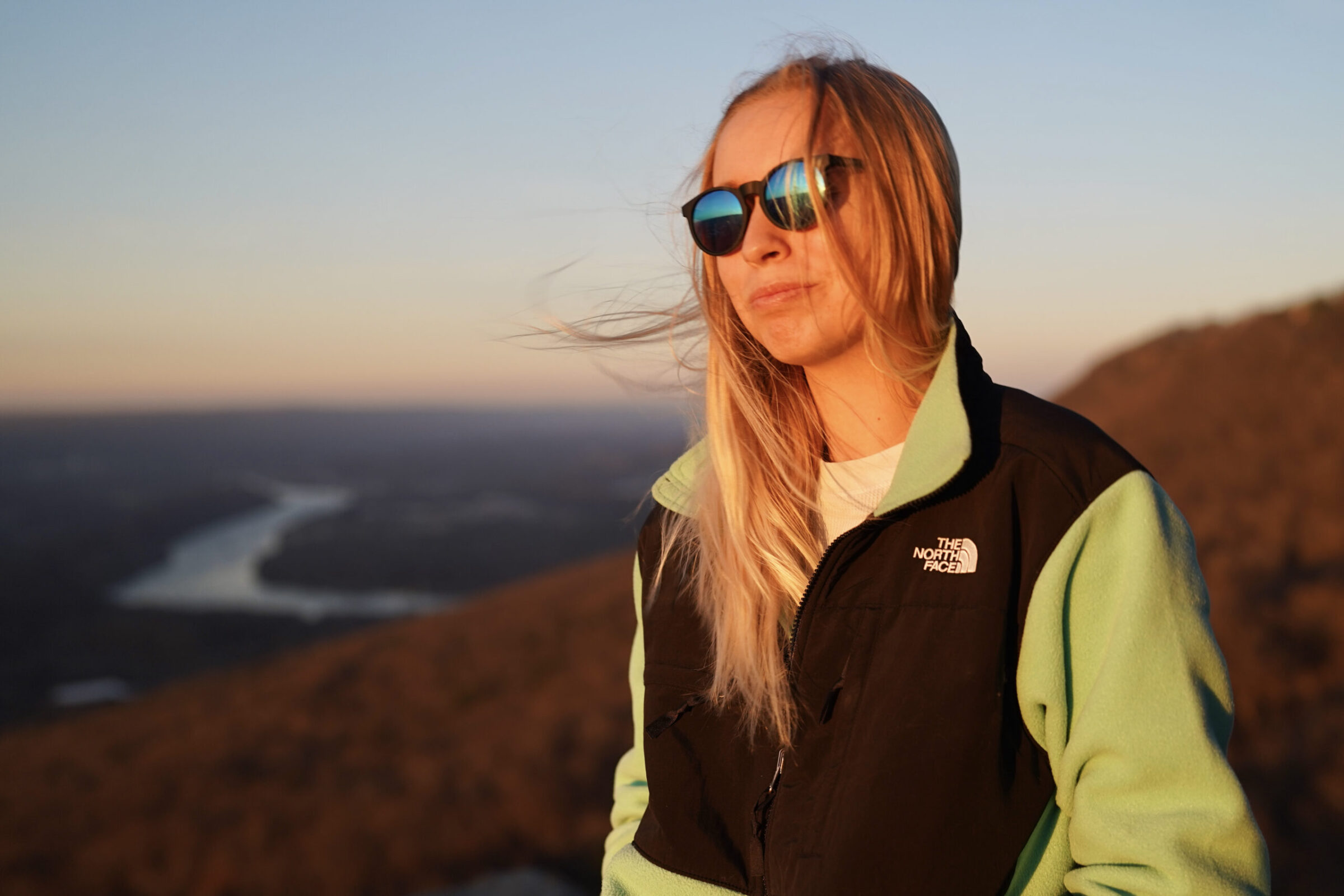
Our crew of testers includes an AMGA-certified (American Mountain Guides Association) rock guide, sugar beet harvester, ski patrol tail guide, triple crown thru-hiker, professional wildlife photographer, avid climber, rancher, lifelong backcountry and resort skiers, and hunters. Between the lot of us, we’ve worn these cozy layers in just about every environment imaginable.
Staff author Steve Graepel, a dedicated runner, traveler, and all-around outdoor athlete, kicked this guide off in April 2021 with an initial roundup of nine jackets. Senior Editor Chris Carter took over this guide in August 2022, and obsessively combed online catalogs and bugged brands at gear shows to find the best fleece jackets.
Chris has thru-hiked the Triple Crown of long trails (the Appalachian Trail, Pacific Crest Trail, and Continental Divide Trail) and continues to pursue long-distance hiking around the world. He’s had the chance to test a range of different fleece jackets on these trails, and considers them one of the most vital elements of your layering system on both long journeys and casual weekend adventures alike.
In 2024, Ryan Kempfer and GearJunkie editor, Chris Kassar, both writers and gear testers for decades, worked on the newest edition of this guide. Chris and Ryan are both avid skiers, hikers, and outdoor enthusiasts who prefer adventuring in the cold. They’ve been keeping their fingers on the pulse of the fleece jacket market ever since to bring you the most current, deserving selection possible.

Our Testing Grounds & Process
Our team has tested, reviewed, and published fleece jacket guides for men and women for several years across all seasons. To challenge and determine the best designs, our product testers have worn these jackets across a spectrum of environments and tasks in the Rockies, including in Colorado’s Gunnison Valley and in Mammoth Lakes, Calif., some of the coldest, snowiest destinations in the U.S.
We took these jackets climbing in Yosemite, backcountry skiing in Crested Butte, hiking in the Tetons and used them every day for errands and casual dog walks in Colorado, Wyoming, California and Colorado.
For this guide, we considered the most popular, highly acclaimed, well-made, and size-inclusive fleece jackets made for a variety of activities and across a range of prices. We know the competition in the fleece market is fierce, which is why we have slotted this guide into a regular update schedule and work hard to stay on top of new trends, technologies, and models the moment they become available to the public.
Rest assured, the list you see above represents the best of the best. If you’re in the market for different types of jackets, check out our guides to the best down jackets, the best synthetic insulated jackets, and the best winter jackets.
Our Fleece Jacket Rating System
We score each fleece jacket on warmth, durability, style, and breathability to give readers a clear sense of how it performs. Warmth reflects how well the jacket traps heat in real-world conditions. Durability looks at how the fabric and construction hold up to repeated use, abrasion, and washing. Style captures fit, cut, and how versatile it feels from trail to town. Breathability measures how well the fleece moves moisture and prevents overheating during activity. The overall rating isn’t a simple average of these numbers; a jacket may excel in one category but lag in another, and our final score reflects how those strengths and weaknesses balance out in real-world use.
Buyer’s Guide: How to Choose a Fleece Jacket

Material
Most fleece jackets are completely polyester or polyester blended with fibers like nylon, elastane, or spandex. There’s a growing trend of brands using recycled nylon or polyester for all or a portion of the mix.
Some designs incorporate technical Polartec fleece fabrics that offer weather and abrasion resistance or temperature-management properties like the stretchy and sweat-wicking Power Stretch Pro textile or Polartec Alpha active insulation.
A handful of fleece jackets integrate wool fibers into the synthetic blend to bridge the qualities of both.
Fit: Comfort & Performance
There’s a lot to consider when adding a fleece to your layering system. These jackets truly shine as additional layers when temps plummet or as a cozy, warm layer while walking around camp. They work well as a ventilating barrier underneath a rain jacket and help prevent water from seeping through breathable rainshell fabrics during heavy storms.
They are wildly popular for their versatility and comfort but aren’t the best option as a sole outer layer in most cases. The jackets above that use technical fabrics are usually made with a more athletic fit, and catered toward those looking for an active-use layer.
These jackets need to be extremely breathable while moving yet offer significant warmth while static. Given their greater protection, warmth, and packability, an active insulation synthetic jacket may work better in this area.

What a fleece jacket lacks in technical performance and warmth it makes up for in breathability. While many fleeces like the Cotopaxi Teca Fleece Hooded Full-Zip Jacket have a more casual, lifestyle-oriented look, some manufacturers provide form-fitting, extra-breathable fleeces that offer greater mobility and durability for high-output activities.
Jackets like the Arc’teryx Kyanite Hoodie and Patagonia R1 TechFace or Air fit this bill. Some may not be as cozy as the less athletic, comfort-oriented models, but they will regulate temperature better during intense activities like rock climbing or trail running. Before deciding what to buy, it’s important to consider how you plan on using your fleece and the ratio of comfort to performance that you want on your adventure.
Recycled Fibers
Some fleece jackets, such as the Patagonia R1 TechFace Hoodie and Fjällräven Abisko Trail Fleece Jacket, use recycled fibers like nylon and polyester. One recycled fabric, for instance, is made by Repreve, which uses post-consumer plastic water bottles to create the textile.

Insulation & Weight
The insulation provided by fleece jackets varies based on the material’s density, which is measured in grams per square meter (gsm). Generally, the designs are also categorized as lightweight, midweight, or heavyweight, and warmth increases with the gsm number:
- 1-150 gsm: Lightweight (warm)
- 150-250 gsm: Midweight (warmer)
- 250+ gsm: Heavyweight (warmest)
Lightweight fleece jackets (100 gsm) work well for 32-50 degrees and moderate aerobic activities. This is a good choice for extra insulation on a winter run, for instance.
Midweight fleeces (200 gsm) are thicker for 0-32 degrees and are the most versatile. This loftier option works well beneath a ski shell or while walking on an autumn evening.
Heavyweight designs (300 gsm) are created for the heart of winter and standstill activity. Without precipitation, this layer can also function as an outer layer in cold weather.
Naturally, the greater the gsm, the more the overall jacket weighs, too. You’ll need to balance your preference for overall fleece weight with the warmth properties needed for your activity.
Fleece vs. Synthetic and Down Insulation
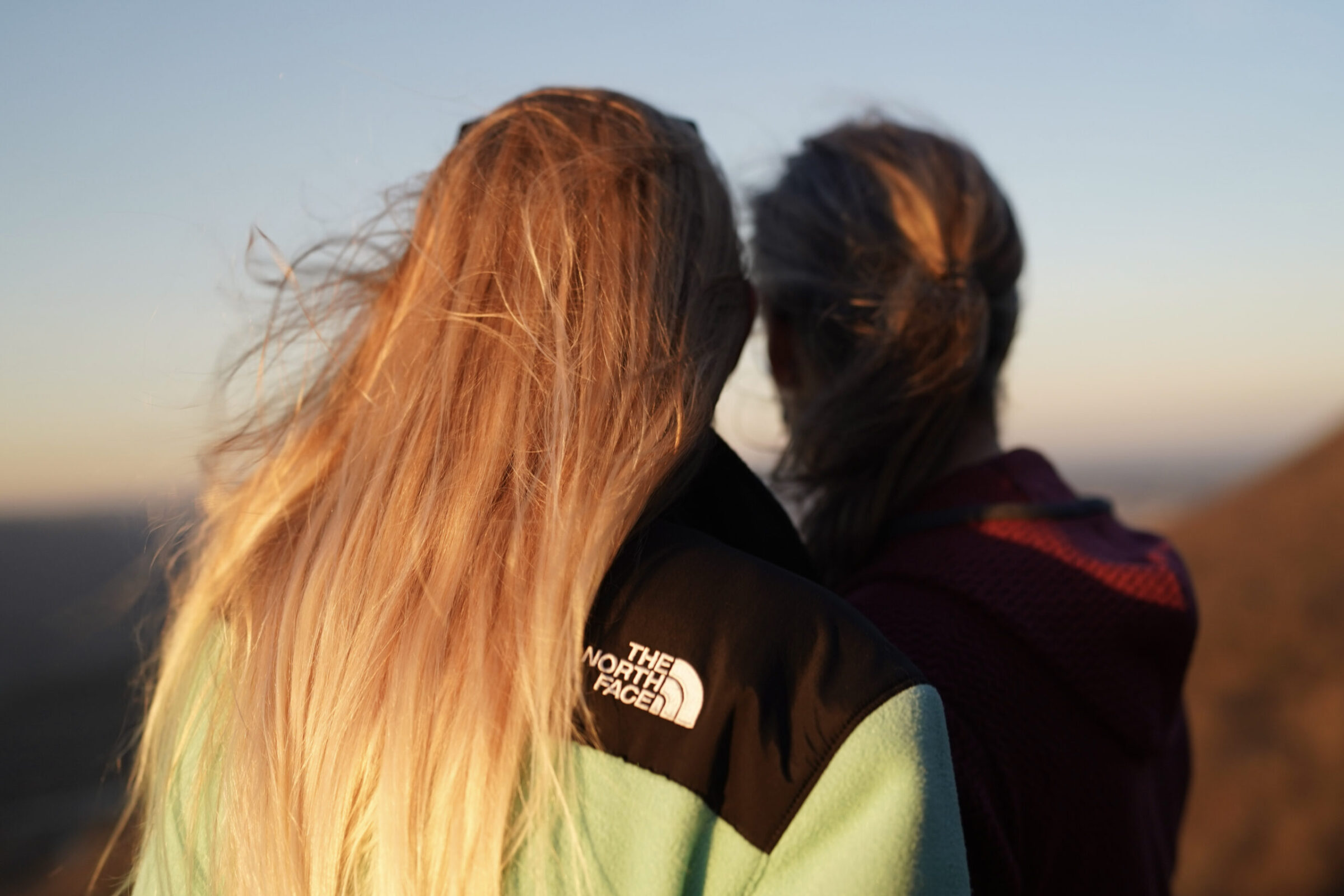
As we touched on above, fleece jackets differ from synthetic and down jackets in that they are generally more breathable but also less packable, protective, and lightweight. Down and synthetic jackets tend to be more expensive but provide a beefier barrier from the elements and have a higher warmth-to-weight ratio.
While layering a fleece with another heavier jacket is usually the move on longer adventures, if you are trying to choose one of the three as a primary jacket, there are some benefits to fleece over down and synthetic insulation. Both down and synthetic insulation need to be sandwiched between an inner and outer liner.
This fabric usually doesn’t boast the same next-to-skin comfort or breathability of a fleece jacket and can get sticky and clammy once sweat begins to build up. Also, the fabric of fleece jackets is often more durable than the thin lining material used on lightweight puffy jackets, which can make them better for technical off-trail travel.
Fleece jackets generally have better moisture-wicking abilities, and are therefore great for high-intensity activities where weight and bulk aren’t a primary issue.
Weather and Water Resistance
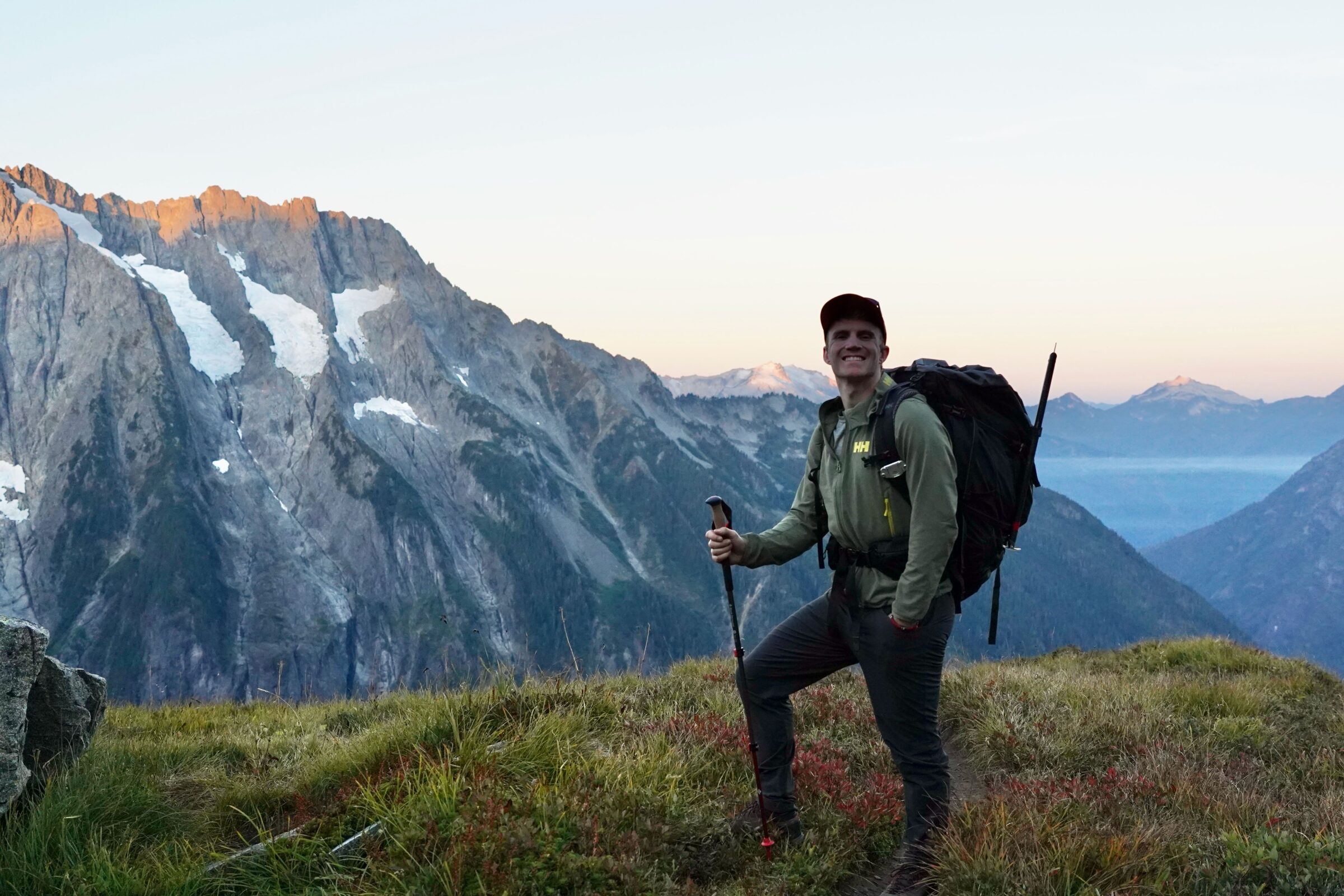
Some fleece designs are treated for weather and abrasion resistance, increasing the fabric’s durability and resilience to harsh weather like rain, wind, and snow. These types of jackets can be an especially good choice for activities like rock climbing, mountaineering, or backcountry skiing when recreationists need to move quickly and desire a layering system that works well across variable conditions.
While we don’t necessarily consider a DWR treatment an important feature for fleece jackets, some models boast hefty DWR coatings that boost both water and wind resistance. If heavy rain is in the forecast, you’ll obviously want a rain jacket or hardshell to throw over top, but jackets like these can keep you cozy and dry in a light sprinkle — and also tend to land on the more durable fringe of the spectrum.
Breathability
One of fleece’s greatest properties is that it’s inherently breathable, even when the blend includes a weather treatment. That said, if you tend to run hot and pull on a heavyweight fleece, the warmth can outweigh the breathability.
Some models are much more breathable than others. The North Face FUTUREFLEECE Full-Zip Hoodie uses eight-sided Octa yarns to achieve an awesome balance of breathability and warmth. Others, such as Patagonia’s R1 Air Full-Zip Hoody and Mountain Hardwear’s Polartec Power Grid jacket, feature a grid fleece pattern that increases moisture regulation while still trapping a significant amount of heat.
Using your fleece jacket as an element of your layering system allows you to weather much rougher conditions than if you were to wear it as a standalone piece. Pairing your fleece with a burly rain jacket or hardshell when the clouds open is a must for weathering the storm with ease. If it’s just wind you’re worried about, throw a thin windbreaker jacket over your insulator for an ultralight solution to thermal efficiency.
Collar & Cuffs
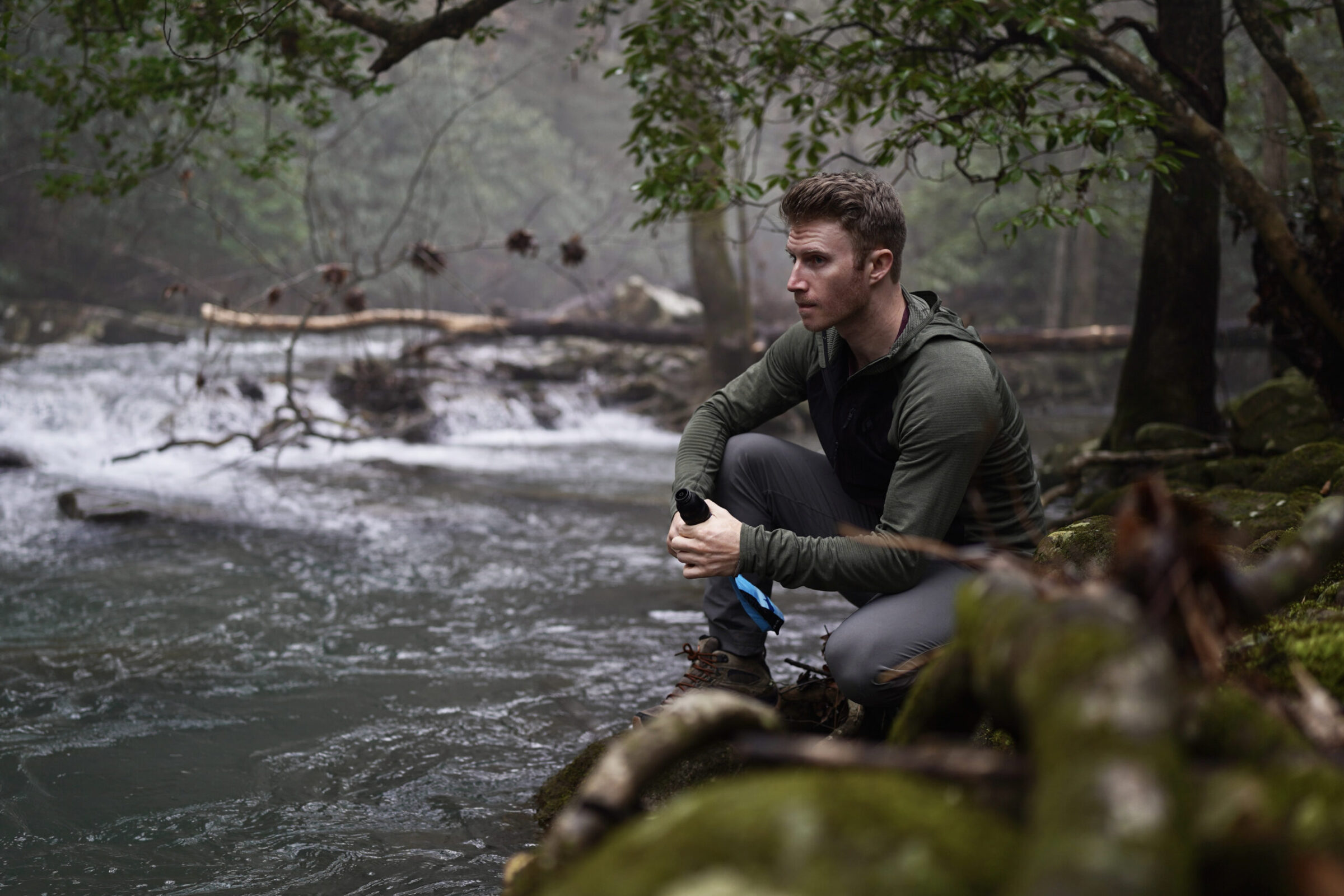
Many fleece designs feature a short or tall cuff that zips up to protect the chest and neck from the cold and zips down to expel heat. Some fleeces also include a hood any may be streamlined for bike, ski, or climbing helmet compatibility.
The cuffs are usually closed via a gentle elastic closure at the wrist or farther down the hand toward the base of the fingers. Some sleeves have an extended thumbhole design, like the Black Diamond Coefficient Fleece Hoody. This is popular for folks who need extra protection and warmth on their hands.
Pockets & Zippers
Fleece jackets usually have two external zippered hand pockets in the front. If you need to wear a harness for climbing, ziplining, or ski mountaineering, check that pockets are placed higher up to pair well with a harness.
Occasionally, designs have a kangaroo-style front pocket, which offers a nice place to stash a small purse or many snacks.
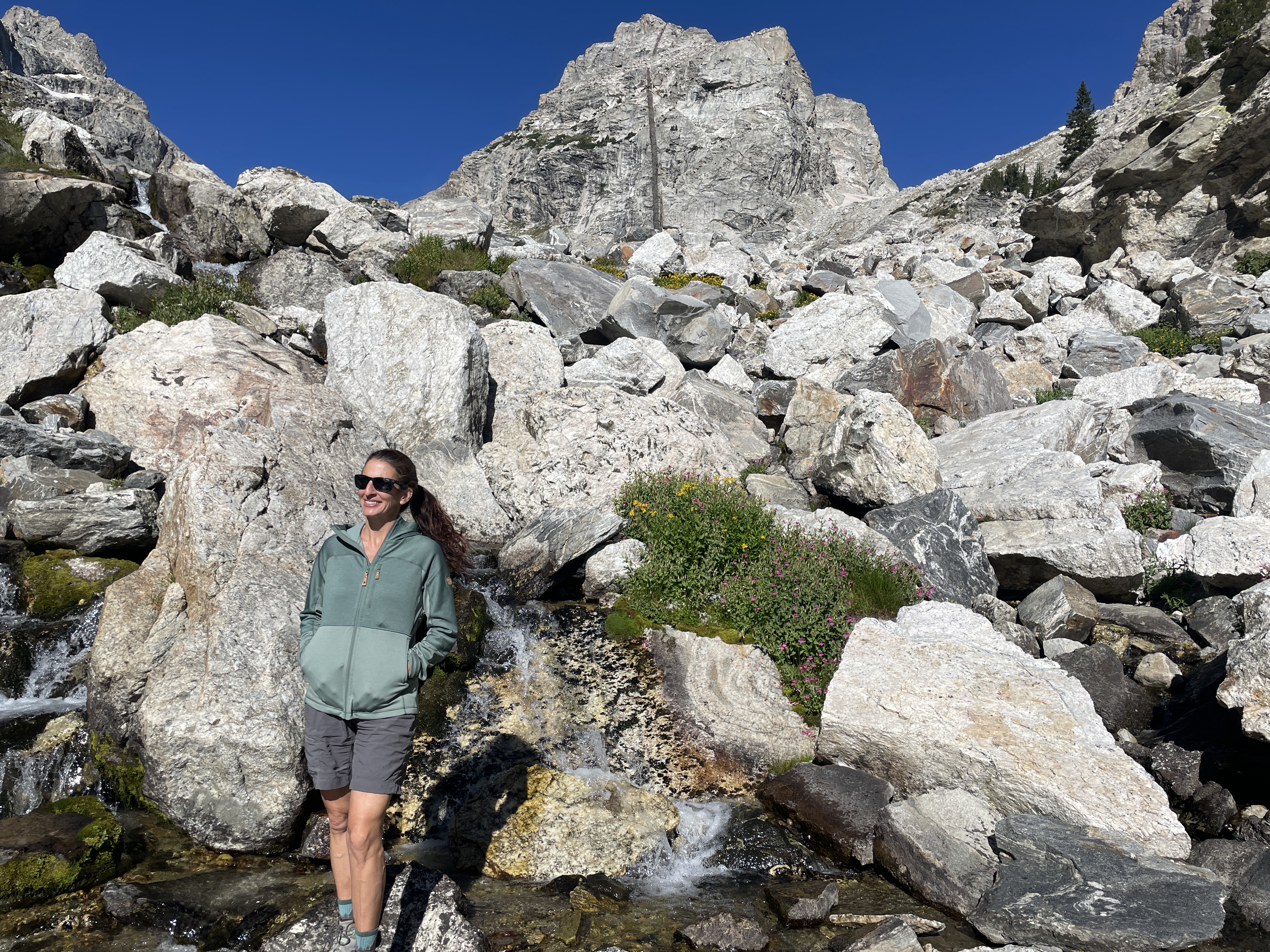
Some models include a zippered chest pocket that can be internal or external. The Fjällräven Abisko Fleece has a large chest pocket with ample room for a phone and other accessories. Occasionally, designs add a small zippered pocket on an arm. A handful, like the Cotopaxi Teca Fleece Hooded Full-Zip Jacket, have roomy internal pockets, too.
Traditionally, jackets will have a full zipper closure in front. Or, pullovers will have a partial zip or button closure from the chest to the neck. Zippers are generally seamless but vary in size and quality — YKK is the most robust.
Caring for a Fleece Jacket
Fleece jackets are built to withstand a good amount of torture on trail. But, you can take a few steps to prolong their life. Fleece jackets can be quite susceptible to pilling if cared for improperly. This can reduce the life of your jacket and its insulating properties. Wash it on gentle, using cool water, a mild detergent, and line-dry to avoid this.
Price & Value
The majority of fleece jackets range from high-end technical pieces at $200-300 to budget-friendly $50-100 fleece and everything in between. Generally, the higher the cost, the more durable, weather-resistant, and multi-functional the fleece is for a broader range of activities and conditions.
Budget
Coming in below $100, our top budget pick, the REI Co-op Trailmade Fleece Jacket, is durable, comfy, and ideal for casual use. It’s great for sitting around at a campfire or running errands on a fall morning but lacks the technical aspects and high price of other fleeces that are more suited for active endeavors.
Mid-Tier
Most fleece jackets on our list fall within the $130-190 range. Our best overall, the Patagonia R1 Air Full-Zip Hoody and most stylish option, the Cotopaxi Teca Fleece Hooded Full-Zip Jacket ($140) fall here. This category also has our favorite jacket for active pursuits, the Black Diamond Coefficient Hoody and our favorite ultralight option, The North Face FUTUREFLEECE Full-Zip Hoodie ($170). Mid-tier fleeces are designed for a variety of activities. They have a wide range of features (or lack them) and can also be very technical or not.
For example, the Patagonia Lightweight Synchilla Snap-T Fleece Pullover ($139) is better suited for errands and hanging out. The KÜHL Interceptr Full Zip Jacket (also $139) performs well on the trail. Our point here is: don’t decide by price alone. Be sure to check out all the bells and whistles, including pockets, breathability, and weight, to make sure the jacket is made for how you plan to use it.
Premium
Anything above $200 packs a price tag that may give you pause. However, these are typically extremely lightweight and technical fleeces sure to perform in all conditions. For example, the Patagonia R1 TechFace Hoody ($219), Arc’teryx Kyanite AR Hoody ($200), and the Rab Ascendor Summit Hoody ($200) are all designed to deliver mobility and warmth for more active applications.
The Rab Ascendor is breathable and has body mapping that keeps heat in where you want it and ventilation where you need it. The Pataognia R1 Techface is a favorite of serious mountain athletes due to its ability to perform in high-output activities.

Frequently Asked Questions
Fleece is an insulating midlayer or lightweight outer jacket created from synthetic materials, typically polyester or a polyester blend. The human-made fabric is soft, breathable, and quick-drying, and it imitates wool fleece. Often, fleece jackets are long-sleeved with a full or partial front zipper. The material needs an additional treatment in order to be wind- or water-resistant.
Fleece is not to be confused with wool fleece, a natural fiber used to create apparel. This can come from a variety of animals including sheep, lamb, alpaca, and goat.
The first-ever synthetic fleece textile was developed by Malden Mills Industries, which is now known as Polartec, in 1981. Using the fabric, Patagonia collaborated with the company to develop the Synchilla Fleece pullover in 1985. Today, many companies in addition to Polartec produce fleece fabric.
Fleece tends to hold smells, especially compared to wool, which is naturally odor-resistant. Pile fleece designs, which are fluffier and super cozy, can be bulky. Also, fleece doesn’t inherently block wind, rain, or snow — other outer layers are much better choices for weather protection.
When fleece does get wet, it doesn’t insulate well. The fabric tends to pill or clump over time. The fabric can also generate static electricity, which attracts and holds hair. Also, be careful around a fireplace, furnace, or campfire — untreated fleece can melt at low temperatures.
In a word, yes, fleece is better than cotton — if we’re talking about managing precipitation, turbulent weather conditions, perspiration, and overall safety during outdoor activity.
Though some folks enjoy the touch of cotton, fleece is a hydrophobic fiber that repels water and dries relatively quickly. Cotton absorbs moisture, doesn’t dry quickly, and can chafe when wet.
Recreationists should avoid fabric that holds sweat and stays damp, which can potentially increase the risk of hypothermia and discomfort.
Read the full article here