





The best camera backpacks and bags do more than just haul your gear; they protect your investment and help you stay focused on capturing the perfect shot. Since 2021, our team has tested more than 30 top camera packs and bags across photo and video shoots around the world, putting them through everything from muddy trails to packed concert crowds.
This guide encompasses both camera bags and camera backpacks. Below, you will find reviews of backpacks, followed by reviews of bags, grouped together with comparison charts. Below our product recommendations, there is a highly informative buying guide on choosing camera bags and backpacks.
Across all categories, we evaluated each backpack and bag for comfort, durability, accessibility, and overall gear protection. This guide highlights the best options, whether you’re an amateur shooting nature walks with a single camera or a pro running back-to-back events.
Editor’s Note: We updated this guide on February 5, 2026, by adding a camera bags section.
The Best Camera Backpacks of 2026
Best Overall Camera Backpack
8.6/10 Rating
Best Budget Camera Backpack
7.3/10 Rating
Best Camera Backpack for Daily Use
7.9/10 Rating
Best Camera Backpack for Adventurers
8.0/10 Rating
Best Camera Backpack for Flying
7.5/10 Rating
Most Versatile Camera Backpack
8.2/10 Rating
Best Camera Bag for Event Shoots
See more picks
-
Padded interior is ultra-protective and includes a padded waist strap -
Exterior fabric and zippers are durable and water-resistant -
Expands for change of clothes and toiletries -
Lots of sturdy storage
-
No rain cover -
Heavy for long periods of travel
-
Budget-friendly -
Two exterior bottle holders
-
Lacks many interior pockets for organization -
Smaller volume -
Not the most quality construction
-
Sleek, extremely functional design -
Simple to access all gear from any angle -
Pass-through back for fixing to carry-on -
Tons of organization in a tiny package -
Beautiful construction and aesthetic -
Solid weather resistance for outdoor use
-
Thin, sparsely padded straps get uncomfortable when pack is fully loaded with heavy gear -
Unorthodox sternum strap -
Laptop can be a bit difficult to remove when bag is full
-
Adjustable and extra padded shoulder and waist straps provide a comfortable carry -
Expandable 7-liter roll top provides extra storage -
Action sport-friendly features like helmet holder, ski carry, and hydration routing -
Multiple sizing options available
-
Cube insert sold separately -
Magnetic waist strap buckle collects rocks and debris easily and won’t close
-
Converts easily from backpack to roller bag -
Sized to meet standard carry-on requirements -
Optimal space for camera gear
-
No waterproofing on zippers -
No separate area for carry-on clothing -
Heavy and bulky
-
Lightweight -
Super versatile -
Very comfortable -
Great details
-
Can feel overly complicated -
Elastic mesh doesn’t usually hold up over time -
May need to purchase additional cubes depending on desired level of protectio
Camera Backpacks Comparison Chart
How We Tested Camera Backpacks
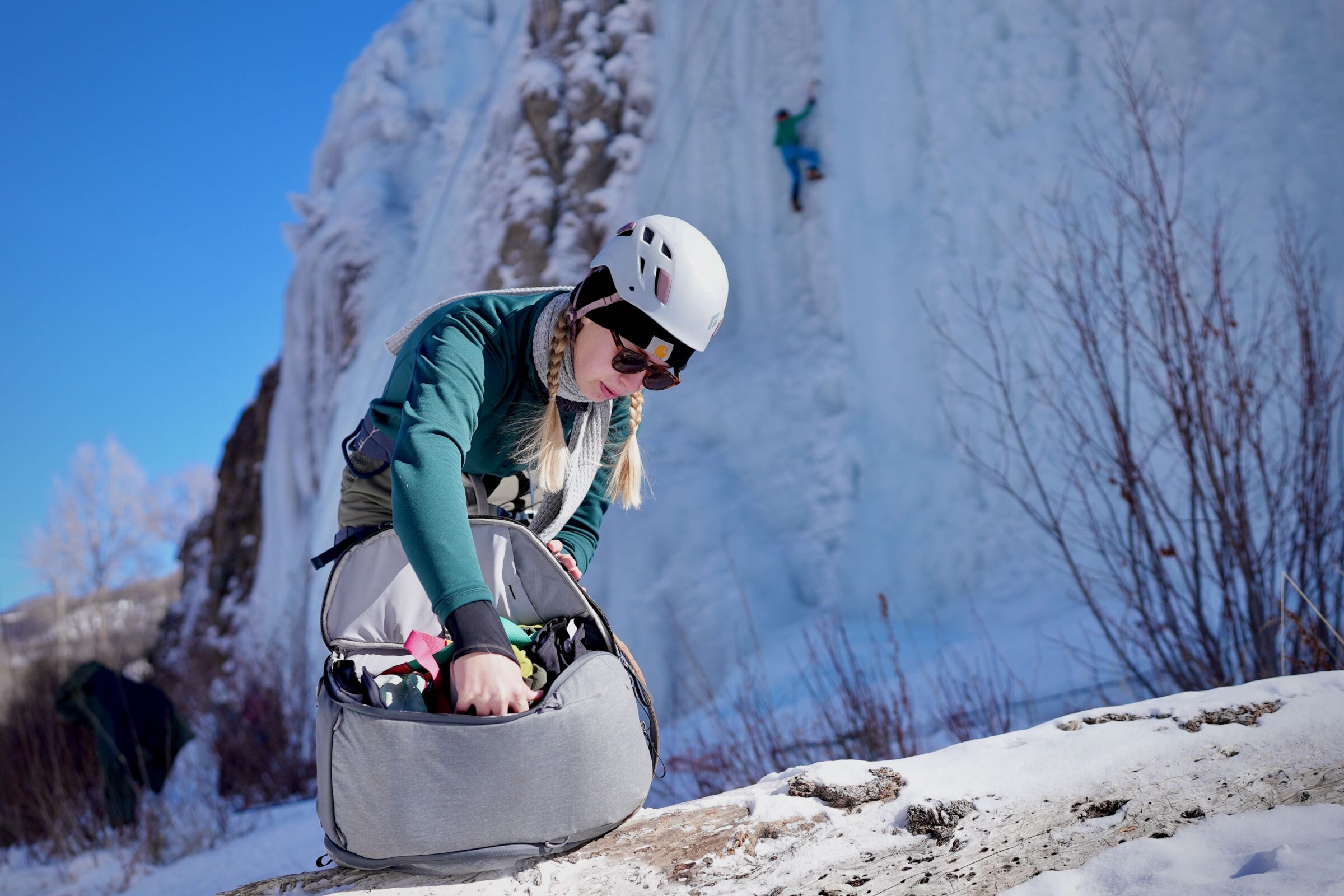
To build portions of this guide, GearJunkie contributors Chris Carter and Kendra Smith hauled backpacks from mountain summits to city centers. Carter, who regularly shoots in some of the harshest conditions on the planet, is notoriously picky about what protects his kit. Smith, a Minneapolis-based editorial photographer, pushed several models through international travel and urban assignments. In 2024, adventure photographer Eric Phillips joined the team, lending his detail-oriented eye and years of experience in outdoor and commercial photography.
We also tapped tester Katelyn Clement, who has photographed major concert events, video shoots, and outdoor excursions throughout her 8-year career. She tested 10 of the top camera bags on the market, weaving through tight crowds and trekking muddy trails, to determine which designs actually keep expensive equipment safe and stress-free on the move.
Our Testing Grounds and Process
With decades of experience behind the lens, GearJunkie’s rabble of creatives is no stranger to flashy photography trinkets — and they know the importance of keeping that precious glass safe and sound in any environment.
A good camera backpack is the foundation of a successful shoot. It keeps thousands of dollars of heavy, fragile gear cocooned in cushy compartments and is the difference between getting that perfect shot or endlessly fumbling around while the sun sinks below the horizon.
For that reason, our team doesn’t take our testing lightly. We rummaged around online forums, bugged our pro photog contacts, and scoured the tables at gear shows to narrow in on the absolute best roundup of camera backpacks on the market. Rest assured — this list represents the crème de la crème of these niche packs.
These backpacks wound their way along cobblestone streets in Europe, bounced across the dusty African savannah, slowly plodded up endless Sierra switchbacks in California, and were thoroughly abused in the Colorado backcountry. We clocked some serious distance and time with each model and would feel confident recommending any one of them for your various photography ventures.
Our Expert Testers
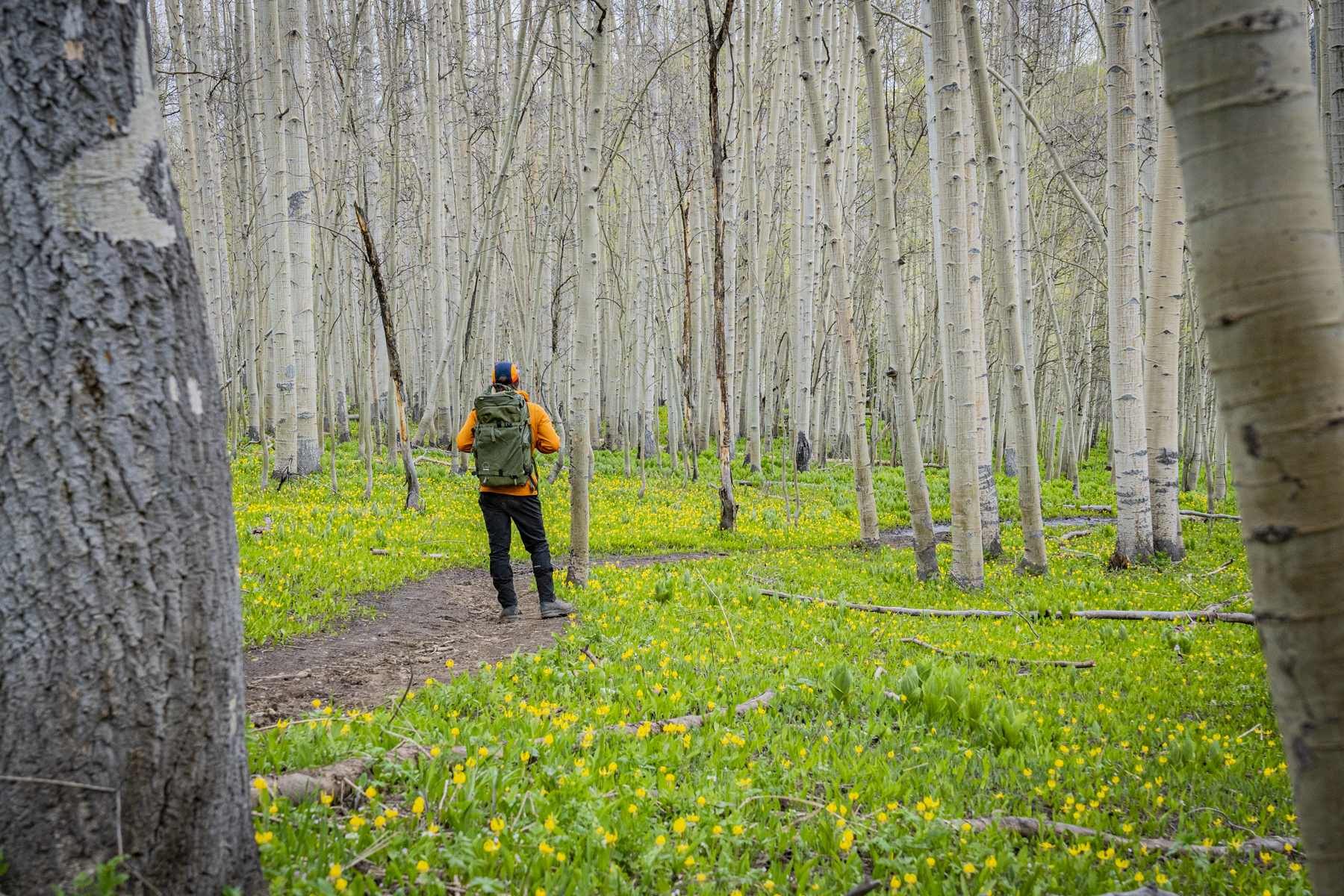
Senior Editor Chris Carter and GearJunkie contributor Kendra Smith joined forces to spearhead this guide. Taking over 10 different camera backpacks on shoots and adventures all over the world, they reviewed this fresh stock of packs over a year-long testing period before settling on the list above.
In 2024, adventure photographer Eric Phillips took over this guide and tested five new backpacks. Some backpacks he’s been using for a few years, while he tested others for 6 months. Eric is most known for his images that capture compelling landscapes, human exploration, and outdoor industry news. His outdoor photos have been featured in local and national publications, including 5280 Magazine, REI Co-op Journal, SNEWS, Elevation Outdoors Magazine, and Adventure Pro Magazine.
Through his experience, he has learned what makes a great camera backpack, and his critical testing is key to the recommendations in this guide. If you’re looking for other camera gear, check out our guide to the best camera tripods.
The Best Camera Bags of 2025
Top Picks
Best Overall Camera Backpack
8.6/10 Rating
Best Budget Camera Backpack
7.3/10 Rating
Best Camera Backpack for Daily Use
7.9/10 Rating
Best Camera Backpack for Adventurers
8.0/10 Rating
Best Camera Backpack for Flying
7.5/10 Rating
Most Versatile Camera Backpack
8.2/10 Rating
Best Camera Bag for Event Shoots
See more picks
-
Dedicated tablet sleeve with magnetic closure -
Divider shelves aid in organization & increase versatility -
Shell is 100% recycled -
Inside stretchy pockets increase storage and organization -
Top of the dividers fold over for added protection -
Tripod and external carry clips allow for extra gear -
Weatherproof -
Comes in 3L, 6L, and 10L for varying needs
-
Rigid dividers -
The inside side pouches are too small for anything -
Inner zipper pocket fits only small things -
Front zipper pocket is very flat
-
Slot for a small tablet -
Room for a full frame camera and extra lens -
Lots of side pockets -
Rubber feet on bottom
-
Access to gear is a bit cumbersome -
Plastic clasps seem flimsy
-
Does not fall forward when you reach into it -
Three ways to carry -
Weather resistant -
Three grab handles and key clip -
Tripod straps work well -
Fits 16″ laptop -
Comes in a variety of sizes for different needs (3L, 6L, and 9L)
-
When using the laptop pocket, the laptop hangs out, unprotected -
Sides aren’t very well padded
-
Water resistant -
Rain cover included -
Easy access zipper -
Customizable “shelf” inserts -
14” computer or laptop compartment -
Water bottle pocket -
Shock absorbing materials -
Attached, external suitcase strap -
Easily adjustable strap clip
-
Tripod holder is just two small, internal bungee cords
-
Tripod can be attached to bottom -
Customizable inserts -
Stabilizer strap included and removable – Can switch sides for right or left arm dominant -
Fits 11” iPad or Tablet pocket -
Contains no harmful PU, TPU, PVC, or DWR coatings -
Quick snap magnetic clips -
“Wing” features -
Waterproof and durable YKK zippers -
Comes in 6L and 10L
-
Inside fabric will get dirty easily -
Sailcloth is noisy -
Pricey for a bag of its size -
Front pouch is a little small
Camera Bags Comparison Chart
| Camera Bag | Price | Weight | Inner Dimensions | Materials |
|---|---|---|---|---|
| Peak Design Everyday Sling V2 6L | $120 | 1.72 lbs. | 11-9”x 4.33-3.5” x 8.27” | 400D double poly-coated DWR-impregnated nylon canvas shell. 100% recycled post-consumer material, nylon interior. Hardware is anodized aluminum and glass-reinforced nylon (weatherproof) |
| Amazon Basics Large DSLR Gadget Bag | $43 | 1.56 lbs. | 11” x 6.5” x 7.5” | Polyester, nylon, Velcro |
| WANDRD Rogue Sling 9L | $159 | 1.74 lbs. | 7.75” X 13″ X 5″ | 840D Jr. ballistic nylon with 5PM coating, weather-resistant 1680D ballistic nylon, weather-resistant YKK zipper |
| Manfrotto Advanced Messenger Camera Bag M III | $125 | 2.4 lbs. | 14.17” x 10.24” x 5.12” | Water-resistant materials, high-density EVA foam (M-Guard), viscoelastic memory foam |
| Moment Rugged Camera Sling 10L | $100 | 1 lb. 12 oz. | 14.2” x 7.9” x 5.1″ | Waterproof NPX, recycled polyester sailcloth, laminated sailcloth |
How We Tested Camera Bags
Our Expert Testers
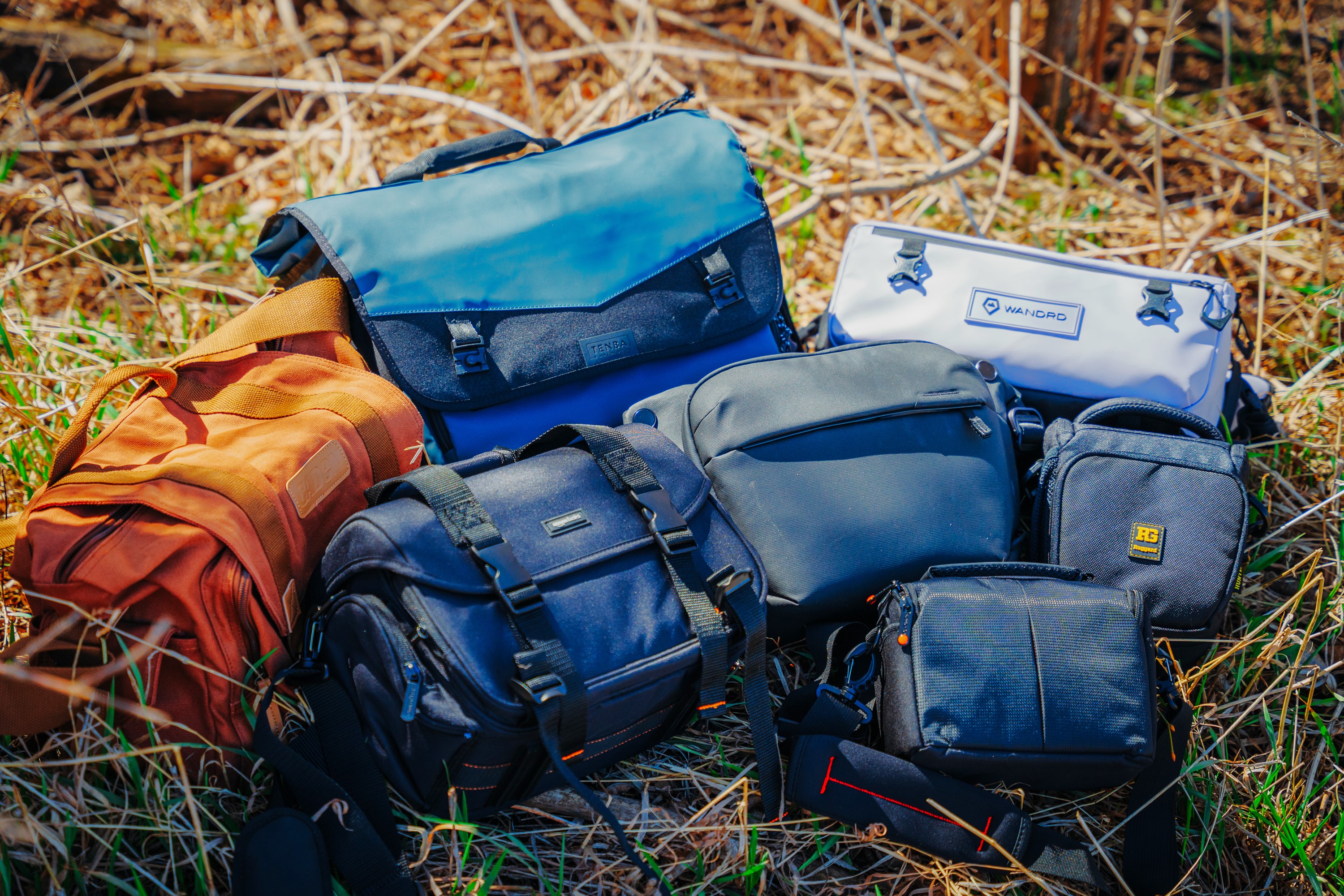
The best way to test a camera bag is to fill it with the gear you need and put it to use “in the wild.” So, that’s exactly what our tester, Katelyn Clement, and her partner, Ethan Weise (also a professional photographer), did. With 20 years of photography experience between them, this dynamic duo made the ideal team to determine each bag’s performance.
Through her 8-year photography career, Clement has photographed large concert events, video shoots, and outdoor excursions. She and her camera have been through it all, so she knows what makes a camera bag good enough to protect your expensive gear from bumps, spills, drops, and more.
Ethan is a Midwest photographer, videographer, and creative director based in South Dakota, documenting candid moments and authentic glamour for portraits, live music, events, and commercial work. Together, they tested about a dozen camera bags to bring you their favorites.
Our Testing Process and Grounds
Clement’s first goal was to test whether manufacturer claims for materials between “water resistant” and completely “weatherproof” held up. Cameras, lenses, and associated equipment are never cheap. And you don’t want something as simple as a fabric to damage an expensive lens.
In addition to photography experience, Clement and her partner have almost 30 years of outdoor experience. They hike, camp, and raft in every free moment. They hiked these bags through forests and along muddy creeks for over 6 months. They set them down in wet gravel and used them in snow, rain, and sunshine.
Their discovery? Practically all manufacturers were honest when they claimed materials were water-resistant or weatherproof. A few of the less durable bags may show signs of wear sooner (we’ll report on this in our next update), but they survived our initial outdoor test.
The next test came when they were hired for photo events. Some of these bags are geared toward professional photographers, so our testers knew they needed to be compared against one another. At crowded events, bumps and spilled or sloshed drinks are inevitable. Thus, they offered a great opportunity to test durability and protection.
Buyer’s Guide: How to Choose the Best Camera Backpacks and Bags
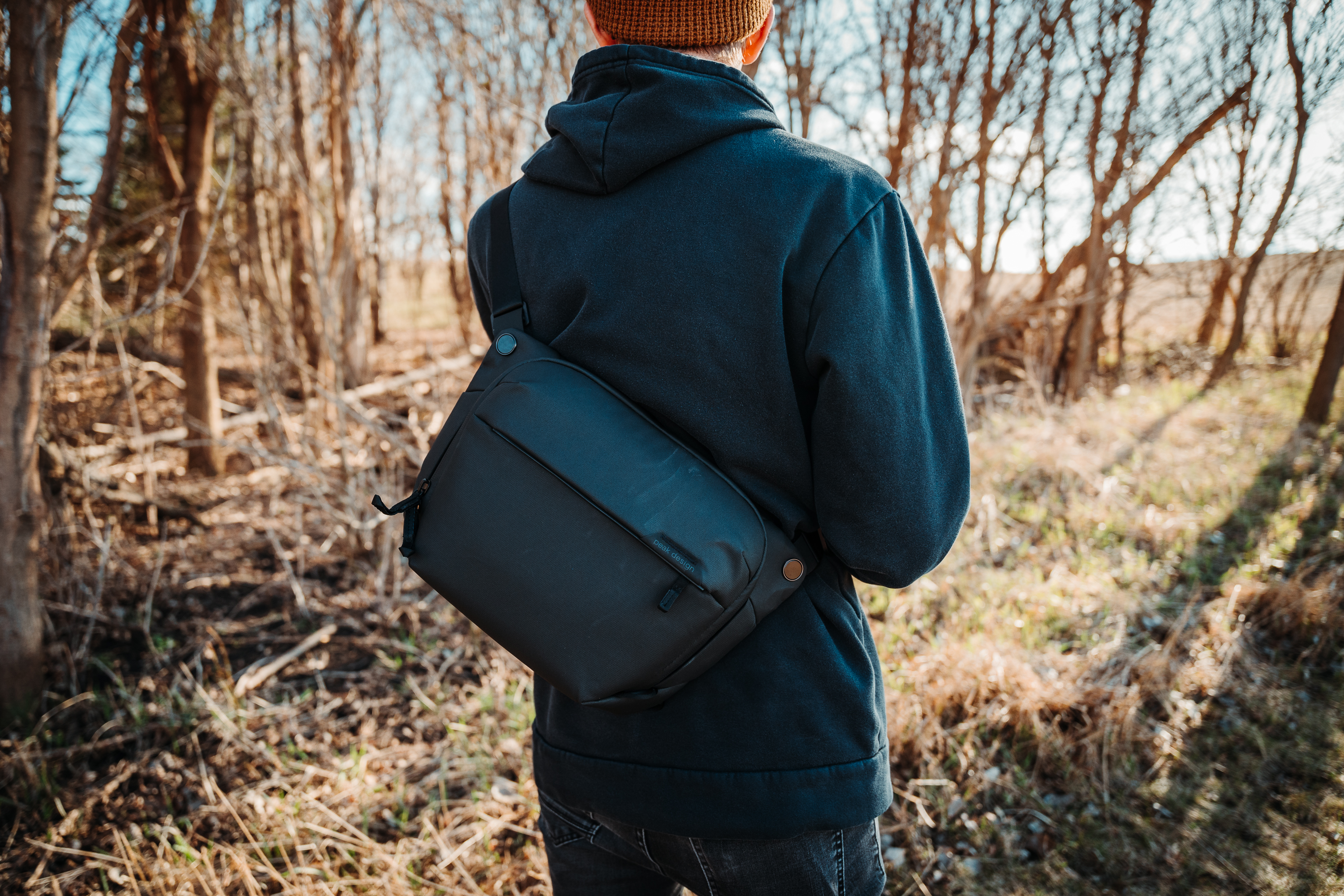
The best way to choose a camera bag is to first consider how and where you will use it. Are you a hobbyist who loves going on nature hikes with your DSLR and taking bird photos? Do you just do one-on-one shoots like engagements or family portraits? Or do you work large-scale events that require multiple full-frame camera bodies and several lenses? These answers will help you choose the best bag for your needs.
You’ll want to consider factors such as bag size, level of protection, comfort, aesthetics, durability, accessibility, and storage. Knowing how and where you will use your camera bag will guide you to the right bag for your needs.
All the bags above that our team has tested will, first and foremost, protect your camera. These are over-the-shoulder and messenger-style bags that will serve you whether you are on a nature hike or working a wedding.

Below are a few good questions to ask yourself before making your purchase:
- Is this for professional or personal use?
- Do I need a daily camera pack or does this have a specific use such as travel, hiking, or commuting?
- How many cameras, lenses, and accessories are necessary to fit?
- What is my comfort level with weight?
- How accessible do I need my camera to be in my bag?
- Do I need a computer insert? How large is my computer or tablet?
It’s worth noting that all of the packs we listed above serve the niche purpose of transporting and protecting sensitive camera gear. If you’re on the hunt for other backpack categories, be sure to check out our comprehensive review on the absolute best backpacking backpacks, or our streamlined roundup of the best daypacks for everyday use. All of these packs could also be converted to DIY camera backpacks with the inclusion of some nifty camera cubes — but it sure is nice to have an all-in-one package.
Materials and Waterproofing
t’s important to find a bag that will protect your gear and last a long time. Bags with water-resistant or waterproof outer shells will keep your equipment dry and moisture-free. Materials like polyurethane laminate (PUL), vinyl, polyester, nylon, or Thermoplastic Polyurethane (TPU) are commonly used in water-resistant or weatherproof bags.
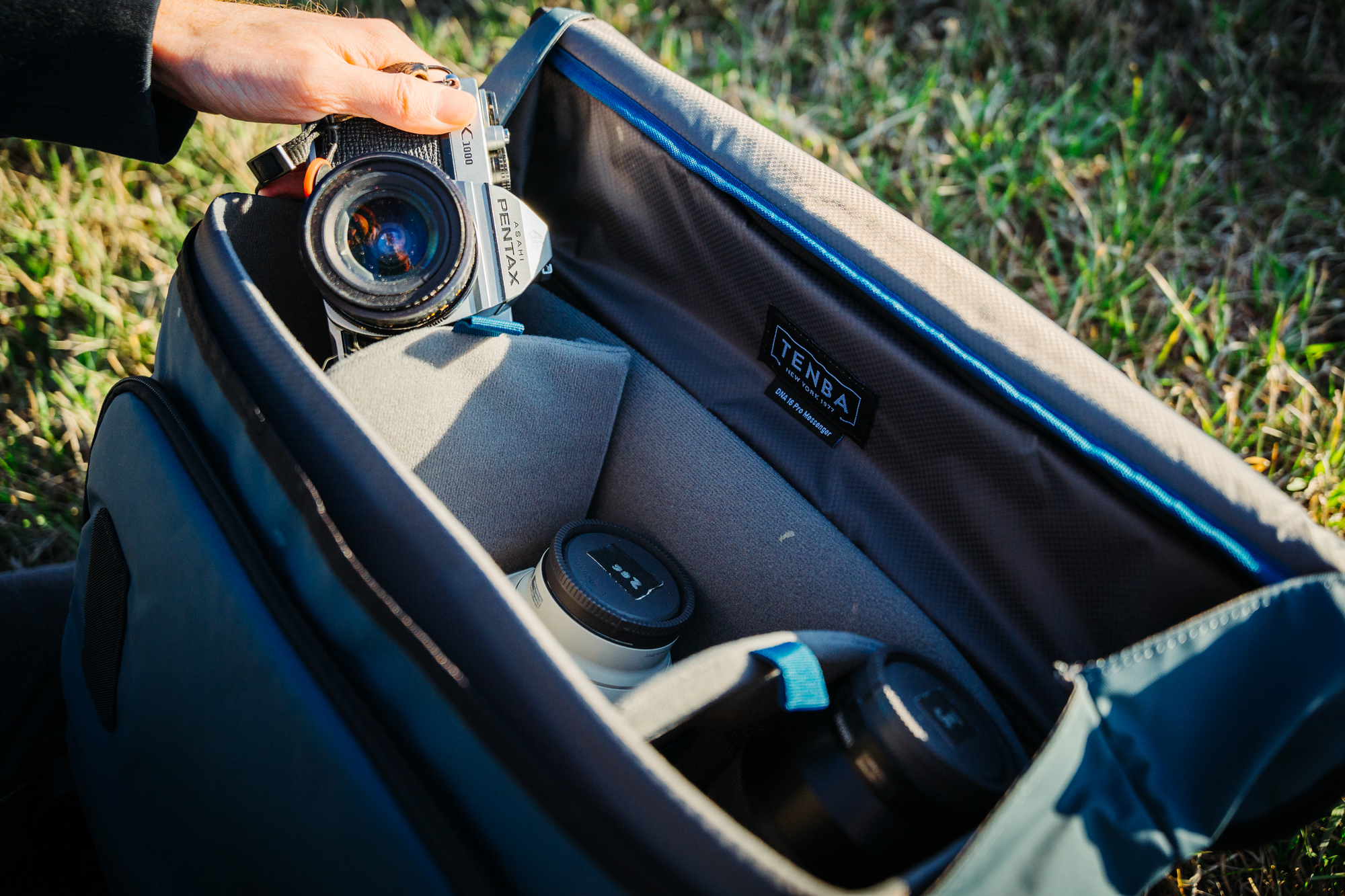
Seams, bases, and zippers are weak spots where moisture can get in even if the materials are waterproof. YKK zippers are high-quality and are often found on the best camera bags. So, choose a bag with a seam-sealed base and solid zippers. The WANDRD Rogue Sling 9L have these important features.
Water-resistant bags are great for minor exposure to liquids and in between throwing on an additional rain cover or rain jacket. They will eventually become saturated if there is substantial water, so be sure to consider a game plan if you’re out and about during rainy or snowy seasons. In any case, you can always plan to move your camera backpack underneath a rain jacket for coverage on the move.
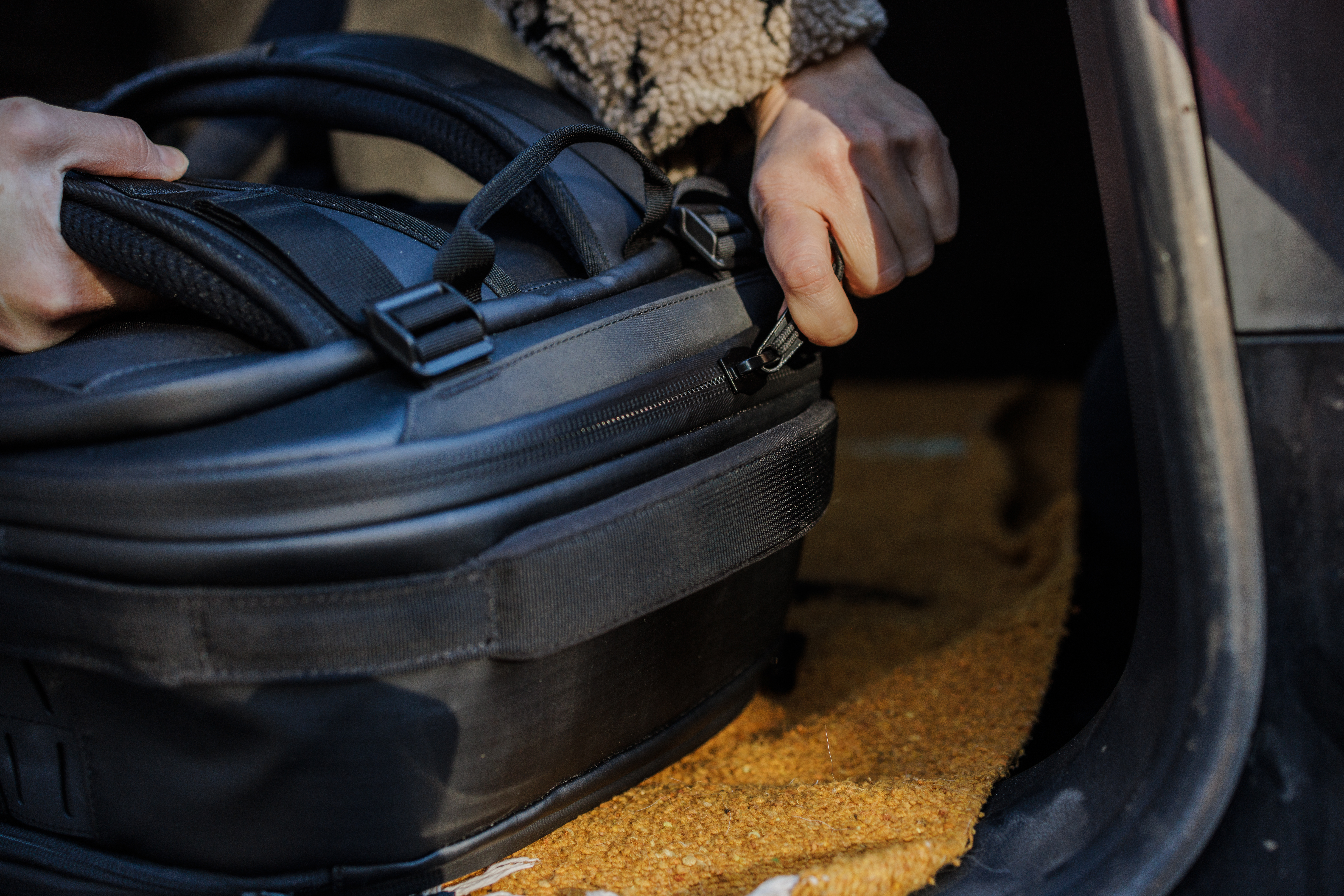
If you tend to shoot in rainy weather, look for a pack that comes with a rainfly. Many packs stash these in a small pocket on the exterior for quick deployment.
Be wary of packs that are advertised as waterproof. Even if the bag’s material is waterproof, the zippers usually aren’t. So, while a waterproof exterior may repel rain, humidity, mist, or splash action from the bottom of the canoe, there’s a chance that it can seep in through the zippers and get your camera wet.
Durability
As far as pack durability goes, double-stitched straps and high-denier (thicker) materials will help your bag withstand standard wear and tear. For keeping your gear safe, the more padded the backpack, the safer your equipment will be.
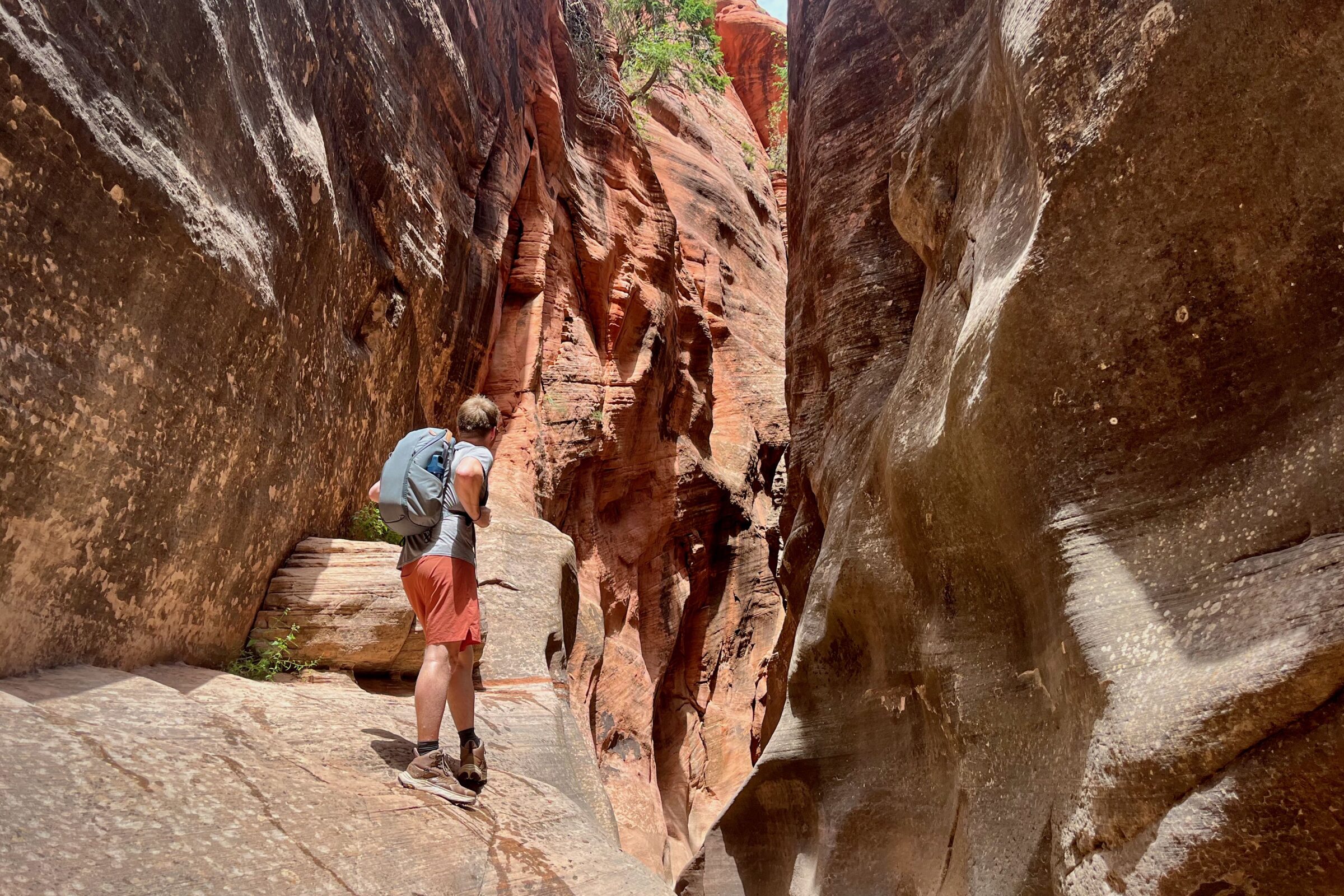
Also, the more snug the compartment design is, the better. Extra space leaves room for gear to jostle around, whether you’re running through the airport, riding your cruiser to the park, or steering a dirt bike to an overlook for sunset.
Look for a pack that has padding that surrounds the main compartment, not just on the separators. If you tend to be extra hard on your gear, some bags have hardshell liners for extra impact protection.
Accessibility
The most important feature we look for in a camera backpack is its quick access to gear. Manufacturers must balance the need to protect fragile equipment while ensuring you can swiftly grab your camera for that perfect shot.
Multidirectional zippers, various access points, and strategically placed Velcro dividers all aid in this complex process. Perhaps our favorite accessibility layout can be found in PD’s Everyday Zip 20L. The pack features top and dual side access via a single 270-degree wraparound zipper, with four different zippers to open whichever compartment of the pack you need.
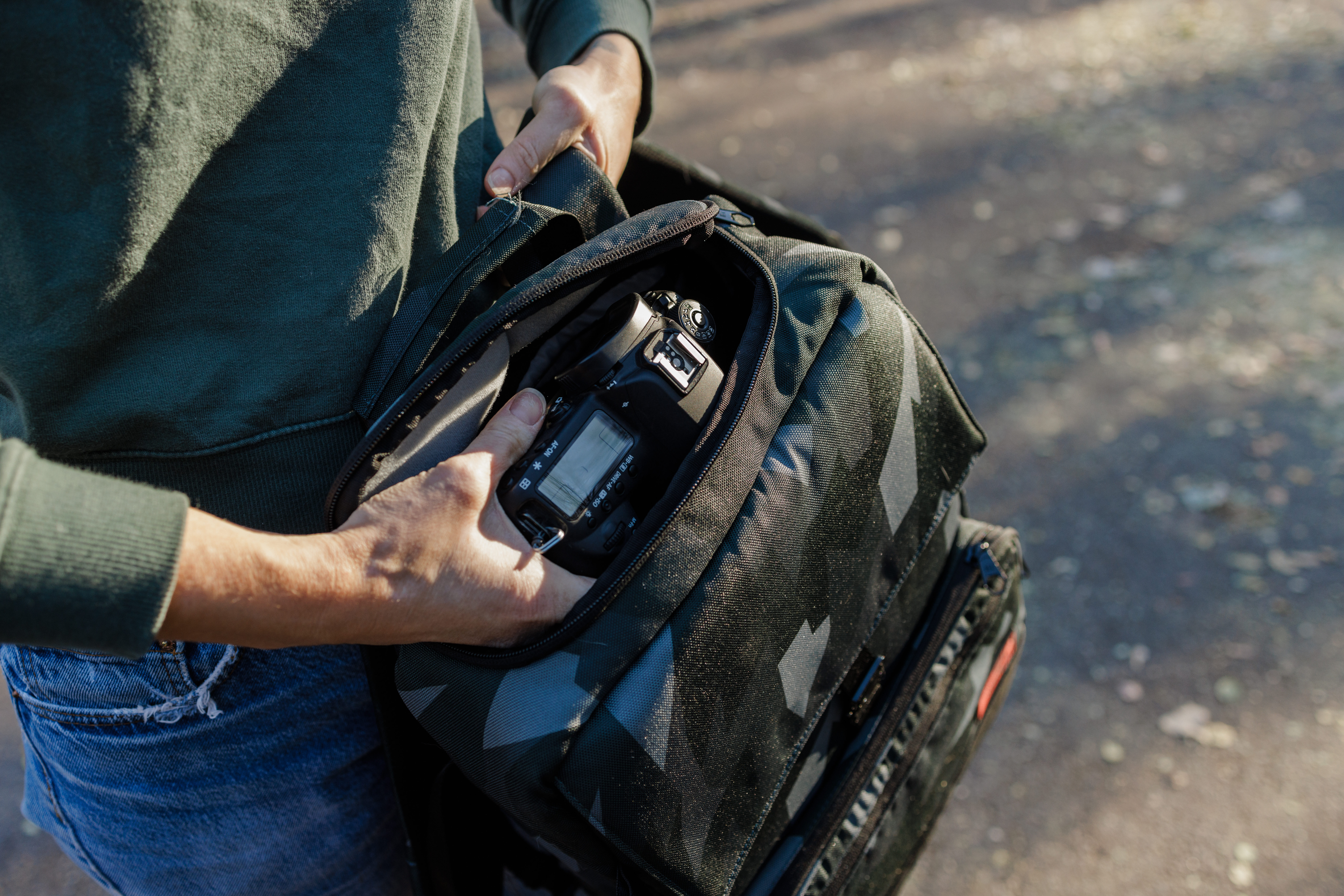
Easy-access zippers allow you to reach into the bag instead of opening the main flap. The Manfrotto Advanced Messenger Camera Bag M III has these zippers at the top of the bags. They have a smooth glide and allow the bag to open wide enough so you can fit your whole arm.
Another easy-access feature is when the flap or top of the bag is designed to open away from your body. The Ruggard Hunter 35 DSLR Holster Bag has such a feature. A top that opens toward your body creates one more obstacle for getting to your camera, while a flap that opens away makes for a quick grab.
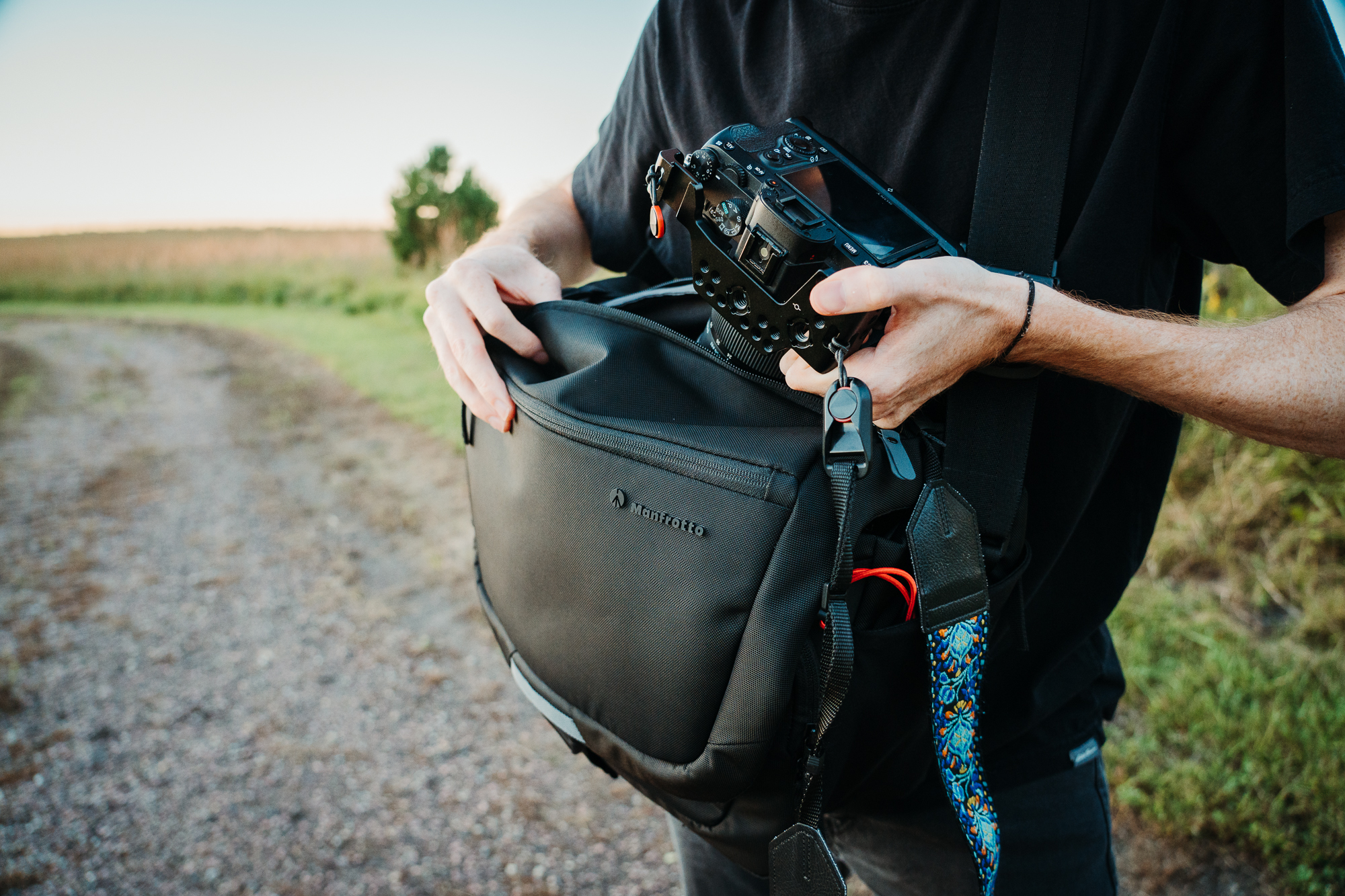
Handles on each side of the pack allow you to rip it around with ease to quickly access each segment, and the rotating shoulder straps let you drop the pack onto one shoulder and rip it open without plopping it on the ground.
When selecting a camera backpack, think about your access needs—quick access or transportation. Look for features like top and side access, camera clip loops, and a side door entry for easy camera retrieval without removing the pack.
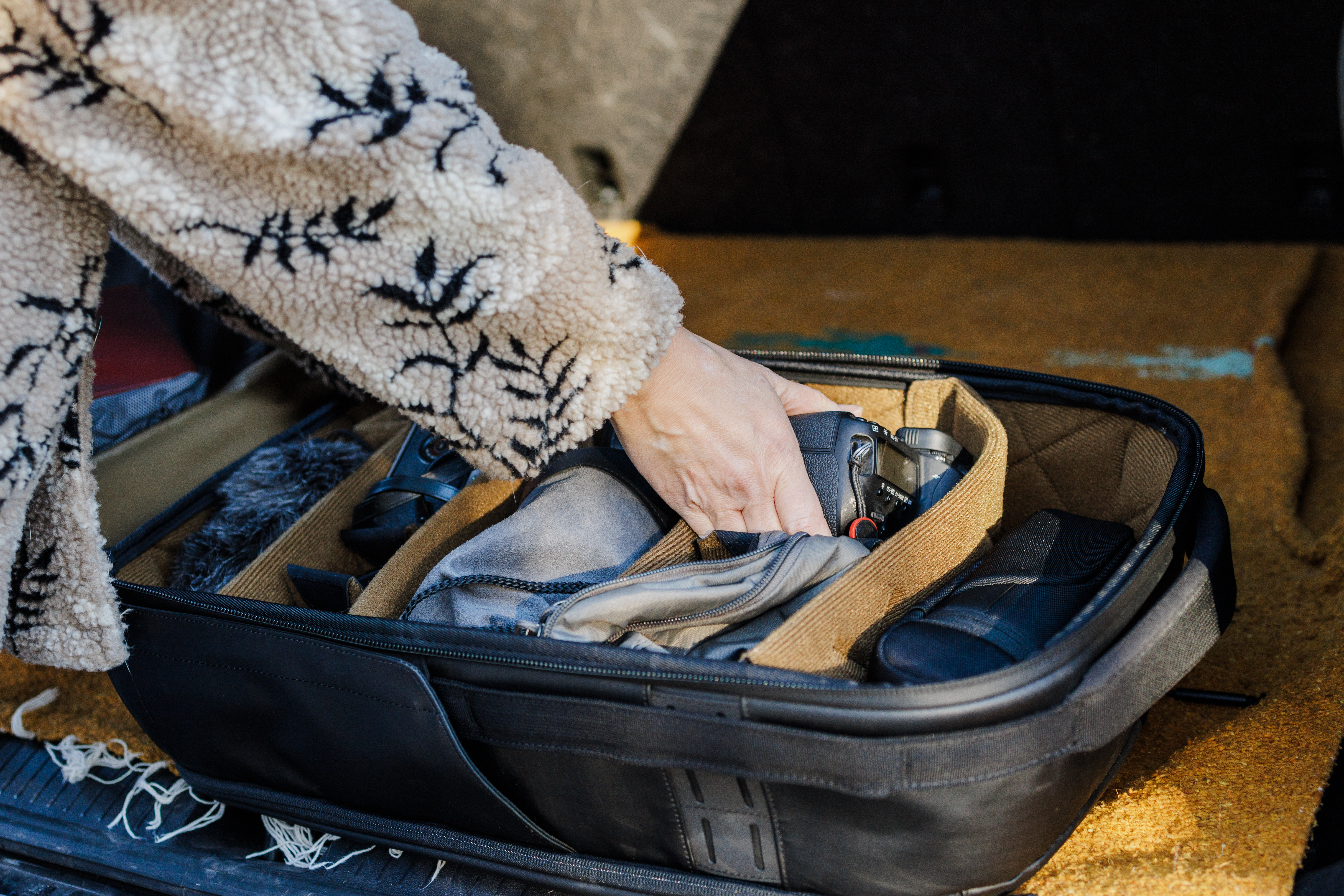
A good camera pack typically has a zipper that extends to provide a full view of your gear when the pack lies flat. A clamshell design allows the bag to open completely for easy visibility. The location of the camera compartment varies: zippers can be positioned near the back, front, or sides. Some users prefer added security at the cost of accessibility, while others opt for easier access from the back or outer zipper, depending on their needs.
Size and Capacity
Most standard camera bags are around 20-30 L. This is plenty of room for camera gear, a laptop or tablet, and other essentials. The Deuter Jaypack 34+ comes with a range of dividers that allow for endless customization options and enough room to fit a telephoto lens, and even a drone.
If you go out on longer multiday trips, opt for a larger pack — 50 to 60 L might be a good size. In this capacity range, we especially love the Shimoda Action X50 V2, which carries well and has added features. Find a padded camera cube so you can pack your camera and lenses safely in the pack if you don’t plan on getting one with integrated camera storage.
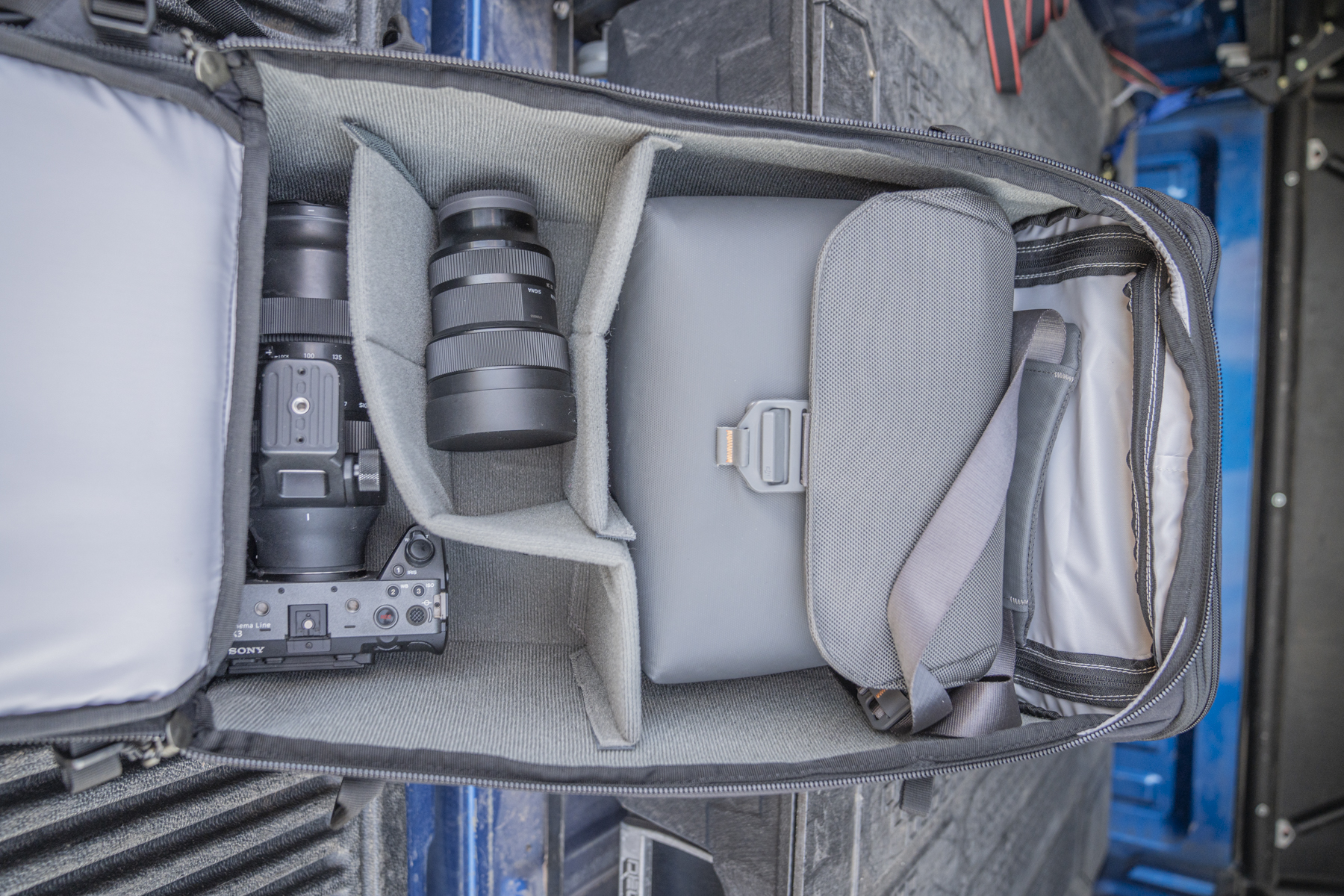
Photographers with single point-and-shoot cameras will want a compact bag like the FOSOTO Waterproof Anti-Shock Bag with padding and protection. An event photographer will need space for two camera bodies and several lenses, SD cards, and a tripod.
Camera bags often come in a range of sizes measured in liters. For example, the WANDRD Rogue Sling 9L comes in 3L, 6L, and 9L sizes. Some bags, like the Peak Design Everyday V2 6L Sling, have a 10L option. A 3L bag works best for a small camera with one lens, while a 6L bag fits a few more lenses. A 9L to 10L bag is perfect for multiple full-frame cameras, lenses, and accessories.
Comfort
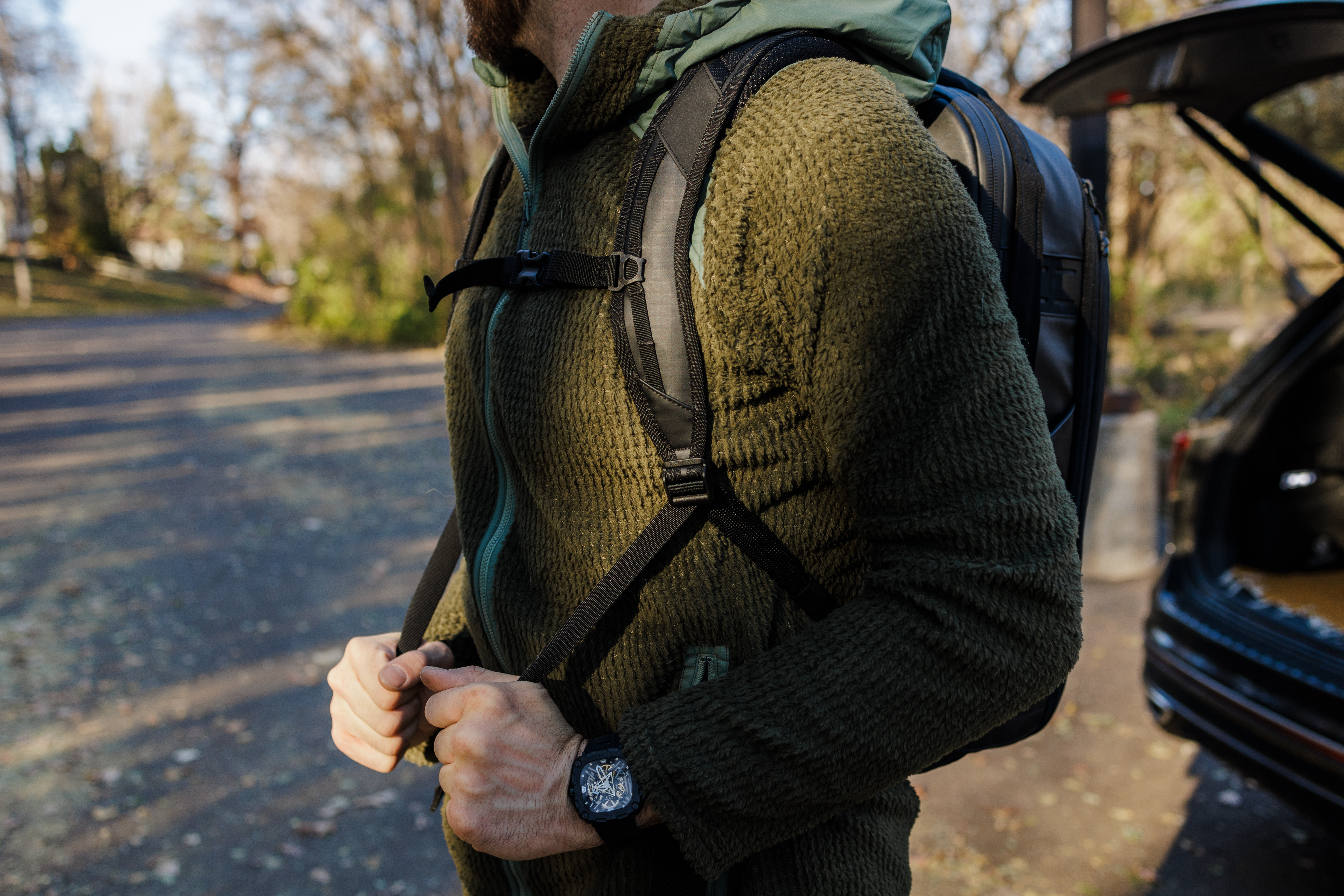
Camera backpacks can get heavy fast. If you’re planning to pack multiple cameras, lenses, and accessories along with your laptop, it’s important to consider how much weight is bearable for your body and find a backpack that distributes weight evenly.
Many backpacks, like the Peak Design Outdoor Backpack 45L and Shimoda Action X50 V2, include chest and hip straps. Really great packs add padding to all the straps with adjustments to fit your body. Look out for these features and consider spending a little extra if you’re someone who often carries heavy gear.
Another thing to consider is how heavy the backpack is before you put your gear in it. It’s a hard balance as extra comfort and padding usually lead to more weight, while ultralight gear can be flimsy and less likely to distribute weight evenly. There are packs that do a great job of balancing both comfort and protection with good padding and weight distribution to help offset the discomfort.

We found that the WANDRD Rogue Sling 9L and the Moment Rugged Camera Sling 10L offered the most comfort because they had adjustable straps, a strap pad, and extra padding in strategic places. The “stabilizer” strap on the Moment and Manfrotto Advanced Messenger Camera Bag M III bags adds even more stability and comfort while on the move. The Moment bag also offered a special “wing” feature that allows the weight of the bag to be distributed while not forcing gear to form to the shape of the receptacle or wearer
Bags that provide two or three different ways to wear them are a plus. Over-the-shoulder will give you quick access to your gear. Making your bag into a cross-body will keep your shoulder and neck from knotting up.
Special Features
Bags’ special features will vary, but small details make the best camera bags.
Good-quality bags have YKK zippers, as mentioned in the materials section above. The easy-access zipper on the Manfrotto bags makes quick grabs more efficient and manageable.
Sometimes, we find special features in the oddest of places. The WANDRD Rogue Sling 9L has a “secret” pouch at the bottom of the bag that could hold a light rain jacket, poncho, water bottle, or small tripod. The small pocket at the bottom of this sling hides an excess strap, which can be used to secure items tethered to the outside of the bag.
The Hex Ranger DSLR Sling XL has faux fur lining in the compartments that would fit screened or glass gear like a phone, computer, tablet, and lens filters to prevent them from scratching if they were loose in the main part of the bag.
Some camera packs put shoulder and hip strap qualities on the back burner, which is a bummer because a loaded pack of electronics is a fair load to carry around! Ideally, the shoulder pads are breathable, ergonomic, and well-cushioned.
Likewise, the back panel should have cushion, support, and hopefully breathability through a mesh material and airway channels between the pads.
Hip belts that are constructed of a simple strap will help secure the load from swinging around, but will not support the load off the shoulders and upper back. They are also not the coziest to snap on.
Cushioned hip belts help to protect the hips from rubbing and carry a portion of the pack weight, relieving the upper back; plus, they are generally more comfortable. For folks with back or neck pain or injuries, be sure to look for adequate pads in your camera pack.
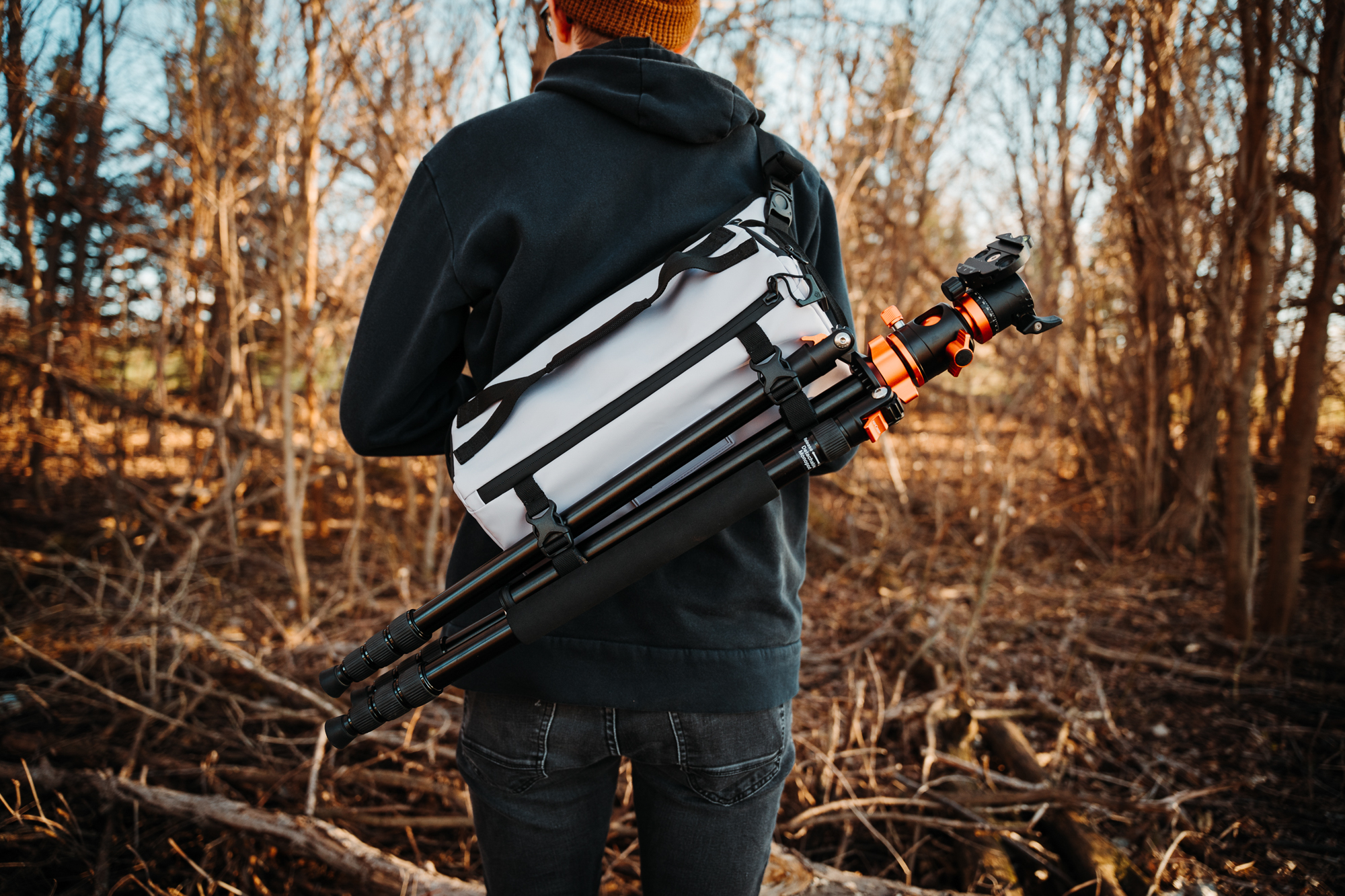
Every good camera backpack will also have a tripod holder. If the bag you’re considering has one, it’s usually located on the exterior of the pack. Many packs use a pocket that usually acts as a bottle holder to support the bottom of the tripod, with a strap near the top of the pack to secure it.
Location
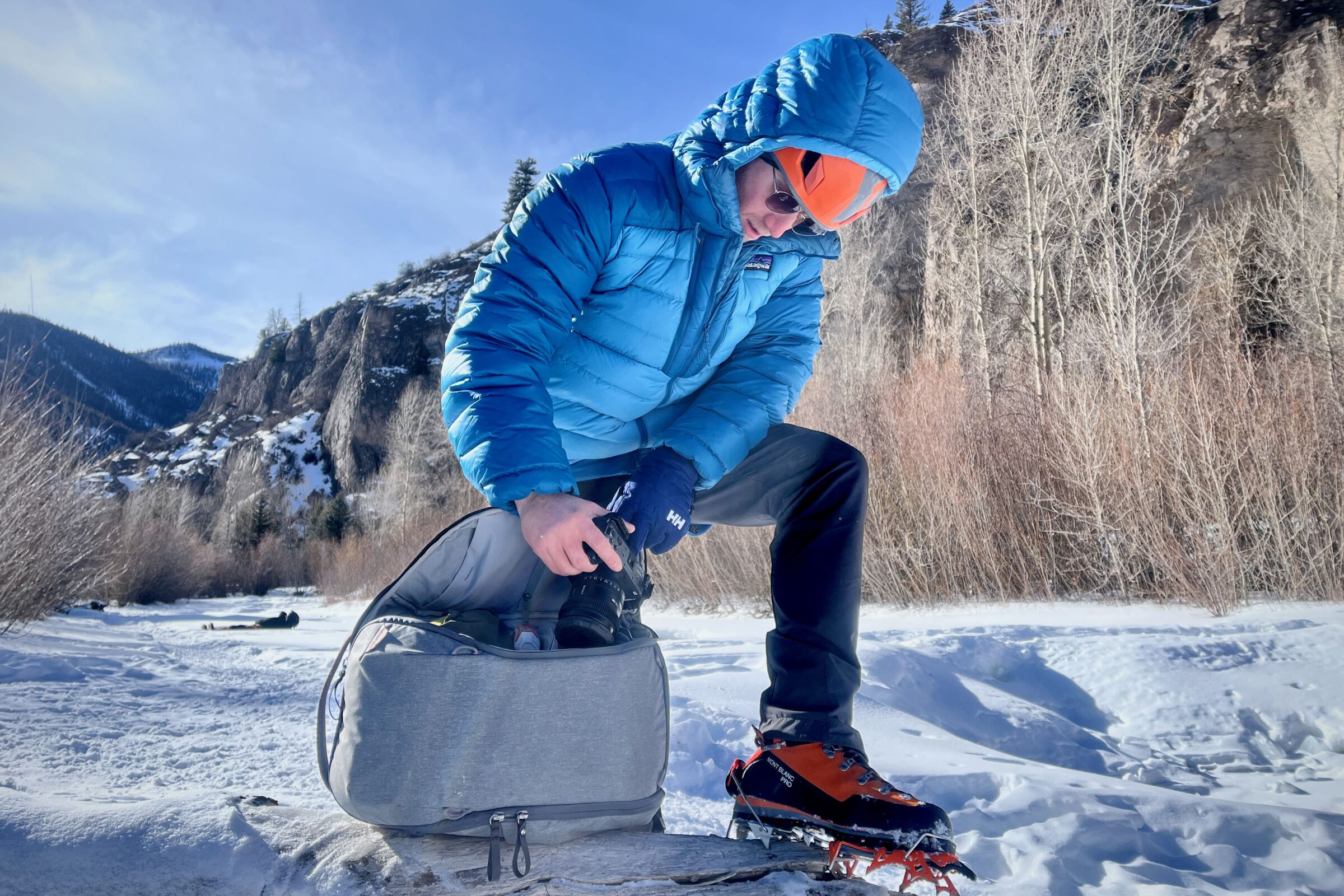
As every photographer knows, location is everything, and with that come weather, lighting, and terrain. These aspects will inform some of the most important elements your camera pack should be prepared for — and hopefully help narrow down your options.
Based on location, a common accessory for many photographers is the tripod. Most camera backpacks have clips to hold a tripod, but this very much depends on the size and weight of the tripod, so look out for the pack’s specs and your tripod’s specs when considering how important a tripod holder is to your camera backpack.
If you know there is a higher risk of inclement weather, you will want to look for waterproof or water-resistant materials on the fabric and zippers, or a rain cover. Another major element to consider is dirt and dust. At the very least, good camera backpacks keep dirt out of your pack, so check out the materials section below for more information.
When choosing your camera backpack, consider the full range of conditions and environments you plan on shooting in. This will largely determine the capacity, materials, and overall organizational features of the pack that are best for your needs.
Distance
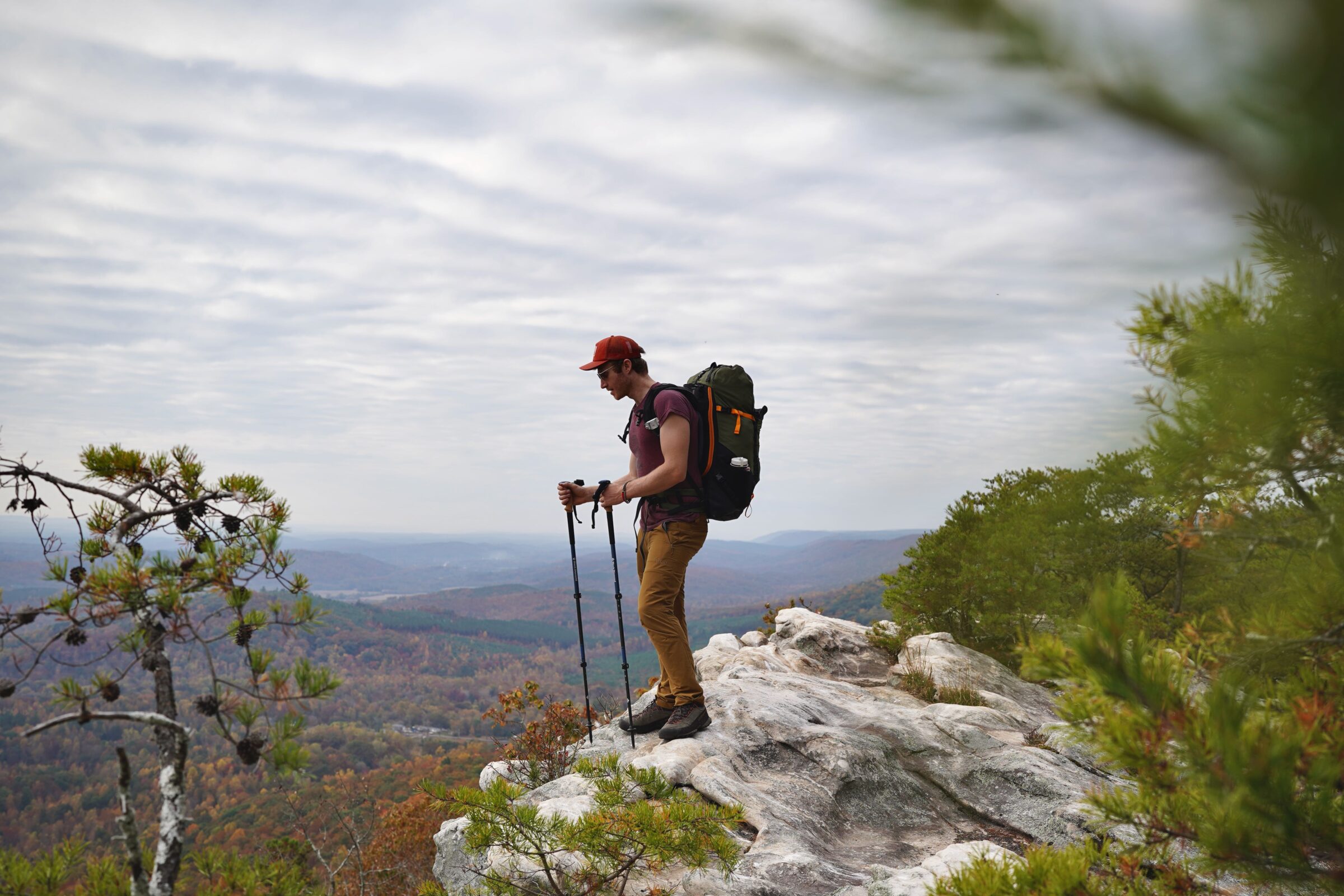
Knowing how far you need to travel with your camera backpack will help inform how durable your pack should be and how much weight you’re willing or able to carry for that distance.
In general, thicker materials with double-stitching in the seams and straps will help your pack manage normal wear. Ripstop and other strong materials help with extensive wear for increased or long-term use. It’s important to note how much or little space your pack allows compared to your gear.
Ironically, the tighter your gear fits into your pack, the better, as extra room allows your gear to get knocked around while traveling. Either get the perfect fit or find ways to make that space tighter.
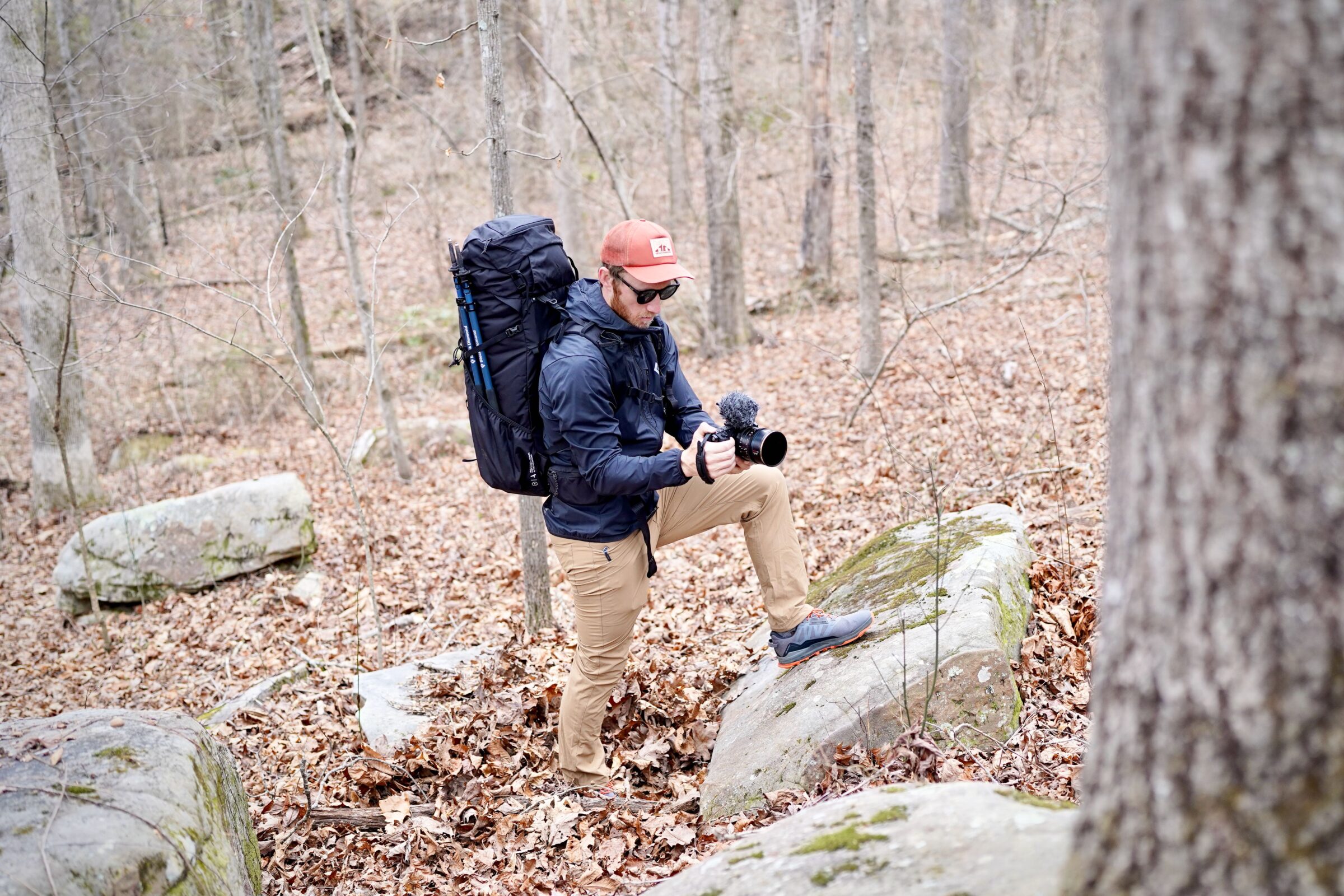
If you’re carrying your pack longer distances with substantial weight, you’ll definitely want to consider choosing a backpack with waist and chest straps to balance the weight distribution of your gear. A good long-distance pack also has substantial padding around the walls of the front, back, and side of the backpack as well as the interior separators.
We love the Peak Design Outdoor Backpack 45L for hiking and adventuring. Packs like these allow you to safely carry a full camera loadout in addition to a basic backpacking kit for multiday travel in the backcountry.
Flying With Camera Backpacks
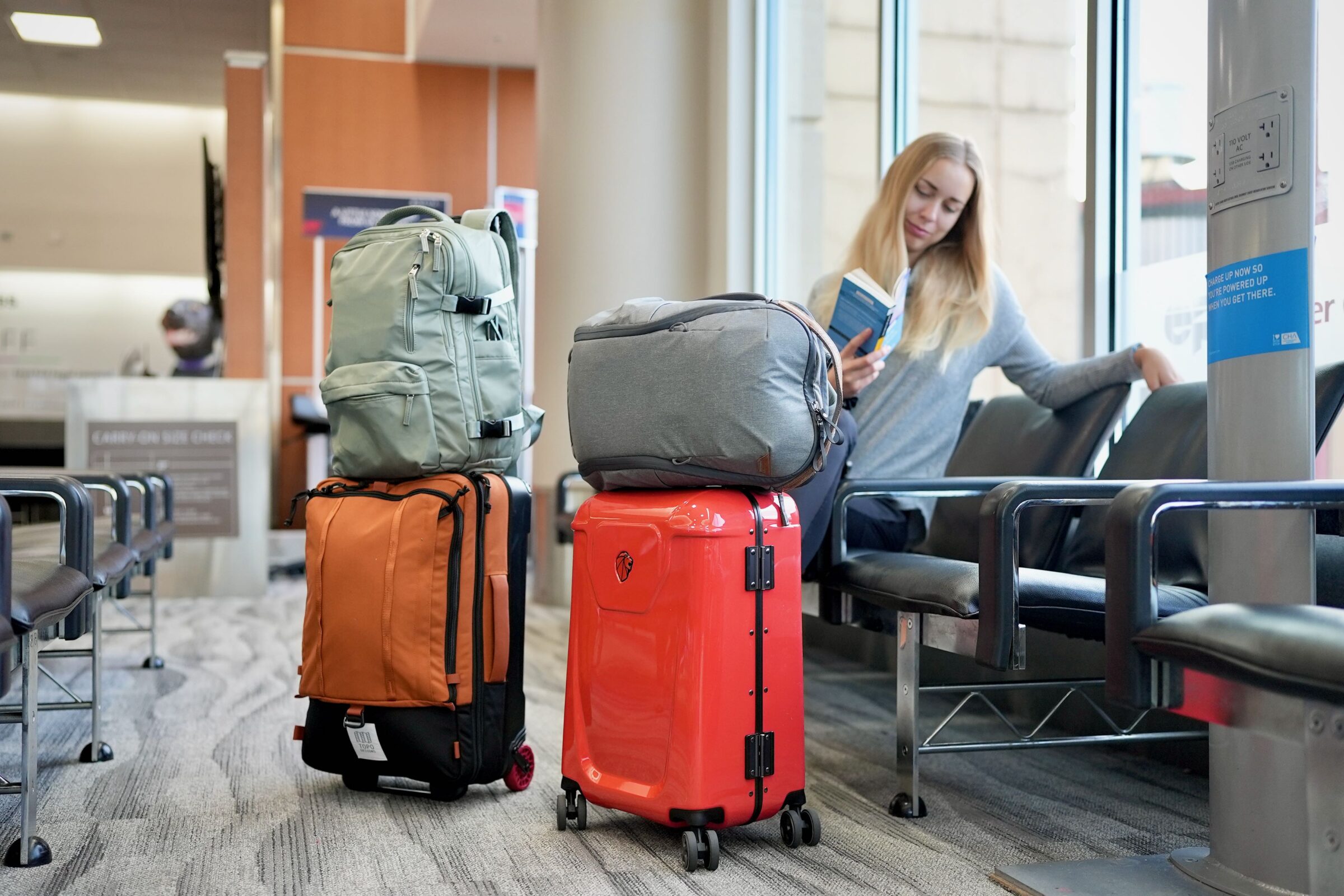
Inevitably, you’re going to have to cross some big ponds during your filmmaking/photography exploits — which can be an understandably disconcerting experience. Not everyone — TSA *cough cough* — understands just how fragile and expensive this glass can get. Horror stories abound of camera gear getting ruined in transit between countries.
Carry-On
Your best line of defense against these woes is to carry all of your pricey gear in either your carry-on, using a backpack like the Lowepro Pro Trekker RLX 450 AW II, or your personal item. You can then stash more durable gear like a tripod, mounts, or a bulky camera cage in your checked bags.
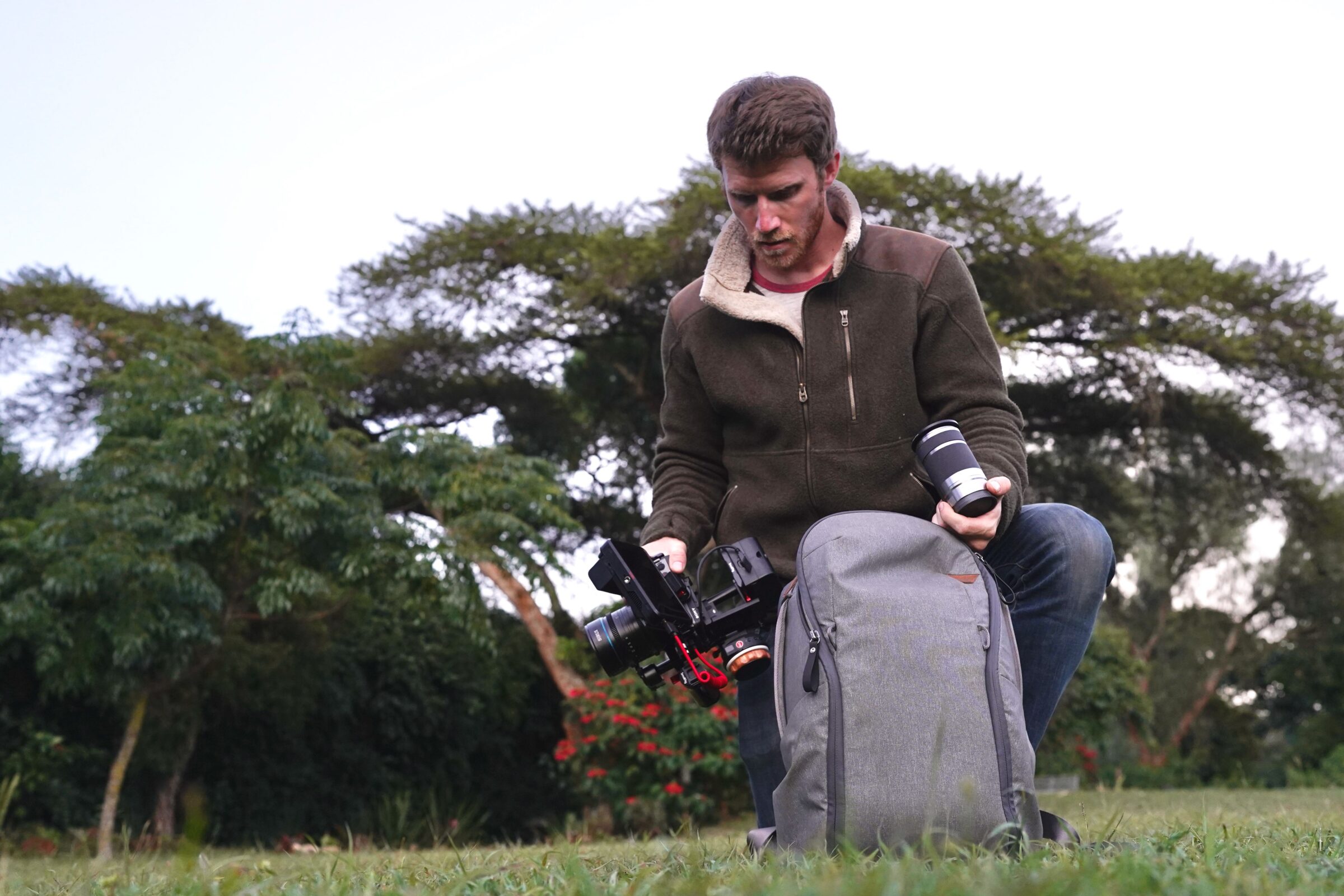
Our favorite combo for schlepping gear for even moderately complicated shoots abroad is to slot a large camera cube, such as PD’s Medium or Large Camera Cube V2, into a hard-sided carry-on like the one above, and fill it with any assortment of lenses, mics, or sensitive filters. We then pack our pricey camera bodies and some of the more expensive lenses in a smaller personal item-sized camera backpack — like PD’s Everyday Zip 20L.
This streamlined combo has allowed us to haul an absurd amount of film gear all over the world for everything from simple photo gigs, to complicated multi-month international video projects. Never once have we had to put anything fragile in a checked bag. Though this does make our personal items quite heavy, it’s a price we’re willing to pay for peace of mind.
Checking Bags
Checked bags get chucked haphazardly around while loading and unloading onto planes, and we’d rather not worry one bit about a cracked lens or broken body. With that said, we’d still recommend purchasing gear insurance before going anywhere too wild.
If your camera loadout is simply too massive for your personal luggage, you can splurge on something like the bombproof 1615 Air Case from Pelican to check sensitive gear — but this gets pricey fast.
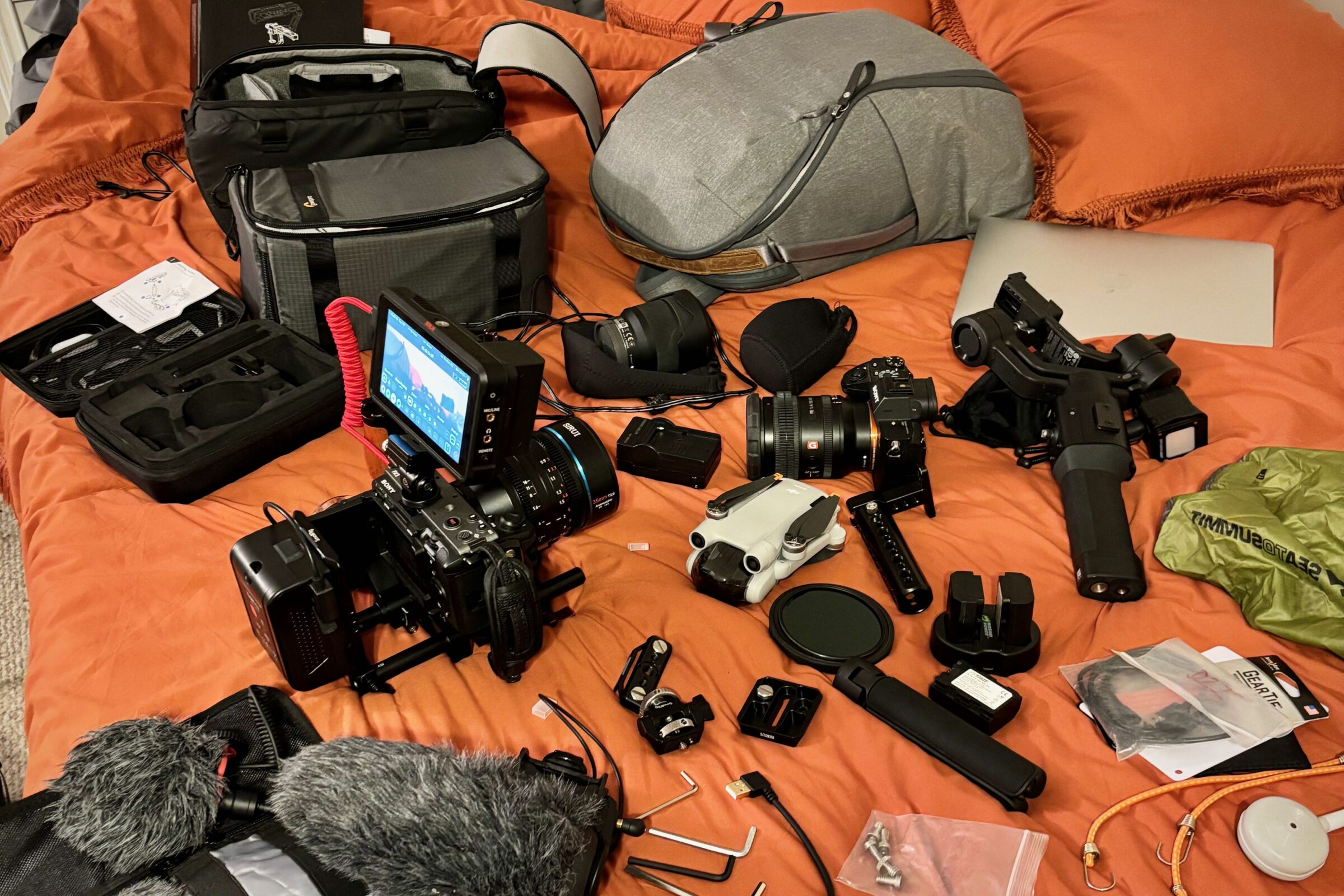
We recently were able to shove multiple camera bodies, a slew of bulky lenses, camera cages, gimbals, mics, monitors, and all manner of awkward-shaped tech accessories into this carry-on/personal item combo and travel stress-free to Africa for a months-long video project in brutal conditions.
The multiple access points of PD’s Everyday Zip and the easily accessible organization of the camera pod in our carry-on allowed us to quickly reveal our suspect film gear to prying airport security eyes without having to spill all of our personal contents on the ground at checkpoints. A cherished detail.
When traveling internationally, it’s safe to assume that expensive camera gear will be scrutinized while going through airport security. It’s therefore best to have everything as easily accessible as possible if/when your bag gets pulled aside to be rummaged through.
It’s also helpful to have an itemized list on hand of what camera gear you’re bringing into the country, and its rough monetary value — as we’ve been asked for this on multiple occasions while traveling abroad. Having to scroll through your recent Amazon purchases to wrangle this info together last-minute while folks wait impatiently behind you is less than fun.
Pods/Camera Cubes
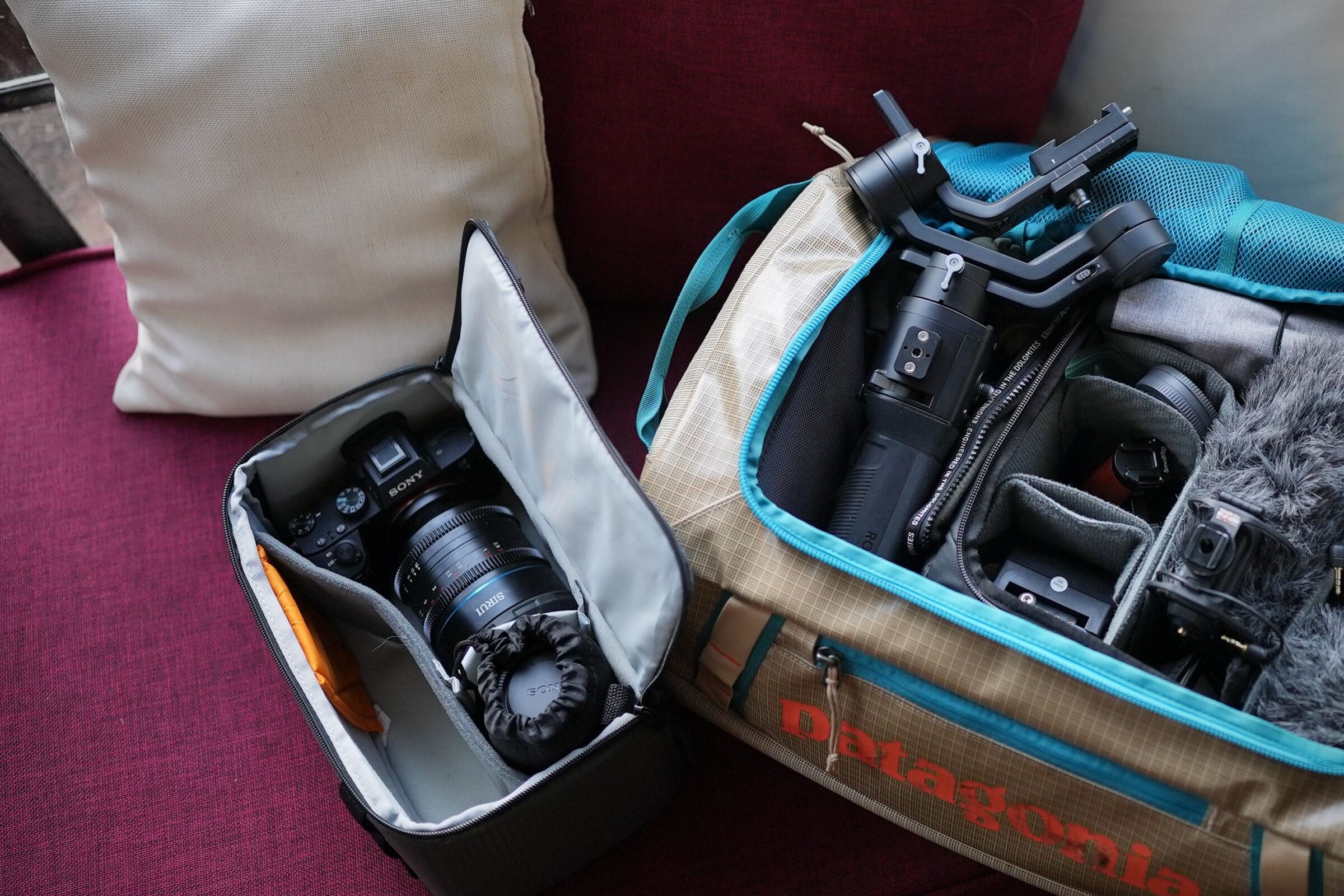
Camera pods/cubes are another important feature to consider, and can be immensely helpful when flying or road-tripping around — as mentioned above. Pods, or “camera cubes,” can make many different backpacks into camera backpacks, and are smaller inserts that fit within a larger pack. They generally have foam dividers for cameras and lenses, and vary in size.
First, be on the lookout for pods that are and are not included. Many packs are now offering pods as an add-on to create a more customized bag that can double as a camera backpack or regular pack. The add-on options allow you to choose what size of pods you need. In any case, try to visualize where your gear will be placed in the pods, how many you need, and how to customize them to your needs.
Some of our favorite camera cubes are Peak Design’s Camera Cube V2s and Lowepro’s GearUP Pro Camera Boxes. We’ve been using the small and medium PD cubes to make our regular carry-ons into full-fledged camera rollers, and the GearUP Boxes for carrying loads of heavy bodies and lenses on backpacking trips.
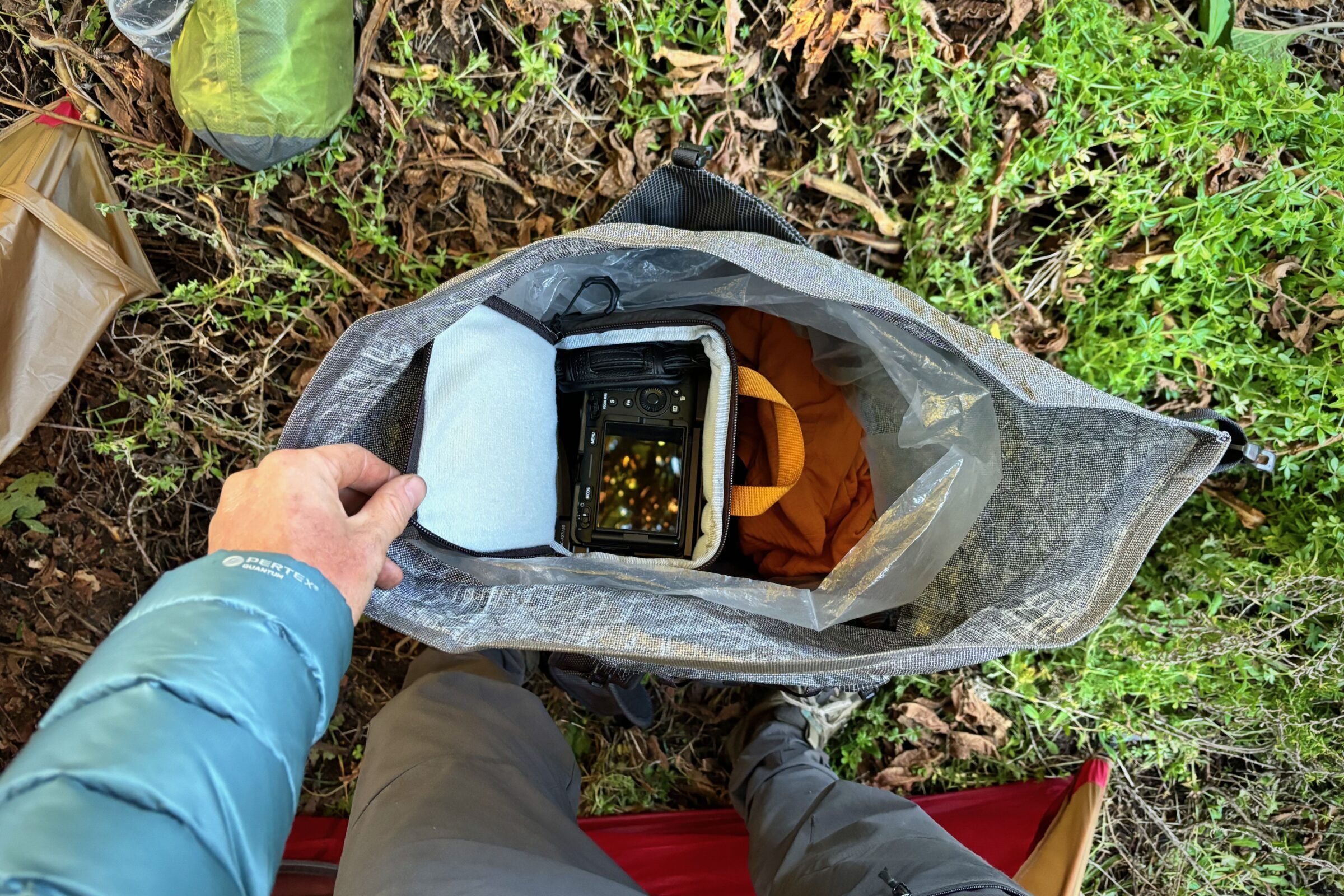
The ability to slide them in and out of any backpack makes these shoo-ins for just about any adventure we’ve gone on during this testing period. The PD cubes also work seamlessly with all Peak Design bags — such as their sleek Travel Duffels — and can be securely clipped into attachment loops within the bag.
We love being able to store a body and one or two lenses in LP’s GearUP Boxes, and slide them vertically into our backpacking backpack for quick, multidirectional access to our camera mid-trek. The GearUPs have a large zippered opening on the front to access everything when you pull them out of your pack.
Or, you can open a smaller door on the top to slide the camera out when the pod is slotted vertically, nestled among your gear (see above). If you aren’t using a dedicated camera backpacking backpack — like Moment’s Strohl Mountain Light pack — this can be a great solution for the trail-trotting creative.
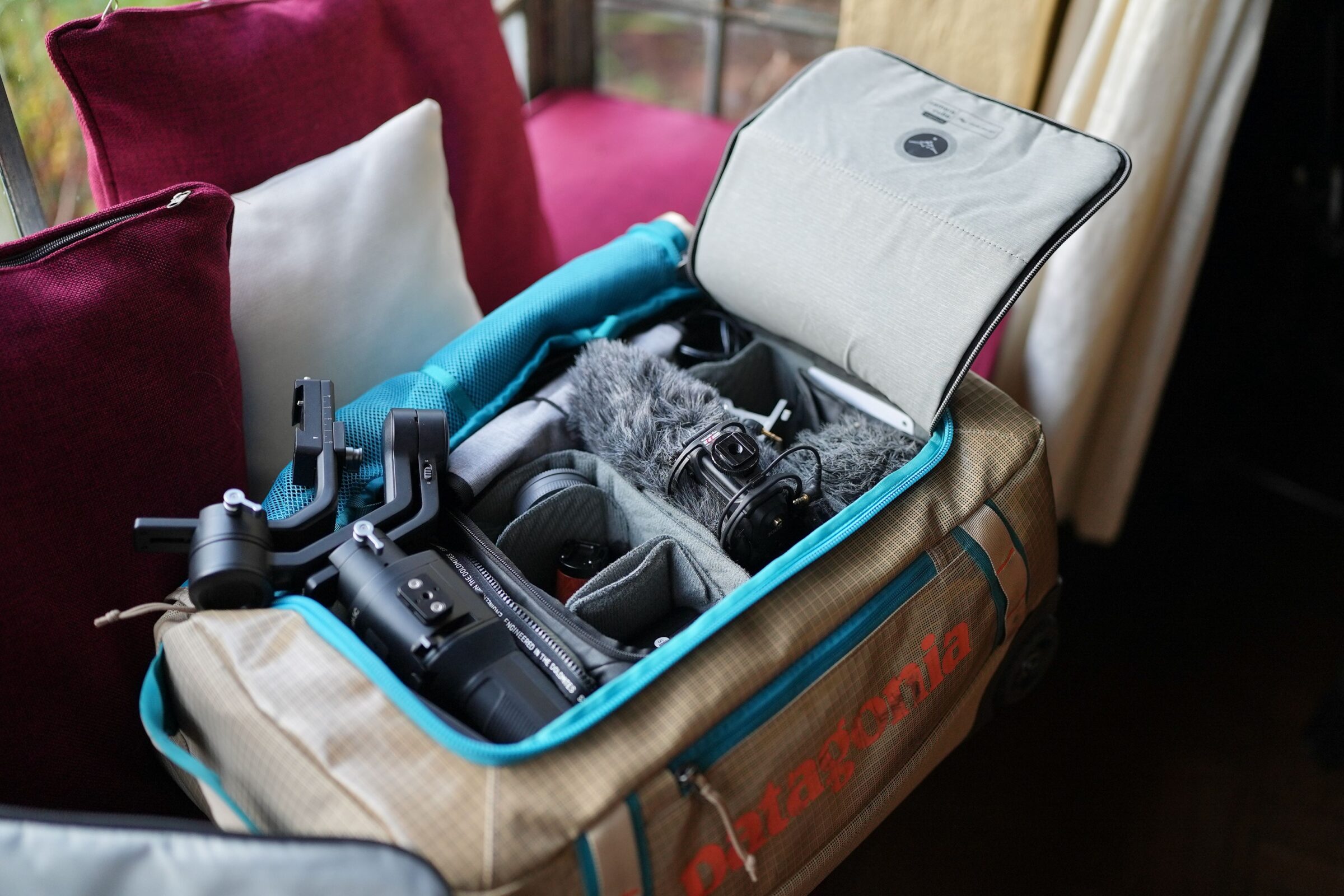
Camera cubes can also be used to add more gear storage to camera backpacks. Oftentimes, the included camera compartment of camera backpacks just isn’t enough, and cubes can be added to personal gear sections of the pack to safely store additional sensitive gear.
Categories of Camera Backpacks
Different camera backpacks serve different creatives’ needs. Whether you gravitate to simple day or wedding shoots, or frequently find yourself filming technical expeditions lasting for months, there’s a pack out there with your name on it. We’ve broken down some of our favorite camera backpacks into three main categories. Most of these packs are featured above, while some we have reviewed in previous years.
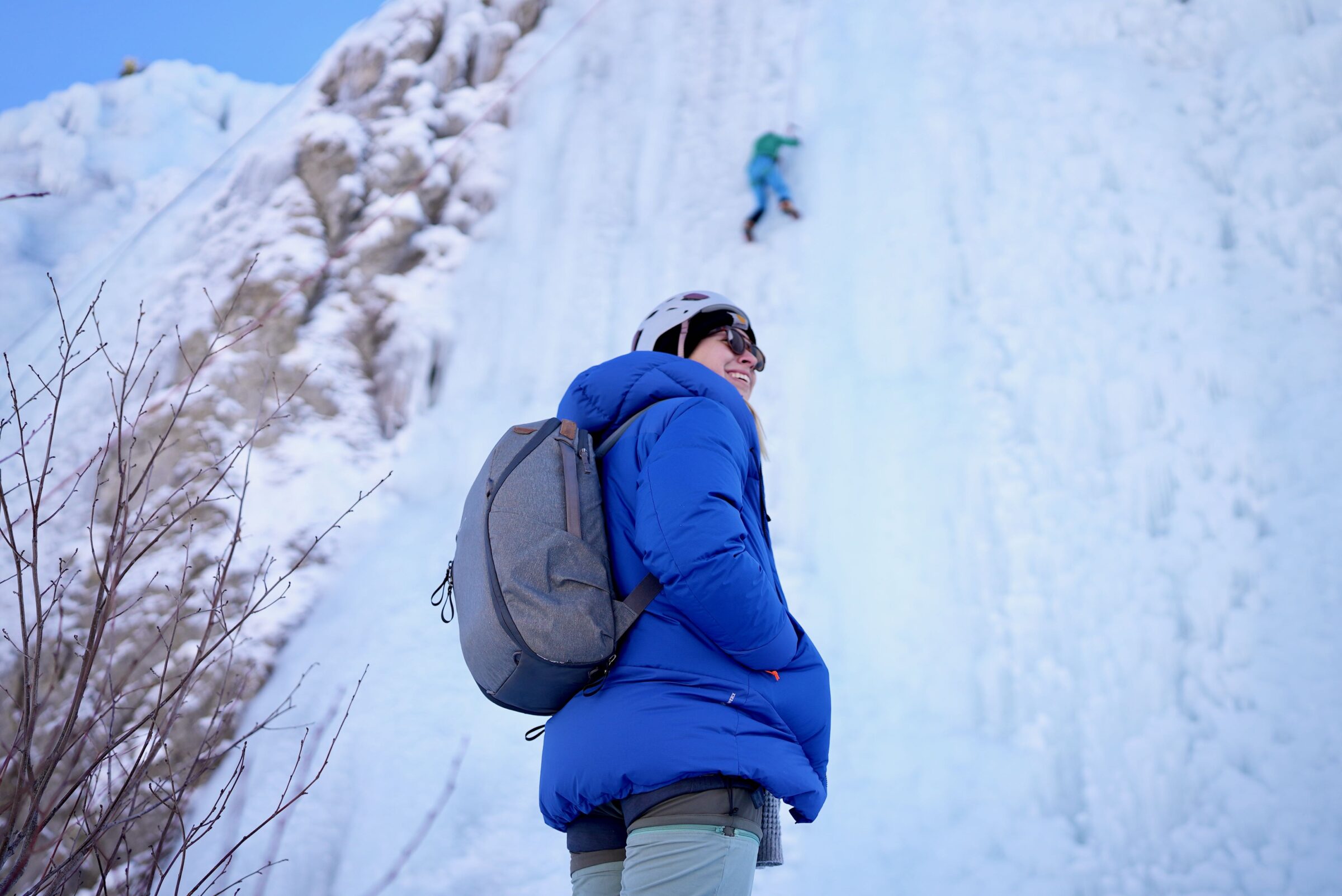
- Casual: General use around town, non-professional gear but still provides good coverage
- Technical: Great for professional gear for the long haul with increased padding, waterproofing, and support straps to support additional weight when traveling.
- Backpacking: Packs with larger volumes — used best for 2-3-day trips hiking over various terrain, or even general traveling.
Price & Value
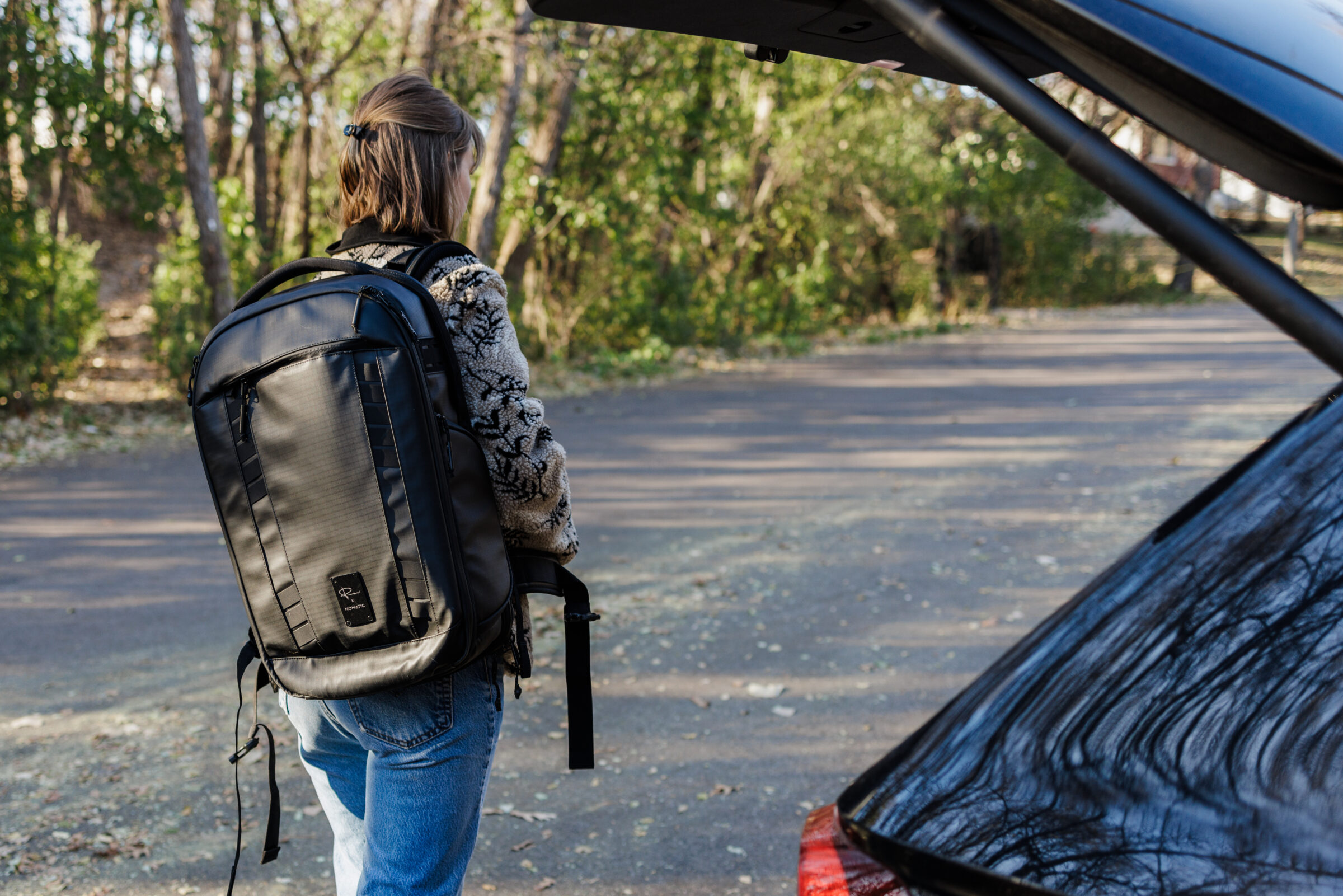
Whether for personal or professional use, be prepared to spend a little extra on a good backpack. Camera backpacks vary dramatically in price and features. Generally, the more you want to carry (e.g., multiple camera bodies or lenses), the pricier the backpack becomes. However, size isn’t the only factor that matters. Weather resistance, durability, and the level of camera protection can also impact price.
Budget
The budget category ranges from as low as $30 to around $100. Here, you can find backpacks like the CADeN Camera Backpack ($36), a true barebones camera bag. At this tier, the bags are made of questionable fabric that lacks waterproofing, and they may lack padding and ergonomic support.
The budget bag that fits the most gear is the Amazon Basics Large DSLR Gadget Bag ($43). It can fit a full-frame camera body, two to three lenses, and a decent amount of accessories. The inside is surprisingly roomy for how small the bag first seems, and the extra pockets stretch out a small amount.
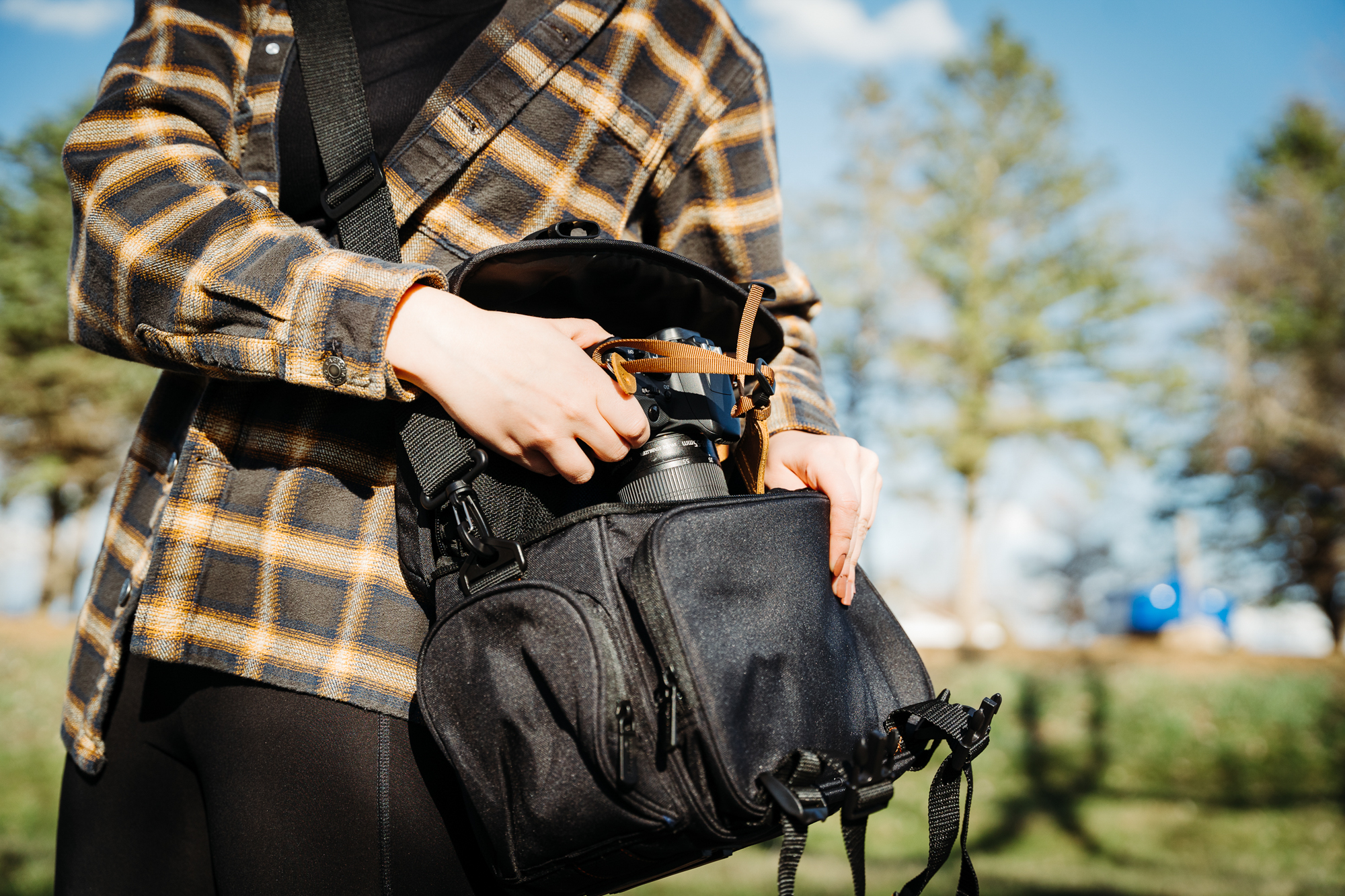
The Ruggard Hunter 35 DSLR Holster Bag ($16) is much cheaper than that and offers the same amount of protection, but it is only for a single camera body and lens with small accessories. Both bags are high-quality and would be great for amateur photographers or photographers doing small to medium events.
These bags generally are less comfortable and hold less gear than other options; however, these budget bags may be the right choice for you depending on the way you use them. The CADen has enough padding to properly protect your gear, but it lacks support for heavier loads. While these packs may not save your back, they are easier on your wallet.
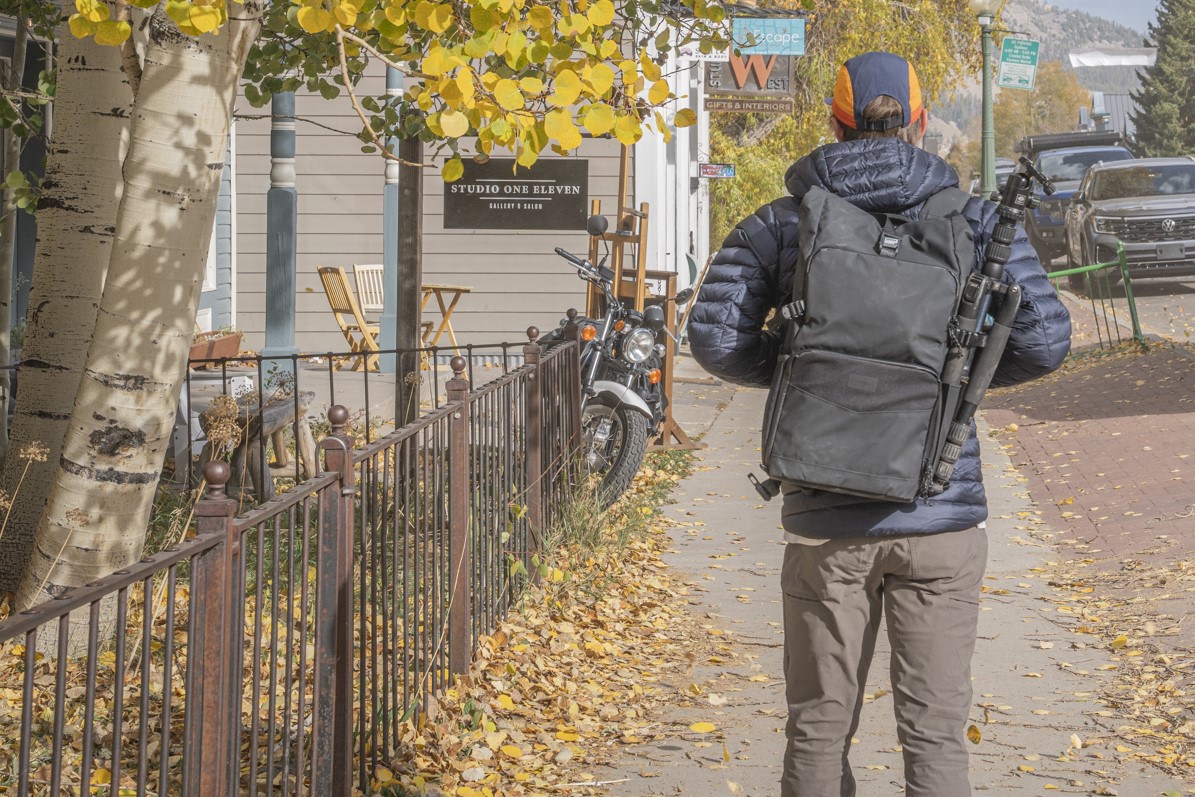
Mid-Tier
These camera bags range from $150 to $250, and most camera backpacks fall into this range. The standouts in this tier is the Lowepro ProTactic 450 AW II ($220). At this level, backpacks have more features like laptop pockets and waist straps. They typically also have more ergonomic and comfortable designs.
The Peak Design Everyday V2 6L Sling ($120) is a cleverly designed and sleek sling that provides enough padding and safety for your camera and two to three lenses. Its hard shell offers shock protection and offers weatherproof durability. But with just a $5 difference, the Manfrotto Advanced Messenger Camera Bag M III is a much larger bag with a quick-access zipper and many more incredible features for its price.
These bags are worth the price jump as they are significantly better for daily use. At this price point, the backpacks are still on the smaller side, so if you’re looking for a quality bag that can hold a lot of gear, then you should check out the premium bags.
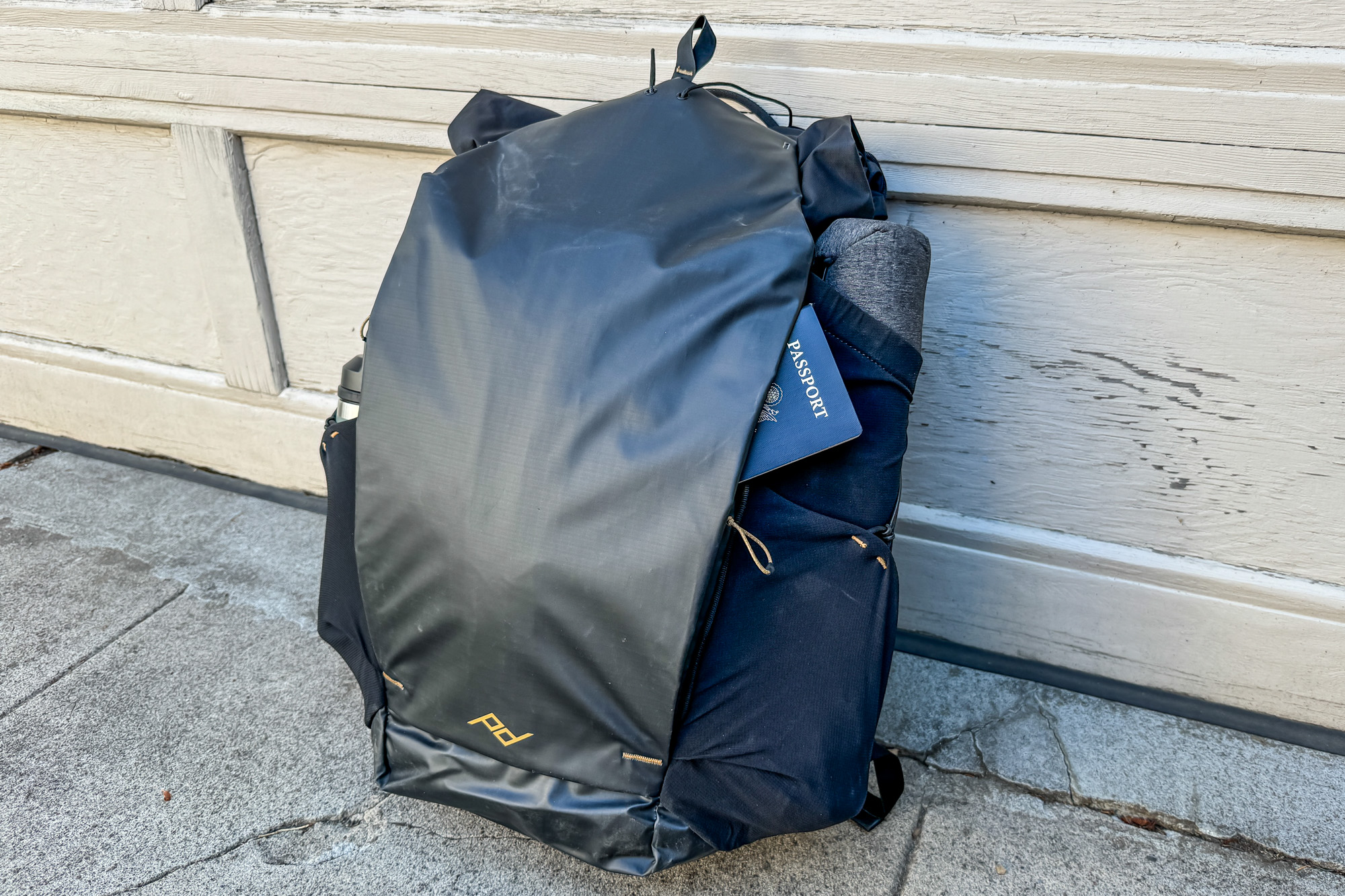
Premium
Premium bags start at $300 and go upward, with the most expensive in our guide in the $500 range. Here the backpacks come with the most features like extra padding, waterproofing, and the ability to hold multiple camera bodies and lenses. If you plan on doing big days in the mountains, these will save your back from discomfort.
A camera bag filled with a drone, multiple bodies and lenses, and even a gimbal, can be worth thousands of dollars. It’s best to protect that investment with a high-quality backpack that protects your precious camera equipment from weather, shocks, and drops.
The standouts in this category are the Peak Design Outdoor Backpack 45L ($330) and the Shimoda Action X50 V2 ($350) for their ability to securely carry a range of cameras and outdoor gear in all weather conditions while your back gets the support it needs to haul all that weight around.
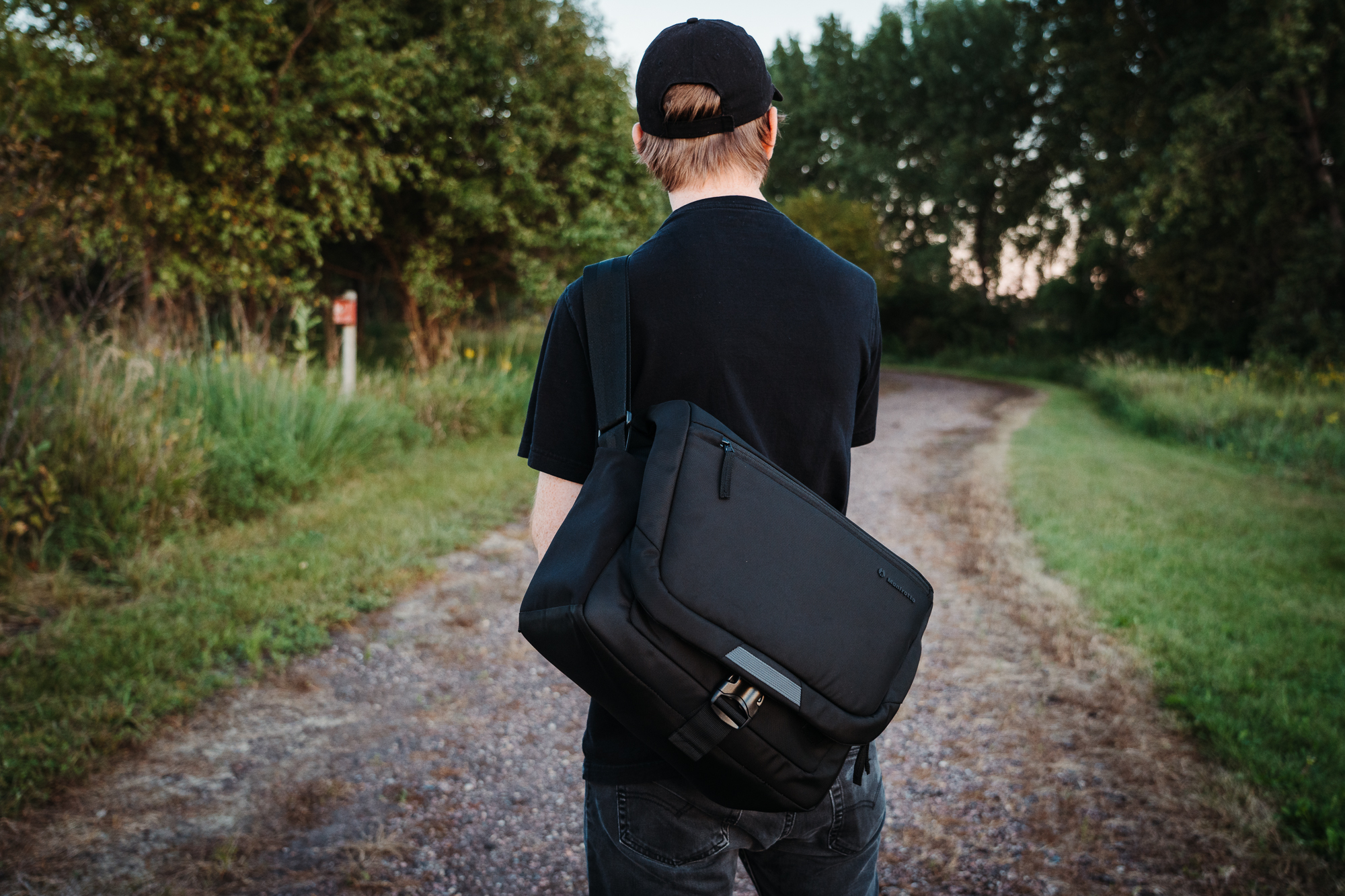
The WANDRD Rogue Sling 9L ($159) is an extremely comfortable bag with several unique qualities and many forms of protection. It allows a generous amount of gear to be carried while still being more “compact” in size compared to larger, more expensive bags.
Frequently Asked Questions
Protection, organization, weight, access, gear fit, and comfort are the key components of good camera bags. Look for a bag with a padded interior, plenty of internal and external pockets for keeping your small, easy-to-lose accessories handy, and a well-designed harness system that distributes the pack weight well.
Look for a pack that allows you to grab the camera on the fly thanks to a seamless side entry point.
Every camera bag has a padded compartment that’s designed to keep your camera safe from bumps and scratches. The best way for you to keep your camera safe in your pack is to pack it correctly.
Also, know that your average camera pack is not bombproof. Use common sense with your bag: Avoid throwing your bag around, sitting on it, or piling other bags on top of it, and your camera should be safe.
While camera backpacks are built with durable, often water-resistant material, note that zippers are not typically waterproof. Be aware that moisture, humidity, splashes, setting it in puddles, traveling through pouring rain or snow, or a spilled water bottle have the potential to reach your equipment.
Pay attention to your surroundings when you travel, too. If you’re overseas or in a crowded bus or train station or at an airport, consider using a lock on your pack. Not all camera pack zippers are compatible with TSA locks.
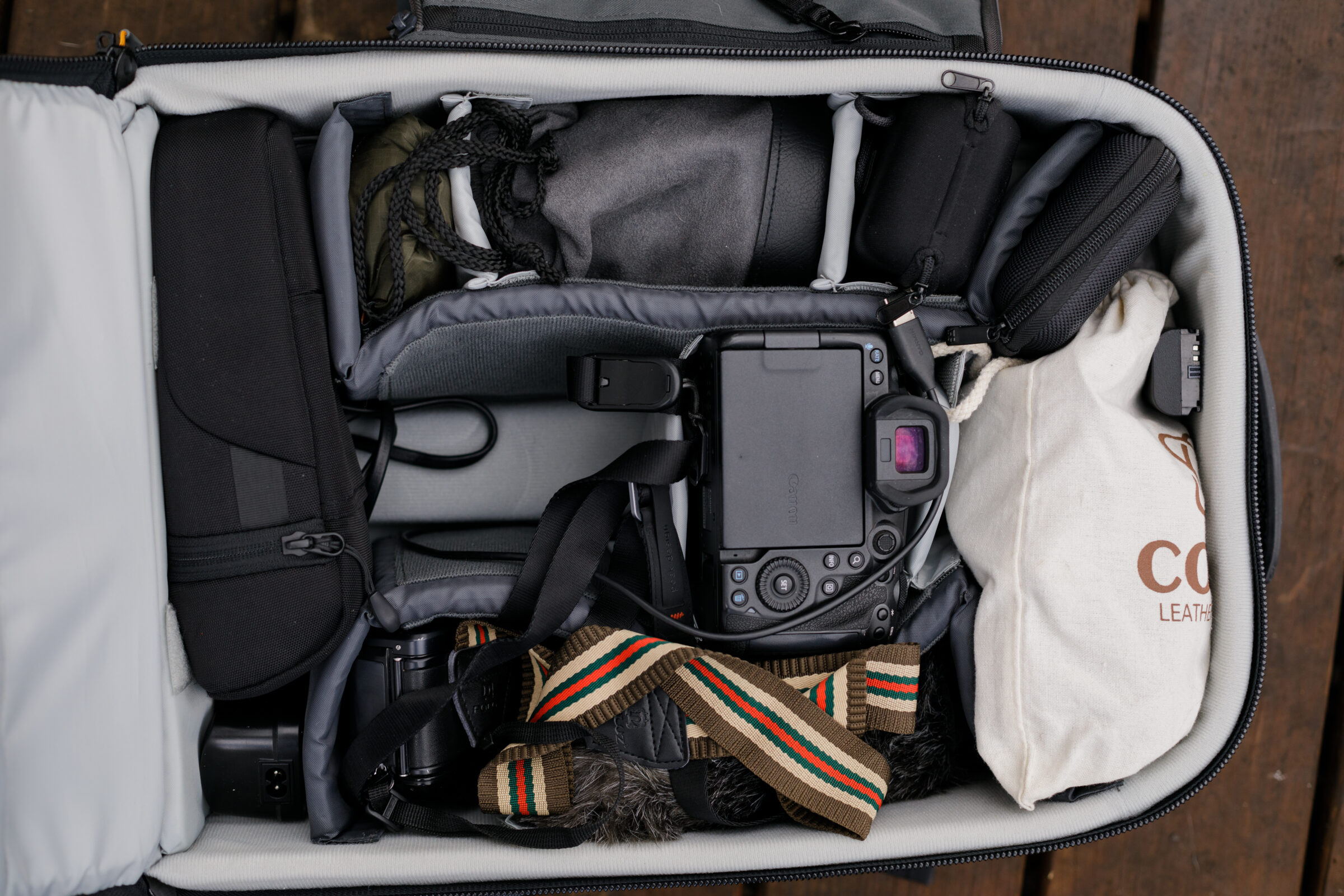
The TSA allows bags with cameras, tripods, and lenses if they fit in the overhead bin or under your seat. Drones are allowed through checkpoints. But individual airlines’ rules may vary. Check with your specific airline to see if your drone is allowed in your carry-on.
Short answer: no. If you feel like risking it, you can keep your camera in a regular bag. But the likelihood that your camera will be damaged is increased. And if you’re attached to your bag, you can always buy a padded camera cube, put your camera in it, and then place it in the bag.
That said, a camera bag will not only be safer for your camera but will also keep all your peripherals organized, allowing you to access everything you need when you need it.
Like a painter or graphic artist, every photographer is slightly unique with their technique, tools, and how they carry and operate their gear outside or indoors on a film mission. Generally, a few things that pros will carry include multiple memory cards, batteries, a lens wipe, a tripod, plus, of course, their camera and a couple of lenses tailored to the shots that they have in mind for that destination.
Sometimes they’ll also bring an extra camera, reflector, or light meter, but it really depends on how quick, fast, and lightweight they need to travel and what their objective or contracted project entails.
Just like any other piece of gear, it’s important to provide routine TLC to your bag. Clean the exterior and interior according to the product tag, and reapply water repellent too. Make sure the zippers are well-lubricated and clean.
Repair and patch any tears or deep scratches. Also, be sure to air out the interior pockets and camera cubes, as storing your equipment in a dry, clean space is important.

Head into the backcountry with the best backpacking backpacks of 2025. From budget-friendly options to ultra-comfortable picks, we’ve got you covered.

We tested the best daypacks of 2025 with options for every budget. Top picks include Osprey, Cotopaxi, and more.
Read the full article here