




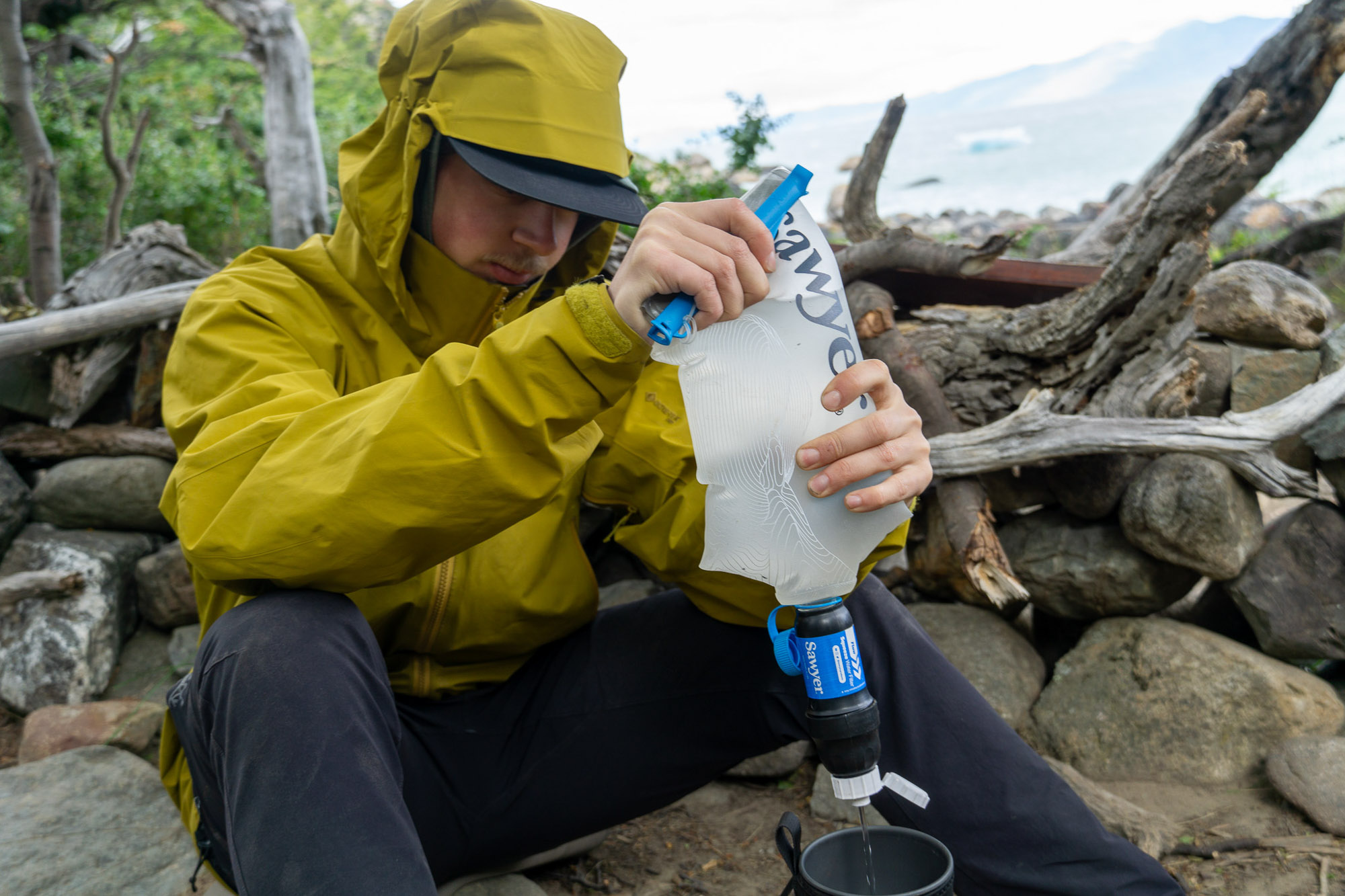
I used an early version of the Sawyer Squeeze water filter during a thru-hike of the Pacific Crest Trail, and while it filtered admirably until the end, one thing was immediately clear: the original foil “squeeze” bladders were junk.
They filled hiker boxes throughout southern California, all presumably pinholed and binned in favor of other solutions. The fix many settled on was to pivot to a soft TPU bladder, like the CNOC Vecto, which didn’t collect holes and was much easier to scoop from shallow sources thanks to its wide-mouth opening.
Sawyer noticed, and now the Squeeze filter is available with not only one but three different CNOC dirty-water bladders, bundled together in a savvy collaboration. It’s a match preordained by the backpacking gods, and after using the 750mL, 1L, and 2L versions, here’s where I think the combos excel, and when some work is still left to be done in refining the system.
In short: The Sawyer Squeeze is better than ever with the collaboration with CNOC and the addition of its solid TPU bladders. With three different sizes available, there’s an option that should work for almost anyone and any adventure.
Looking for a new water filter for hiking and backpacking? Check out how the Sawyer Squeeze compares to the rest of the market in GearJunkie’s Best Backpacking Water Filters Buyer’s Guide.
Filter type
Bottle/inline filter
Filter life
100,000 gallons
Filter pore size
0.1 microns
Removes particulates and bacteria
Yes
Pros
- New CNOC bladders are much better than previous
- Simple-to-use design
- Lightweight at under 3 oz.
- Packable
- Integrated flip-cap keeps outlet clean (with extra gasket beneath)
Cons
- Inline filter setup isn’t flawless
- No specified integrity test
- No cap on the dirty side
Sawyer Squeeze + CNOC: Review
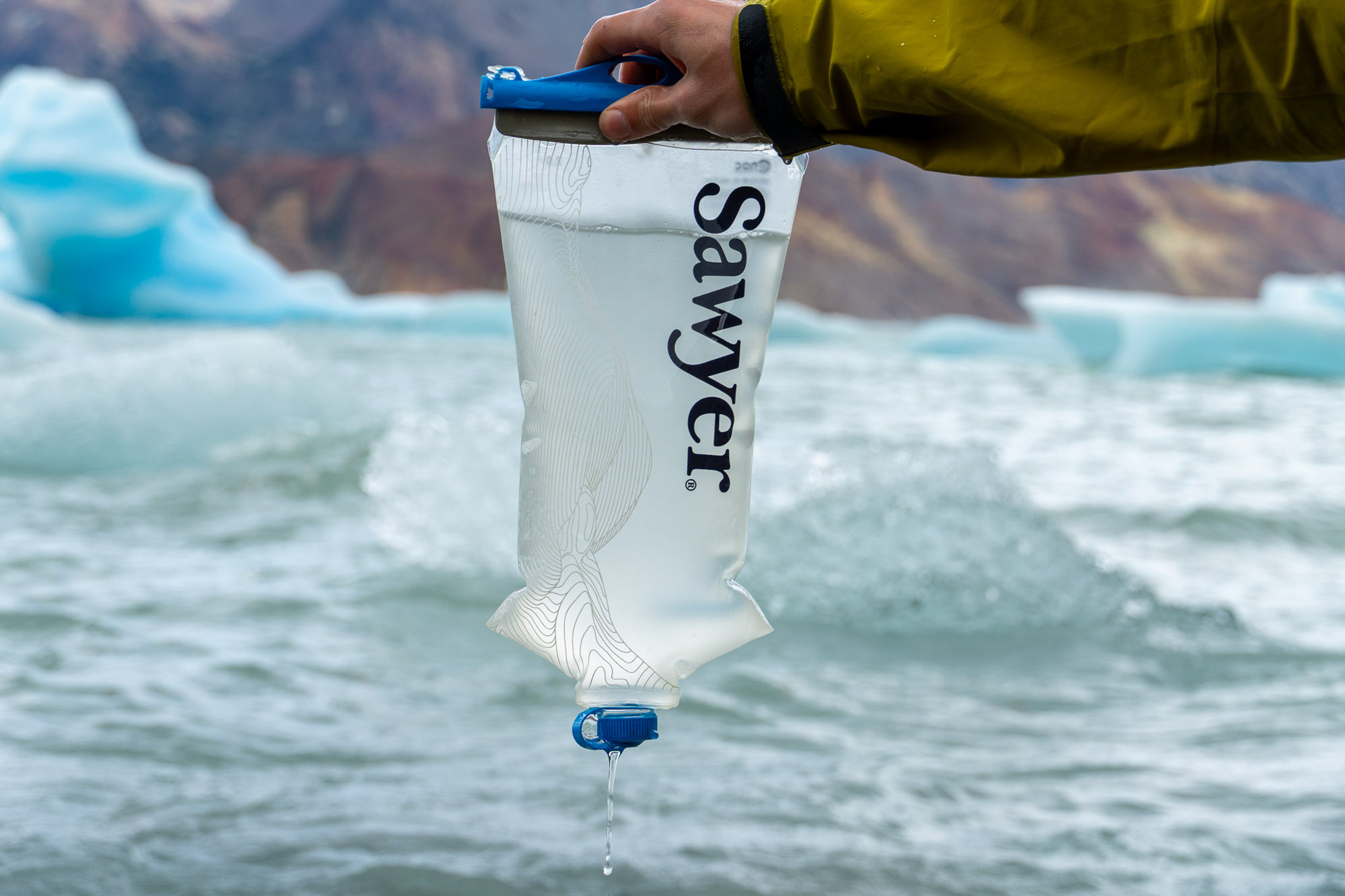
It’s always satisfying to see outdoor brands heed the call to change something when it isn’t perfect. And even more so when they pay attention to the needs of those so miserly as to wear trail runners for 500 miles or pilfer sauce packets for later any time they enter an eating establishment.
That isn’t to say Sawyer isn’t still selling Squeeze filters with its foil bags — it does — but the CNOC collab offers a system that works well without any user experimentation. That’s smart.
Last year, I started off testing the updated Squeeze system with a trip to Patagonia in February, and here’s what I learned about the kit in my first 14 days with it and in the year since.
The Sawyer Squeeze Filter
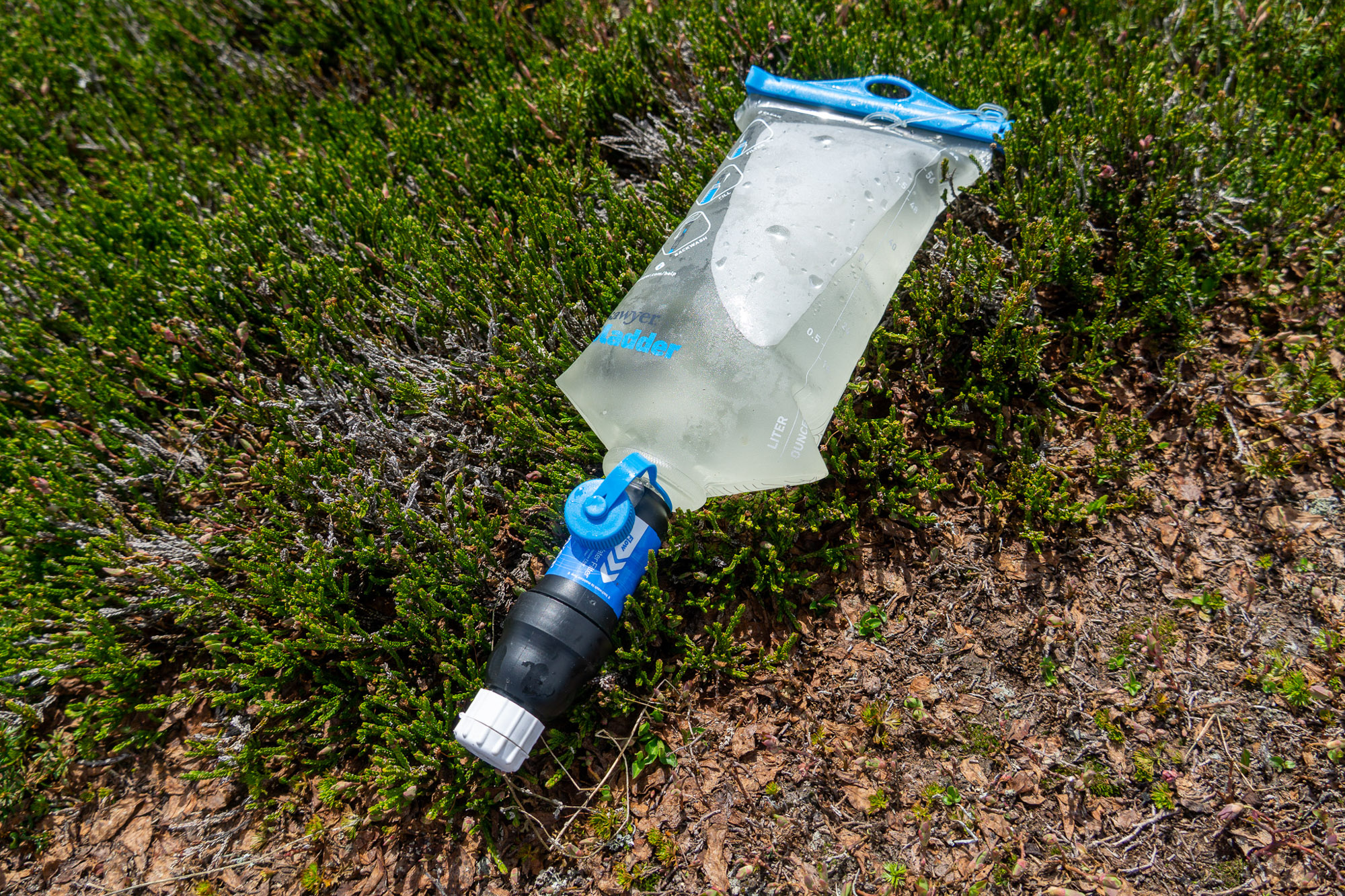
First, a reprise of just how good the Sawyer Squeeze filter is on its own. Our own Buyer’s Guide coverage of Backpacking Water Filters has had the Squeeze pinned as the best overall choice for many years now, only recently surplanted by the Platypus QuickDraw (a system that we like slightly better — check out our review to read why).
The Sawyer filter is a hollow-fiber style that utilizes a matrix of very thin tubes, which are permeable to water but filter down to 0.1 microns — approximately 1% the diameter of a human hair. This removes 99.99999% of bacteria (which is a lot of 9s), and almost the same measure of protozoa such as Giardia and Cryptosporidium.
My own history with the Squeeze has shown that it can sustain an entire thru-hike at a functional level, meaning it starts off strong and maintains an acceptable flow rate with occasional backflushing. The beauty of the Sawyer Squeeze, however, has always been its versatility in slapping it on any vessel you want to filter from.
With standard soda cap threading, the filter can be run with the included pouches, or screwed onto a water bottle, or used with any other vessel that also hosts the soda cap thread. This meant that when my OG Squeeze bladder died a valiant death, I could pivot and drink from my Smartwater bottles until I got a CNOC bag.
Sawyer Squeeze System With 2L CNOC Bladder
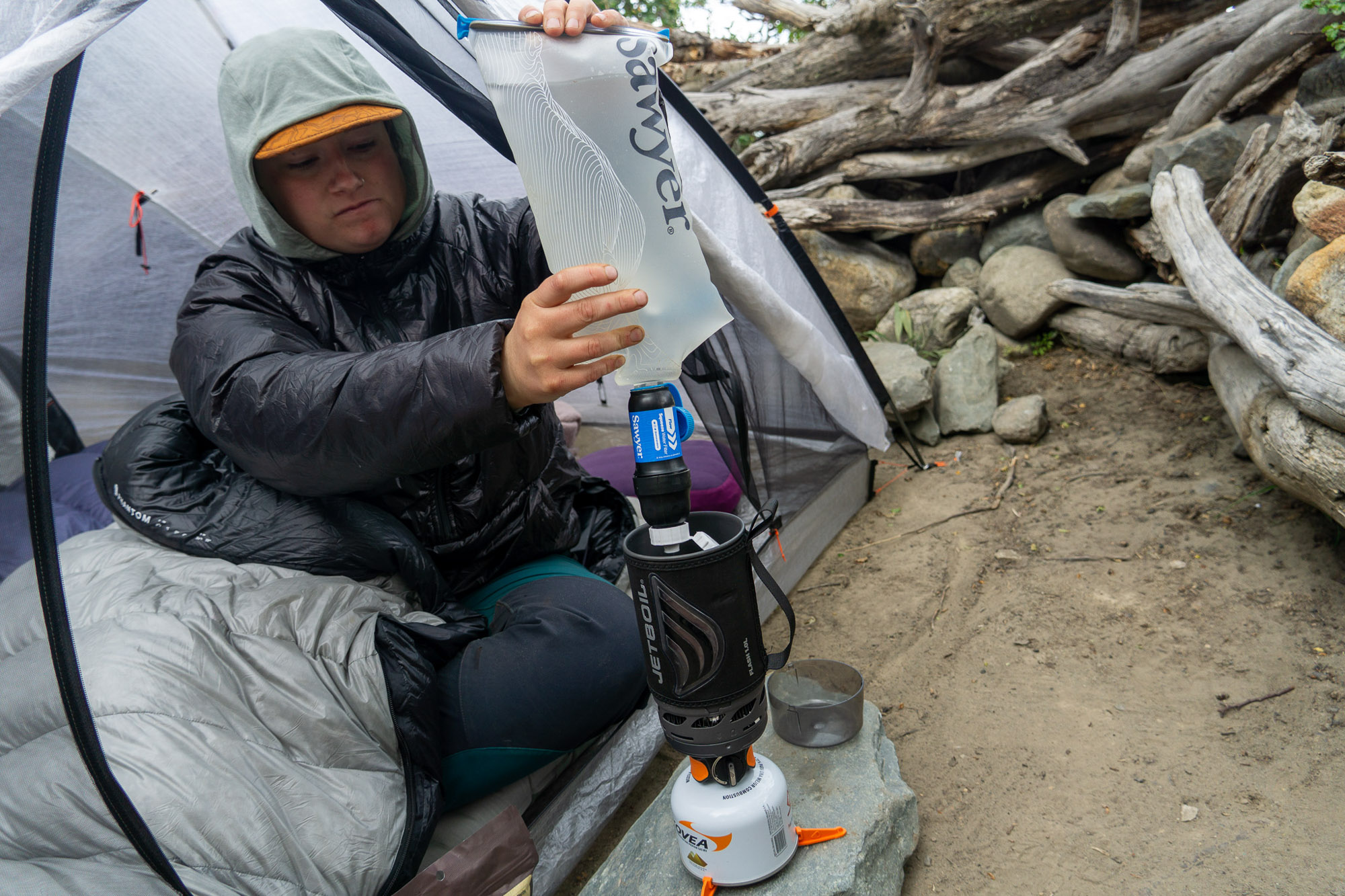
If you’re after a one-and-done backpacking water filter system, it’s tough to argue you can do much better than the Sawyer Squeeze paired up with the 2L CNOC Vecto Bladder. This collab is $65, and it’s the system I used in Patagonia last winter (summer?) while hiking around El Chalten.
The CNOC bladder itself is a huge upgrade on the previous pouches. First off: the material. While the mylar film used in the OG bags is robust enough for a while, leaks would eventually develop. The TPU material of the CNOC Vecto is, in my experience, much more durable and far more supple when squeezed or rolled up for storage.
The wide end of the Vecto is where this bladder really makes the grade, however. This is sealed with a stiffened edge and slider, allowing you to scoop or fill the bag with great efficiency. In practice, when I used the filter and bag for the first time, dipping from the Rio Túnel, this method was a little more work upfront, but very worth it.
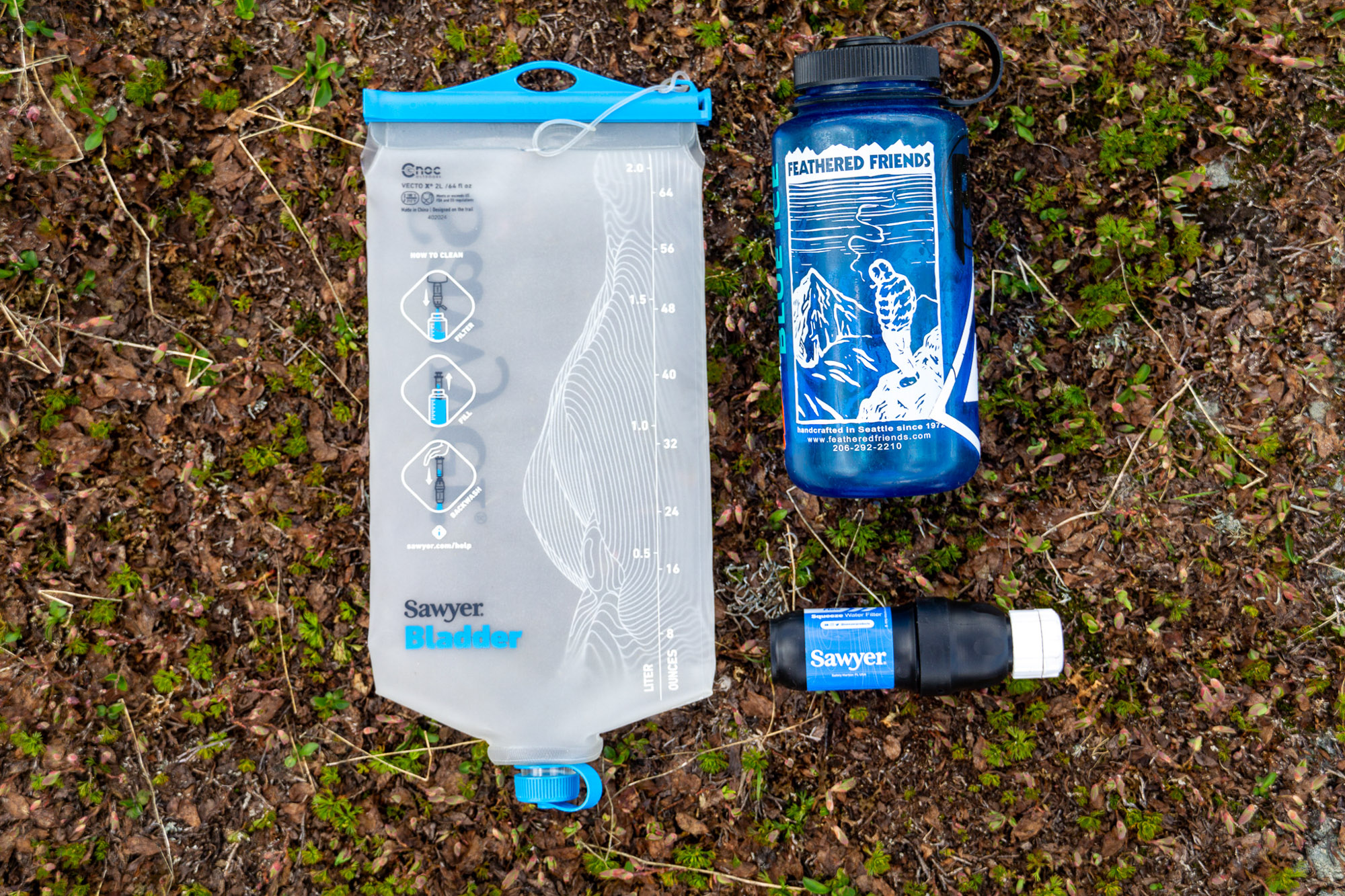
Thankfully, a little tether keeps your slider stuck to the Vecto bag, and speaking of tethers, the cap on the port is also wrangled by one. I typically always carry a spare in case I misplace one, but not losing your cap in the first place is always preferable.
On the first use with the new Vecto, a TPU-like flavor does pass through the filter, which can be a little funky if you aren’t expecting it. Nothing some drink powder doesn’t fix, and thankfully, it diminishes with use to the point that I can’t taste it anymore.
1L CNOC Bladder
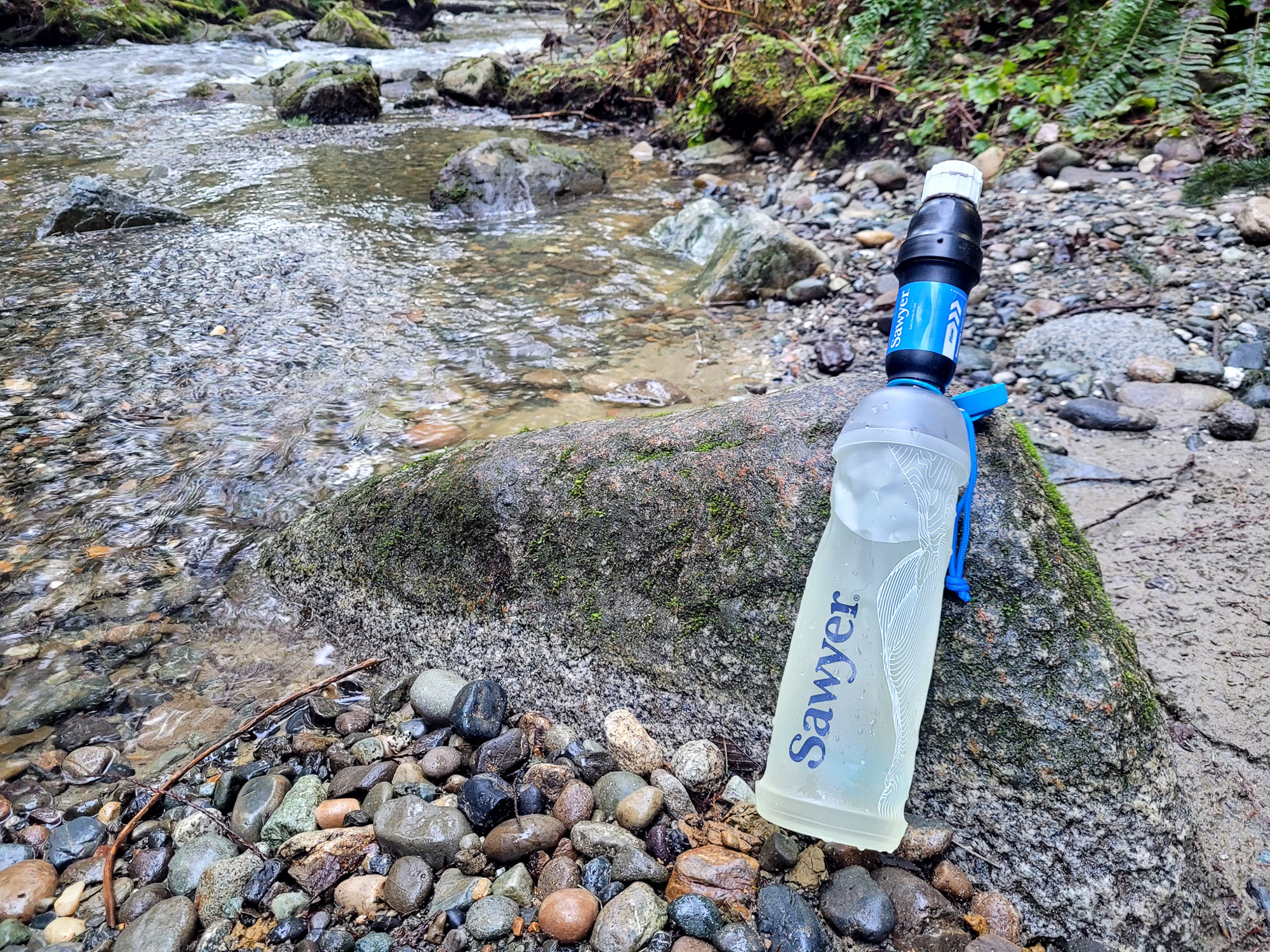
The 1L version of the CNOC + Sawyer Filter is certainly targeting the ubiquitous Smartwater bottle, a backpacking standby that I’ve used for many years now (though it seems new alternatives are gaining traction).
The CNOC Vesica 1L bladder loses the wide mouth opening of the 2L version and instead uses a more rigid polyethylene base and collar to reinforce it. When full to the brim, the Vesica and filter stand tall just like a full water bottle, and can be stashed in pack pockets this way.
That is, if it’s 100% full. Much less than that, and the structural integrity of the vessel falls off quickly, with the heavier Sawyer filter wilting over. This isn’t ideal, but the squeeze-ability of the bottle does make using it with the filter nicer than trying to wring your water out of a Smartwater bottle.
I found myself using the 1L system most frequently for bikepacking trips, where I typically don’t carry much capacity, and can stash the floppy bladder in a few different places on my bike where it won’t fall out. When collapsed, the Vesica bottle is much smaller than a plastic bottle, and when space matters, it’s a bonus.
750 mL CNOC Bladder + Sawyer Squeeze Micro
The smallest of the trio of Sawyer Squeeze x CNOC offerings, the 750 mL Hydriam Bladder and Sawyer Squeeze Micro combo is assuredly aimed at your fast and light adventures, where you’re more likely to fill at sources as you come across them, and looking to keep gear weight at a minimum.
The smallest 750 mL CNOC bladder is different from the 1L Vesica in that it’s entirely soft, with no rigid base or collar. You can scrunch it down easily to fit into your closed hand, and it’s well-sized to slip into running vest pockets.
It’s paired up with a Sawyer Micro filter, which is the smallest filter the brand makes. This is admittedly not my favorite, with a pretty slow flow rate that relegates the system more in the emergency/backup category.
In this arena, I think the recently updated Katadyn BeFree AC or HydraPack UltraFlask + Filter Cap are better options for quick filtration when you don’t need much actual capacity to carry with you. The BeFree filter is a bit quicker than the Sawyer Micro (once you pop out the charcoal filter), and the HydraPack Filter Cap fits in running vests better.
Room for Improvement
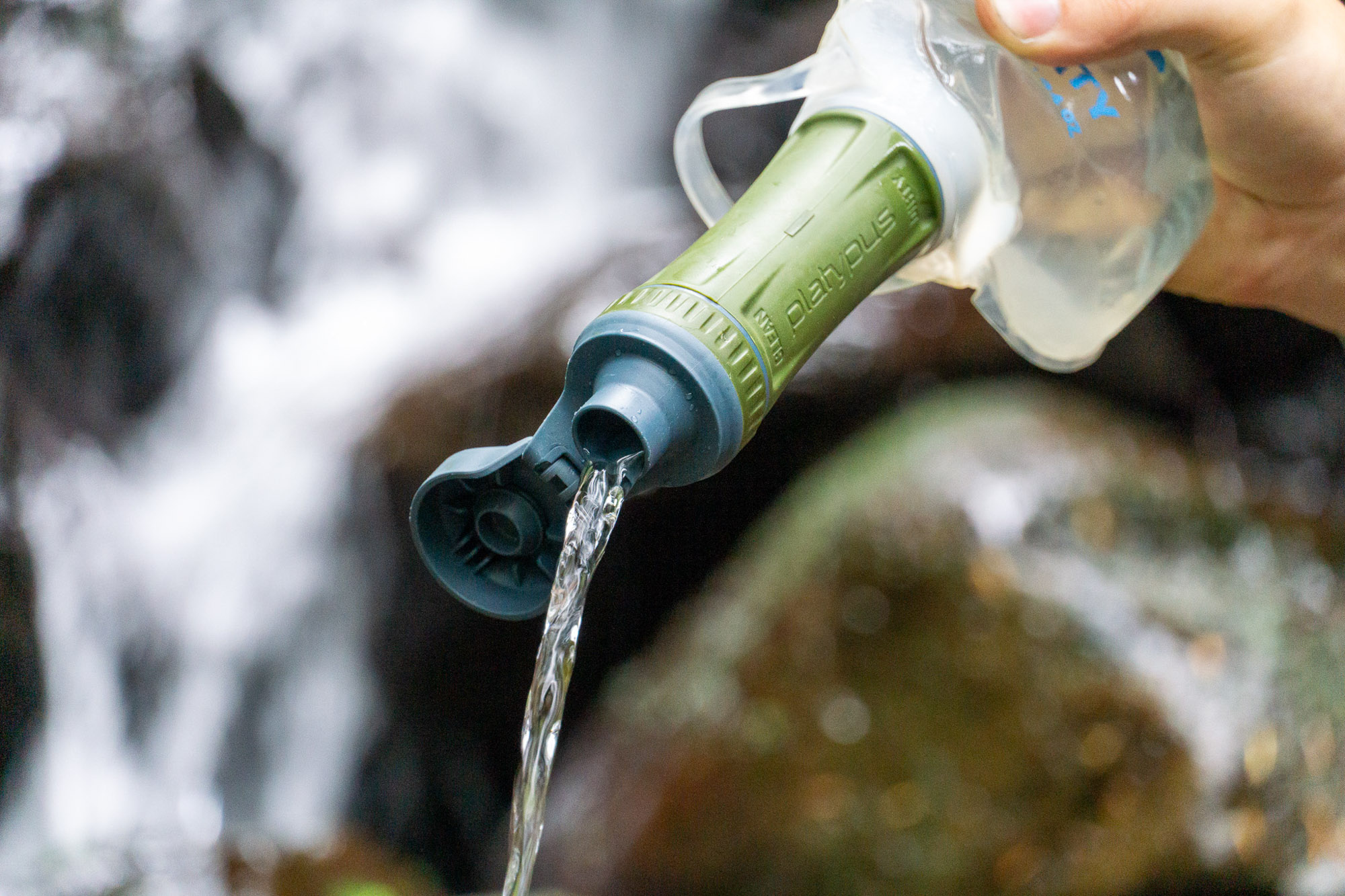
I think the Platypus QuickDraw filter is slightly better than the Sawyer Squeeze filter, and there are a few reasons.
The first is the filter rate, where the QuickDraw simply moves more liquid through it, thanks to its 0.2-micron filter (still more than sufficient for filtering out anything you’ll encounter outdoors). It also retains this flow rate for longer than the Squeeze, which tends to slow down after about 100 miles of serious use.
The QuickDraw is also more versatile on the dirty side of the filter, hosting its own quarter-turn threading that interfaces with QuickDraw reservoirs, as well as a common internal 28mm thread that fits Smartwater bottles, CNOC bladders, and more.
My current backpacking filter system is a Platypus QuickDraw mated up to a 2L CNOC Vecto. This has been a trusty companion (coupled with a few Smartwater bottles), and it highlights the versatility that backpackers these days are after. The Sawyer Squeeze and CNOC bladder combo is a huge step in the right direction, and it’s honestly tough to recommend between the two most days.
If you’re going line item by line item between the two, the Squeeze does have a much longer filter lifespan compared to the Quickdraw. These numbers typically don’t mean much in actual use, but it’s a difference all the same.
Sawyer Squeeze Filter + CNOC: Conclusion
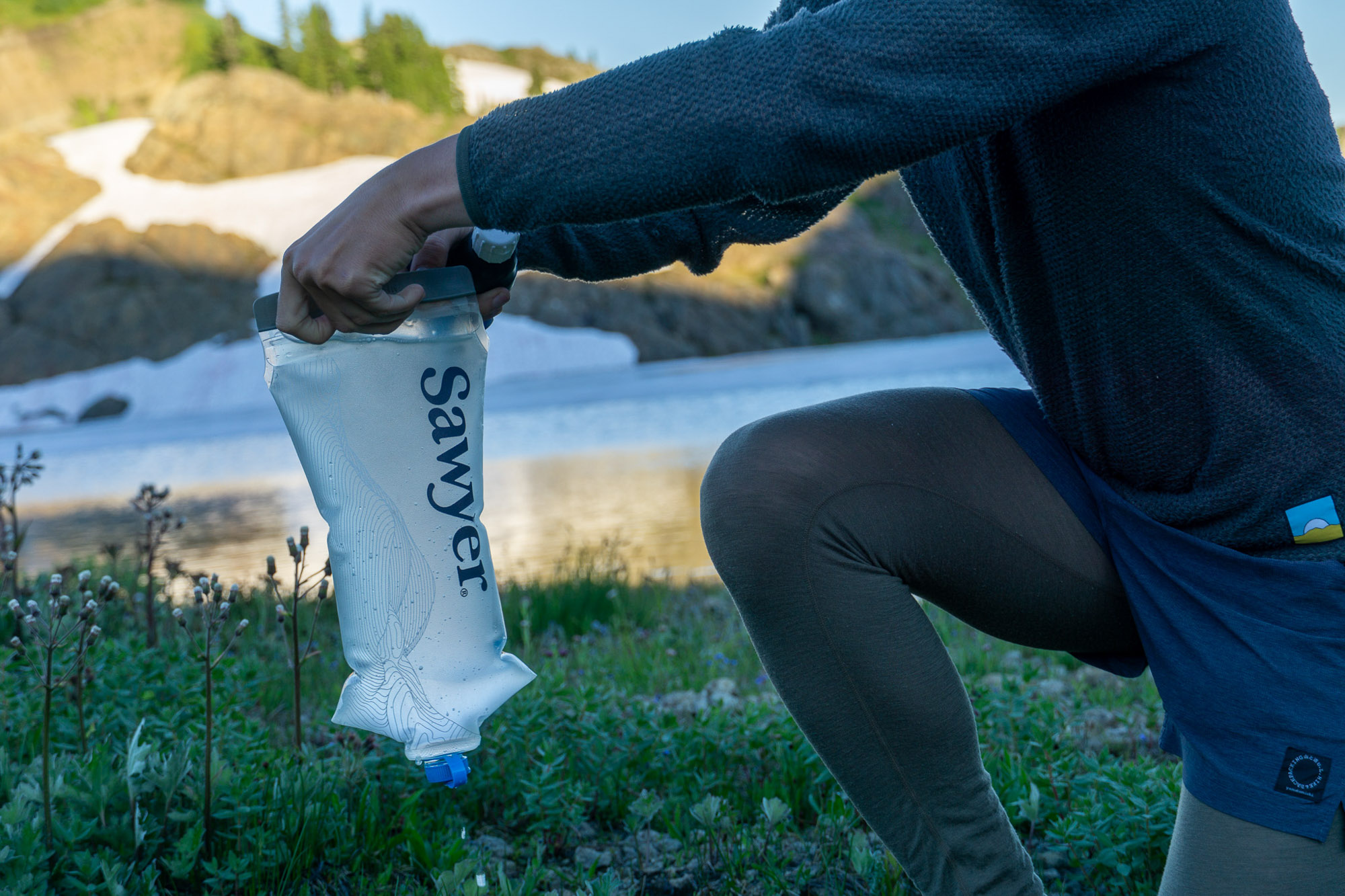
The updated trio of Sawyer Squeeze systems offered with CNOC bladders are winners, just of different magnitudes. The Squeeze + 2L CNOC System is likely one of the best backpacking filters available at the moment, and an easy recommendation to anyone looking for a filter that will last long into their adventures.
The 1L system is a little more hit-or-miss, and depending on how you like to drink on the trail, it might work great or not be perfect. The Squeeze Micro and CNOC 750 mL Bladder isn’t quite the best fast-and-light filter, but I’ve still made good use of it (as a backup filter in my truck). The addition of CNOC bladders to every kit raises all ships here, however, and all of these new Sawyer offerings are better than their previous iterations.
It’s always validating when a little garage-gear science comes to the big screen and is offered by a brand. Trust me, with a solid thru-hike of use already, the Sawyer/CNOC combo is proven, and proven to work well. Invest in the kit and know you’ve got one of the best right out of the box.
Read the full article here