




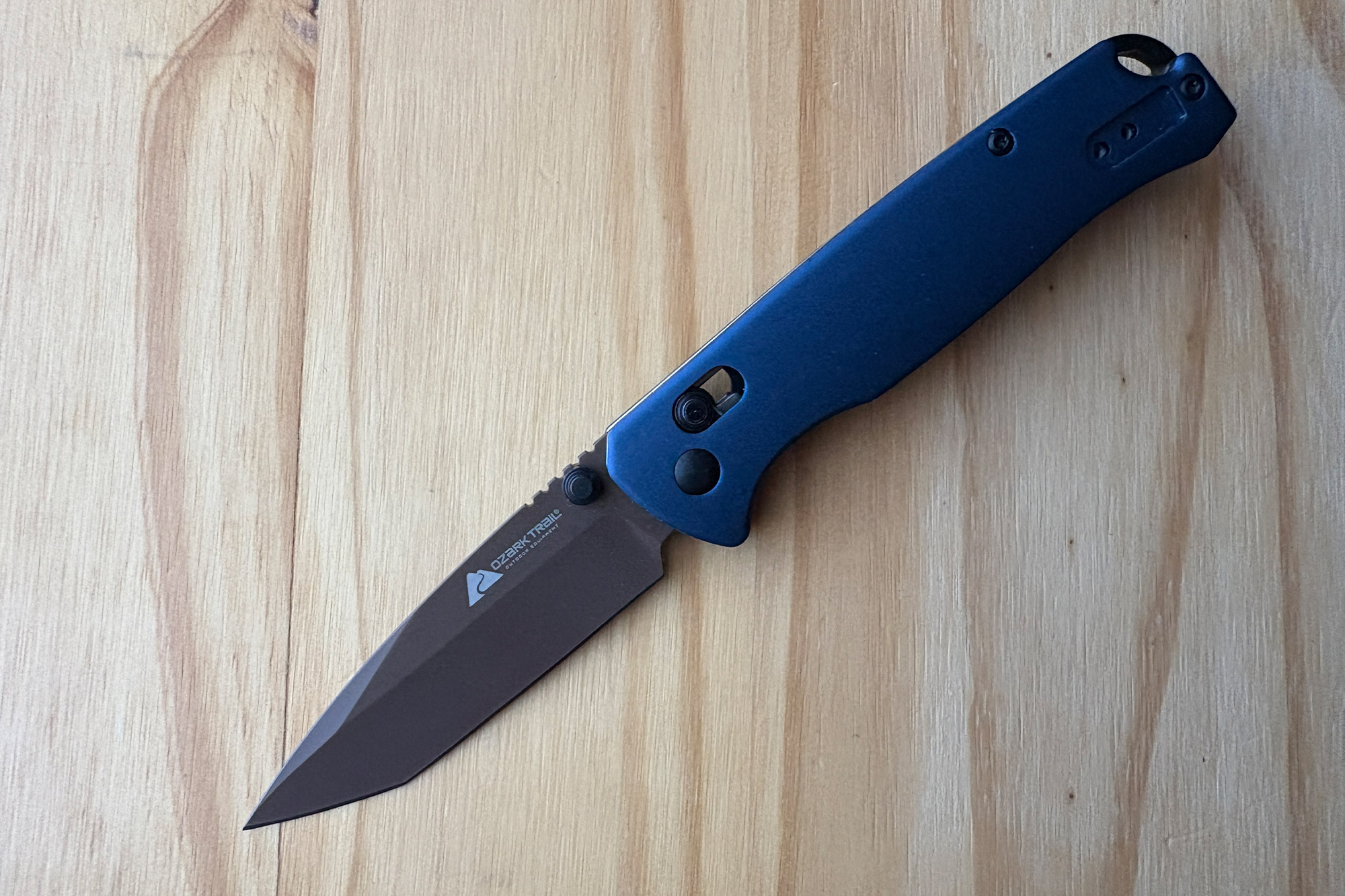
The first Ozark Trail knife was an experiment in limbo pricing (how low can you go?) and sourcing real knife components. This knife, which has no official name — hence the “Ozark Trail Tanto” — is not just a daring loss leader, it is also an outstanding and cohesive piece, a knife with real chops.
At $20 plus tax, you get a knife with the best non-powder metal steel on the planet. When you pair that with great ergonomics, good materials, and an interesting colorway, the Ozark Trail Tanto looks like the very best knife for the money available in 2025.
Think of this as a Civivi or other mid-market brand that is priced like a hunk of junk budget knife from Amazon. Except, the knife is outstanding.
The Ozark Trail Tanto is so good that knife brands should be terrified; one solid Walmart knife is a blip, two is a pattern, and Walmart, the world’s greatest logistics firm, has the distribution system, partnerships, and buying power to crush the entire knife business.
This is a true threat to the knife business as we know it. And it’s all the better for the consumer.
In short: While the “Ozark Grail” got a ton of attention last year, this knife outperforms in every way. Even with a price tag that is twice as high, it still offers a better value thanks to across-the-board materials upgrades. Better handles and superior steel make this knife the peer of blades that are four or five times its price. Only the wonky blade shape holds this knife back.
-
Unbeatable price -
Very good blade steel -
Excellent handle shape and clip
-
Americanized tanto blade shape is hard to sharpen and unnecessarily intimidating
Ozark Trail Tanto Review
Use and Carry
As usual, my testing included a project and then general cutting tasks like fire prep, food prep, opening packages, and processing recycling.
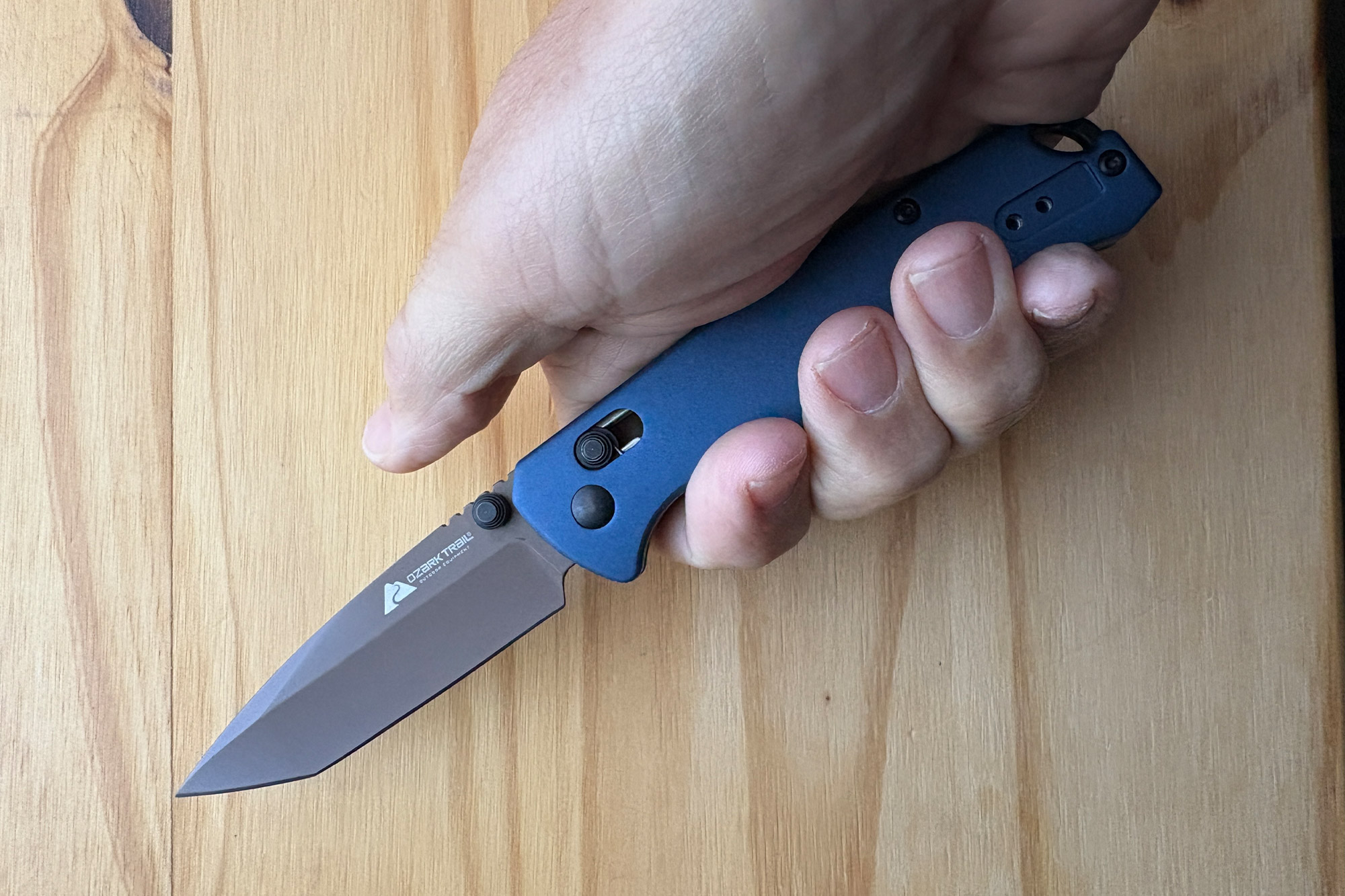
The OT Tanto helped with three projects: a small mallet for my wife (for knocking out the locking pin of her KitchenAid mixer), a valet tray for my nightstand, and a miserable winterizing project in my basement.
The two woodworking projects were excellent tests of precision cutting, while the last was a slog through some pretty unpleasant cutting material — insulation.
The two precision tasks were pretty easy for the OT Tanto. It scored and marked three different kinds of wood well. The mallet head was made of hard maple, and it left clean, scored marking lines behind.
Meanwhile, the borders of the valet tray were walnut, a softer wood, and it did even better there (as you’d expect). And the base of the tray was birch ply. This is somewhere in the middle, and it did well there, too.
I did some carving on the mallet head to quickly ease the edges, and it took chunks out nicely. The surface left behind was faceted but smooth, allowing for easy shaping at a sander, producing nice, clean roundovers. After these decidedly easy tests, I got the OT Tanto pretty messy.
Serious Cutting Tasks
As part of a winterizing project, I removed bats of insulation and had to cut them down to size to fit in our municipal garbage bags. This meant a lot of cutting (there were roughly 60 8-foot pieces I needed to cut down and tape into rolls).
In the end, I got them all crammed into roughly 20 bags, but it was pretty awful. Because of the age of the insulation, it was exceptionally dusty and itchy. Generally, I would cut through the paper side of the insulation onto the concrete floor of my basement. I made probably 120 of these cuts.
The result was substantial wear on the blade.
The secondary tip, which was already a bit round, is almost completely gone, especially after I sharpened the OT Tanto back to a keen edge. It crunched through the paper and the fiberglass quite easily at the beginning, but began to degrade about two-thirds of the way through. Even though I took care to avoid striking the concrete, I wasn’t perfect.
This produced no chips in the blade, as one would expect with 14C28N, but there was considerable rolling along the edge. This test — paper, fiberglass, and concrete — is probably more challenging than it is fair to expect from a folder, but the OT Tanto did quite well.
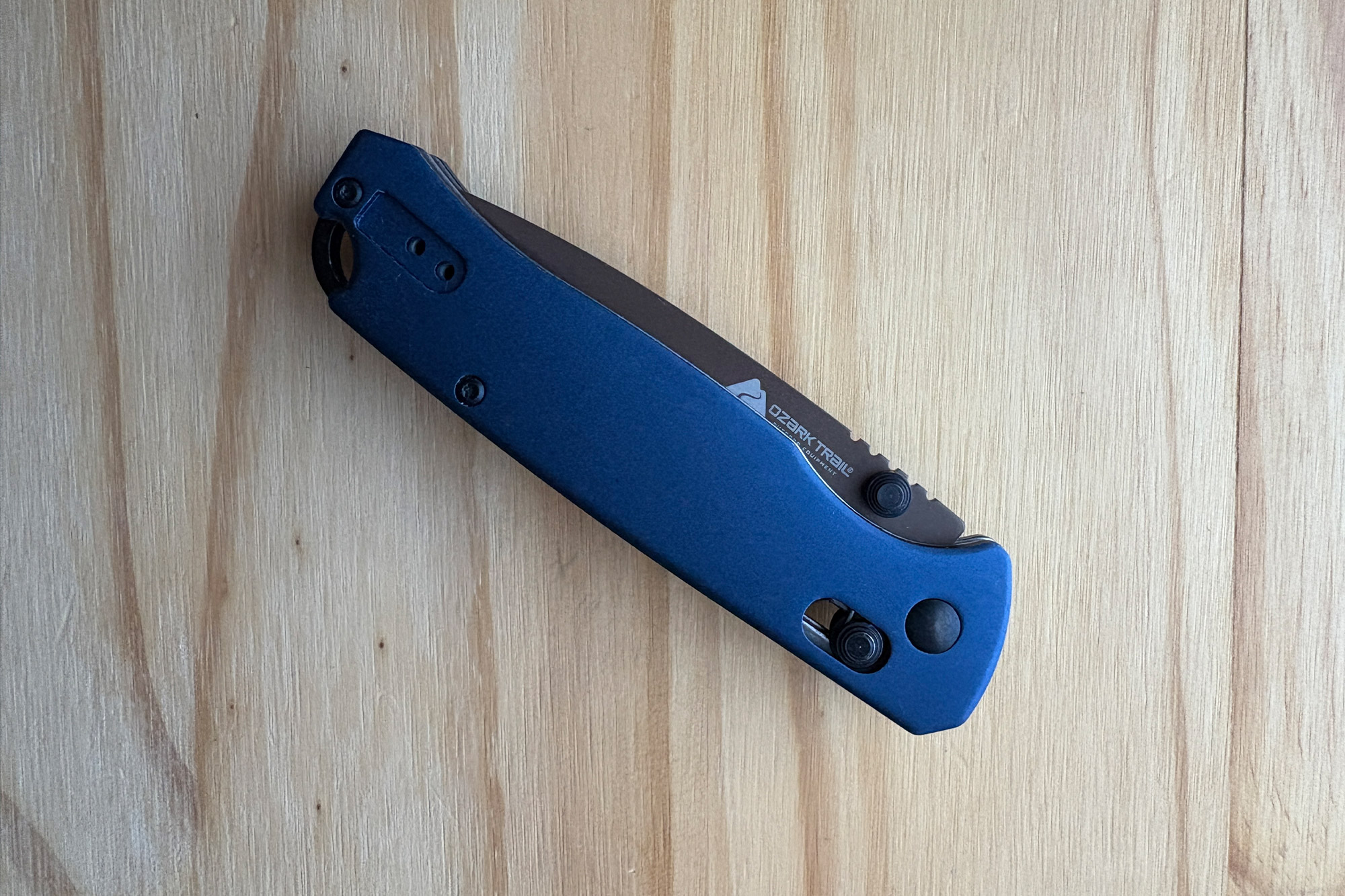
Because of the Tyvek suit, I got quite warm. The OT Tanto, which was clipped to my T-shirt under the suit, handled the moisture even better than the wear.
The total impact of this grueling work was pretty minimal. The lock is still dead on, the edge was pretty easily restored, and the deployment is snappy.
Notes on Design
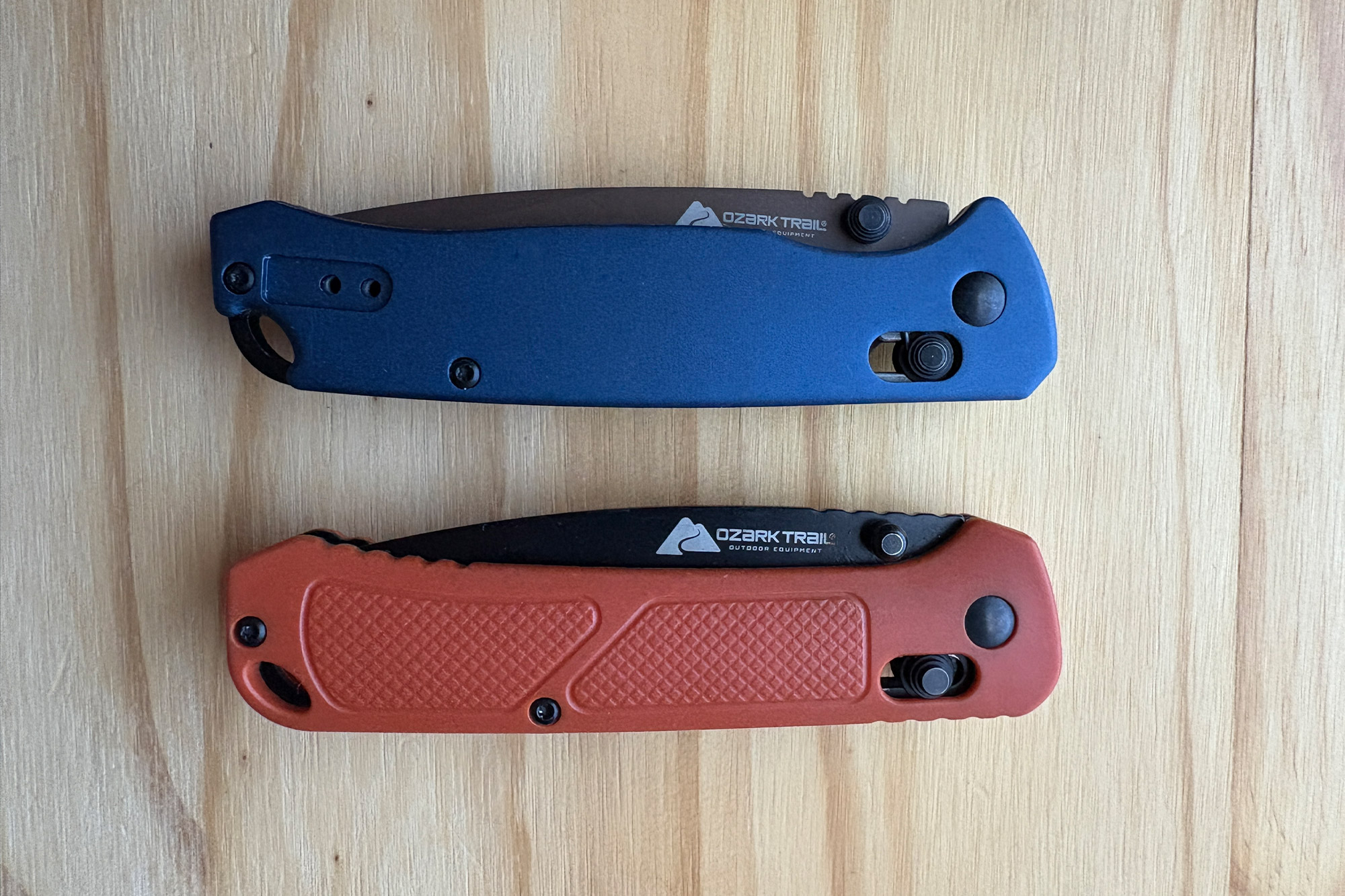
There are a few things I noticed about the design that bear mentioning. First, the knife has a very small exposed rear tang. It did not catch on anything, but it still bothers me. Also, the detent is pretty heavy, so unless you use the right technique, the knife will not deploy easily. I like heavy, crispy detents, but some might not.
The handles are nicely finished with a bit of chamfering and some contouring. They fit well in the hand and are excellent even when wet. The clip is a straight port from the Ozark Grail — it was good there, so it is good here. Then there is the blade grind.
‘Americanized’ Tanto
This knife has what is often called a “tanto” blade shape. That’s something of a misnomer. The original Japanese tanto design has a very reinforced tip, but it is curved. There is no secondary point.
Most of the knives with this secondary point design are, in reality, “Americanized tantos.” This blade shape is common now, and was first popularized by Cold Steel in the early ’90s.
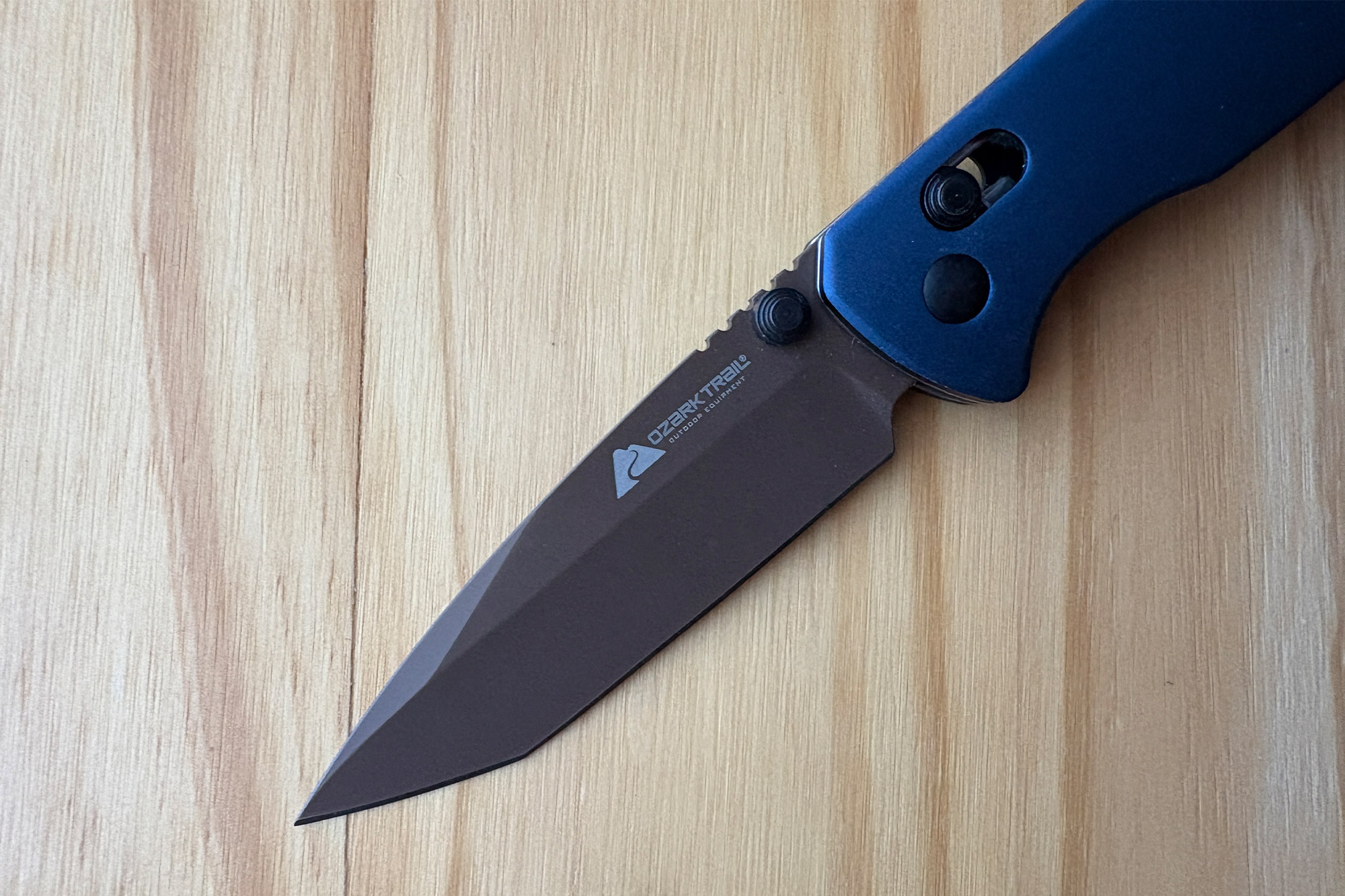
It, too, has a reinforced tip, but it also possesses a secondary point at the point where the belly of the knife angles upward toward the tip. This design is difficult to keep sharp. It is also hard to prevent the secondary tip from wearing away, especially when it is as muted as this one is.
Overall, I do not like Americanized tanto blades, as they introduce unnecessary complexity in the sharpening process for no real benefit. I also think they are significantly more intimidating than other blade shapes. I’d prefer a drop point, especially on a general-purpose blade like this one. The secondary tip, as mentioned above, did get rounded over a bit during use.
Conclusion: Who’s It For?
This is a spectacular knife, a worthy successor to the Ozark Grail. Its steel and sculpted aluminum handles are great, giving the knife a much better look and feel than any other $20 knife out there.
If you are in the market for a “real” knife with “real” steel, you won’t find a better value. I’d love to see this in a drop point, but for the money, I am OK with a tanto blade.
The Ozark Trail Tanto is a stunning value, more than twice as good as its $10 predecessor.
Read the full article here