




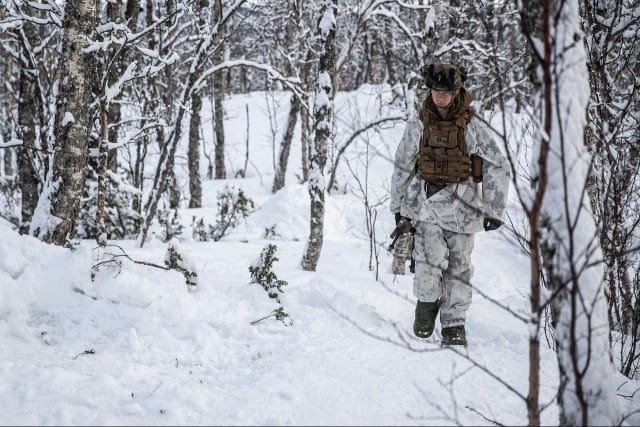
WASHINGTON — As the race to control the Arctic intensifies, more research is focused on how to optimize service member performance in the extreme cold, where lack of sleep and appetite, altitude and equipment issues can all affect a warfighter’s ability to function.
Researchers at the U.S. Army Research Institute of Environmental Medicine’s Military Nutrition Division in Natick, Massachusetts, study physiological stressors that warfighters encounter. By manipulating dietary, exercise and environmental conditions, they’re working to determine the best way to deliver the right nutrition and energy to increase warfighter lethality.
How extreme cold negatively affects warfighters
In extreme cold environments, difficult terrain, bulky clothing, heavy equipment and the body’s own process for regulating internal body temperature can cause service members to expend more energy. Many also don’t get enough nutrition or sleep, said USARIEM research psychologist Harris Lieberman.
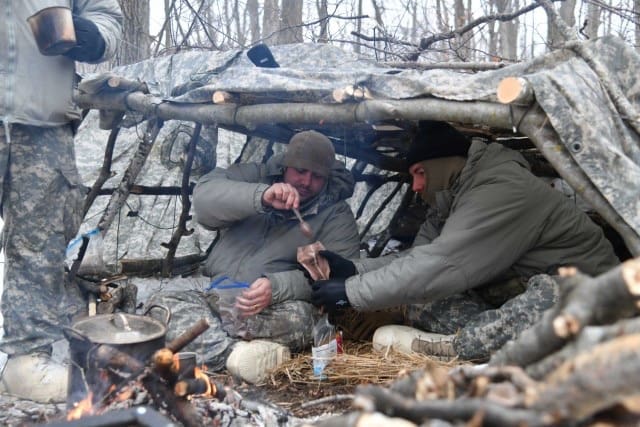
“Sleep deprivation is what usually occurs when you’re deployed,” he continued, “and service members don’t eat enough food [in the cold] to keep up with all the work that they do.”
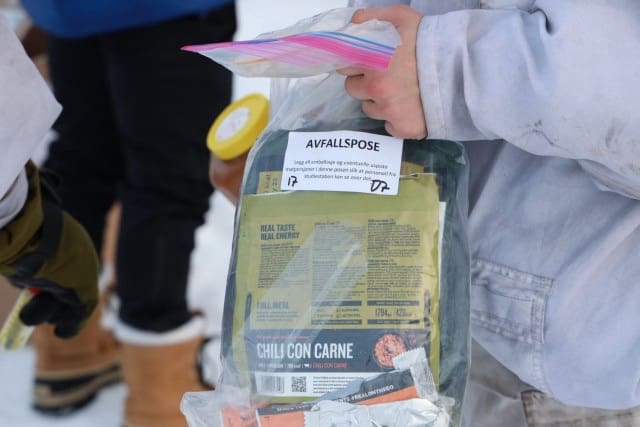
The U.S. military has a cold-weather version of the meals ready to eat, which is dehydrated to keep the rations from freezing. But they need to be rehydrated at mealtime, which can take time — something not all warfighters have. Many just don’t eat during busy time periods. That lack of nutrition can lower the energy levels required to do the mission, explained Lee Margolis, a veteran-turned USARIEM nutrition physiologist.
“Energy expenditures can range anywhere from 5,000-7,000 calories per day [in extreme cold],” Margolis said. “For an average individual, normally you’re going to burn about 2,000-3,000 calories per day.”
High altitudes, where less oxygen is available, can also affect energy expenditure — even in the strongest special operators — and change the body’s ability to metabolize food for fuel.
“It’s critically important that we develop solutions to offset the impacts of altitude,” explained James McClung, chief of USARIEM’s Military Nutrition Division. “Nutrition can be a part of that.”
Other issues, such as equipment freezing up and losing its ability to function, can also affect productivity.
Mimicking Extreme Temps
Researchers visit cold-weather climates, such as Alaska and Norway, to perform studies, but they’re also able to do some at home. USARIEM’s Doriot Climatic Chambers allow experts to test the effects of extreme environments in two massive indoor chambers: one focuses on human-subject testing, while the other is used for equipment testing.
“Every climate you could possibly imagine … we can recreate,” said Facilities Manager Jeff Faulkner.
The chambers’ temperatures can range from 165 to minus 65 degrees, and they can create 40 mph of wind, rain and snow. Each chamber has inclining treadmills that can handle up to five Soldiers at 15 mph on a 12-degree incline. Smaller conditioning rooms have the same capabilities as the chambers, except they can drop to minus 72 degrees.
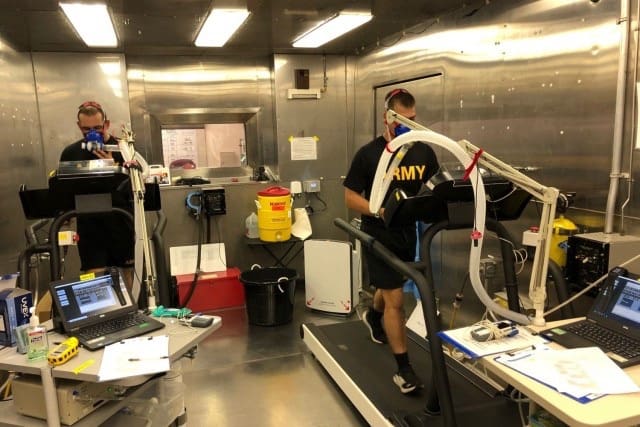
In one of the smaller conditioning chambers, Lieberman is leading a cold-weather study to analyze the behavior, physiology and performance of stressed, sleep-deprived Soldiers to determine what nutritional needs will increase their performance.
After various pretests and body composition measurements, the volunteers, who are part of the Natick laboratories’ Soldier Volunteer Research Program, spend two days and one night in the room at 16 degrees. While wearing cold-weather-appropriate gear, they undergo various physical activities, such as stationary bike rides and hand strength tests, to measure their reaction time and vigilance.
They take various cognitive performance tests to measure mental acuity, and they eat meals primarily consisting of military rations that dietitians tailor specifically to their needs. They also forgo sleep. “If something unexpected happens, can you effectively respond and correctly deal with it?” questioned Lieberman, referring to the study’s end goal.
Carbs, fat, protein: What’s best for energy balance?
Meanwhile, USARIEM researchers have been working to get a better understanding of the types of macronutrients that will help cold-weather combatants thrive. The goal: to keep warfighters from expending more energy than they’re consuming.
“We’re studying using macronutrients to avoid negative energy balance — the case where we cannot eat enough to maintain physical or cognitive performance — which is associated with poor performance and also an increased risk of injury,” McClung said.
“We’ve seen that there are decreases in lower body power specifically,” Margolis said of the negative energy balance. “Obviously, under a combat scenario, your ability to move very quickly, especially if you’re carrying a heavy kit, may be the difference in survival.”
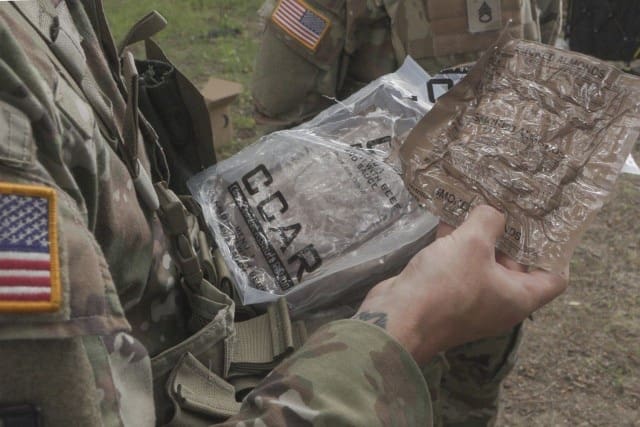
The research, which has been years in the making, helped to develop a more energy-dense ration known as the close combat assault ration. The CCAR recently replaced the first strike ration for combat troops.
In 2016, in collaboration with the Norwegian Defense Research Establishment, known as FFI, USARIEM began studying Soldiers in the field to see how they metabolized prototypes of supplemental snack bars created by the Army Combat Capabilities Development Command Soldier Center’s Combat Feeding Division. One bar was higher in carbohydrates, while the other was higher in protein. The result: the volunteers liked and ate the bars, but they ate fewer of their actual combat rations, leading to energy deficits.
Further lab research in 2022 studied the amount of food Soldiers ate by feeding volunteers a higher-fat prototype product. Fat has more calories per gram than carbs and protein, so a bar with a higher-fat count could provide more energy in a smaller package, Margolis said — something that could help lighten warfighter load during combat operations.
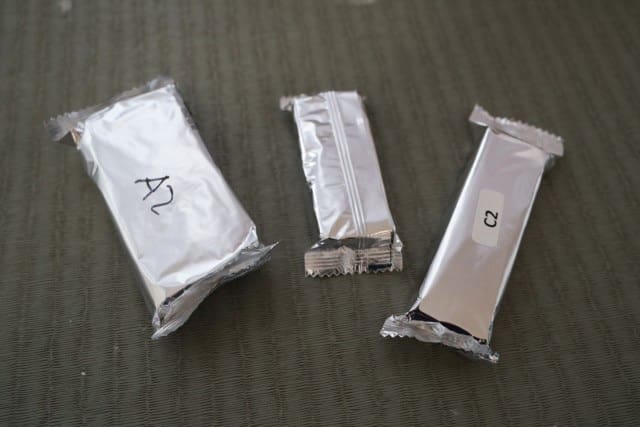
By providing the volunteers with the higher-fat prototype product, researchers wanted to see if their energy intake would increase.
All of the volunteers ended up consuming more calories than in previous studies. However, most of their energy deficits remained at moderate levels, causing no adverse effects, explained Emily Howard, a USARIEM nutritional physiologist who helped carry out the study. The takeaway for researchers: the amount of food a warfighter consumes is the most critical factor in preserving their performance, not so much the composition of that food.
However, since Soldiers don’t typically eat a lot in cold-weather conditions, the research into how to optimize macronutrients in rations continues.
Evolving tactics
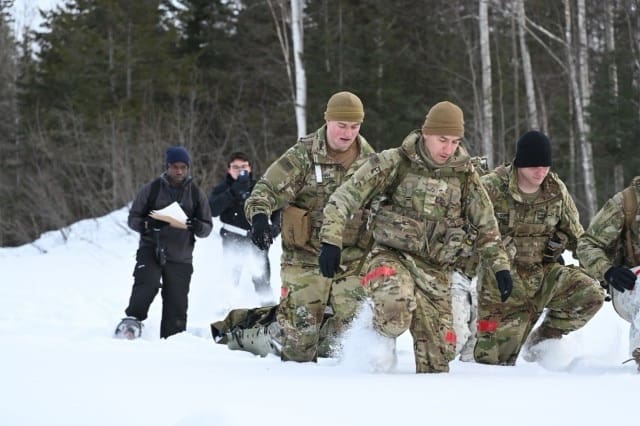
One upcoming study will monitor how warfighters on cold-weather ruck marches perform when eating two newer prototype ration bars: one that’s higher in fat and more energy-dense, and another that’s less energy-dense and higher in carbs. During the study, researchers plan to measure each volunteer’s oxygen and carbon dioxide levels.
“We’re able to actually calculate if their body is using primarily carbohydrate, primarily fat, or a mix while they’re doing exercise,” Margolis said.
The study will also look at glucose and insulin level changes, as well as hormone responses, to see how well that fuel sustains them on long marches and during moments when they might need to pick up the tempo.
Margolis’ team also plans to do some observational studies during the annual exercise Arctic Edge in Alaska in 2026 to see how service members are using the cold-weather MRE and its supplements.
Once the studies are concluded, USARIEM’s findings are shared with the Combat Feeding Division as recommendations for adjusting current rations or developing new ones.
By Katie Lange, Pentagon News
Both comments and pings are currently closed.
Read the full article here