




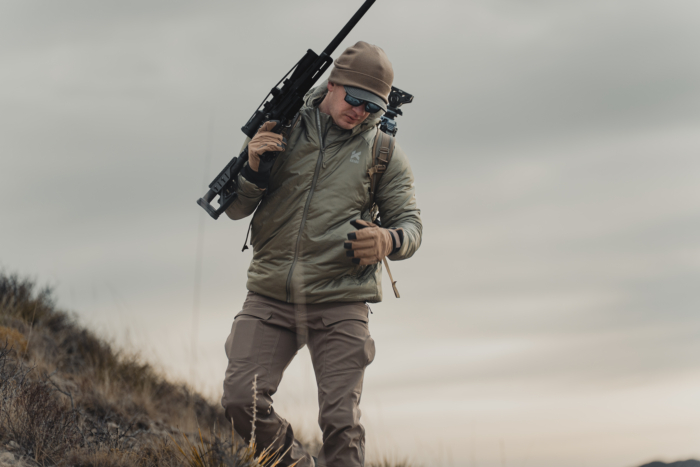
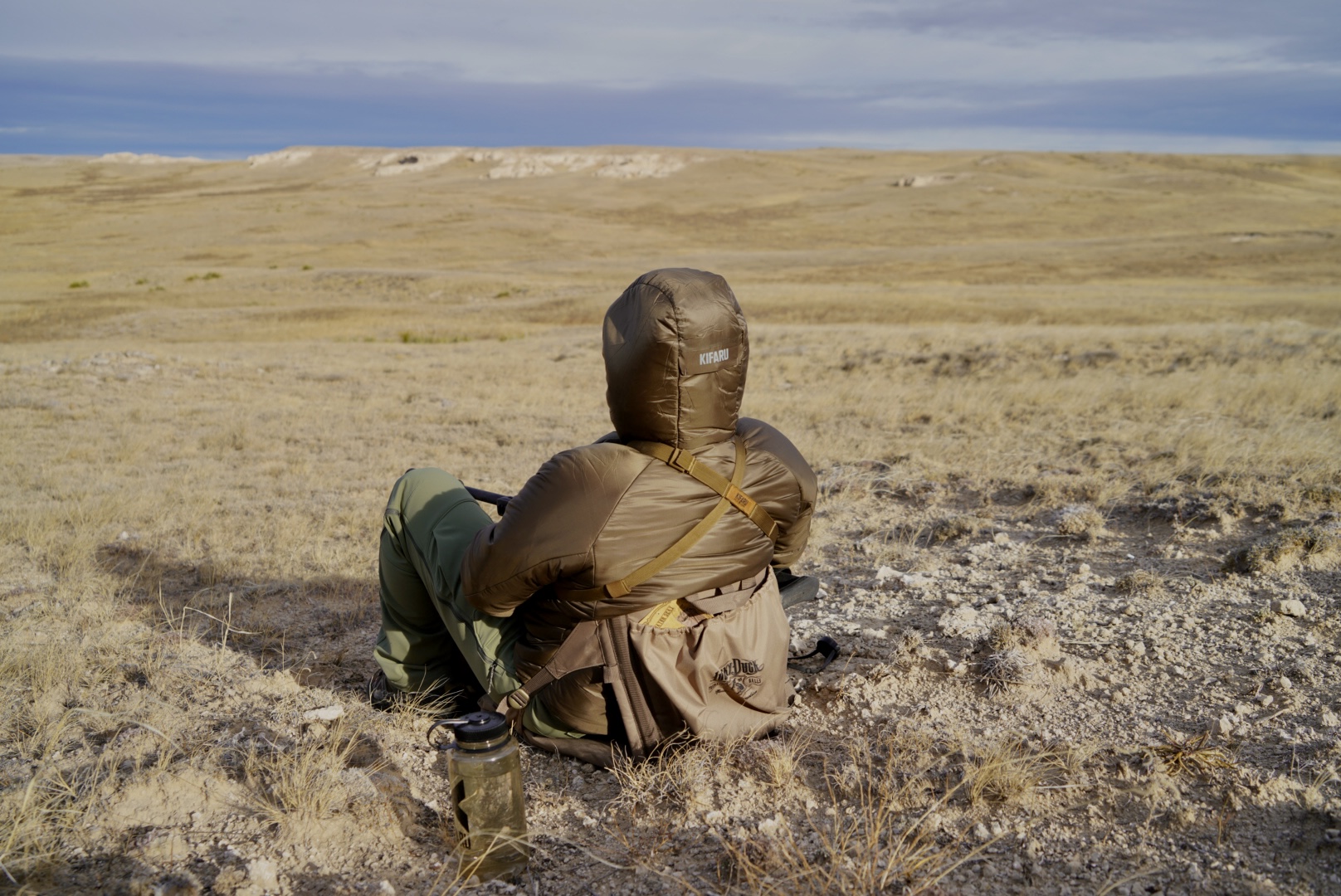
As I sat on a glassing knob in Wyoming overlooking a deep canyon, the wind kicked up, and I started shivering. It had been a slower day of hunting, and we were hunkering in for the last stand of the day. It was time to bundle up and settle in. I pulled the Kifaru Pointe Synthetic Puffy jacket from my day pack and threw it on.
Within minutes, the shivering stopped. The sun dipped below the horizon, dropping temperatures further, but the jacket kept me nice and toasty as I watched a few mule deer on a distant hillside. We weren’t successful that evening, but I was happy as a clam.
It was January in Wyoming, and I wasn’t left freezing, wishing for another layer, thanks to the recent addition to Kifaru’s product line.
Editor’s Note: The Pointe Synthetic Puffy Jacket won’t be available until March 2026. We will update this review with links when the jacket is available.
In short: Kifaru rates the Pointe Synthetic Puffy Jacket ($310) for use in temperatures of 20–50 degrees. But after a hunt in Wyoming, I wore it through an ice storm with single-digit temps, and with a few layers underneath, found myself sweating at times. There are fewer pockets than many jackets, but they’re just as functional, resulting in a streamlined design. This jacket is toasty, and I’ve come to rely on it almost exclusively as my last-ditch barrier to extreme cold.
See how it stacks up against the Best Hunting Jackets for Men of 2025–2026.
Kifaru Pointe Synthetic Puffy Jacket Review
-
Excellent warmth -
Streamlined, functional pockets -
Expended pit zips for improved breathability and access -
Windproof
Materials, Water, and Windproofness
This particular puffy jacket is made from 20D ripstop nylon. From a durability standpoint, that’s pretty good for a puffy jacket, and through roughly a month of consistent use, mine has shown no damage.
But, it’s still a puffy. The material certainly won’t stand up to abuse as well as more robust shells, but the ripstop will help prevent the jacket from ripping open if you puncture it with a thorn, stick, or any of the myriad other sharp objects hunters encounter in the woods.
The outer shell is treated with a PFAS-free DWR treatment, and it works fairly well. I’ve worn the Kifaru Pointe Synthetic Puffy jacket in light snow and rain, and water initially beaded up on it, but it didn’t take long before it started soaking into the outer material.
But the 133g PrimaLoft Gold insulation is also water-resistant and quick-drying. Because of that, in light precipitation, I didn’t have any water penetrate the main portion of the jacket, although I did have some water penetrate around the cuffs. However, that was likely due to snow and ice traveling down the sleeve rather than penetrating from the exterior of the jacket.
I’d definitely trust the jacket in light precipitation, but for anything more than that, I’d be sure to pack an outer waterproof shell, like the KUIU Chugach LT.
While it may not be completely watertight, the jacket is very much windproof. In Wyoming, I faced ripping winds while wearing the jacket. Wind doesn’t cut through it at all, and heat stayed trapped closely to my body. The windproofness allows the insulation to do its job well.
Pockets on the Kifaru Pointe Synthetic Puffy Jacket
When the designer of the Kifaru Pointe Synthetic Puffy first introduced this jacket to a crew of other hunters and me, he proudly talked about the lack of an exterior chest pocket. He pointed out that the interior of the pockets is smaller than that found in other jackets, and tried explaining how it’s better.
I wasn’t biting. I’ve always believed that the more storage, the better, and a designer shouldn’t decide how much pocket storage I need. If I don’t need it, I just won’t use it.
I ate crow on that one. The designer was right. More pockets aren’t always better, and most internal pockets on jackets are way too big for functional use.
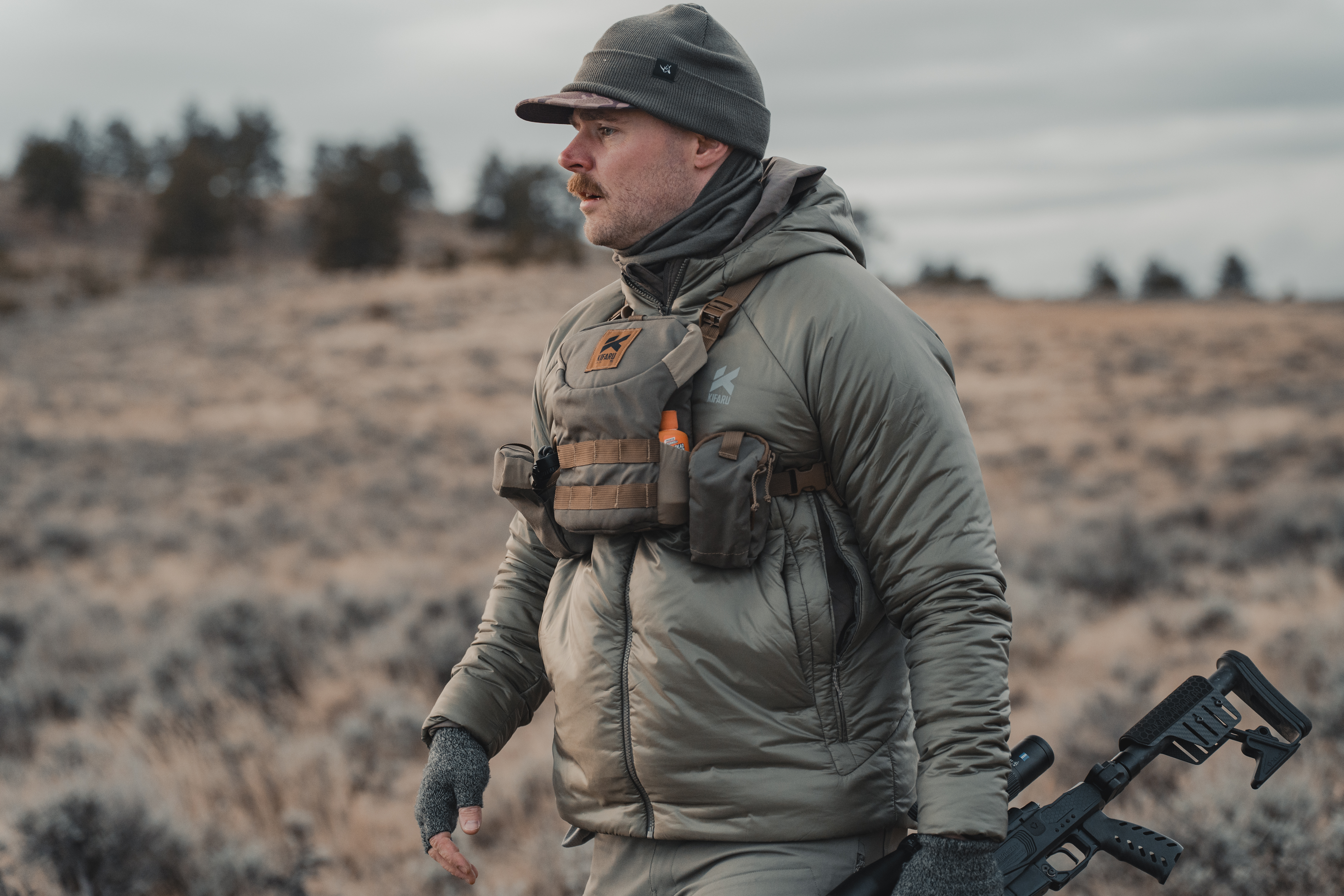
There are two zippered front pockets at the hip, and the jacket can be stuffed into the right one for a compact carry in a hunting backpack. There are three internal mesh stow pockets, two at the hip and one on the chest. As I said earlier, those internal pockets are noticeably smaller than what I’m accustomed to.
I absolutely love them. The smaller size means I don’t have to dig through the dark abyss of a massive internal pocket, trying to grab the dang car keys that I buried in there hours before. They’re large enough to carry everything I need to, but are small enough that I can get to things quickly.
And the lack of an external chest pocket? I don’t miss it at all. In fact, losing another pocket means I have fewer places to stuff things, and I don’t have to do a full person pat-down when I’m looking for what I need.
The storage is great. It’s enough to store everything you need, but not so much that organization is difficult.
Pit Zips
The biggest standout feature of the Kifaru Pointe Synthetic Puffy Jacket is the massive pit zips. They start on the arm and extend almost all the way down to the jacket’s hip. In fact, they extend further down the jacket than the front pockets.
There are two reasons I love that. The first is increased breathability. Puffy jackets are absolutely miserable to wear anytime you’re on the move. A puffy just doesn’t breathe.
But with a giant pit zip, I was able to leave this jacket on, even when taking brief hikes from spot to spot on a coyote hunt. As midday temperatures rose, I did have to remove it. But I was able to leave it on longer than most insulating layers. For puffy jackets, it gets an A++ in breathability.
Those massive ports also let me access the layers beneath the puffy, which is awesome. Many times, I leave things in my midlayer pockets when I throw a puffy on in the cold. Rather than unzip my entire jacket to reach those inner-layer pockets, the big ports on the Pointe let me reach right in without losing much body heat.
It also allows me to warm my hands in interior layer pockets, rather than in the puffy’s pockets. It’s surprising how much warmer my hands stayed cocooned inside the jacket itself rather than in the exterior pockets.
Hood and Cuffs
The cuffs are internal and are made of a tight-fitting, stretchy elastic. I don’t feel wind or chill enter the sleeves at all. It’s a simple design that’s comfortable and allows insulation to run all the way down your wrist.
The hood has an elastic band as well, but can be cinched up from a drawcord on the back of the hoodie. I definitely appreciated that in the Wyoming wind. When tightened down, the hood stays put.
What I Don’t Like
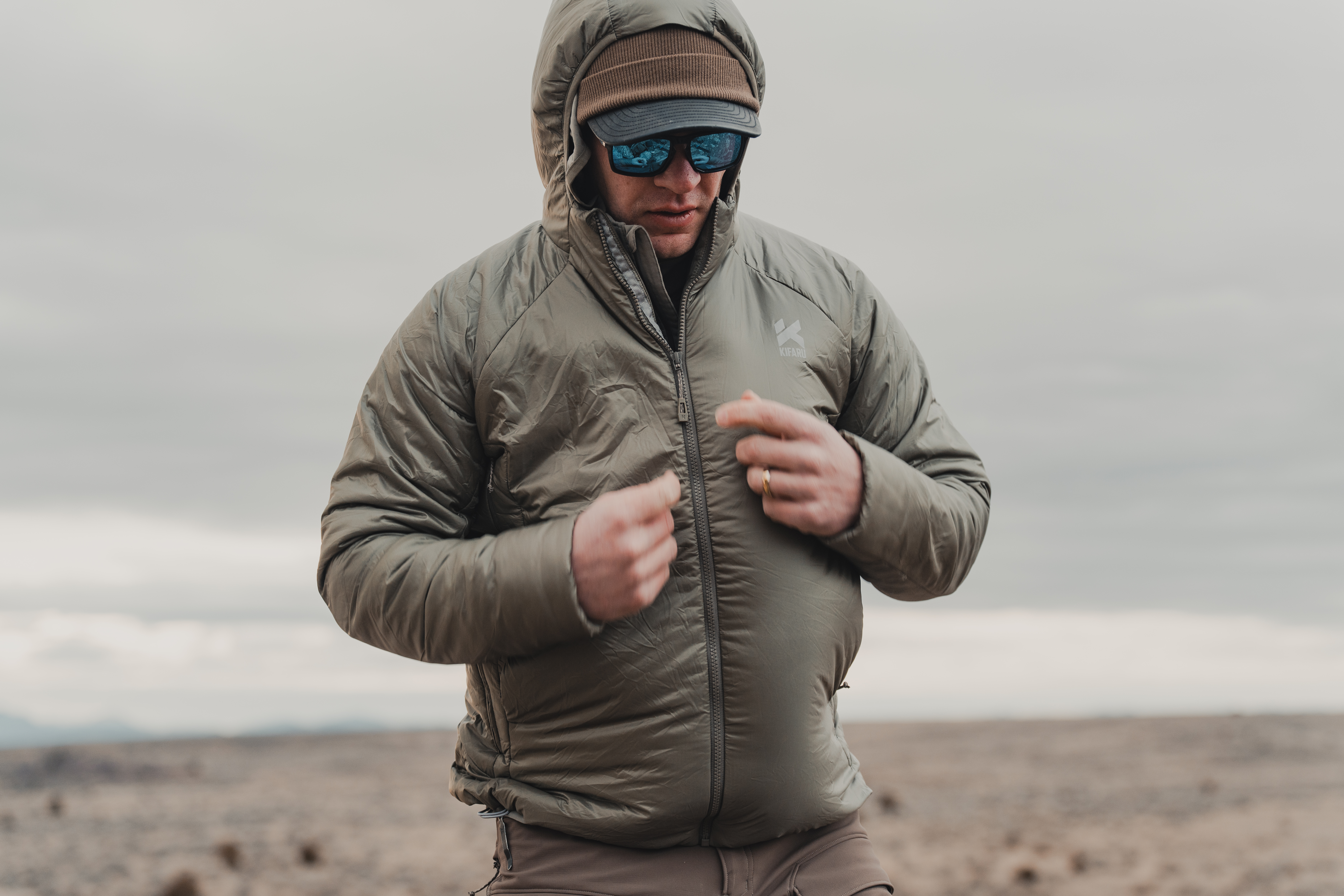
I have only one complaint with the Kifaru Pointe Synthetic Puffy Jacket. It stains easily, and the stains are somewhat difficult to remove. Within a few days, mine had quite a few stains, and more kept popping up.
That’s kind of a bummer because this jacket looks good, and I love wearing it around town.
After washing, the stains were only partially gone. If I look down while wearing the jacket, they seem plain as day. Oddly enough, though, if you look at the jacket straight on, you can’t see them at all. It’s weird, and I don’t know why the material does that.
From a wear-around-town standpoint, other people can’t see the stains, so I guess it doesn’t matter, but it bothers the heck out of me. From a hunting clothing standpoint, I couldn’t care less about stains.
Final Thoughts: Where the Kifaru Pointe Synthetic Puffy Jacket Works Best
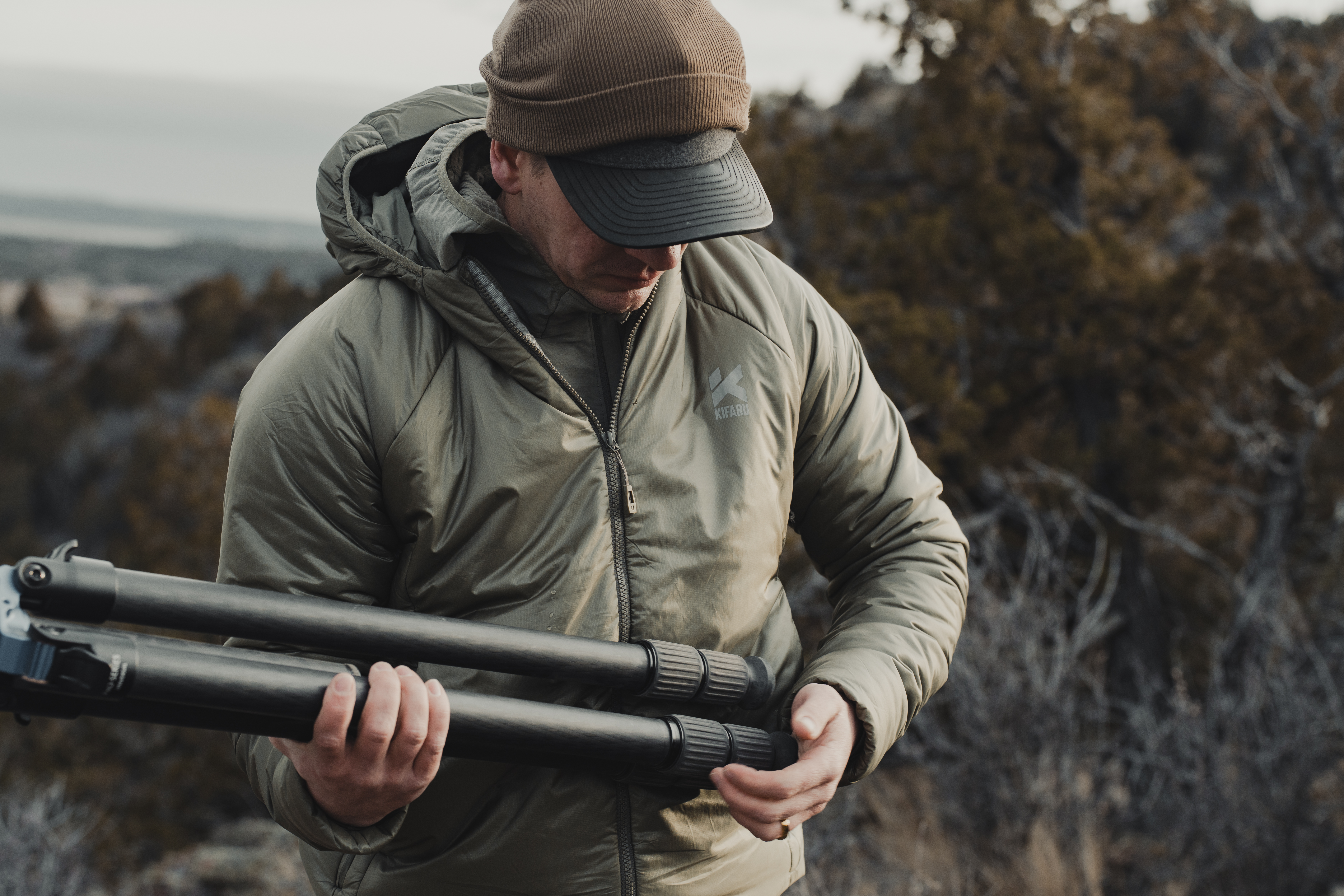
With the ability to pack down into its own pocket and increased breathability from the massive pit zips, the Kifaru Pointe Synthetic Puffy jacket is perfect for hunters on the move. It packs down small, and the synthetic, water-resistant insulation means you can rely on it on multiday excursions, where wet gear is always a possibility.
Sure, it’s only rated down to 20 degrees, but it can certainly be pushed beyond that. You can trust it to provide all the warmth you need in most hunting conditions.
With just a thick base layer, a midlayer fleece, and this jacket, I’ve been quite comfortable in temperatures hovering around 10 degrees. For me, it’s the main insulation I’ve started to rely on when subfreezing temps are in the forecast. And it’s not too much jacket for warmer days. It’ll be on most of my hunts next year, from October on.
The fit is excellent. The jacket runs true to size with an athletic cut and plenty of room for layers underneath. If you’re in the market for a new puffy jacket and want something that can perform in the field and look great around town, it’s a great option. It will be available for purchase on March 5, 2026.
Read the full article here