





As a major battleground in the Revolutionary and Civil Wars, Virginia is home to many important historical sites and public lands, with 22 areas managed by the National Park Service (NPS). Directly adjacent to the nation’s capital is also the world’s data center capital.
As data center construction has exploded in Northern Virginia (NOVA), this technological and commercial development has butted up against historic battlefields and other public lands. Across the country, many local communities have organized to oppose data centers, and historic preservation and conservation organizations in these areas of Virginia have joined that fight. Here’s what’s behind the debate in Virginia, and what it means for public lands more broadly.
The Context
Virginia, particularly NOVA, is home to 663 data centers in operation, with another 595 under construction or in the planning phase, according to a 2025 report. These facilities, which handle roughly 70% of the world’s internet traffic, use a huge amount of power. The Northern Virginia Regional Commission estimates that by 2035, the industry will require 11,000 MW, quadruple the amount it currently uses.
NOVA is an extremely densely populated region: Approximately one-third of the state’s 8.9 million residents live in 1.2% of its land area. This density and land scarcity mean that data centers, which require large areas of land, have to source and buy land wherever they can find it, setting the stage for a battle over historic sites.
Prince William and Manassas
The data center debate revolves around two major projects in NOVA. First, there’s the Prince William Digital Gateway Project. Proposed by QTS and Compass Datacenters, this 2,100-acre project would construct a 23-million–square-foot facility.
One of the primary objections involves a 10-acre parcel that falls within the boundary of Manassas National Battlefield Park, and is bound on three sides by federal land. This area was home to two major Civil War battles in 1861 and 1862, and was made an NPS site in 1940. In addition to preserving this history, it’s also a large green space and popular walking and outdoor recreation area that saw 541,000 visitors in 2024.
While the 10 acres in question fall within the park’s boundary, they are privately owned, meaning the NPS has no say if individuals choose to sell the land to data centers. The American Battlefield Trust (ABT) and National Parks Conservation Association (NPCA), two land preservation nonprofits, both strongly object to the project.
In an interview with GearJunkie, ABT President David Duncan explained the organization’s stance. “We’re not anti-development per se. I understand that people need places to live and work and shop and go to school and recreate, but let’s all work toward having that and conservation. Let’s do all of those things and still preserve our country’s irreplaceable heritage because it’s really our duty to preserve and protect these places, add to them however we can, and then pass them along to future generations,” he said.
“I really feel that is a duty, and it’s ultimately good for our country for people to know their history. It makes them better citizens.”
In addition to concerns over preservation, the NPCA also worries about the potential environmental impacts of the scale of these projects. GearJunkie spoke with Kyle Hart, the NPCA’s mid-Atlantic senior program manager, who recently authored an in-depth report for the organization about the potential impacts of data centers.
Hart explained that these kinds of facilities aren’t your typical development projects. A project approved in one county might involve constructing power lines in areas hundreds of miles away.
“We should not be viewing data centers the same way we view Walmarts or something else, and that’s because of their energy and water implications. They require an extra level of scrutiny to ensure that we are not impacting resources that a local government isn’t in charge of understanding or considering,” he said.
“Downstream effects need to be considered when we’re adding gigawatts worth of energy demand to the grid and millions upon millions of gallons of water demand.”
One data center might not have a huge effect on energy usage, but with over 500 in development, Hart says it’s important to look at the issue at scale. Around 58% of Virginia’s energy supply comes from fossil fuels (natural gas and coal).
Data centers are among the most energy-intensive forms of development, raising a natural question about environmental impact. “If we met current data center energy demand within the existing energy ratio in the state of Virginia, how much additional air pollution would that create?” Hart asked.
The same line of thought applies to water usage, as data centers already account for 8% of withdrawals from the Potomac River. The NPCA report estimates that in the next few decades, data centers could use up to 200 million gallons per day.
Hart stressed the need for greater transparency and community involvement. “We’d love to see some additional transparency and good conversations between state regulatory agencies and water utilities about: Are we planning for this growth? How does this … impact stream flows and droughts and drought conditions and that sort of stuff?”
Other Projects
There are a few other public land data center debates elsewhere in NOVA. Plaza Realty Management Inc. is planning to build a data center, the Potomac Technology Park, near Prince William Forest Park, an NPS-managed national reserve that’s the largest protected green space in the area. The 1.1-million–square-foot building would use 52 acres that fall within the park’s boundary.
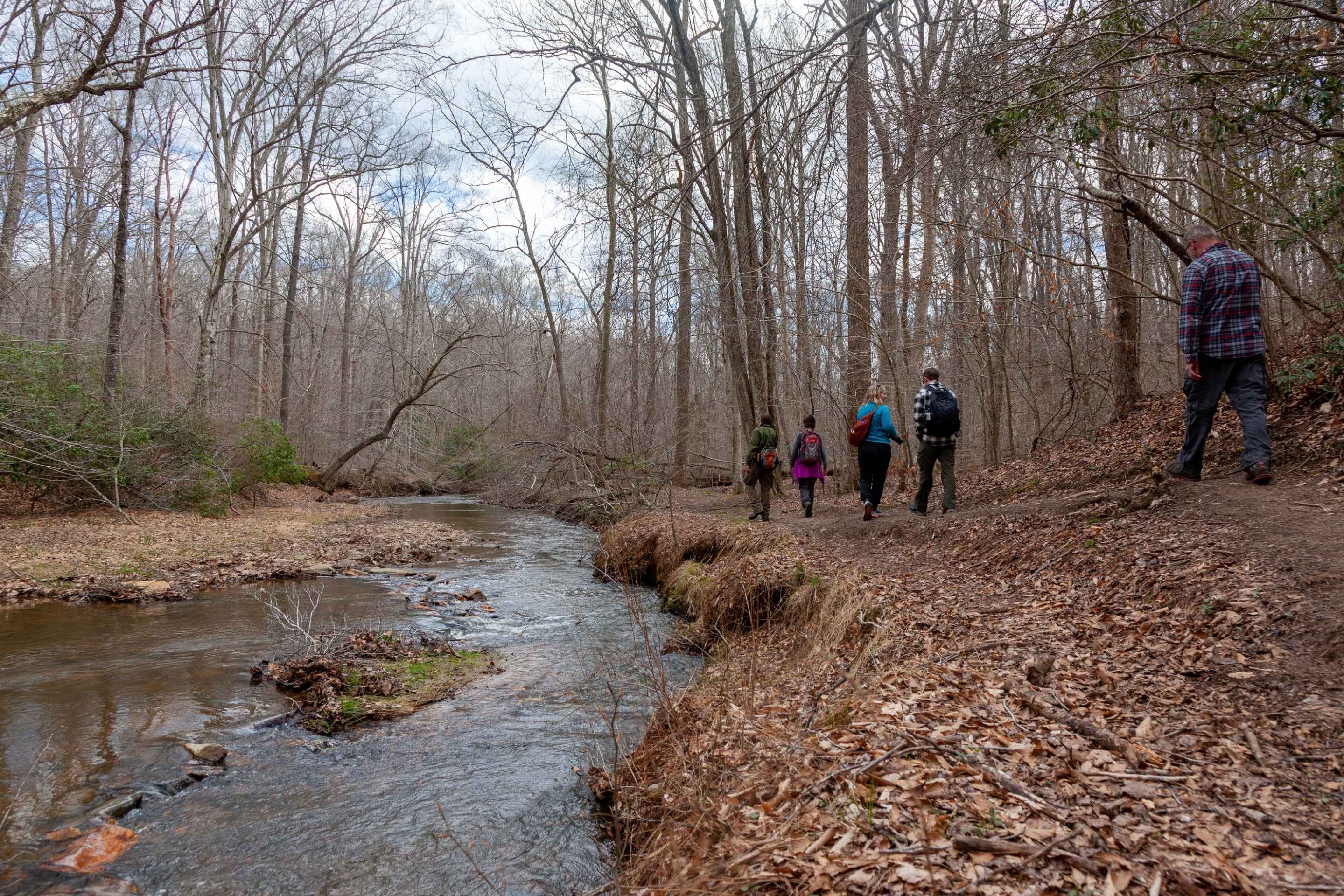
The Wilderness Battlefield, a portion of Fredericksburg & Spotsylvania National Military Park in Orange County, Va., is also facing development. The 2,600-acre project would involve 800 acres of commercial use and 700 acres for data centers, and it would butt up against the historic site.
When asked if the ABT had any conversations with the companies behind these developments at any point, they said no.
“Unfortunately, not to characterize their motives, but it seems to be a situation where they’re saying, you know, we got all the money in the world, we can do whatever we want. Why do we have to pay attention to these, you know, these crazy land preservationists? I would love to have a seat at the table,” Duncan said.
GearJunkie reached out to QTS for comment and did not receive a response.
The Fight
The ABT has pursued legal action to protect these battlefields, and its cases center on zoning laws and regulations. For a data center to be built, a county board of supervisors has to rezone that land for development.
The case with Prince William Digital Gateway and Manassas Battlefield is complicated, but it essentially boils down to the question of proper procedure. ABT alleges that QTS knew that the composition of the board was changing soon due to elections and that it wouldn’t have the votes to get the project approved. It claims the company rushed the process and failed to follow the proper notice procedures required by law.
ABT wants the board and the company to repeat the zoning process, knowing that the board is now opposed to the project.
In a major court ruling this week, the Virginia Court of Appeals upheld a lower court ruling that the rezonings were void, siding with ABT and other plaintiffs in the suit, including a local homeowners’ association. It is likely that QTS will appeal the ruling to the Virginia Supreme Court.
ABT is using a similar legal strategy of claiming improper zoning policy in the Wilderness Battlefield case in Orange County; that ruling is pending. In this fight over public lands, zoning laws, and the county board of supervisors, which are not usually huge topics of public interest, have taken center stage.
Major Takeaways
While the legal battle is not over, the ABT celebrated the recent win. It’s a sign of how public opinion can change, even amid compassion fatigue. Many local homeowner associations and other community organizations have mounted massive campaigns against these data centers. Local elected officials now even campaign on anti-data center platforms.
“I’m just hopeful that going forward, more people have now become aware of the challenges associated with data centers than we were aware of that three or four years ago. It was kind of a wild west in Northern Virginia,” Duncan said.
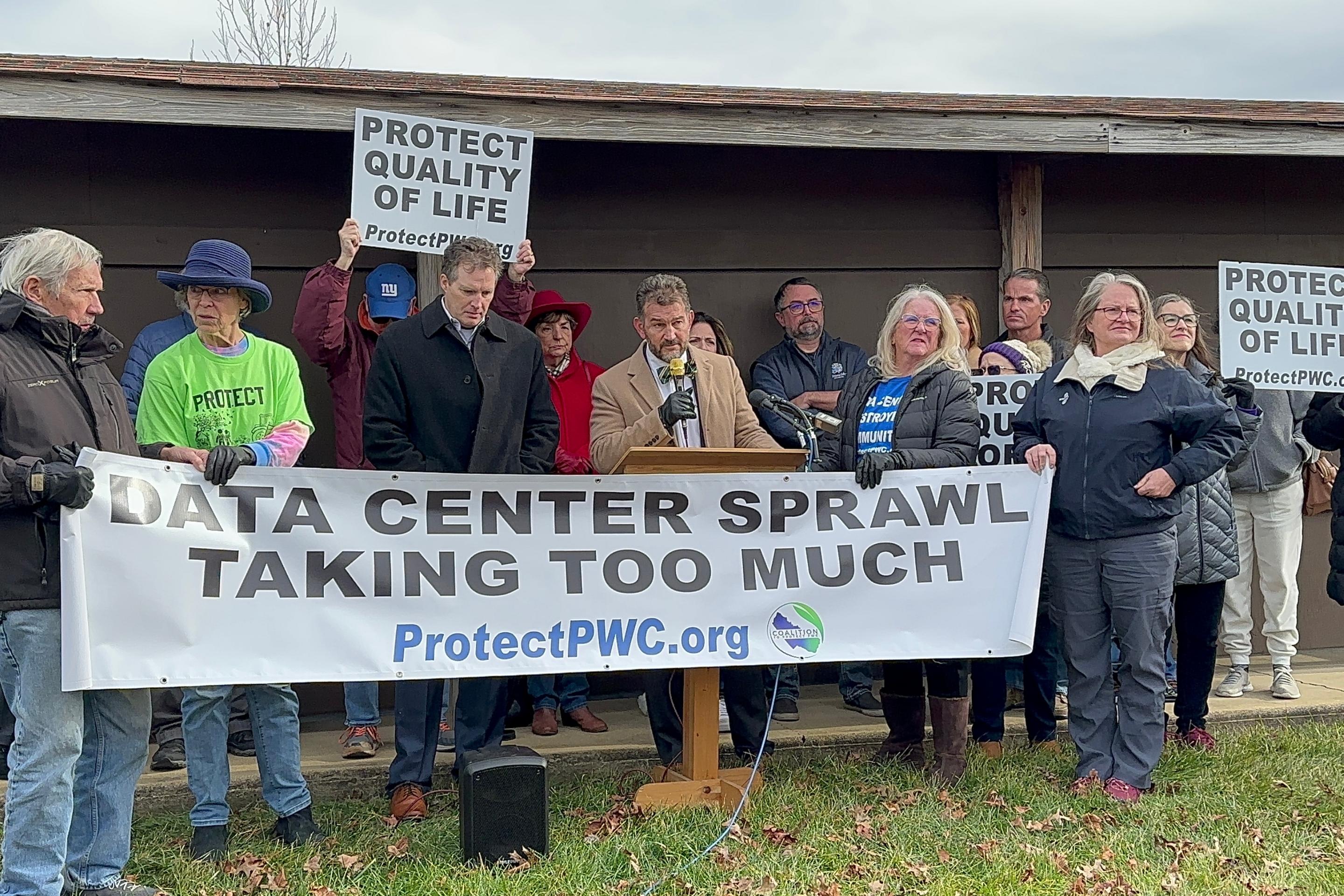
“They were putting these things up, it seemed like every other week, wherever they could find space for them. And now more people are beginning to understand the power needs, the transmission line needs, the water needs, the noise issues associated with these things.”
For Duncan, it shows that it’s always worth putting up a fight, even if it’s David versus Goliath. Companies like QTS have far more legal and monetary resources than nonprofits like ABT, and yet, the underdog prevailed, at least for now.
“I honestly don’t mind … well, I mind a little bit, fighting and losing, but what I don’t like is losing and not even fighting, especially when the other side has done something wrong according to the law. If we have to go back and start the fight all over again, well, that’s what we’ll do.”
Read the full article here