




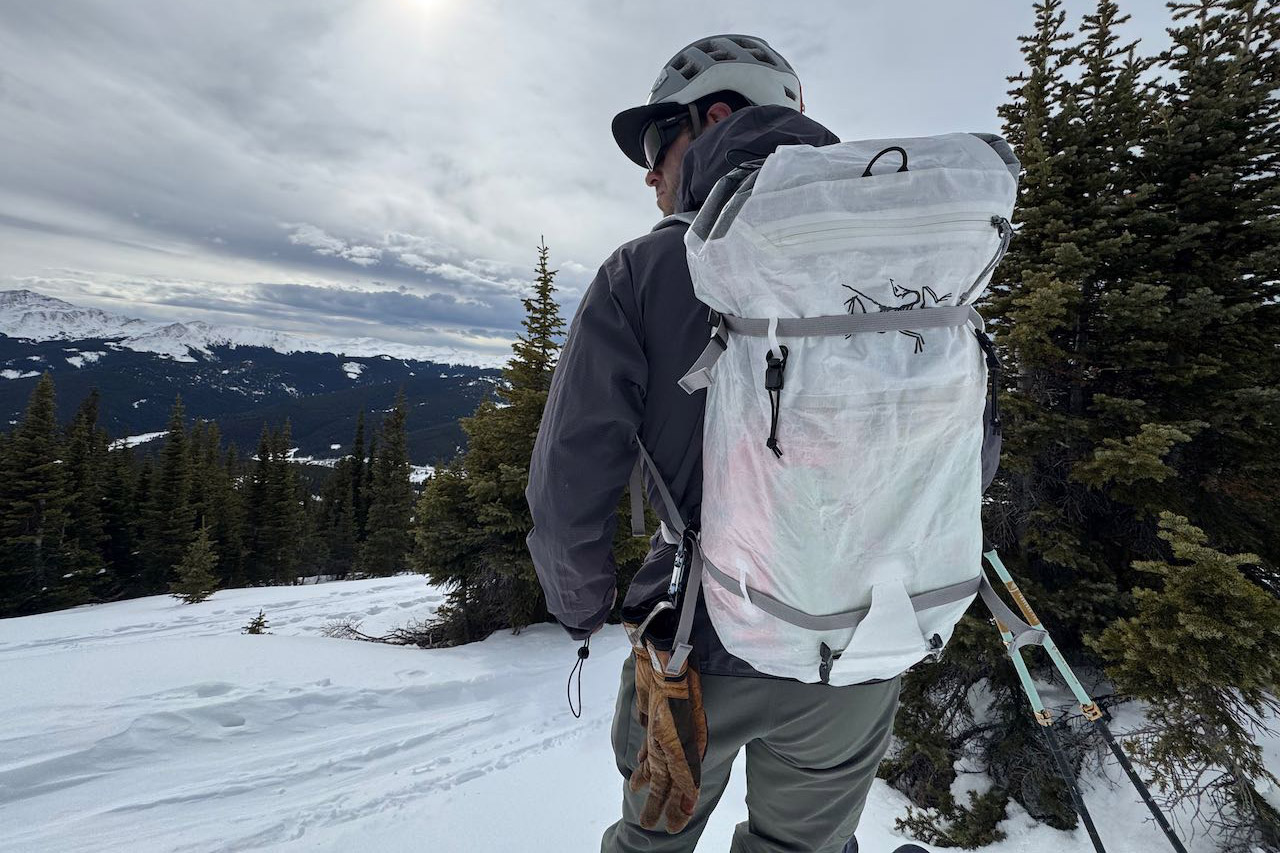
It doesn’t matter if you’re packing ultralight ice screws, carbon fiber ice tools, and skinny ropes. Carrying ice climbing gear gets heavy fast. The impact on the fun factor of a heavy pack in backcountry skiing is even more acute. Heavy packs make skiing, and frankly, most mountain endeavors, less fun.
Since the proliferation of ultra-high-molecular-weight-polyethelene (UHMWPE) fabrics over the last few years, pack companies have raced to produce the lightest-weight mountain pack. It’s a logical place to cut 1,000g or more from the mountain adventurer’s payload.
Arc’teryx may have pulled ahead of the competition with its new 444g Alpha SL pack ($400). It’s an insanely light mountain pack utilizing new ALUULA UHMWPE fabric and an absolutely barebones feature set aimed at providing just what you need for backcountry skiing as well as ice, rock, and alpine climbing, and not a strap or buckle more.
It’s so minimalist that it doesn’t have many more features or mass than my favorite reusable shopping bag. Is the Alpha SL merely an expansive sack with shoulder straps? To be a legitimate mountain pack option, it needs to carry a full ice climbing loadout in relative comfort. It also needs to ski without bouncing all over the place.
Most importantly, it needs to withstand the stresses of heavy backcountry use without tearing like a sheet of paper. I loaded it with all my gear and headed into the mountains to test it for myself.
In short: The Alpha SL 30 backpack is an ultra-minimalist pack constructed from ALUULA fabric. In addition to high-tech fabric, the Alpa SL 30 is absolutely minimalist. You get just enough for ice climbing, backcountry skiing, and technical hiking. That adds up (or down) to a feathery 444g weight. It’s one of the lightest mountain packs on the market. But its pure minimalism comes with distinct tradeoffs for more casual users.
Check out GearJunkie’s guide to the Best Ski Backpacks.
-
Insanely lightweight -
Strong fabric -
Water- and weather-resistant -
Attachment options for ice tools, skis, and rope
-
Crampon attachment is DIY -
Hooked buckles are fiddly -
Fabric prone to punctures
Arc’teryx Alpha SL Pack Review
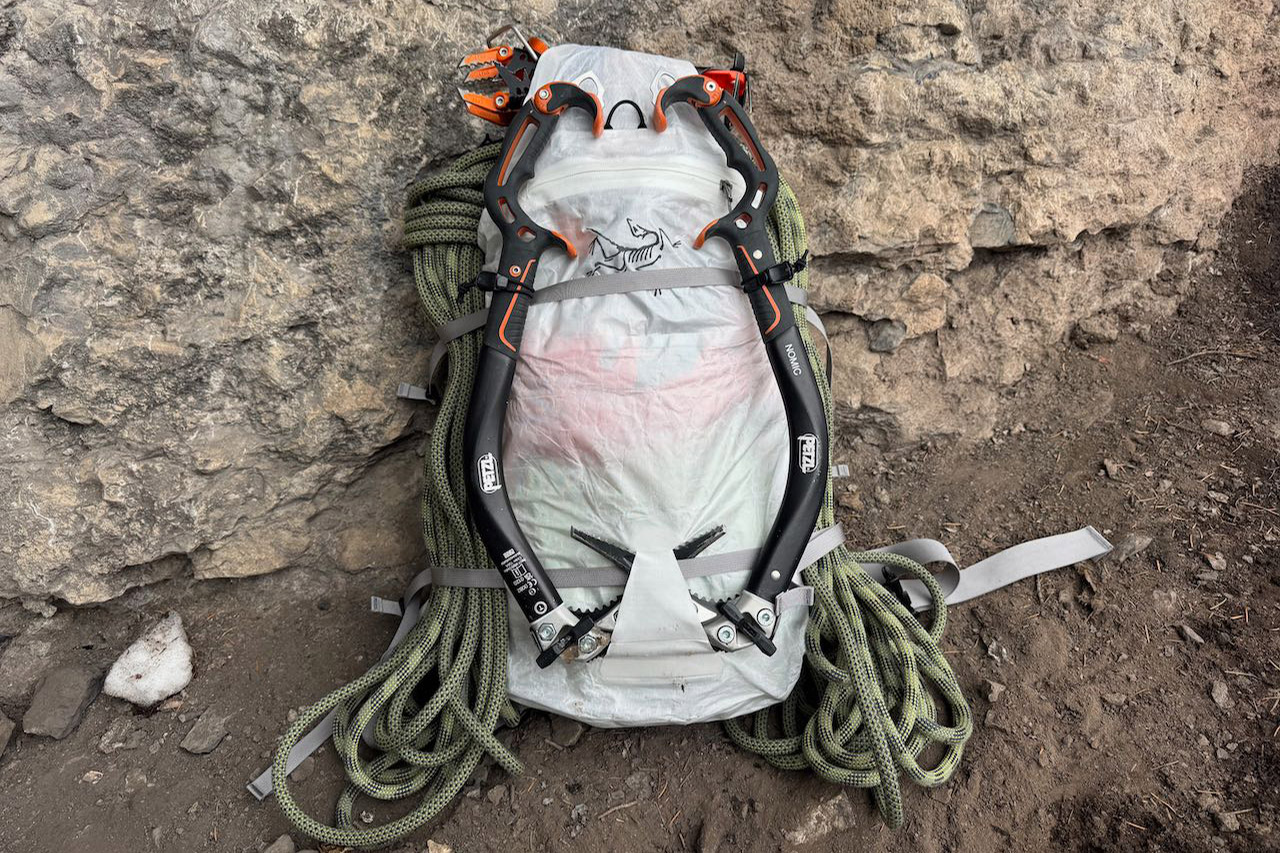
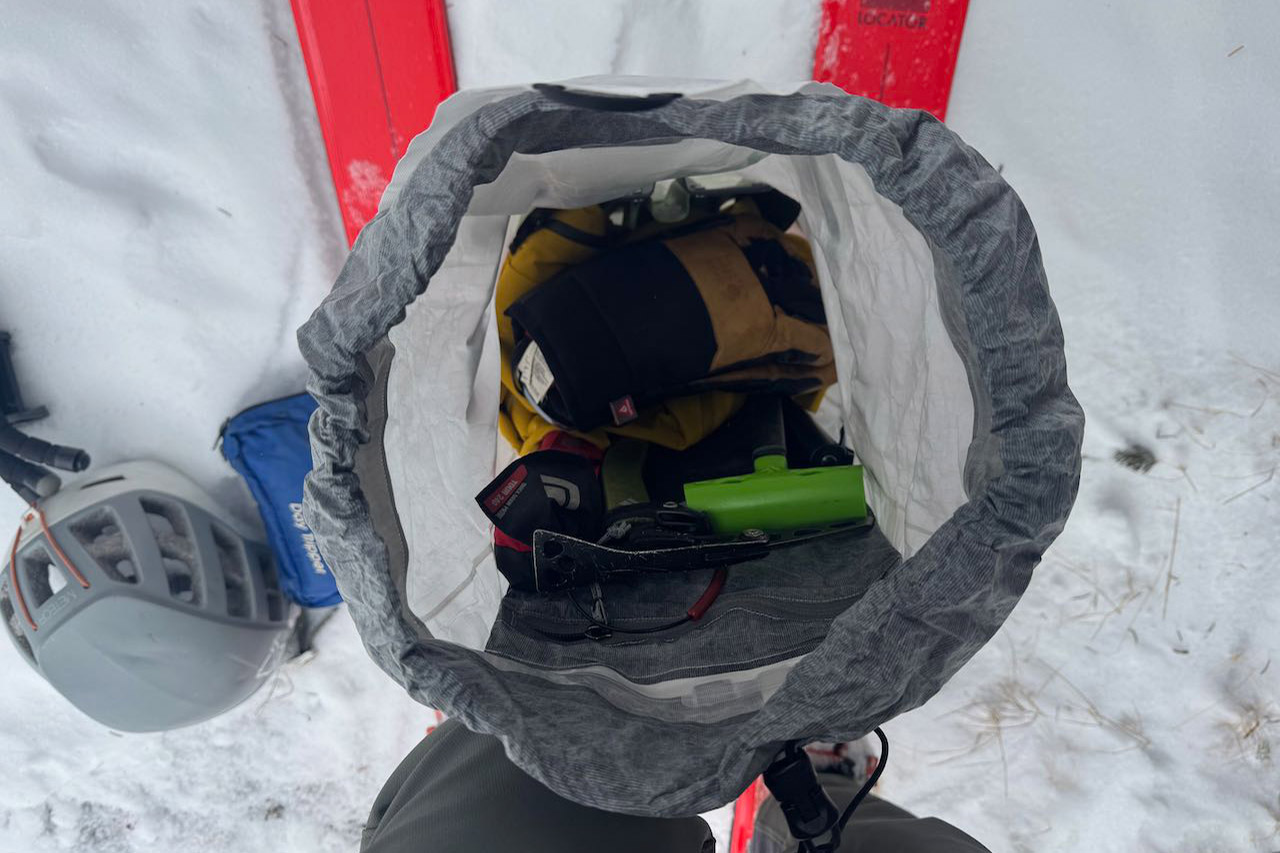
The Alpha SL Backpack is, at its most basic, a very fancy 30L tube with straps. It’s my favorite type of pack layout for ski touring and ice climbing. The interior is large and featureless, aside from one external and one internal pocket. The top cinches closed, a small flap secured by a strap covering the opening (mostly).
That’s precisely why the brand’s longstanding Alpha FL pack has been a favorite among alpinists and ice climbers for years. Arc’teryx took what was working — downright minimalism — and cut the weight by 30%. And in a surprising twist, they added a few small details that greatly enhanced the chassis’s versatility across the mountain endeavor spectrum.
Build
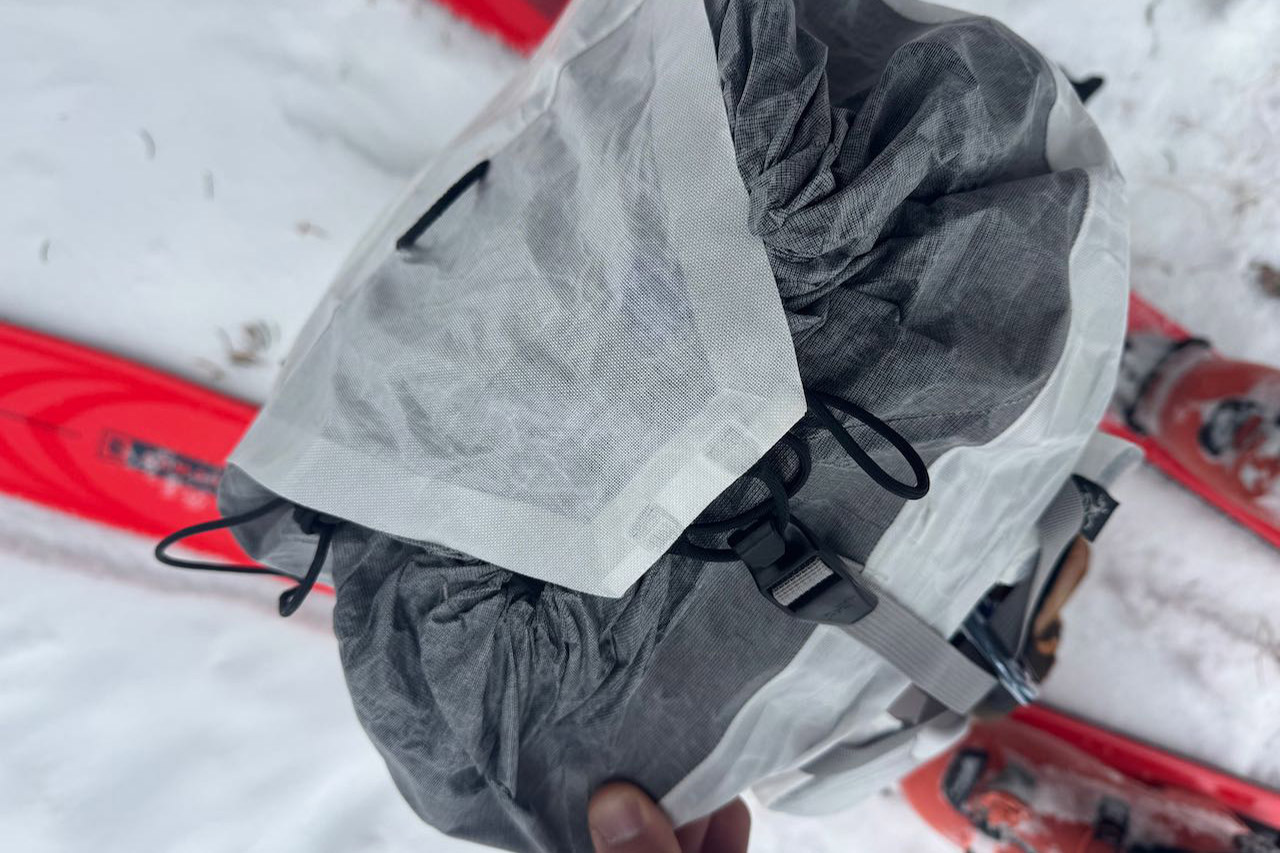
Bright white UHMWPE backpacks are so hot right now. It’s the super fabric that’s both extremely light and super strong. You might recognize the brand names Dyneema and Spectra, which are used extensively in climbing gear and even in aerospace applications.
The Alpha SL pack uses a material in the same family called ALUULA. Without getting too deep into the chemistry, ALUULA utilizes bonded polymer films instead of fibers as you’d find in Dyneema. According to Arc’teryx, bonded films offer significantly greater tear resistance than other structures, which allows them to get away with so little fabric. The brand claims that ALUULA offers an eight-times-stronger-to-weight ratio than steel.
The main fabric weight is 130 grams per square meter (gsm). That’s insanely light. The gray cinching top collar goes all the way down to 52 gsm. For comparison, a sheet of printer paper is close to 80 gsm. You get the picture. The Alpha SL pack is exceptionally light and theoretically strong.
A pair of lightly padded shoulder straps pop neatly out of the back panel, nearly featureless except for a minimalist but fiddly daisy-chain sternum strap adjustment system. The non-removable thermoformed back panel offers just enough structure for light to medium loads and Spartan comfort.
Pockets
The Alpha SL pack comes with exactly one external pocket, a horizontally zippered one near the top. It’s decidedly modest in dimension.
The waterproof zipper is approximately 19cm, and the pocket itself is 21cm wide and 12cm tall. It’s small enough that this isn’t where you’ll be stuffing your sandwich. Rather, it’s an essentials pocket. Big sunglasses, a tin of sunscreen, a small Leatherman, a buff, maybe a Clif Bar. That’s about all you’ll get in there in thematically consistent minimalist fashion.
Inside the main compartment is another zippered pocket hanging from its upper edge. It’s slightly larger at 21cm wide by 18cm tall. This is where you could feasibly stash a sandwich. It’s also where I stored odds and ends I didn’t necessarily need quick access to, but didn’t want floating around or potentially falling out. A small key leash is anchored inside.
This primarily turned into my snack pocket while I was out in the mountains. Without a waterproof zipper, this dangling pocket isn’t technically waterproof, even though the material is itself impenetrable. This inner pocket proved an important feature given the otherwise featureless interior. The tiny bit of organization did wonders for keeping my kit contained.
Hooks vs. Buckles
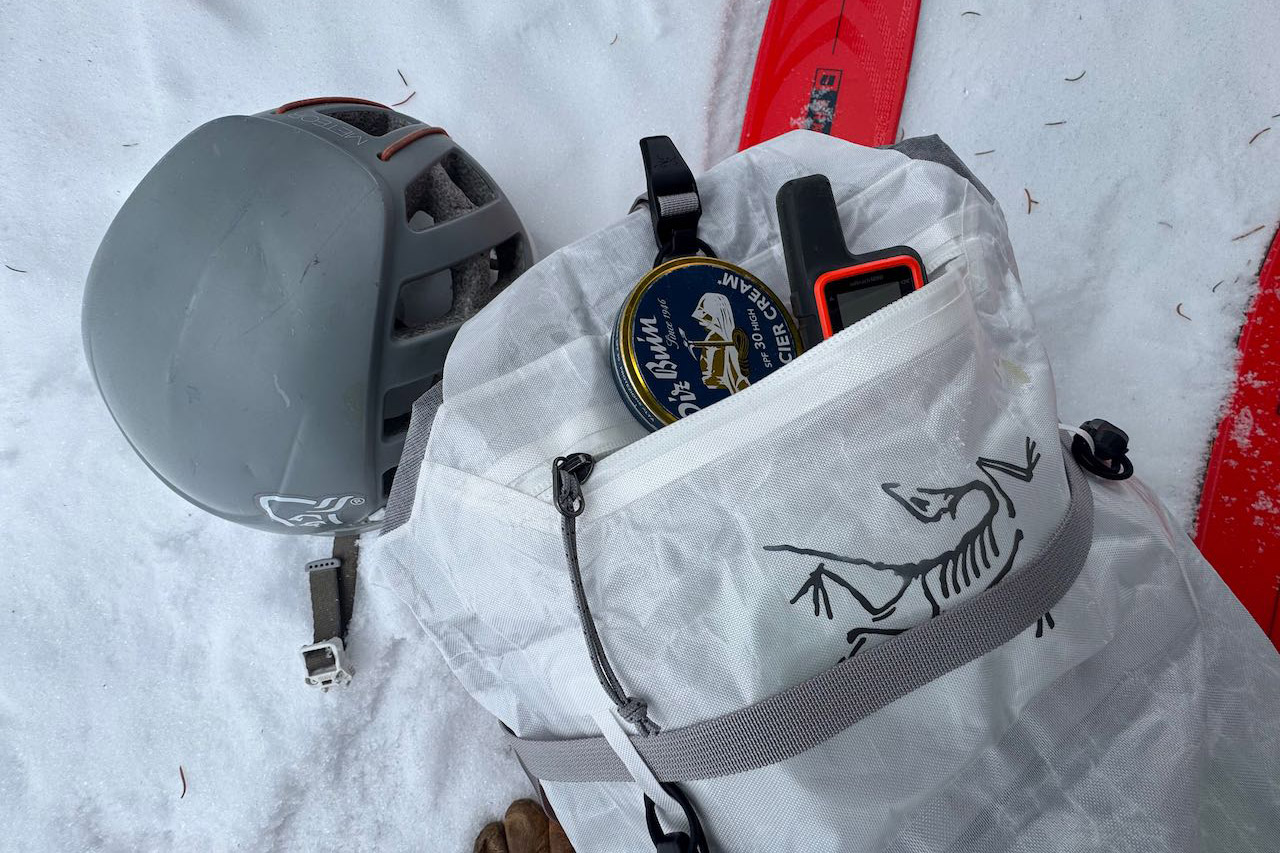
Perhaps the most idiosyncratic element of the Alpha SL is the collection of hooked straps that attach to anchor loops sprinkled throughout the pack. A “nub” inside each hook locks the hook to the anchor loop. That way, they don’t pop free willy-nilly (though it does happen occasionally). They’re consequently tricky to unhook. Do they get the job done? Definitely. But, especially with cold hands in gloves, they are annoying to work with.
After stepping on one of the hooks in another of Arc’teryx’s packs, I realized another pro to the hook/loop setup. When you break a hook, you’re left with an anchor loop and a strap that you can simply tie off without losing functionality. It’s a lot better than a broken buckle.
Overall, I’m not in love with the hooks primarily because of the fiddle factor. However, they don’t present a functional issue.
Attachment Points
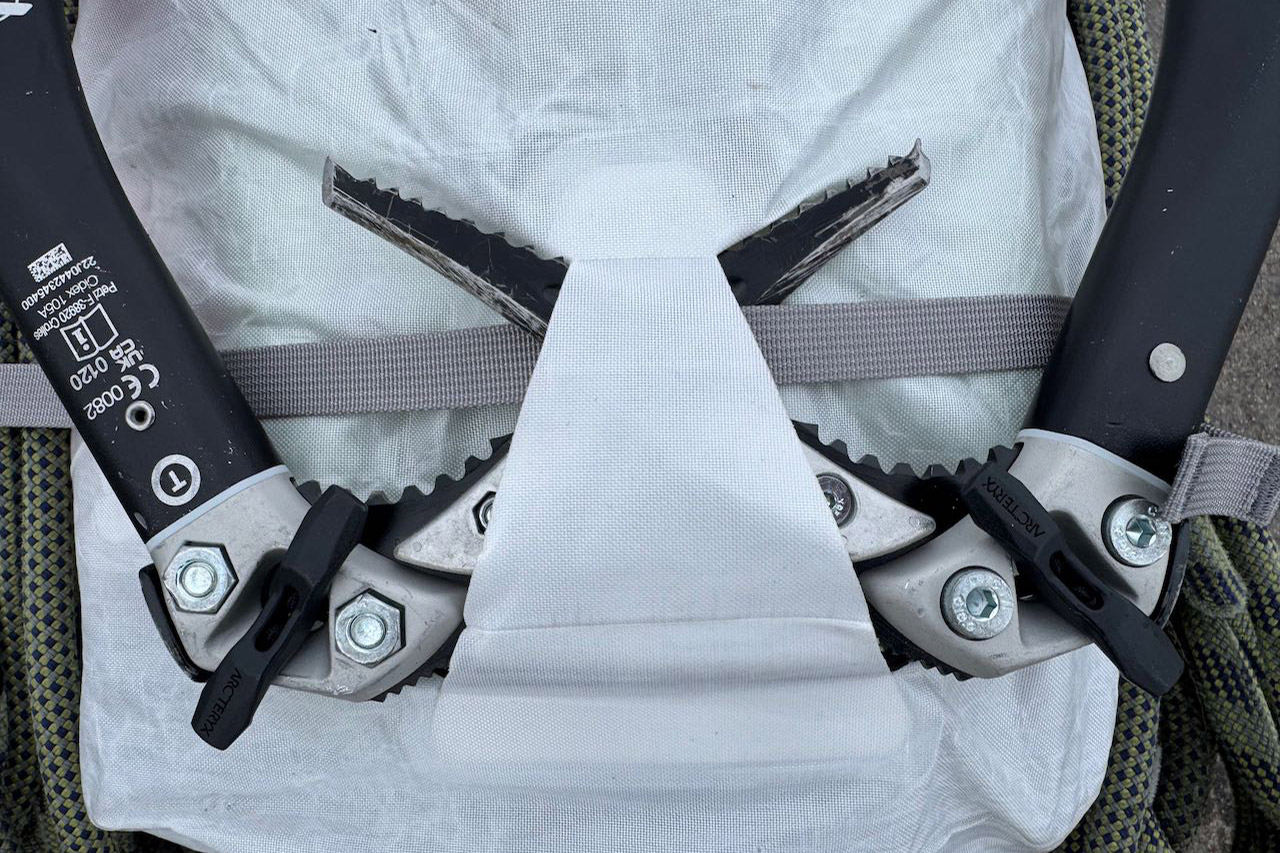
Arc’teryx aims to do a lot with a little in the Alpha SL. It clearly strived to reduce the number of designed punctures in the main body fabric. I imagine that’s to increase water resistance and strength while keeping the weight low. That’s part of what makes it weigh just more than a feather. However, that requires users to get creative with the tool and equipment attachment.
I’ll start with what’s dialed and then dive into what requires some imagination.
What’s Dialed
The ice tool and piolet attachment are on point. The Alpha SL includes a sturdy loop for ice tool picks and two dogbone-style tool connectors that pass through the tip loop via an elastic cord. This elastic connection makes a ton of sense for replaceability and the pack’s overall waterproofing.
Cinching elastic cords looped around the upper lash point on the front of the pack hold onto the tool’s shaft or handle. My Petzl Nomic ice climbing tools were locked in. The same goes for my Black Diamond Venom LT mountain tools. The system will likely secure any tool on the market.
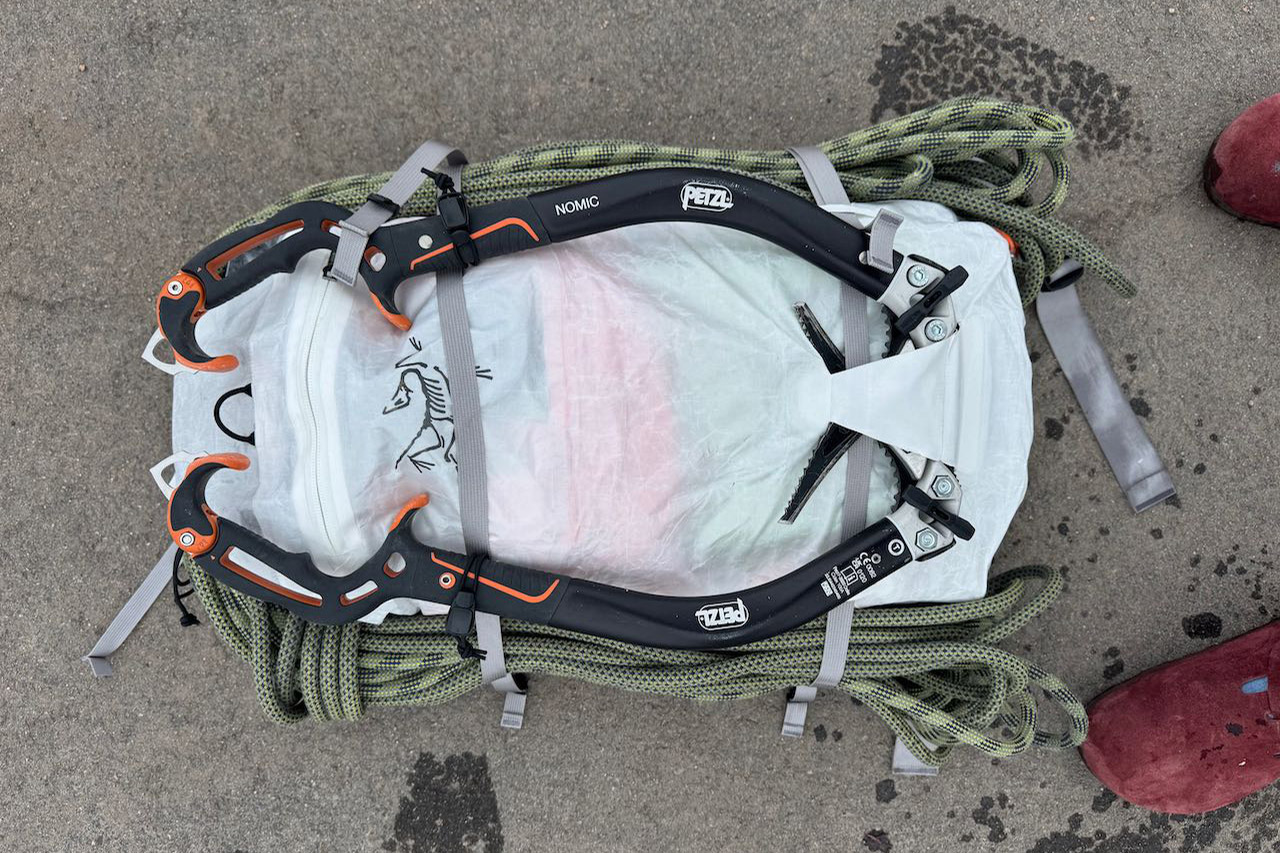
Carrying ropes is equally dialed. You just drape the rope over the top and secure the side compression straps over the coils to keep it neat. The pack’s trapezoidal lid can drape over the top of the rope and secure with a hook and loop, or it can sit underneath the rope to give the pack’s top opening more coverage. It’s nothing particularly new or innovative, but it works.
Room to Improve
The pack’s exterior offers four multiuse anchor points where the horizontal compression straps pass through. That means there’s no dedicated external crampon attachment system, and that will send some climbers into a tizzy.
But what would climbing in the mountains be without a little improvisation? It wasn’t overly complicated. I ski-strapped my crampons together and lashed them underneath the upper compression strap. A small carabiner attached to a lash point provides sufficient security. Carrying them, lashed beneath the rope strap, was another option. Perfect? No, but it can be done.
I typically carry my helmet at the very top of the main compartment. But those four lash points are also perfectly spaced for a helmet net (not included) that I robbed from another pack. That freed up some volume in the main pocket for backcountry skiing scenarios when I wasn’t hauling crampons.
Alpha SL in the Mountains
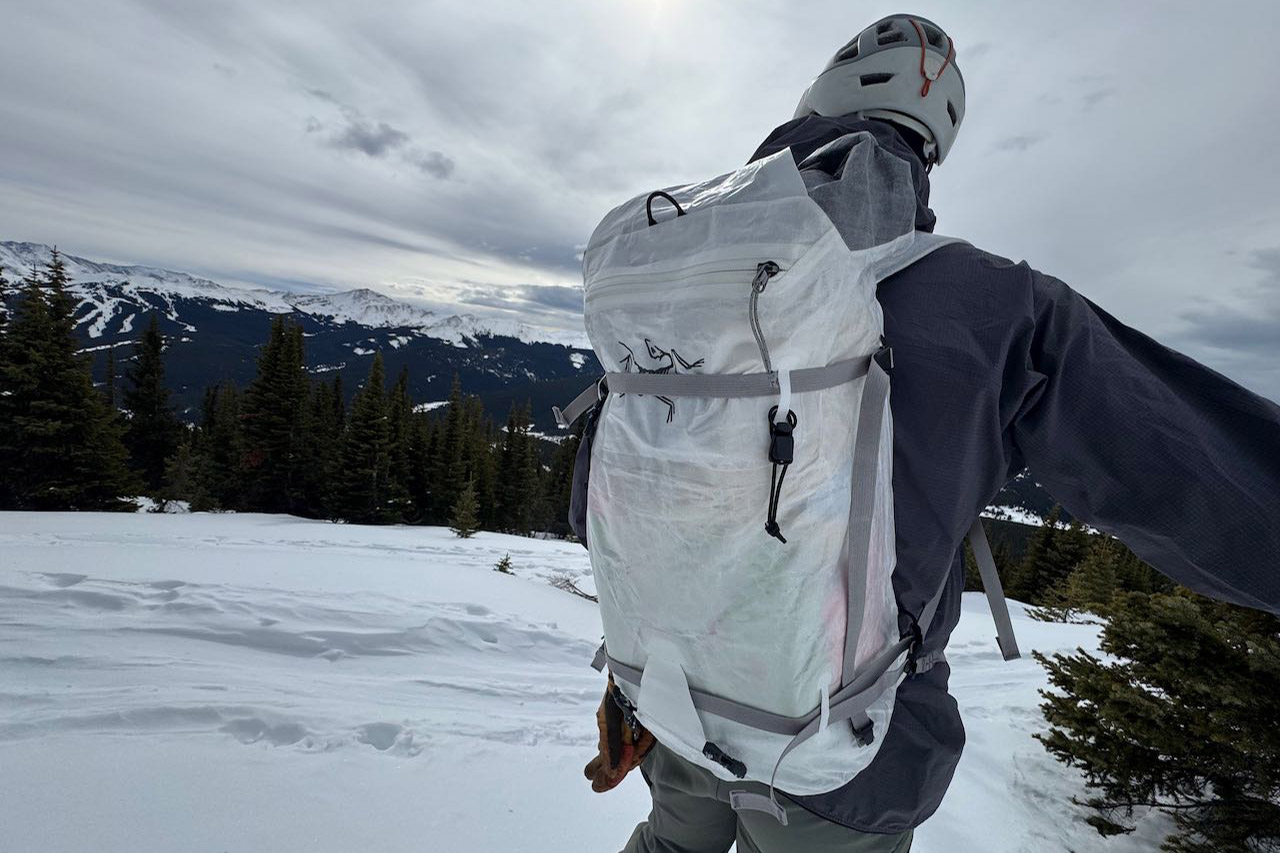
The use case for the Alpha SL pack is essentially endless. That’s the beauty of this level of minimalism. But it’s an alpine climbing backpack first and foremost. Alpine climbing is a broad umbrella with many sub-disciplines — ice and rock climbing, of course, but also lightweight mountaineering, ridge scrambling, and technical hiking. The list goes on.
The throughline between all these activities is the need to carry this backpack on your back, often for long distances.
Don’t confuse the Alpha SL with a luxury hiking pack. It’s clearly not. It comes with a thin back panel and minimally padded shoulder straps with (as you’ve probably guessed) minimal adjustability. It’s a light package, but it works. Even with the pack stuffed to the brim with steel ice screws, crampons, ice tools, a rope, and all the other odds and ends required for ice climbing, it still carried just comfortably enough on the shoulders.
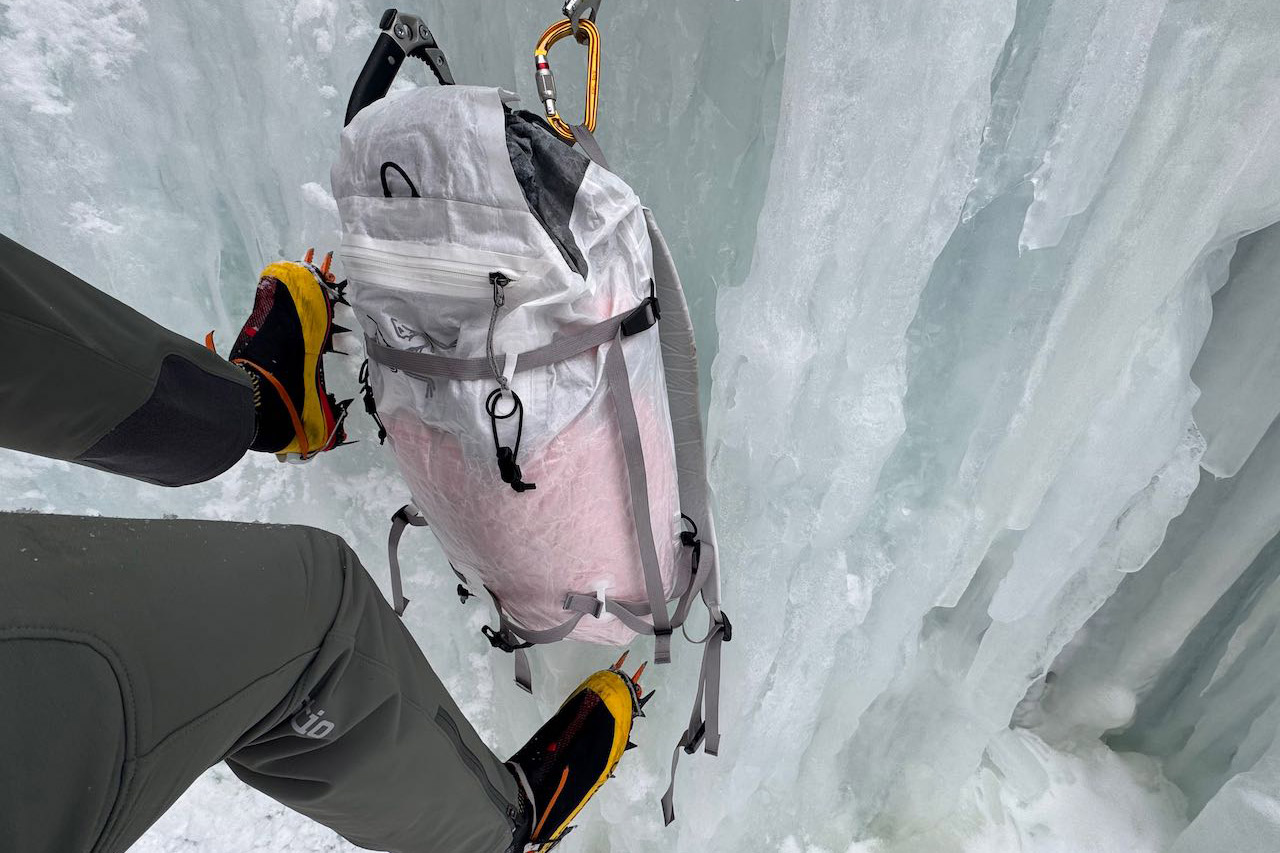
The hip straps are, of course, minimalist to the extreme. They’re essentially two 1.5-inch webbing straps with standard buckles in the front that can take some of the load off the shoulders.
They actually pulled their weight better than I expected, given how they looked. I have a long torso, but the hip straps rode very high on my body. That’s great for keeping it fully clear of a harness’s waist belt, but it’s kinda funky on its own. It sits high on your back lik e most climbing packs, which makes it really easy to maneuver. I felt nimble while I was wearing it, even fully loaded.
The Alpha SL is in its element on the ice. With easily removable hip straps, it can disappear onto your back when you’re harnessed up and climbing, barely heavier than a sneeze. Its water-resistant body keeps your big puffy dry and easily accessible (though you’ll want to make sure the top lid is correctly positioned over the top opening to fend off occasional drips).
A dedicated hiking pack? It could definitely work if you’re specifically prioritizing light weight and simplicity over everything else, including custom-fitting carrying comfort.
Skiing With the Alpha SL
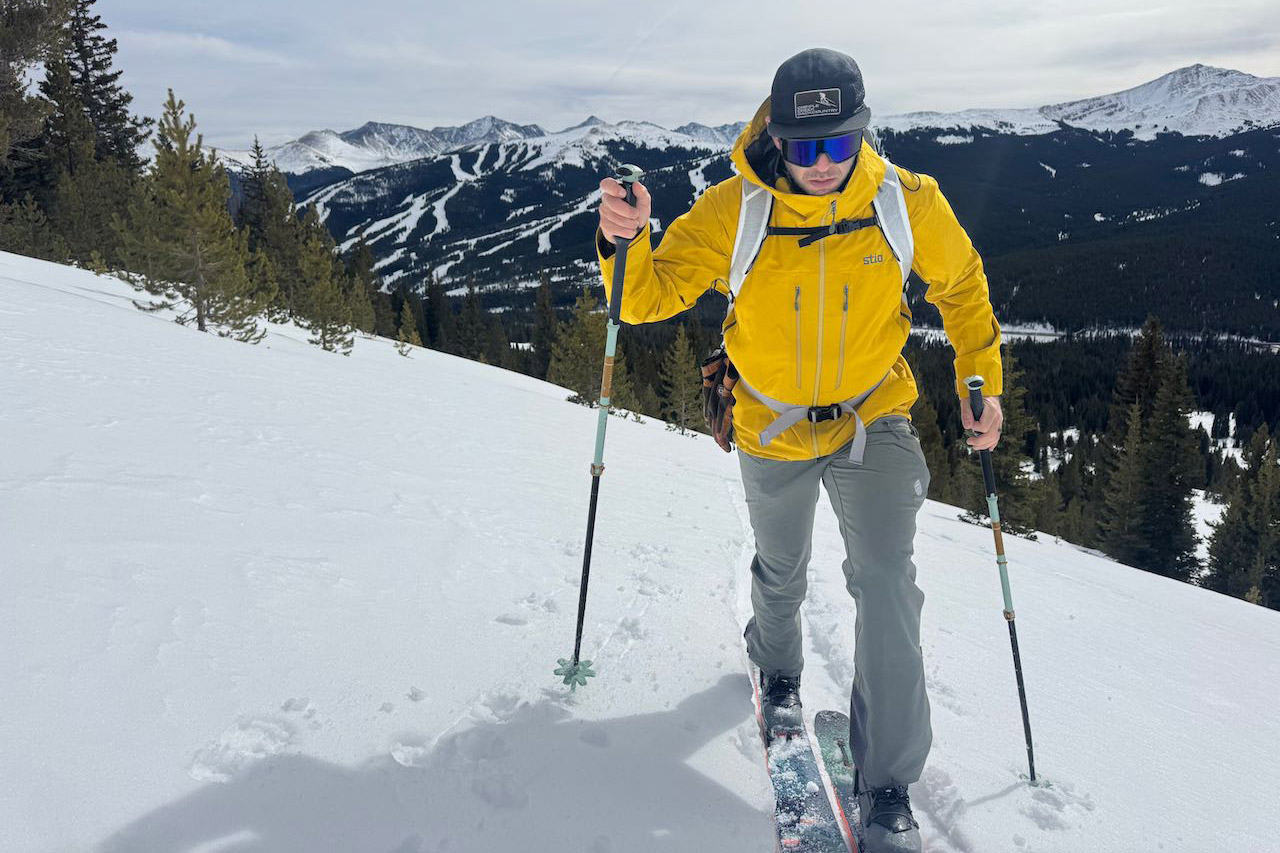
After scraping down an astonishingly bad backcountry run in awful light, I unclipped the Alpha SL pack and set it down next to me, opening the cinch closure to retrieve my skins. Unlike a dedicated ski backpack, the Alpha SL doesn’t have any internal organization for avalanche tools or skins. Everything is just jumbled in there together in alpine pack fashion.
And without any side-access zippers, just about everything else is coming out of the pack when you’re trying to rip a jacket out from the bottom hastily.
My shovel and avalanche probe could stash up against the back panel, and they generally stayed there. The shovel blade pressed up against the front. They were easy enough to retrieve in a hurry, but it’s nothing like the convenience of a dedicated avalanche tools pocket.
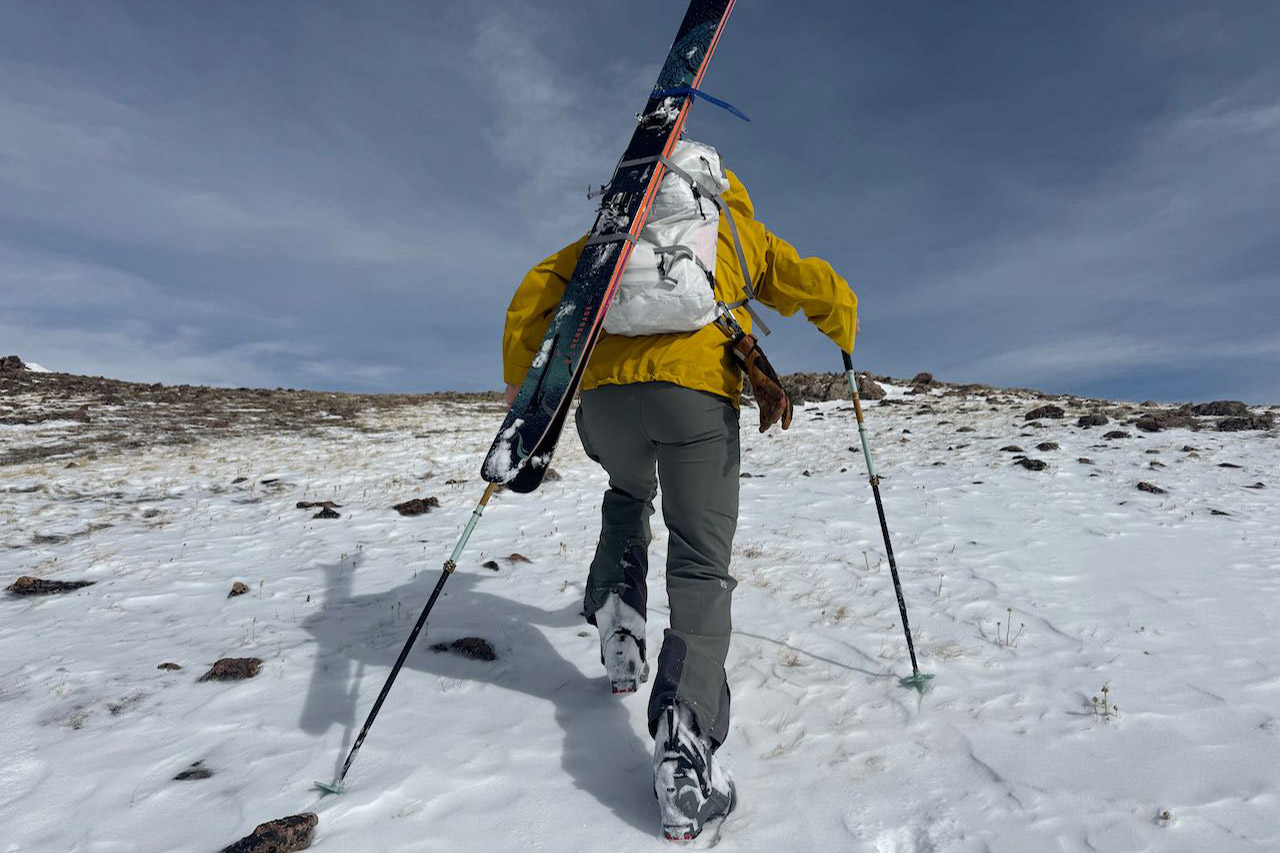
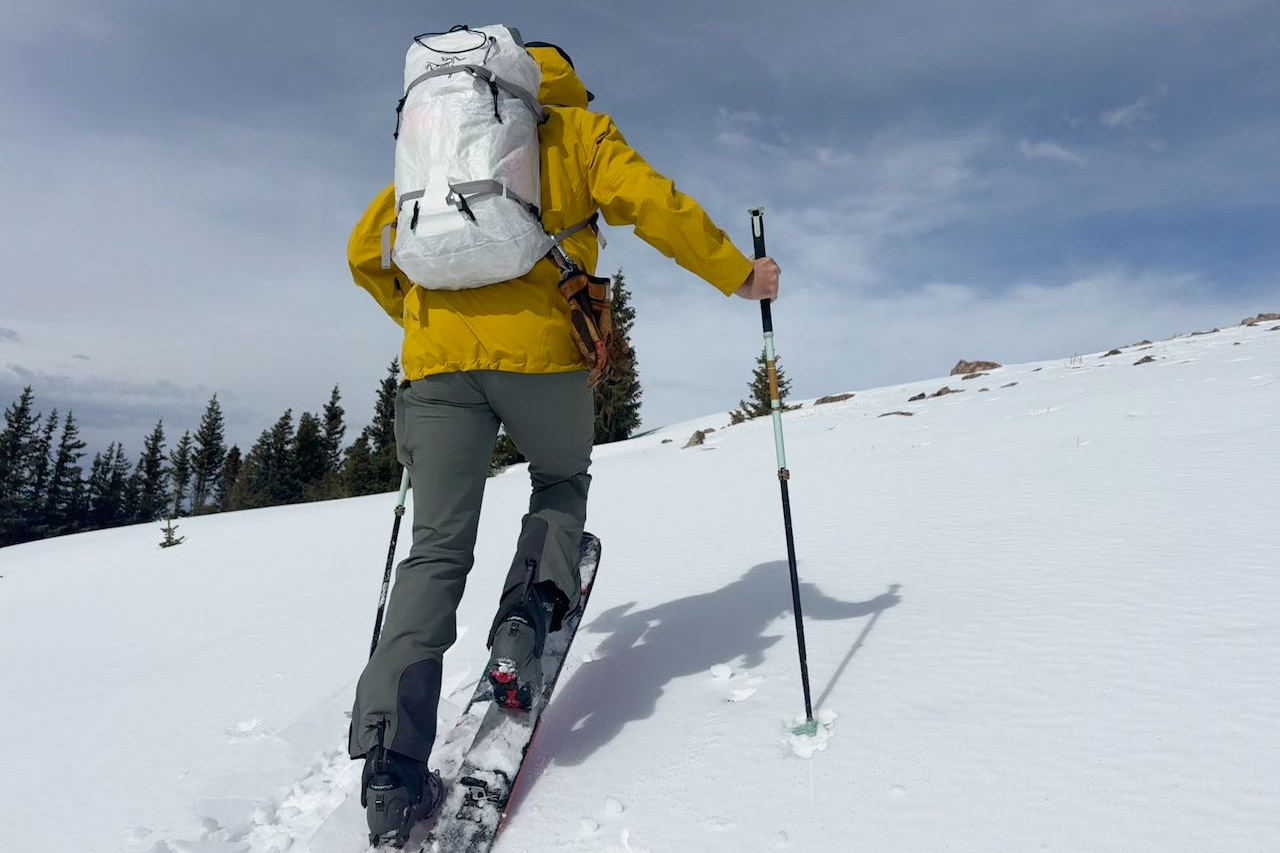
In the most minimalist fashion possible, the Alpha SL makes ski crossover possible thanks to ski carry options on the pack. A-Frame carry is simple — just lace each ski through the side straps and secure them at the tips with a ski strap. It carries great.
More importantly, the Alpha SL will also accommodate diagonal carry by sliding the tails through the bottom strap next to the ice tool dogbones and then looping the upper strap over the skis to keep them steady. It’s a little bit bouncy when you’re walking, but it’s a distinctly viable carry option.
Bottom line, the Alpha SL works as a backcountry ski pack if you’re willing to forgo extra ski pack features and lean into pure minimalism. Personally, I’ll take the small weight penalty for the organization and side access provided by the brand’s Micon 37 (formerly known as the Rush ski pack).
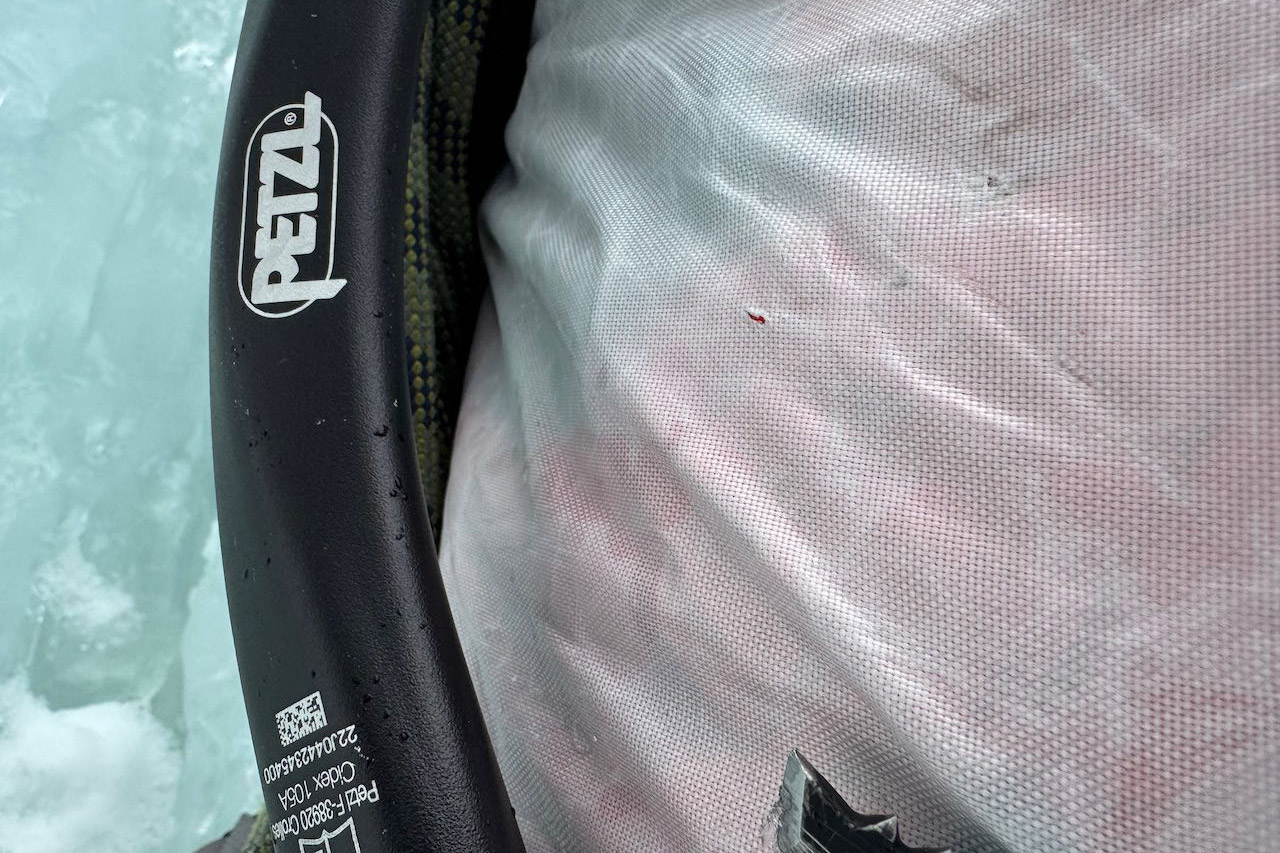
I put the Alpha SL through some rough climbs and ski touring missions. The ALUULA definitely provides a strong chassis. What surprised me was the fabric’s vulnerability to punctures from ice tools and crampon points, which are now scattered across the front of the bag. It’s minimal damage so far, but it’s proof that this pack isn’t indestructible.
Fortunately, the punctures didn’t propagate or tear, nor do they seem to present any kind of structural issue, given the otherwise strong fabric. It’s worth treating the pack with some level of care to ensure a long life (for $400, it should hopefully last at least several seasons of hard alpine use).
Note: Even small punctures significantly reduce the pack’s water resistance.
Competition
I won’t dance around it; the Alpha SL pack and its high-tech fabric are expensive at $400, especially considering the minimalist feature set. But hold on, I recognize that feature set from another pack — Black Diamond’s Blitz 28. That pack is 75% cheaper than the Alpha SL and 40g lighter. It too is essentially just a 408g tube with shoulder straps. Arc’teryx’s own Alpha FL pack isn’t far off either, at 648g and $240.
But there are a few distinct details that the Alpha SL brings to the table that the others don’t. For one, neither the Blitz nor the Alpha FL comes with compression straps that are critical for ski carry without some creative modifications. And while the Blitz just barely wins out on minimal weight, it’s not as durable as the Alpha SL (though you could replace it three times for the cost of one Alpha SL), nor is it particularly weatherproof.
So I won’t pretend there aren’t excellent alternatives to the Alpha SL 30. What I will say is that the Alpha SL maximizes the weight-to-strength-to-versatility ratio better than most for folks who want one pack to handle a wide range of mountain duties and are willing to spend the extra cash.
Arc’teryx Alpha SL Pack: Who It Is For
The main attraction of the Alpha SL 30 pack is the high-tech ALUULA fabric that transforms what would otherwise be a pretty simple backpack into an ultralight marvel. It has proven both very light and tough enough (save for a few small punctures) after dragging it through the backcountry.
That combo should catch the attention of many outdoor adventurers who prefer to go fast and light. The Alpha SL 30 can pass for a ski pack if you’re willing to forgo features like a dedicated avalanche tools pocket. And it can work as a hiking pack as long as you’re okay with shouldering it without any fit or comfort frills.
But it thrives in the climbing realms, where its proclivity to disappear on your back is its defining strength. You’re not grabbing the Alpha SL 30 for its features. You’re choosing it specifically for its lack of features, fluff, frill, and resulting minimal weight. It has just enough attachments for carrying and hauling ice, rock, and alpine climbing gear in reasonable comfort and nothing else.
Arc’teryx found the bleeding edge of high-tech minimalism in this one.
Read the full article here