




This article originally appeared on Explorersweb.
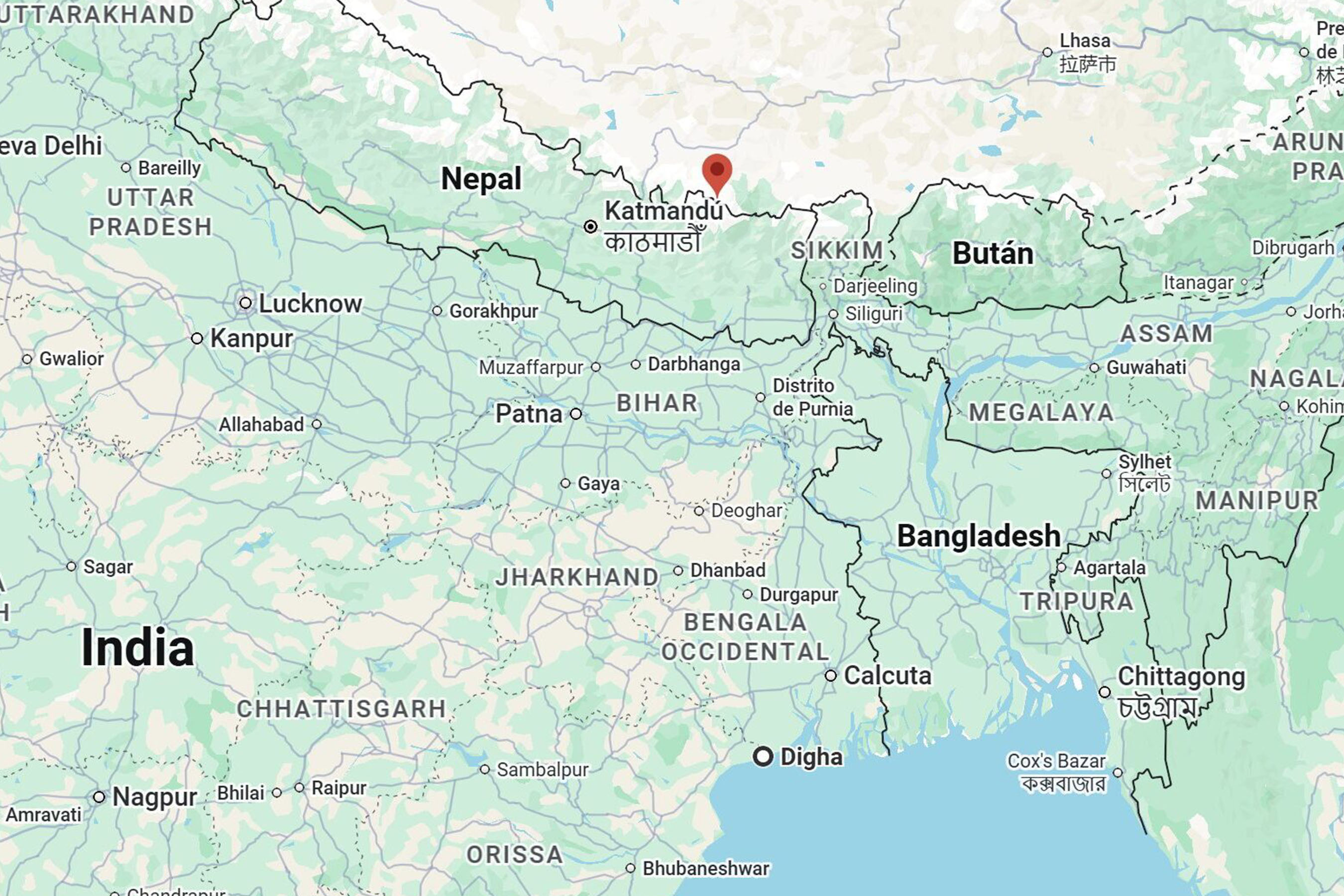
This spring, two climbers will approach Everest the (very) long way around. While most take a helicopter to Base Camp, they will start their “climb” from the seashore some 3,000 km away. From there, they will avoid motorized vehicles until they reach the highest point on Earth.
Climbing Is Just a Fraction
Technology, logistics, and the sheer number of summiters have stripped away some of Everest’s aura, so climbers continually seek a novel gimmick to make their quest seem striking. This includes fast ascents, multiple summits, and no-oxygen climbs. But for years, a handful have made the summit almost an afterthought compared to getting there.
In 1990, Tim Macartney-Snape became the first person to walk and climb from sea level to the top of Mount Everest. This spring, at least two international sea-to-summit expeditions will attempt the same. A third Sherpa team hopes to complete the equivalent on the way down, by summiting and then walking past Base Camp to the Bay of Bengal.
Seven Summits From the Sea
Madalin Cristea of Romania (now a U.K. resident) intends to climb not only Everest but also all the Seven Summits — starting at the sea.
Cristea started in 2024 by climbing Aconcagua after a 200km trek from the Chilean coast. Some months later, he reached the summit of Kilimanjaro from the Indian Ocean, crossing Tanzania on foot. On both occasions after the climb, he returned under his own power to the sea.
Cristea hoped to do the same with Karstensz Pyramid in 2025, but safety issues made it impossible to reach Base Camp except by helicopter. This is his Everest year, and he has already started.
Cristea set off from Digha, West Bengal, on March 4, and is now walking unsupported across India, covering 30 to 45km per day.
“In a couple of weeks, he expects to cross [into] Nepal, with just a backpack,” his home team told ExplorersWeb. “He has already been dealing with a couple of bouts of food poisoning.”
Once in the Khumbu, he will be outfitted by Asian Trekking and will acclimatize by climbing Lobuche East. Cristea hopes to be on Everest in time to join the summit pushes of the second half of May. As he did with Kilimanjaro and Aconcagua, he will then find his way back to the sea.
Sea to Top in 60 Days
Oliver Foran of Australia will also do a sea-to-summit Everest trip, with a different angle. Foran wants to complete the entire self-powered trip in a record 60 days. The current benchmark for sea-level-to-Everest-summit is 67 days, set in 2013 by South Korea’s Kim Chang-ho.
To accomplish this, Foran will try to cover the first 1,150 km by cycling through India and Nepal in 29 days, gaining 9,000 vertical meters in the process. He admits this is the part of the climb that worries him the most, because of the many unknowns and his relative lack of bike experience.
“The goal is simple: ride roughly 100km per day, fuel like a madman, and keep the energy high and positive,” he wrote. A support team and a film crew will accompany him.
In his second phase, Foran will trek from the village of Bung in the Khumbu toward Everest Base Camp, with a stopover at Mera Peak for an acclimatization climb. He will then go up Everest in the usual fashion, supported by AGA Adventures’ Gelje Sherpa.
Gelje is experienced with long-distance summiters. Last year, he climbed Everest supporting Mitch Hutchcraft of the U.K. Hutchcraft completed a self-powered trip from his home in Dover, 12,800 km away.
Foran climbed Island Peak in 2024 and Ama Dablam in 2025. Like Cristea, he also attempted Lenin Peak. However, Everest will be his first experience above 8,000 m.
Read the full article here