



Learn how to spot trouble long before it happens.
If you walk into any defensive-oriented training class, there will be a good chance you will hear the “Cooper Color Code” being mentioned. Created in the 1970’s by legendary firearms trainer Col. Jeff Cooper, it’s a way of describing your ability to react to what’s going on at any given moment.
The original version has four levels, each represented by a different color.
- White: Your mind is on vacation. You’re in your easy chair at home, reading a book and sipping a drink.
- Yellow: You are aware of your environment and that something might happen to you.
- Orange: There is something going on that requires your increased attention.
- Red: You’ve determined what the problem is, and it needs to be dealt with.
When I teach a class, I relate the Color Code to driving on a road. Condition White is clueless to your environment, like texting and driving. Don’t do that. Condition Yellow means you are occasionally checking your mirrors and keeping an eye on your speed. Orange means you are approaching something that might be a problem, like a tricky intersection or a tight corner. Red means some yahoo has blown through a stop sign and you’ve got to deal with it right now. Yikes.

The Color Code works well to describe our mindset as we go about our daily routine. It’s easy to relate to just about anybody, and describes how we need to change our response as things escalate.
However, one of the disadvantages of the Color Code is that it is an intuitive process. What triggers each step in the mindset is not specified; that is left up to the individual. Humans are pretty good at spotting trouble — that’s one of the reasons why we are at the top of the food chain. We know when things just “don’t feel right” and we prepare ourselves to deal with it.

This becomes a problem when we are forced to explain our actions to other people, such as an investigating officer or a district attorney. “I drew my pistol because the dude was acting weird” may have seemed perfectly reasonable at the time, but try explaining that to a jury and see what they think. What we need is an iterative, process-based approach to spotting trouble and reacting to it when it happens. Enter the Marine Corps’ Combat Hunter program.
The Right Response
The Combat Hunter program was created in 2007 as a way to teach Marines how to spot an ambush before it happens. Casualties were mounting from surprise attacks, and Gen. James Mattis (and others) directed the Corps to create a program to spot and possibly nullify an ambush before it happened. They wanted to win the “left of bang.”

“Bang” refers to the event that starts the ambush, be it an improvised explosive device going off or surprise assault by a group of irregular soldiers. Everything on the timeline to the left of that event is planning and preparation. Everything to the right is execution of those plans. We were winning the battle to the right of bang, what we needed was a way to win left of bang.
The Combat Hunter program was created to help solve this problem. It is, in essence, a two-step process:
- Establish a baseline of normal for your environment
- Look for changes from normal
Establishing a baseline of “normal” takes some time, but not as much as you might think. For example, I lived in Costa Rica for an extended amount of time, and it took me about three weeks to get the rhythm of the culture there, and that was before I could say more than a dozen words in Spanish. After those three weeks went by, I had a good idea of what “normal” meant on the streets of San José, and could tell when something was not supposed to happen.

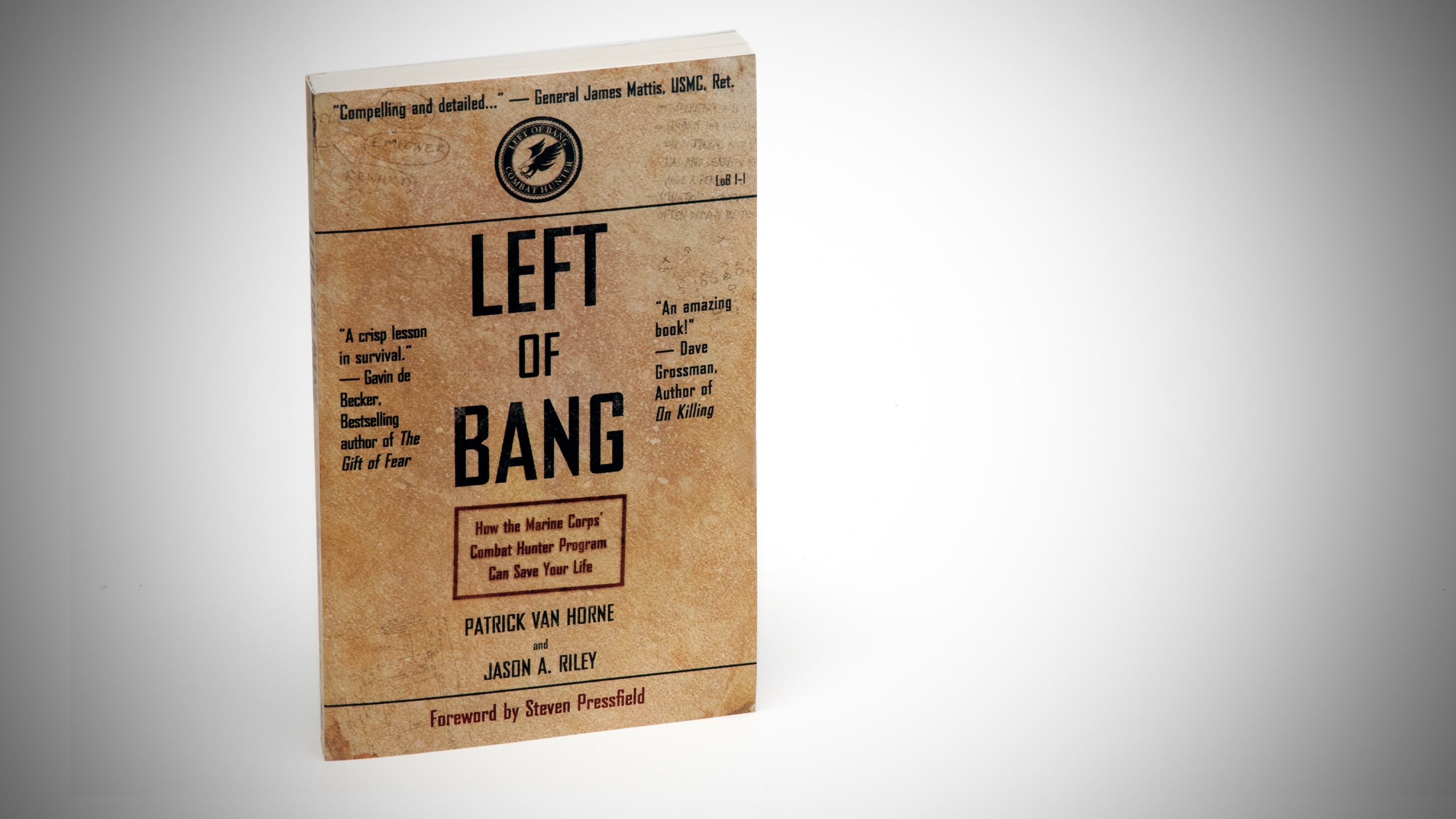
Just knowing that “something ain’t right” isn’t enough, though. We need to look for specific changes in our surroundings that signal that something is about to happen. The Combat Hunter program, as outlined in the book Left of Bang, demonstrates six things which can change and indicate that something bad is about to happen.
They are as follows:
- Proxemics: Where everybody is in relationship to everyone else. A young man breaking off from a group of other young men congregating on the other side of the street and walking towards you is a prime example of this, but so is someone who is standing unusually close or unusually away from you
- Iconography: Graffiti is a classic example of this, but it can also mean what clothes a person is wearing or similar ways we signal group affiliation to other people.
- Geographics: Where are you? My time in college taught me that hanging around outside of a seedy bar at night dramatically increases the chances of something bad happening to you versus, say, studying in the library.
- Kinesics: How are people moving? Touching your face, nervous glances or a “mad dog” fighting stare are usually indicators that something bad is about to happen.
- Biometrics: Nervous tics. Unusual sweating. You know it when you see it.
- Atmospherics: As they say in the movies, “I got a bad feeling about this.”
These are the six things that establish what “normal” behavior is like in any given environment. When three or more of those behaviors change, our behavior needs to change, or else we will suffer the consequences. If three of these things are out of the ordinary, you need to act. What that action is will vary depending on the circumstances, but an action is required if you wish to avoid a negative outcome.
Near and Far
Up until now, I’ve been talking about how the Marines use these methods to spot trouble in far-off countries. However, they are 100 percent applicable to our lives here in the U.S. The criminal we are most likely to face is a resource predator: We have something they want, and they are willing to use the threat of violence (or actual violence) in order to get it.

Live The Armory Life. The latest content straight to your inbox plus an automatic entry to each of our monthly gun giveaways!
They will probably attack from ambush in order to get said resource, no matter if it is our wallet or our car or our very lives, so having a system that lets us look for specific things around us. Better still, this process allows us to relate our thinking to others rather than just saying, “He was just acting strangely, so I drew my pistol.” Let’s walk through an example of what this might look like in real life.
It’s 10pm on a Saturday night and you have been tasked by your significant other to run to the local supermarket in order to buy a vital component for tomorrow’s meal. Now before you say, “I would never do that sort of thing,” realize that if you haven’t done this already, you probably will do this or something similar at some point in your life. We can minimize the risks we take, but we can’t eliminate them altogether.

You pull up in your car in a reasonably safe parking spot, take a quick glance around the parking lot to make sure there is no violence currently in progress, then go into the store, make your purchases and walk out to your car. As you exit the building, a young man breaks off from a group of other young men, ages 20-30 or so, who are hanging around a car about 15 yards off to your right. He walks purposefully towards you and is dressed primarily in green colors, along with his friends.
As he walks towards you, he points to you and says “Hey, buddy!”
Game on. Let’s establish what is going on here, and see if there is reason to act.
- Proxemics: The man in question left his group of friends and is on a mission to approach you. That’s weird.
- Iconography: There is a common color (green) among the people involved. Now it could be they are all on the same softball team and have stopped at this supermarket for a post-game libation, but that’s not how I would see things in this situation.
- Kinesics: Walking with purpose, pointing at you. Yep, check that box.
- Biometrics: Too far away to tell. Let’s give this one a pass.
- Geographics: You’re in a supermarket parking lot, late at night, on a weekend. Yeah, geographics are definitely in play here.
- Atmospherics: See above.
We’ve now established that there are five out of six things happening here which might indicate an ambush is about to happen. Welcome to Worst Case Scenario Town, Population: You.
What should you do in this situation? That is where your previous training and experience should kick in. If it were me, I would default to the “Ask, Tell, Make” method I learned in a Shivworks “Managing Unknown Contacts” class and ask the gentleman to hold up about 15 or so feet away from me.

If he persisted on approaching, I’d ask him again to stop there. If he kept coming, I’d scream “STOP!” and go to another option such as retreating back into the store, shining a bright flashlight at him (it is night after all) or possibly deploying pepper spray or another solution. Your response may vary.
Conclusion
As we can see, the beauty of Left Of Bang and the Combat Hunter program is that they allow us to see why we did something in a logical, process-driven manner rather than just rely on intuition. It also allows us to hone those processes and live safer lives and improves our ability to relate our actions to others if there are any possible interactions with the American legal system. Left of Bang is available in electronic, paper and audio versions from all major booksellers.
Editor’s Note: Please be sure to check out The Armory Life Forum, where you can comment about our daily articles, as well as just talk guns and gear. Click the “Go To Forum Thread” link below to jump in and discuss this article and much more!
Join the Discussion
Featured in this article


Read the full article here