




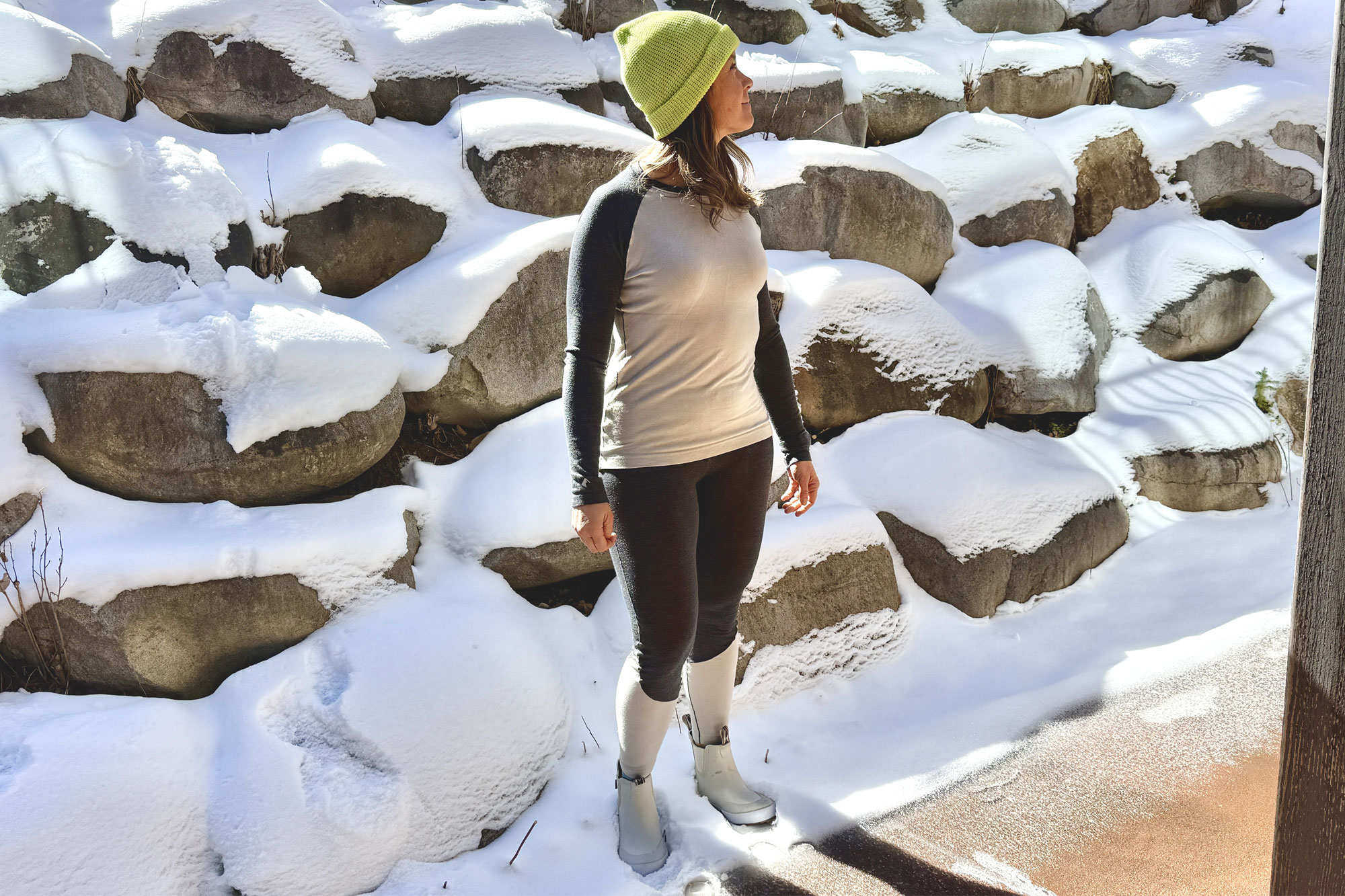
The Ridge Merino Inversion Heavyweight Crew Base Layer Shirt and Leggings are built for truly cold days. The base layers use a heavy-duty, 100% merino wool that prioritizes warmth and odor resistance (And trust me, I really tested the latter!) This is a true heavyweight set designed for cold-weather pursuits where staying warm matters more than shaving grams.
I tested the Inversion set over 3 weeks and roughly 10 days of use while downhill skiing at Aspen Highlands and Snowmass, uphill skiing, cross-country skiing near Ashcroft and Spring Gulch, and trail running in the Roaring Fork Valley of Colorado. During a recent cold snap — including a cross-country ski outing in -6 degree Fahrenheit temperatures — the layers kept my body doing just fine — even if my face strongly disagreed.
In short: The Ridge Merino Inversion Heavyweight Crew Shirt and Leggings ($110 each) deliver excellent warmth, manage sweat effectively, and fight off odor like it’s their job. They’re comfortable next to skin, fit true to size, and versatile enough for skiing, running, and long days outside.
To see how these base layers stack up against the competition, check out our buyer’s guide to the Best Base Layers for Women.
Thermal category
Heavyweight
Pros
- Fantastic warmth without any bulk
- Killer odor resistance for long-haul trips
- Super-soft against your skin
Cons
- Slightly low dip on the back waistband
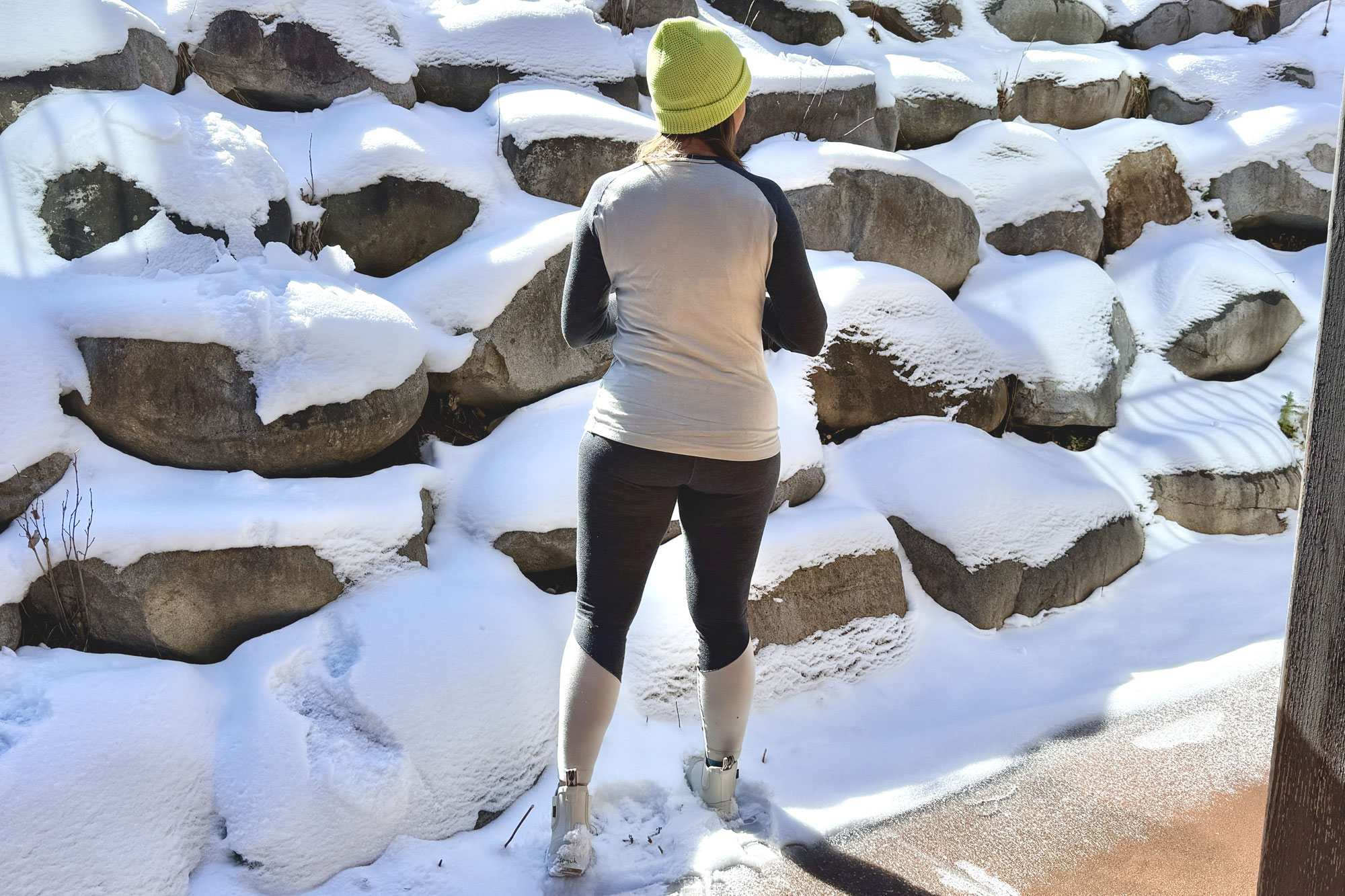
Ridge Merino Inversion Heavyweight Crew Shirt and Leggings Review
Ridge Merino isn’t trying to be flashy, and that’s by design. Founded in 2014 and based in Mammoth Lakes, Calif., the brand focuses almost exclusively on merino wool apparel built for people who play outside. Ridge operates primarily as a direct-to-consumer (DTC) brand, which helps keep pricing more reasonable than many of its competitors.
Instead of chasing trends or seasonal gimmicks, Ridge Merino keeps its lineup tight and functional, leaning into ethically sourced merino and straightforward designs meant to be worn hard and washed infrequently (my kind of party!).
Warmth That Shows Up When It’s Cold
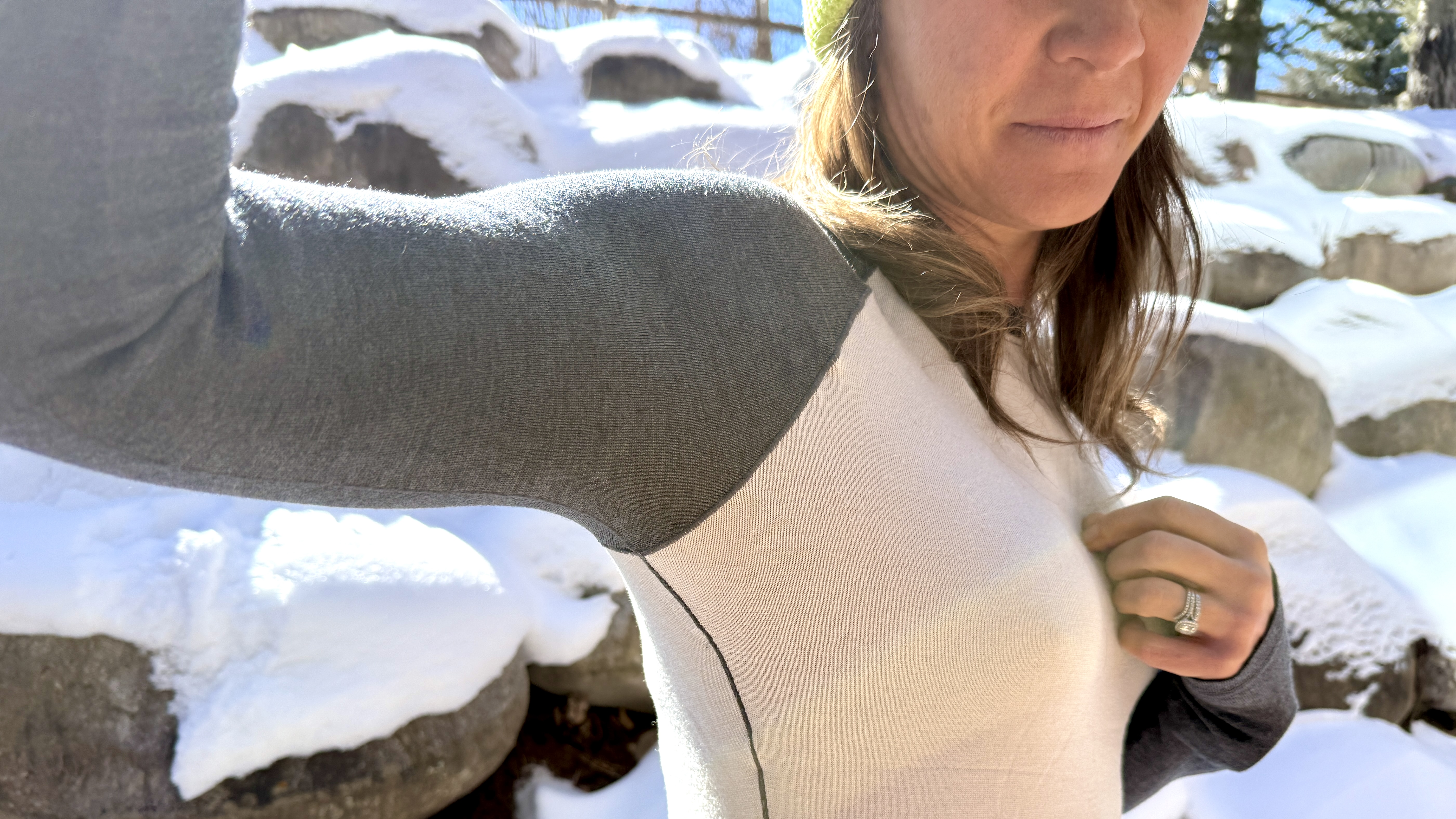
Ridge Merino calls the Inversion a heavyweight base layer, and the tech specs back it up. GSM (grams per square meter) refers to the weight of the fabric, or how much wool is packed into each square meter. The bigger the number, the heavier the base layer. At 270 GSM, the Ridge Merino Inversion set uses a noticeably thicker, denser knit, which translates to better heat retention — on paper.
Good news: it works in real life, too. The heavyweight wool proved its worth during a recent cold snap in Colorado’s Roaring Fork Valley, when daytime highs hovered near zero and “feels like” temperatures dipped to -12 degrees Fahrenheit.
When I’m outside in this type of weather, I tend to choose a microgrid fleece base layer, but opted for the Inversion instead to compare. I wore the set while cross-country skiing near Ashcroft, a historic ghost town outside of Aspen.
Sure, it was chilly during slower sections when I stopped for photos or even when the wind whipped through the valley. But for the most part, the base layers did a fantastic job of keeping my core and legs warm and comfortable. (My face, on the other hand, was not impressed.)
The warmth also carried through multiple days of downhill skiing at Aspen Highlands and Snowmass, including one hard-charging powder day in single-digit Fahrenheit temps. Long lift rides didn’t drain (too much) heat. Once I started skiing through the fluffy meadows, the layers regulated my body heat exactly how wool is supposed to.
Sweaty but Not Smelly
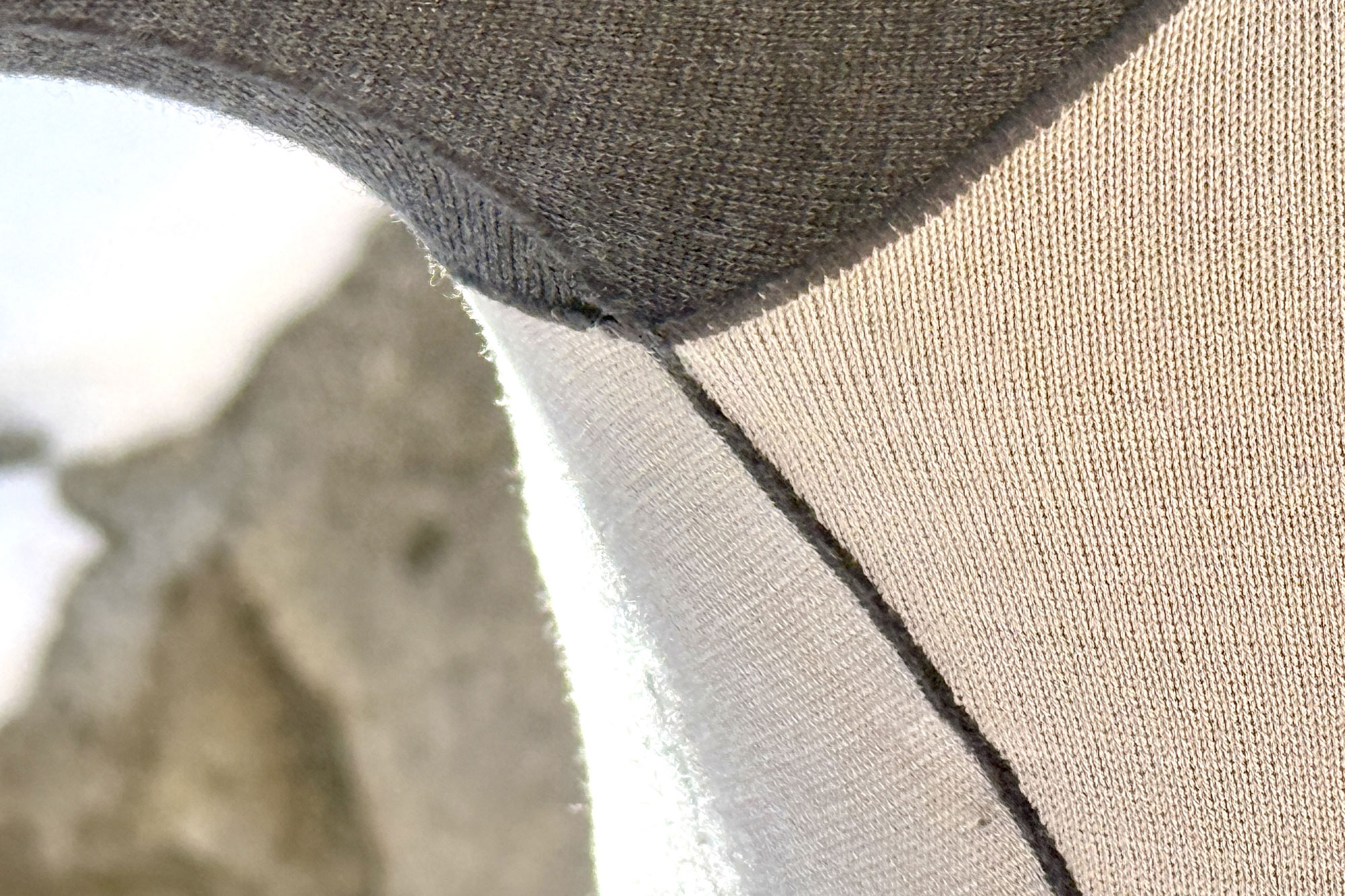
Cold temperatures don’t stop sweat, but they do make it more annoying. No matter how cold it is outside, trail running is the one thing that sends my body into a heated, sweaty overdrive. Luckily, the Ridge Merino Inversion set handled that better than I expected.
On a morning trail run near my home in Colorado’s Roaring Fork Valley, the temperature hovered around 2 degrees Fahrenheit. Yes, motivation was low. But I had a short break between work calls, and the dog was staring at me with his adorable little face, so I realized skipping wasn’t an option.
I overdressed, got sweaty (standard!), and braced myself for that clammy, post-run chill that never seems to quit. But, it never came. The merino did exactly what you want it to do: moved moisture away from my skin so sweat never pooled.
The real surprise came afterward. I walked in the door and immediately jumped on a work call, still wearing the top because that’s the beauty of self-employment. Within about 15 minutes, the fabric felt dry again: no lingering dampness. That kind of dry time matters when you’re recreating outside in frigid temperatures.
Also, these layers slay when it comes to odor resistance. I haven’t washed this set once in the 3 weeks I’ve owned it. Yes, that’s probably gross, but no, I definitely don’t care. (All in the name of testing, right?)
That includes downhill skiing three to four times (one of those days involving hard, sweaty powder skiing), two cross-country ski sessions totaling roughly 3 hours, and two trail runs for about 90 minutes of high-output effort. I’m even wearing the top as I type this. Somehow, it still doesn’t smell. What a win.
A Fit That Works
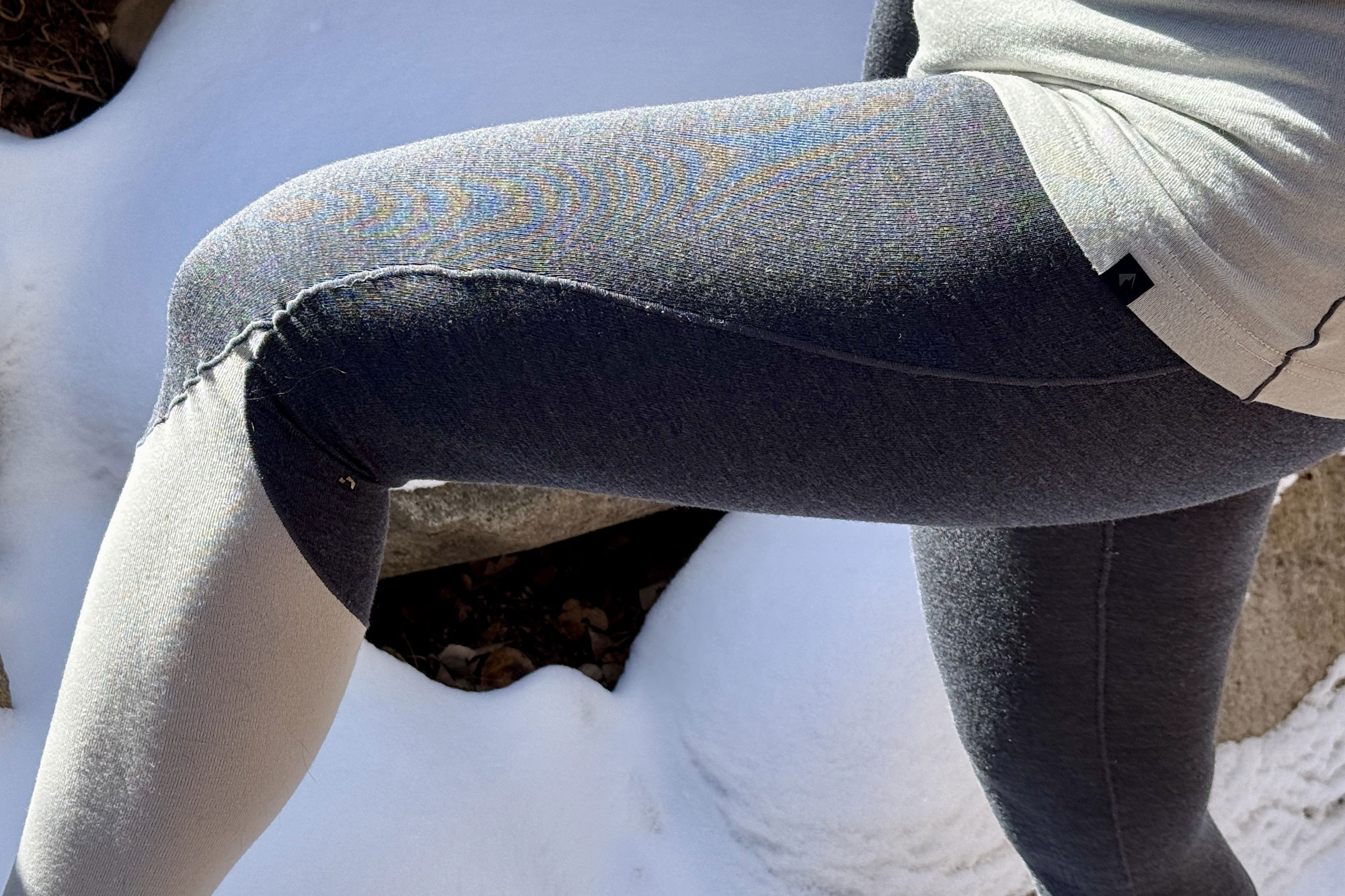
Bluntly, the base layers crush when it comes to fit; especially the top. I’m 5’5” and 145 pounds and tested a medium. The arms work for my slightly longer-than-average arms, and the thumb holes are actually comfortable, which doesn’t often happen for me. (Usually, they’re mere decoration that sits somewhere around my wrist bone.) The 18.5M wool is pretty fine, which means it’s uber soft against your skin.
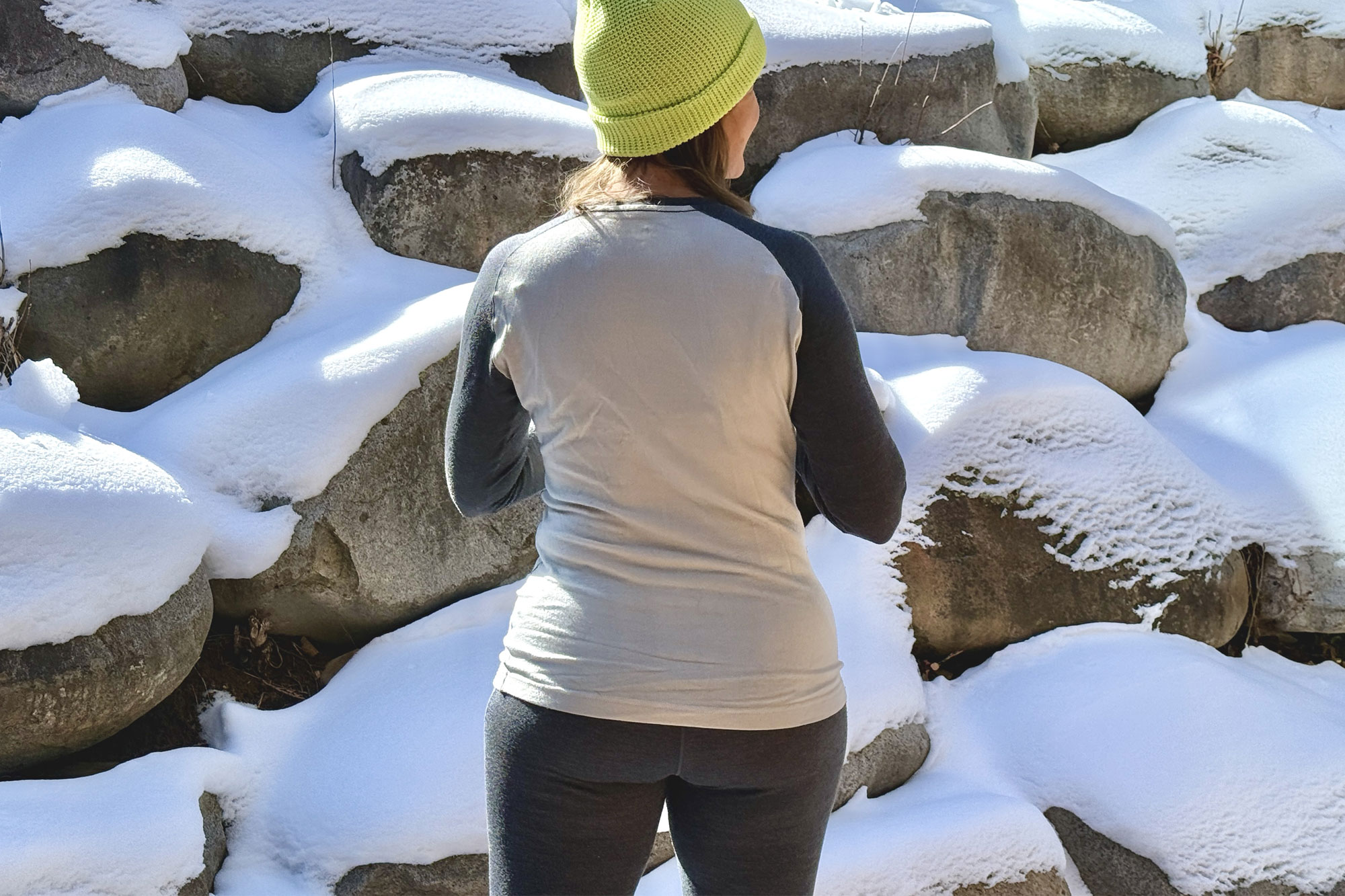
Ridge Merino uses a raglan sleeve construction here, meaning the seams run from the underarm to the collar instead of sitting directly on top of the shoulder. In practice, that translates to fewer pressure points under a pack. I wore a backpack on two outings — one of them fairly heavy after carrying a friend’s extra layers — and never noticed any seam-related hot spots or rubbing.
The longer top covered my backside even when bending over, stayed put while moving, and tucked in easily when I wanted it to. It also looks good enough to wear off the trail; I’ve thrown it on with jeans for school pickup more than once, and it doesn’t scream “base layer.”
The leggings are comfortable overall, with a full-length cut and a looser ankle hem that makes them easier to pull up and over calves when wearing ski boots and socks. While full-length leggings aren’t my personal favorite for ski boots, the forgiving ankle opening made them far less annoying than usual.
The waistband is thinner and less structured than some other merino base layers. It isn’t the most flattering and does create a slight stomach bulge; especially noticeable if you’re a mom with a C-section scar like me. But that’s all aesthetics because it certainly wasn’t uncomfortable in the slightest.
For women with wider hips and stronger glutes, it is worth noting that the back waistband dips slightly. I noticed this most when squatting or bending over. While it never actually exposed anything, I did constantly feel like I needed to check to make sure things weren’t … hanging out.
Final Thoughts
The Ridge Merino Inversion Heavyweight Crew and Leggings deliver exactly what they promise: serious warmth, moisture management, and standout stench resistance for cold-weather adventures. They’ve earned a permanent spot in my winter rotation, especially for brutally cold days when lighter layers just won’t cut it.
If you’re looking for a heavyweight merino base layer that performs across skiing, running, and long days outside, this set is a winner — especially if you don’t like washing your clothes.
Read the full article here