




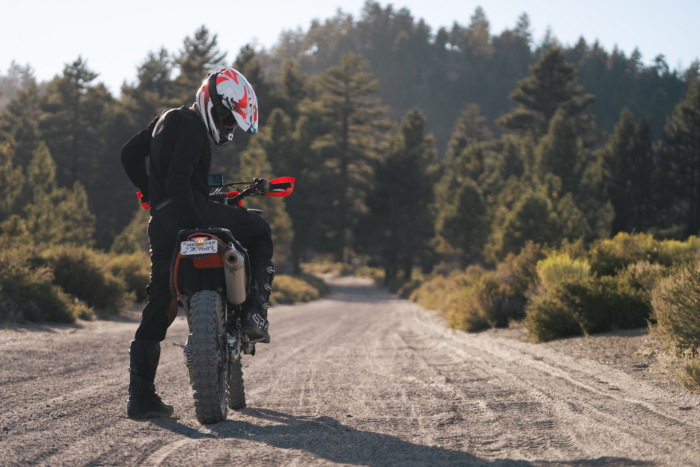
Adventure motorcycle helmets are the Swiss army knife of headwear, serving riders who divide time between pavement and dirt. We also think you should never ride without one: Full-face motorcycle helmets protect your precious cargo. And in most U.S. states, riding without a motorcycle helmet is illegal.
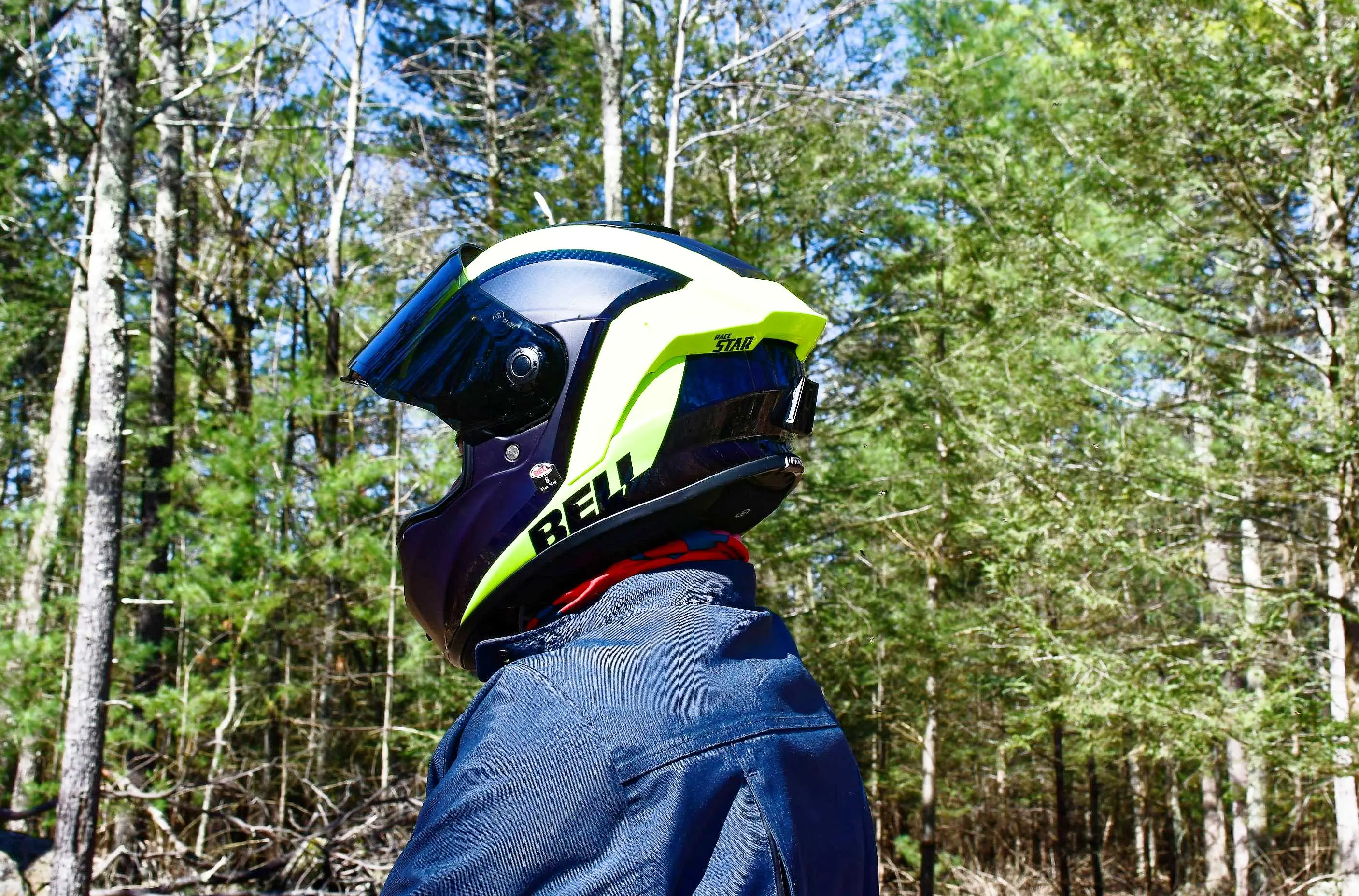
There’s no single helmet that’s perfect for all conditions. While the AGV K6S doesn’t offer the utmost breathability and there’s no sun shield, it’s carbon and comfortable. Other helmets, like the Bell Race Star DLX Flex, are pricier but quieter and have a photochromic visor.
From rain pelts to baking sun, we tested each lid in a range of weather conditions and speeds.
The Best Motorcycle Helmets of 2026
Best Overall Motorcycle Helmet for Adventure Rides
9.4/10 Rating
Best Budget MIPS Motorcycle Helmet
8.4/10 Rating
Best Motorcycle Helmet Air Ventilation
8.1/10 Rating
Best Motocross Motorcycle Helmet
8.4/10 Rating
Best High-Performance Street Helmet
8.3/10 Rating
Lightest Off-Road Motorcycle Helmet
8.3/10 Rating
Quietest Modular Motorcycle Helmet
8.2/10 Rating
See more picks
Editor’s Note: We updated our Motorcycle Helmets buyer’s guide on March 11, 2026, including the award-winning Fox Racing V3 RS Carbon Solid Helmet, field-tested by GearJunkie Senior Editor Morgan Tilton. We also added an advanced scorecard to help you find the best lid: Refer to the Motorcycle Helmets Rating System below to learn more.
Motorcycle Helmets Comparison Chart
| Motorcycle Helmets | Price | Type | Materials | Weight | Safety Rating |
|---|---|---|---|---|---|
| Bell Race Star DLX Flex | $820 | Upright conventional | Carbon fiber shell, multi-density impact liner | 3.57 lbs. | ECE 22.06 certified/DOT certified |
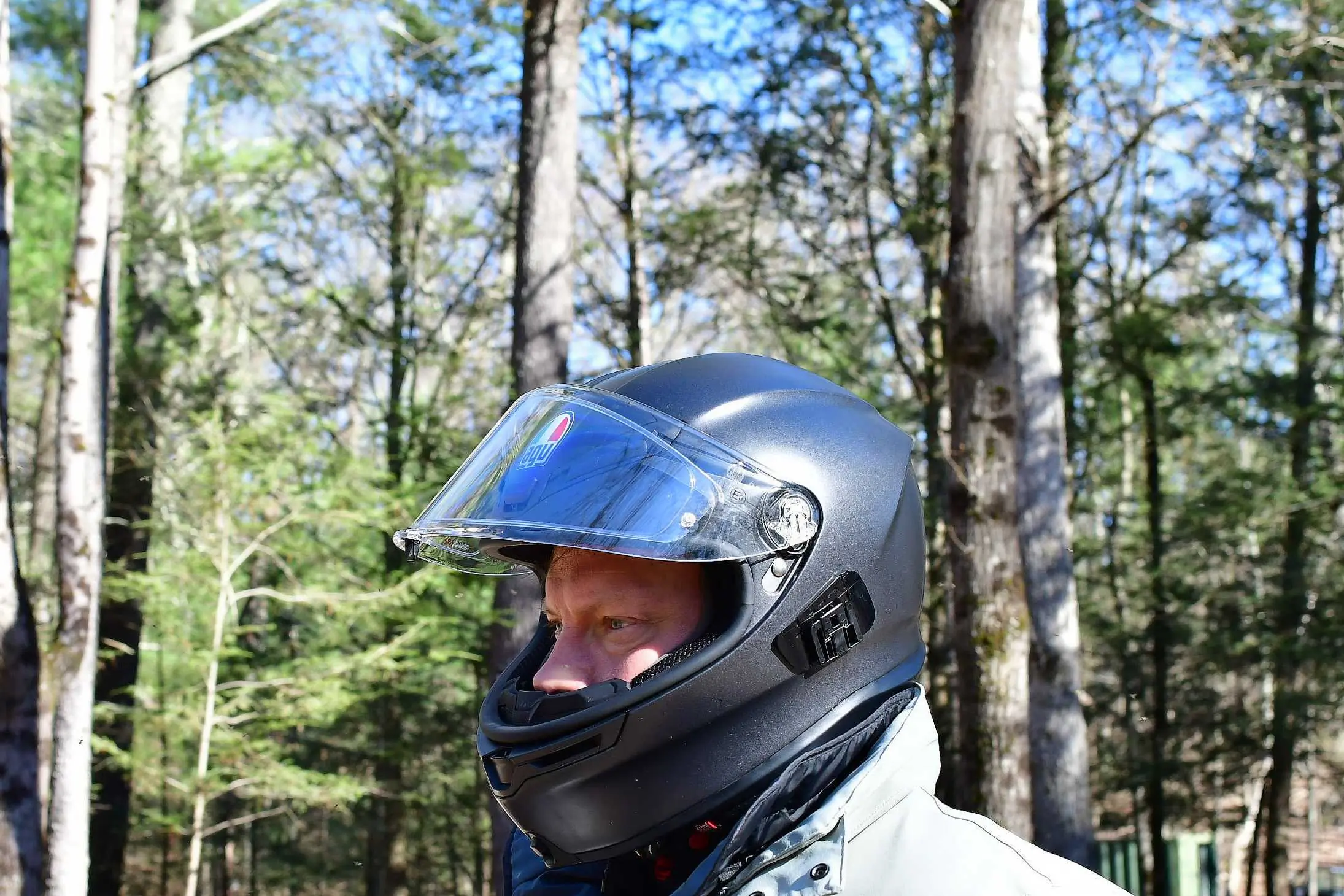
| AGV K6S | $550 | Upright conventional | Carbon fiber shell, heat-resistant and strong synthetic fibers, multi-density EPS foam | 3.02 lbs. | ECE 22.06 certified/DOT certified |
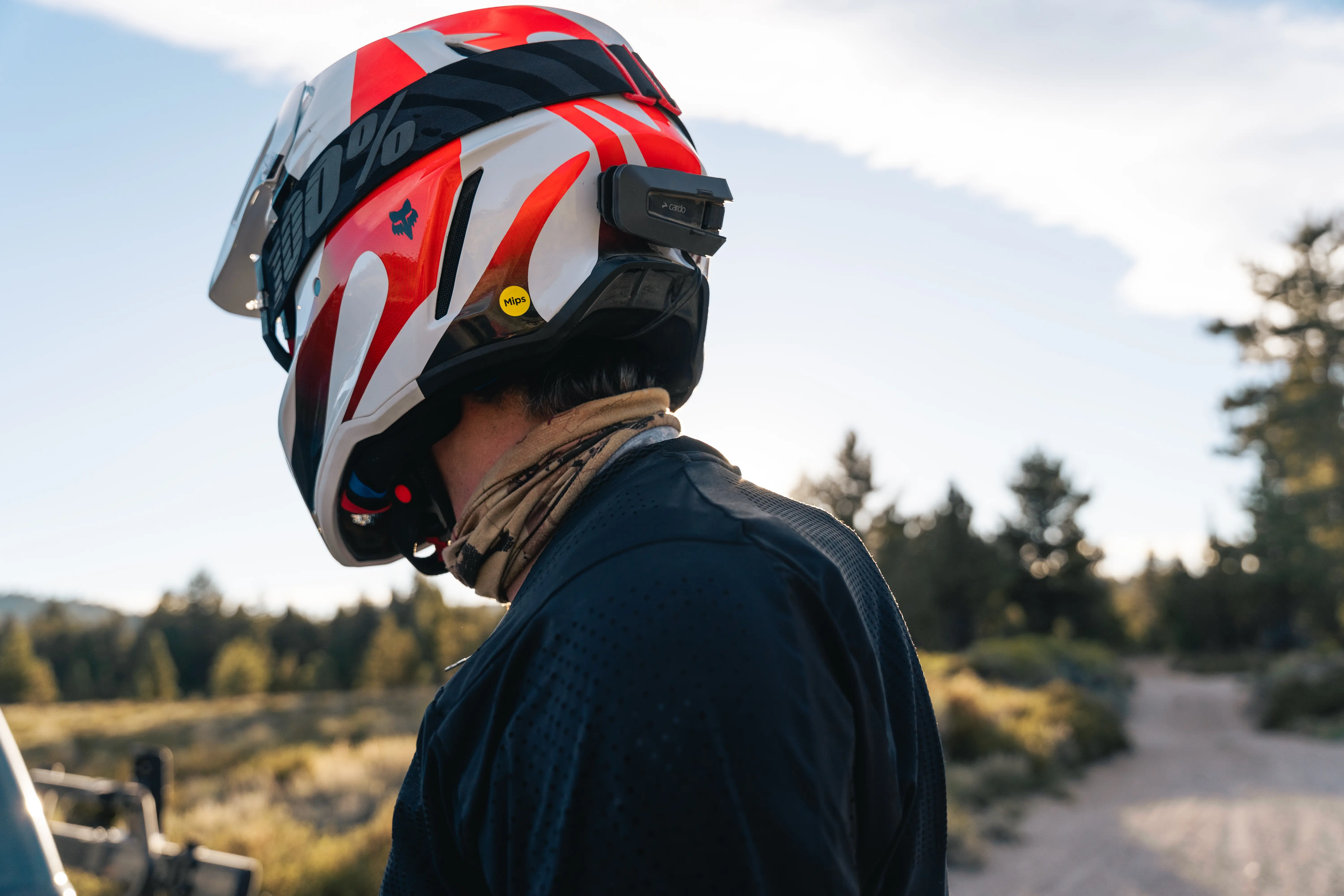
| Fox Racing V3 Magnetic Helmet | $400 | Motocross / Off Road | Fiberglass, EPS foam, moisture wicking liner, MIPS equipped, composite fiberglass shell, hydration routing system, communication system compatibility | 2.8 lbs. | ECE 22.06 certified/DOT certified |
| Fox Racing V3 RS Carbon Solid Helmet | $700 | Motocross / Racing | MIPS Integra Split impact protection system, dual-density EPS foam, Ionic+ moisture-wicking liner, 4K carbon fiber shell | 2.8 lbs. | DOT/ECE 22.06 certified |
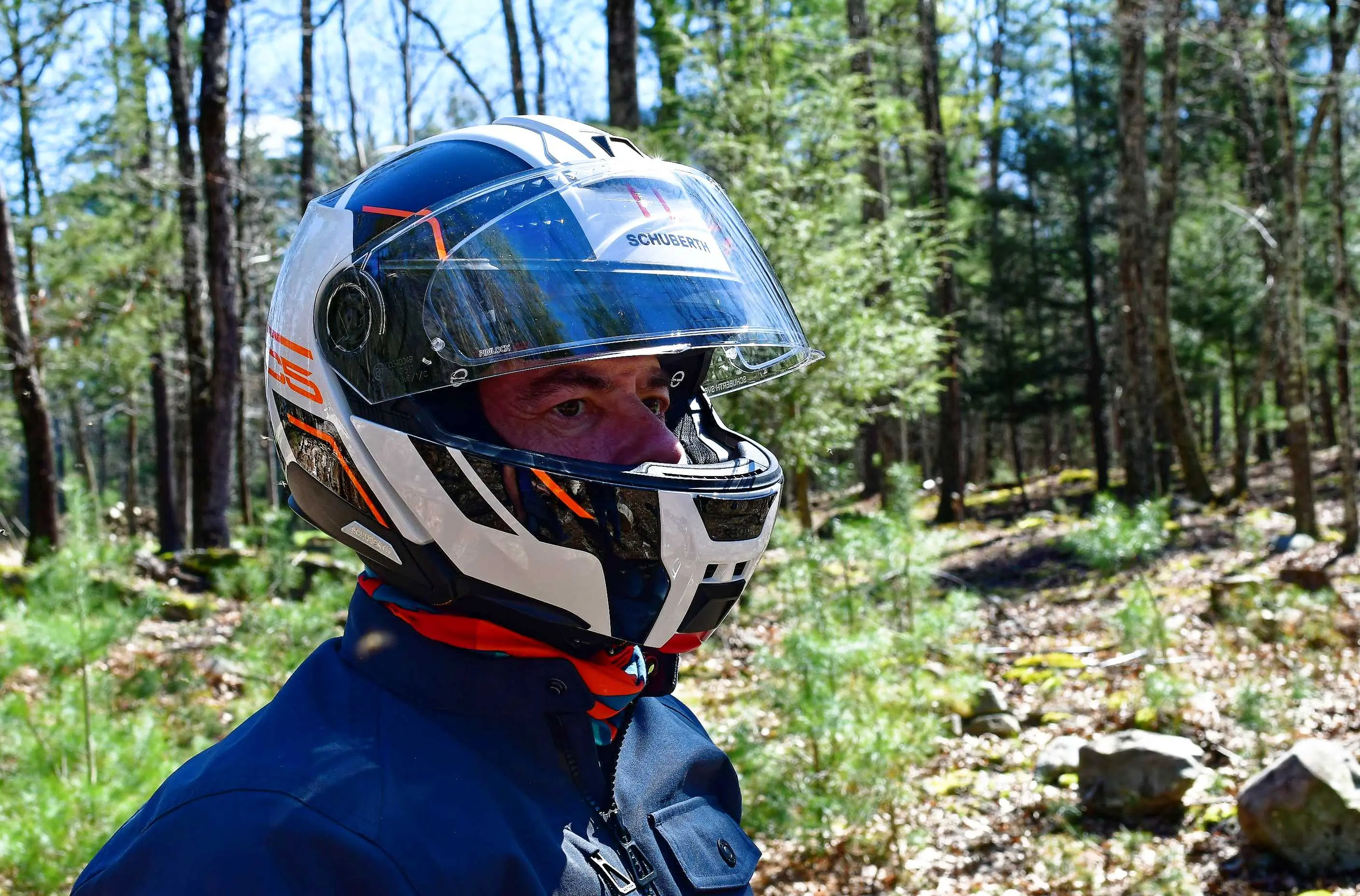
| Schuberth C5 | $769 | Modular with a hinge chin bar, upright conventional | Fiberglass shell, carbon fiber reinforcements, EPS foam interior | 3.8 lbs. | ECE 22.06 certified/DOT certified |
| Shoei Neotec 3 | $900 | Modular with a hinge chin bar, upright conventional | Multi-ply matrix of fiberglass, organic and glass fibers, and synthetic resin plus an EPS liner | 4.15 lbs. | DOT certified |
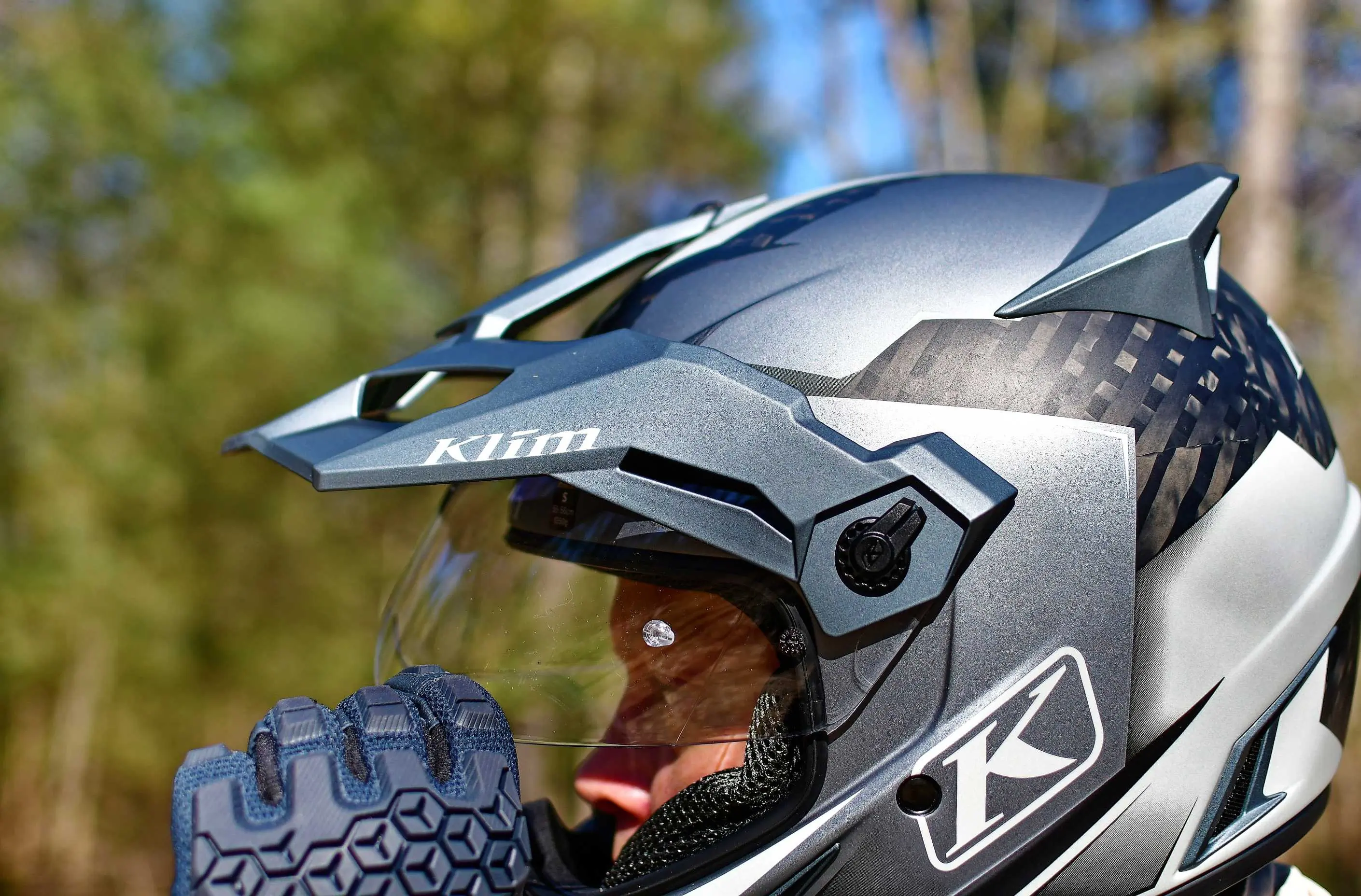
| KLIM Krios Pro | $750 | Upright conventional, ADV-specific | Koroyd and carbon construction | 3.4 lbs. | ECE 22.06 certified/DOT certified |
| Shoei GT-Air II | $699 | Full-face, upright conventional | AIM Shell (Advanced Integrated Matrix), dual-layer EPS liner | 3.64 lbs. | DOT certified |
| Alpinestars Supertech M10 Helmet | $920 | Motocross / Off Road | Multi-composite construction of 3K Carbon, unidirectional carbon, and aramid fiber layer (bonded with epoxy), 4 density EPS foam, MIPs technology | 2.99 lbs. | ECE 22.06 certified, DOT certified |
| Bell Moto-10 Spherical Helmet | $900 | Premium off‑road/motocross | Segmented 3K Carbon Shell | N/A | DOT, SNELL 2020, ECE |
| Bell MX-9 Adventure DLX MIPS | $370 | ADV / Off Road | Composite shell, Transitions adaptive shield, ionic+ moisture wicking liner, MIPS technology | 3.74 lbs. (Medium) | ECE 22.06 certified, DOT certified |
-
Pinlock visor compatible (and included) -
Very light for an ADV lid -
Excellent venting at speed -
Quick-release visor, plus included photochromic transition visor -
Fidlock clasp
-
Only two shell sizes -
Stuffy at a slower pace
-
Lightweight -
Comfortable liner -
Great ventilation
-
Tight cheek pads compared to other manufacturers
-
Incredible construction -
Industry leading protection -
Beautiful aesthetic -
Padded, lined helmet bag included
-
Heavier than other carbon helmets -
Wind noise
-
Premium Mips Integra Split impact protection system -
Lightweight carbon fiber shell -
Style points
-
Expensive -
Lacks magnetic closure system -
Speaker recess pads are a bit finicky -
Price label is extremely sticky on underside of visor
-
Very quiet -
Photochromic visor -
Five shell sizes
-
No specific communication system -
Visor isn’t Pinlock compatible
-
Top-tier graphics -
Extremely light -
Semi-custom fit
-
Pinlock visor compatible (and included) -
Super quiet thanks to the chin and neckroll spoiler -
Built-in communication system with boost antenna and speakers -
Internal sun shield
-
Visor detents could be better -
Only two shell sizes -
Bit stuffy in hot weather
More Motorcycle Helmets Protecting Our Domes
-
Pinlock visor compatible (and included) -
Internal sun shield -
Insanely comfortable, cushy interior -
Nearly as quiet as the Schuberth -
Excellent, easily removable cheek pads
-
Not ECE 22.06 certified -
Somewhat porky
-
Effective transitions shield -
Versatility -
Great ventilation
-
Very loud -
Only one color option
-
Pinlock visor compatible (and included) -
Integrated solar shield -
Seamless compatibility with SENA SRL2 intercom -
Easily operated vents
-
Not as easily compatible with other intercom systems -
A bit beefy -
Somewhat noisy
-
Pinlock visor compatible -
Extra lightweight -
Super wide, 190-degree field-of-view for better visibility -
Four shell sizes
-
Not the best breather -
No integrated sun-shield
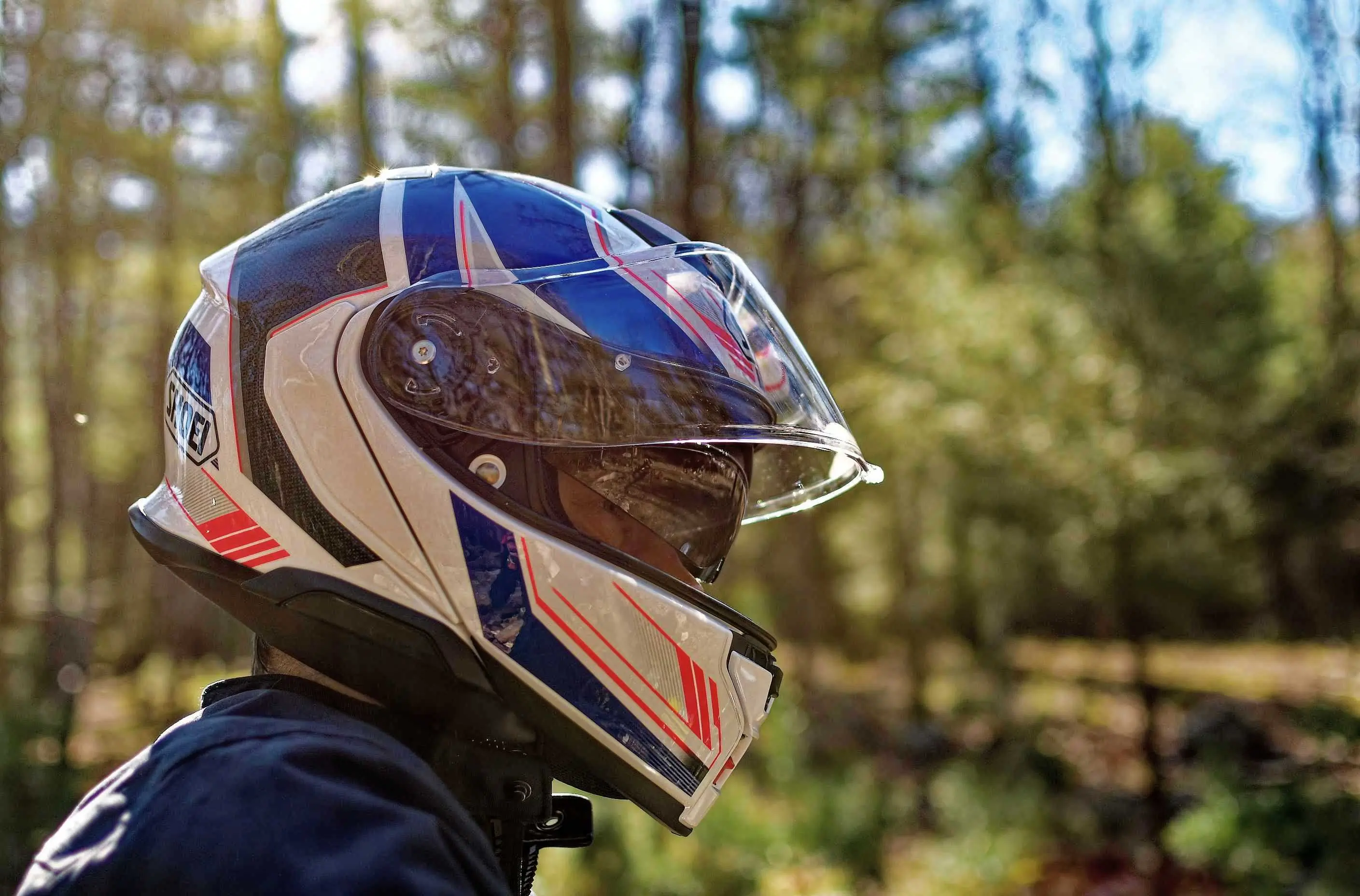
How We Tested Motorcycle Helmets
Our Expert Testers
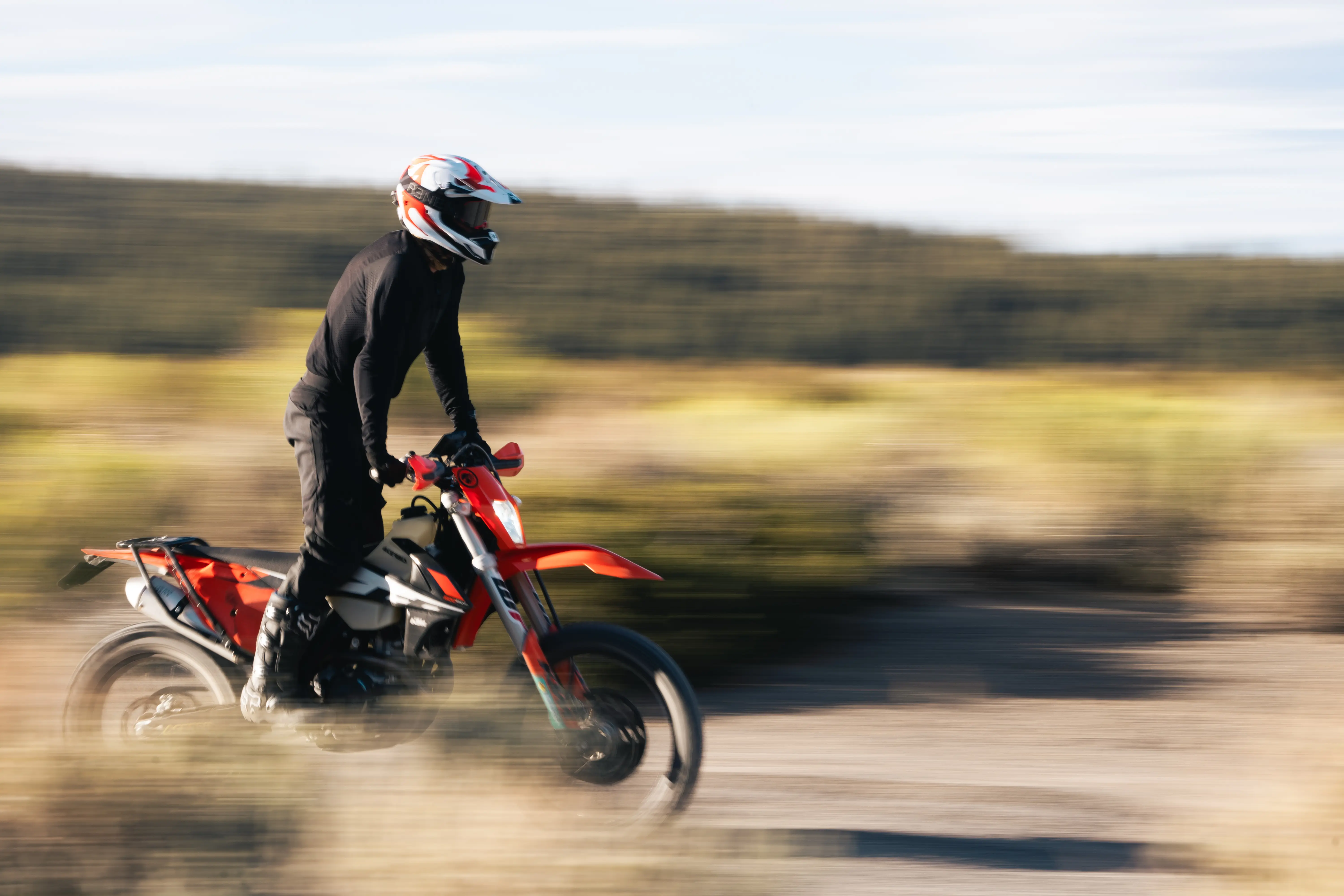
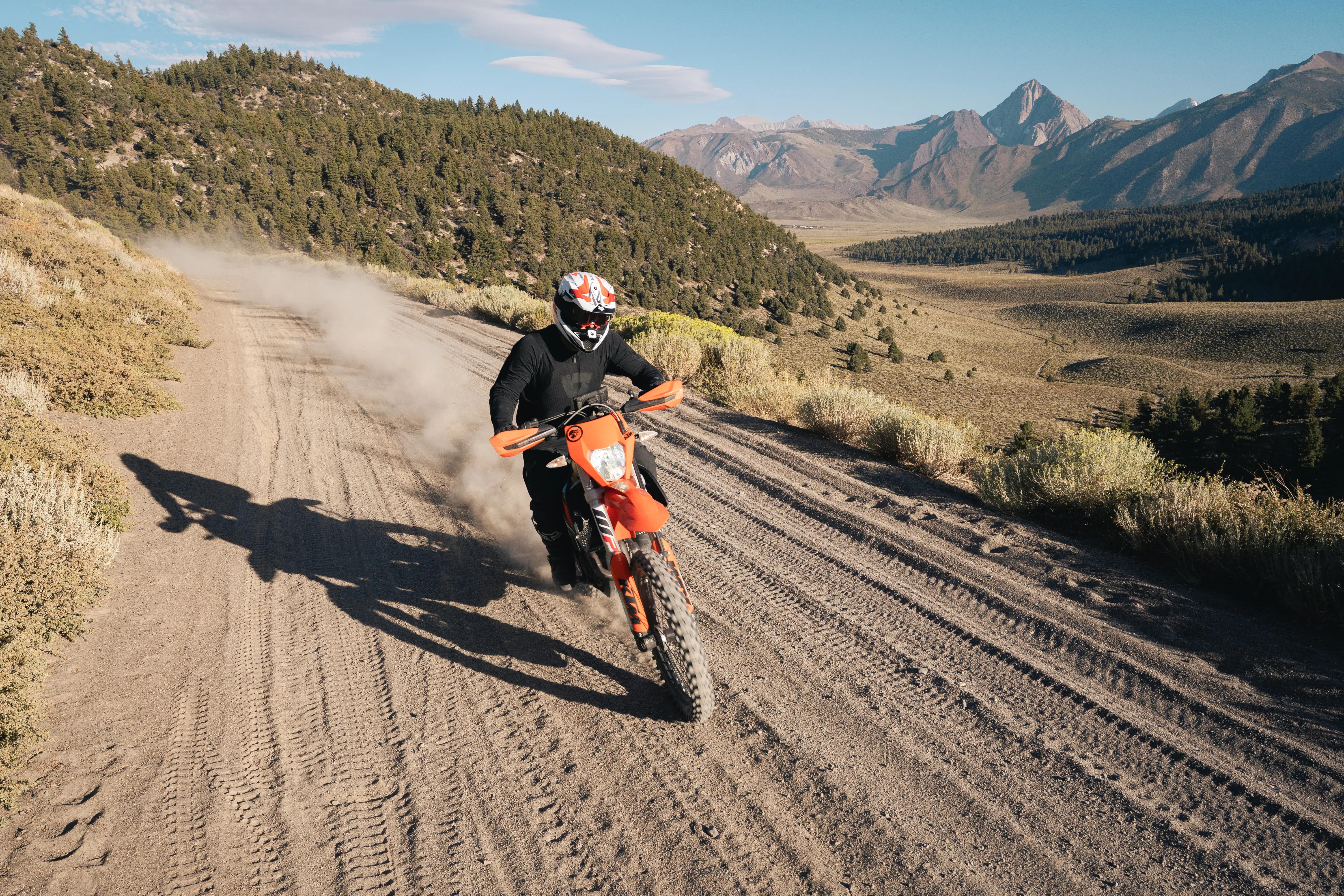
GearJunkie contributor Sean Galaway took the lead on testing helmets on the dirt end of the spectrum. With decades of experience across four continents, Galaway evaluates helmets in some of the toughest conditions imaginable. For this test, he was focused on helmet performance riding fast double track, slow speed technical single track, and wide-open desert riding.
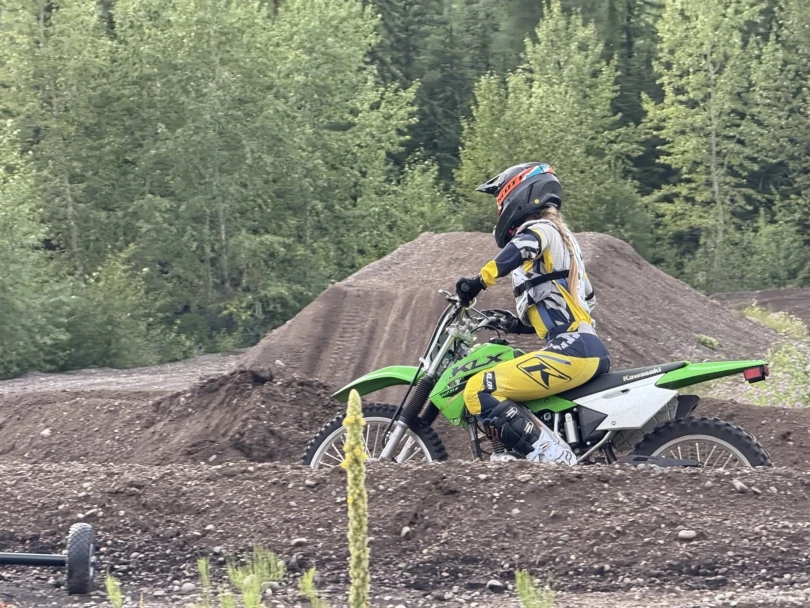
GearJunkie Senior Editor Morgan Tilton owns and rides a dual sport Honda CRF 230F and a Kawasaki KLX140R dirt bike for the motocross track. One of her favorite, longest adventure was covering the Alpine Loop in her home mountain range.

Contributor Hilary Arthur joined the GearJunkie team to offer extra insight into the gear fitment and features from the female rider’s perspective. Many women have to settle for unisex options or among a very small selection of women-specific models. Arthur has thousands of miles in the saddle on both her backyard canyon roads in Colorado, as well as touring around the Western United States and New Zealand.
Another GearJunkie tester for motorcycle helmets, writer Michael Frank, has ridden motos for decades. These days, Frank prefers slow, windy backroads and double-track over Interstate rides. For this guide, he and a crew of friends tested a range of full-face motorcycle helmets on pavement, off-road, and some trail.
Our Testing Grounds
In field tests with the motocross, ADV, and modular lids, we rode at a variety of speeds to measure comfort, especially when riding slowly and working hard in off-road terrain. For street-focused helmets, we maneuvered through in-town traffic and at fast highway speeds to see how the lids performed while we were broiling at a stoplight and in freezing temps while bombing a night run for a pint of ice cream.
Our Motorcycle Helmets Rating System
We score each motorcycle helmet on a 1–10 scale for Protection & Safety Certification, Comfort & Ergonomics, Environmental Control, and Versatility & Features.
- Protection & Safety Certification: This is the baseline for every review. We evaluate the helmet’s impact-absorption and energy-management technologies, specifically looking for certifications such as DOT, SNELL M2025, and the rigorous ECE 22.06. We prioritize helmets that go beyond the minimum by including rotational protection systems like MIPS, Spherical Technology, or Koroyd cores.
- Comfort & Ergonomics: This category examines the “all-day” rideability of the helmet. We test the quality and feel of the interior liners — including moisture-wicking and anti-microbial properties — the overall weight (which impacts neck fatigue), and the ease of the retention system (e.g., Double-D rings vs. magnetic Fidlock clasps). Beyond sizing, we also consider how the internal shape accommodates different head profiles (Round, Intermediate, or Long Oval).
- Environmental Control (Ventilation & Noise): We analyze how effectively the design manages airflow and sound at various speeds. We test the efficiency of intake and exhaust ports in releasing heat during slow-speed technical riding and evaluate how quiet the helmet remains during high-speed highway pulses. For adventure and dirt helmets, we specifically look for “aerodynamically tuned” peaks that prevent wind buffeting.
- Versatility & Features: This looks at the “Swiss army knife” utility of the helmet. We examine the clarity and field of vision of the shield. Other considerations include the integration of sun visors and photochromic lenses, and how easily the helmet integrates with Bluetooth communication systems or accommodates off-road goggles.
The Overall Rating is based on contextual and editorial judgment, and on the complex user experience across various riding scenarios — from the daily commute and long-distance touring to technical off-road trails and track days.
Our Testing Process
The bulk of these helmets were tested for more than a year across seasons and conditions. The goal was to evaluate each helmet for comfort, noise, usability (like the visor and vents), versatility (like ditching or adding a peak), and breathability. For ventilation, we noted the breathability at low and high speeds.
We considered weight without sacrificing safety. While they cost more, we looked for protective options with the United Kingdom SHARP five-star standard or the ECE 22.06 certification. We also sought relatively lightweight options, and we dug hard to find those. Heavier helmets are more exhausting to wear. Then, we looked for models that were aerodynamically tested, which usually leads to a quieter design.
We also hunted for helmets with built-in communication options or pre-built ear pockets to add speakers so that you can upgrade with a Bluetooth system. (Note: We didn’t specifically test each integration option because that’s an entirely different evaluation. But we did make sure the integration existed because we’ve tested helmets in the past without room to add speakers.)
Further, we found helmets with relatively easily removable pads, which helps with wiring comms and maintenance. Our top options have removable liners that are washable and have funk-fighting treatment to reduce bacterial growth caused by sweating into your lid.
Buyer’s Guide: How to Choose a Motorcycle Helmet
There are a lot of motorcycle helmet styles. For our guide, we focused on ADV (adventure), motocross, and street. Here’s a breakdown of all the choices to make sure you’re in the right place.
Types of Helmets
There are half shells that the chopper crowd loves — but we don’t think they are protective enough. You can find DOT-certified half shells, but none exist (that we know of) that are dually approved by the ECE or SHARP.
Here’s what we prioritized while testing:
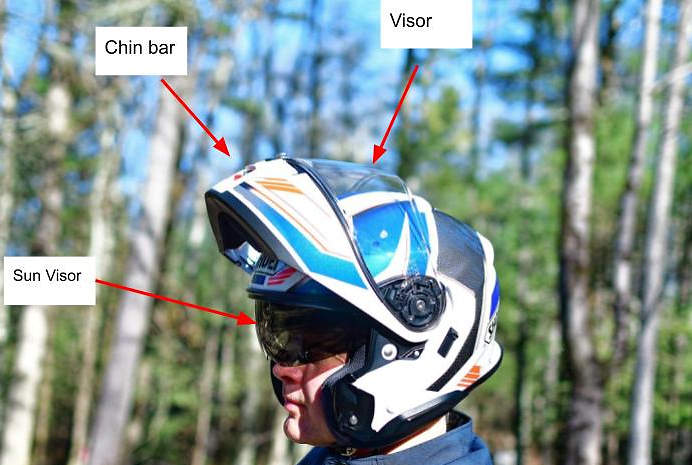
- Modular: These helmets offer a chin piece that hinges and can be pushed completely up off your face. This is convenient to quickly allow air in when you’re stopped.
- Upright Conventional: These helmets are full-face helmets with shields, but they typically have little to no visor, making them ideal for street riding.
- ADV: The jack of all trades, these helmets are the middle ground between a street helmet and an off-road/motocross helmet. They typically have a full-faced shield and a larger visor than their street cousins.
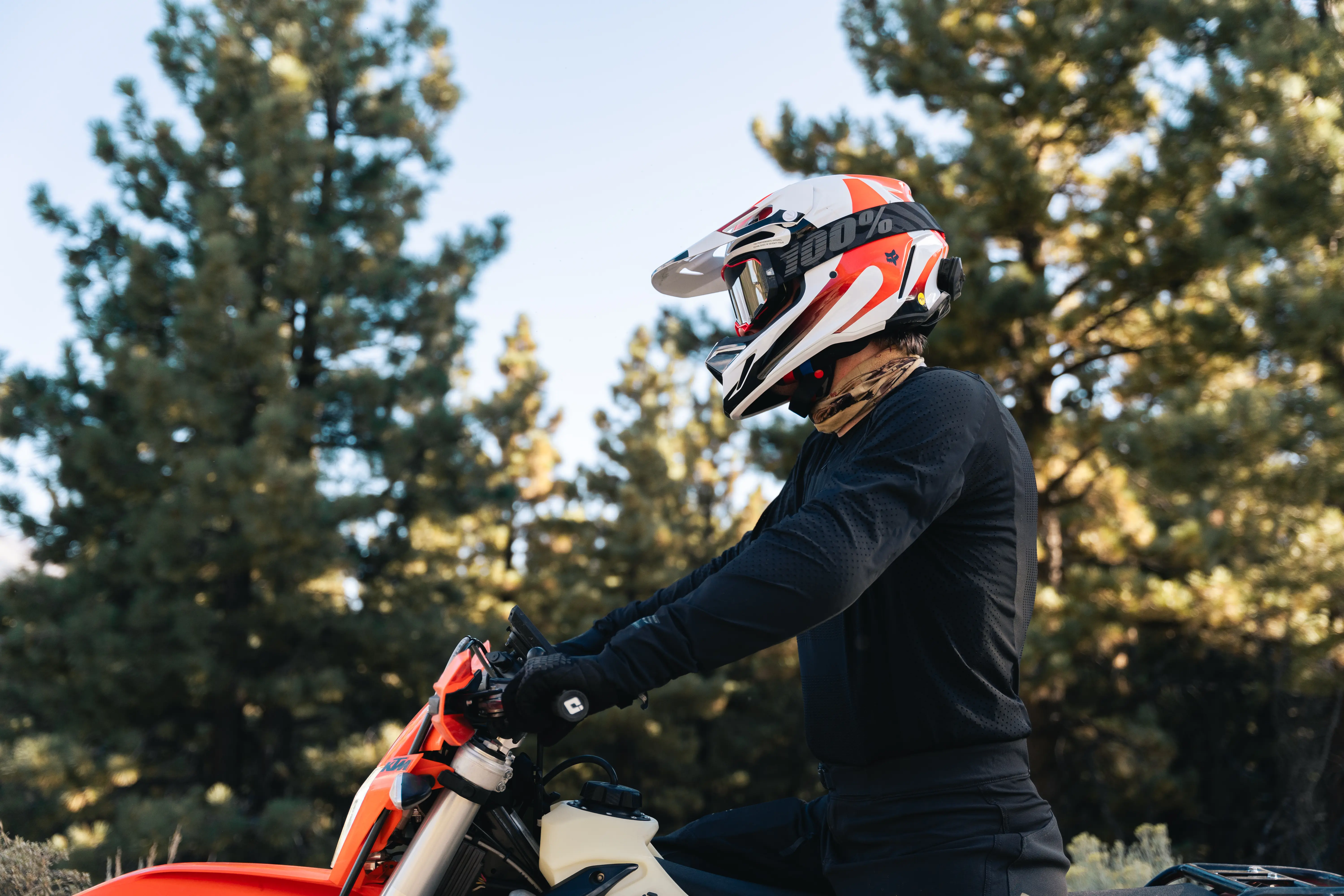
- Motocross / Off-Road: If you’re riding most of your time on dirt, this is the helmet you want. Oversized visors and no face shields here — these are made for riding on dirt, and the Fox Racing V3 is one of our favorites.
Modular Motorcycle Helmet
Modular motorcycle helmets include a hinge chin bar, like on the Schuberth C5 and Shoei Neotec 3. That means you can swing that chin piece up and out of the way. The design is handy for taking a swig of water while you’re gassing up or chatting with a buddy about the next section of road.
Riding a modular helmet with the chin bar up is possible but not advisable. First, the weight of that component in the open position will tax your neck and shoulders: It feels like you’re balancing a small pan on top of your head. Second, exposing the front of your face is not good safety protocol.
Modulars are particularly handy for ADV riders because you can quickly open the front to assess technical sections of trail.
Upright Conventional Motorcycle Helmet
Upright conventional motorcycle helmets are meant for riders who either are on street bikes, baggers, or ADV machines. This shape overlaps with the modular helmets and all of the Moto helmets we tested fit in this category.
The Schuberth C5, AGV K6S, Bell Race Star DLX Flex, Shoei Neotec 3, Shoei GT-Air II, and KLIM Krios Pro are all aero-tested for riding while sitting upright.
Adventure (ADV) Motorcycle Helmet
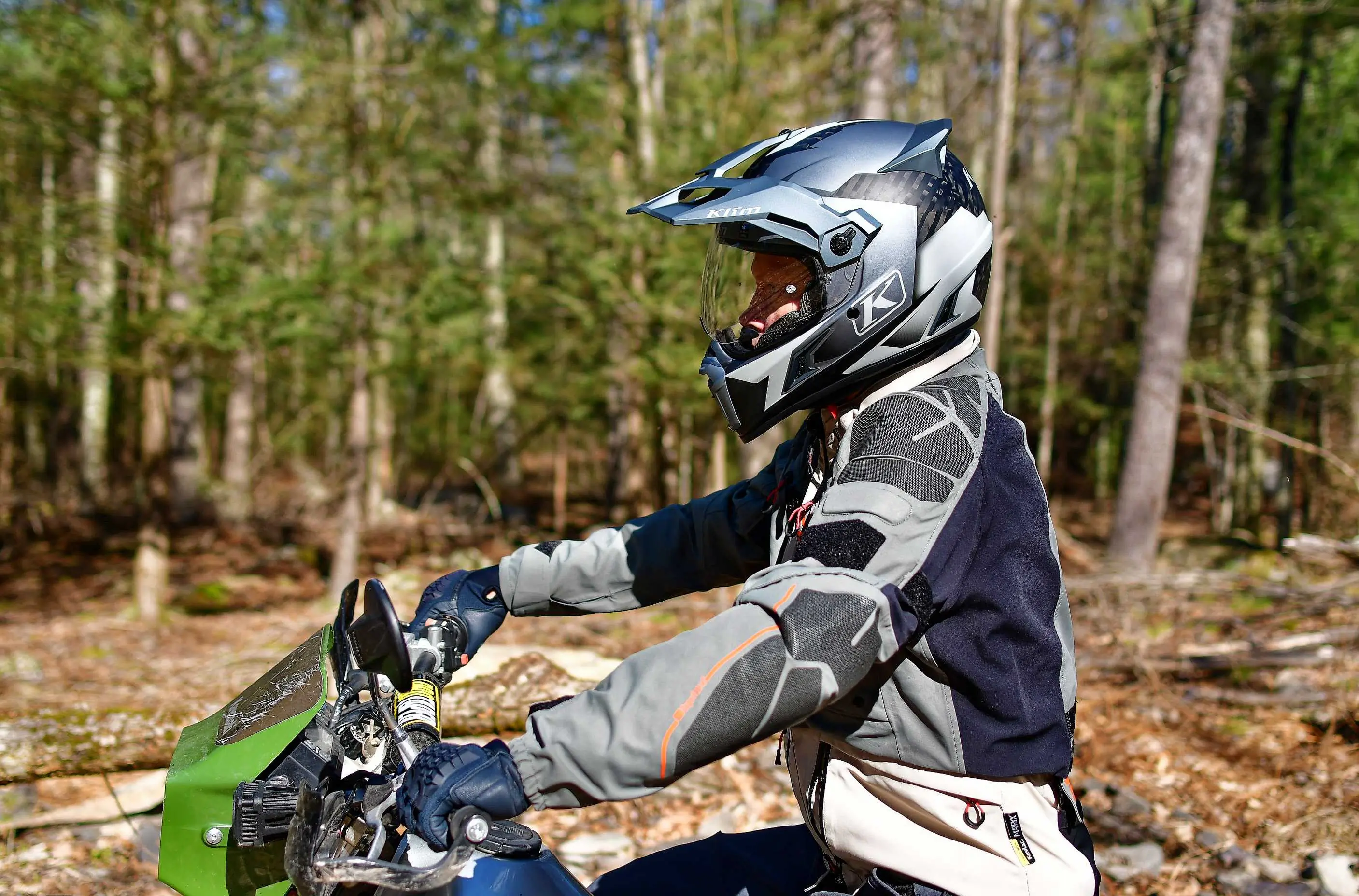
ADV-specific full-face motorcycle helmets, like the KLIM Krios Pro, are more versatile because you can remove the peak and visor. You’re basically getting several designs in a single package. Sans peak, the helmet is less turbulent on the highway. Ditching the visor/face shield lets you wear goggles, which are nice for technical off-road rides.
Typically ADV-specific designs have a wider opening, so riders have increased visibility for obstacles when they’re standing on the footpegs. That way, you can carefully scope out rocks and undulations before picking your line.
Shell Sizes & Fit
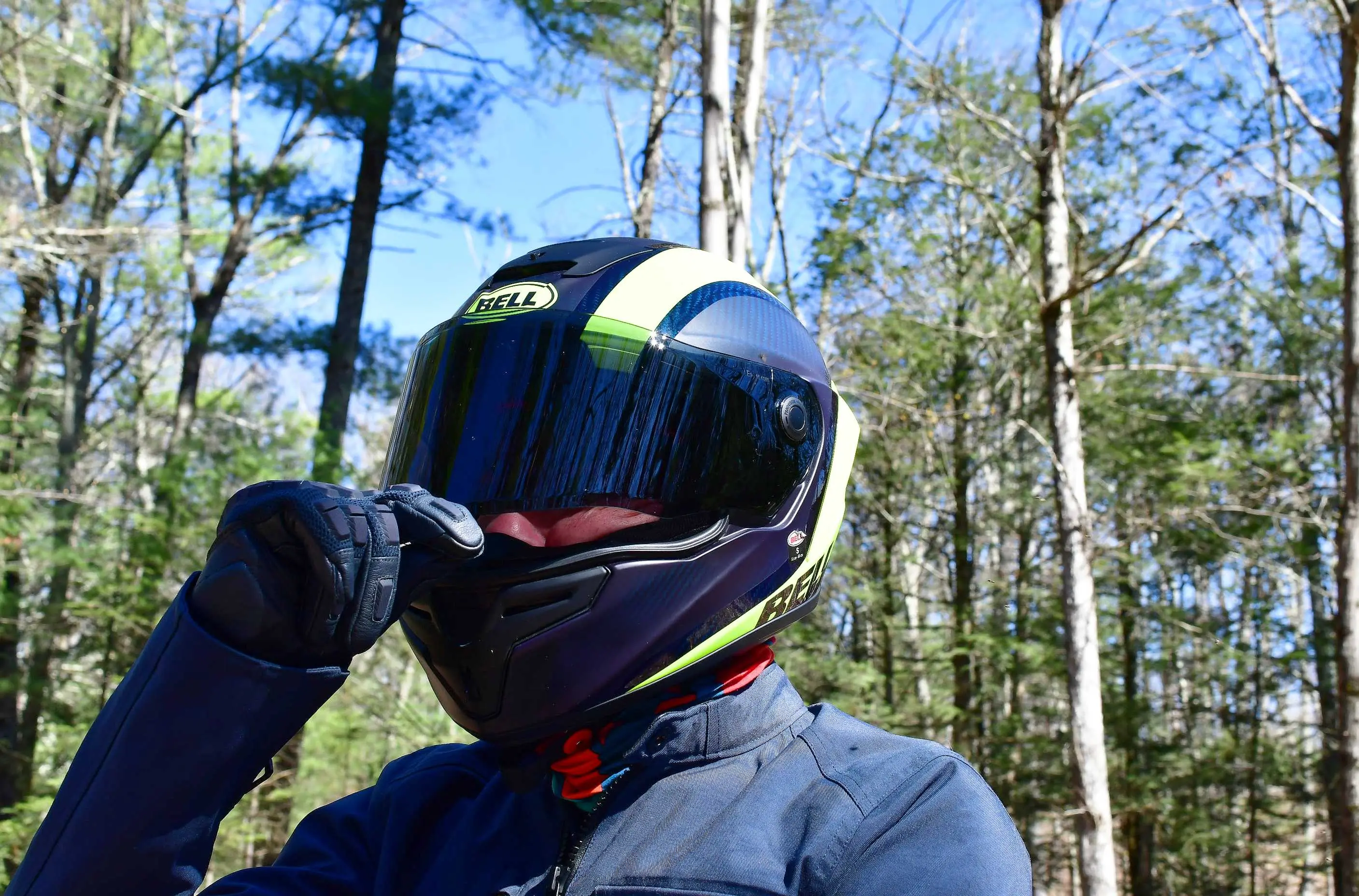
Shell sizes matter. Manufacturers often tailor the same shell to different head circumferences. Often, that means the smaller size is internally stuffed with more padding or insulation to make up for the difference. That can be a slightly uncomfortable ratio for a smaller person because the wider circumference results in a larger draft.
All helmets are unisex sizing, so this can come into play more often for female riders who generally fit within the smaller size range.
Ideally, a full-face motorcycle helmet offers a close fit. There should be zero wiggle when you pull one on and just a slight smoosh in your cheeks. You want to avoid uncomfortable pressure in other areas, as this can amplify into pain points on longer rides. When you slide on the helmet, the interior should have a little bit of give. You also shouldn’t feel the firm backer or hard shell.
Noise, Comfort, and Insulation
These three attributes go hand in hand. Also, if you care about noise, comfort, and insulation, look for a helmet design that’s been wind tunnel tested.
The Schuberth C5, AGV AGV K6S, Bell Race Star DLX Flex, Shoei Neotec 3, Shoei GT-Air II, and KLIM Krios Pro all have chin spoilers: A curtain of foam beneath your chin. A chin spoiler cuts off airflow at the front of the lid, so you don’t experience turbulence inside the helmet.
A well-designed insulation system should be paired with clever vents. Internally, channels groove along the interior and especially on top of the helmet. When you pull back the padding, you can actually see the channels. You can also fire a flashlight beam through the exterior vents at the brow, which will light up the subtle grooves that let air pass over the top of your scalp.

Padding
The padding on the inside of the helmet is the part that comes in contact with your skin: the cheek pads and headliner. We prefer pads made of multi-density foam that is smooth to the touch for comfort yet firm against your cheeks to ensure a proper fit. This should be especially true when the helmet is brand new, as the pads will pack out after heavy use. Insulation dampens noise in helmets, too.
We prefer helmets with liners and cheek pads that can be easily pulled out and washed: all of the helmets in this guide check that box. When you return the liner and cheek pads to the helmet, that process shouldn’t be an arm-wrestling match. Good designs make that step a relatively easy process. When you’re shopping, go ahead and yank out the padding to see if it’s easy to replace.
All of the helmets in this test also have some type of antimicrobial treatment on the padding including the Fox Racing V3 that’s equipped with an Ionic+ moisture-wicking liner. This has been a welcomed feature for us during long, multi-week ADV rides.
Cooling & Ventilation
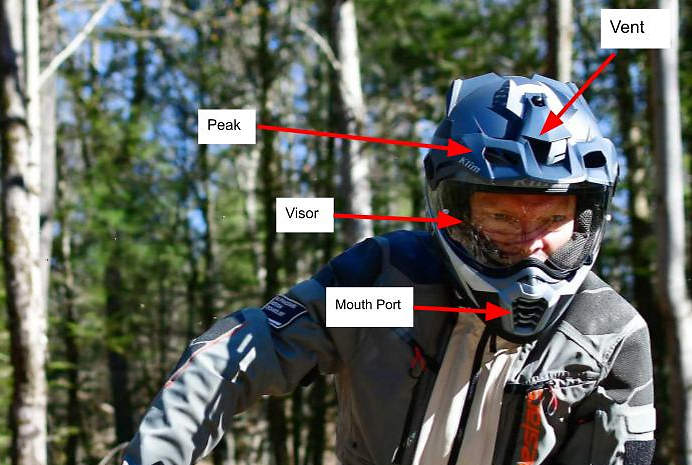
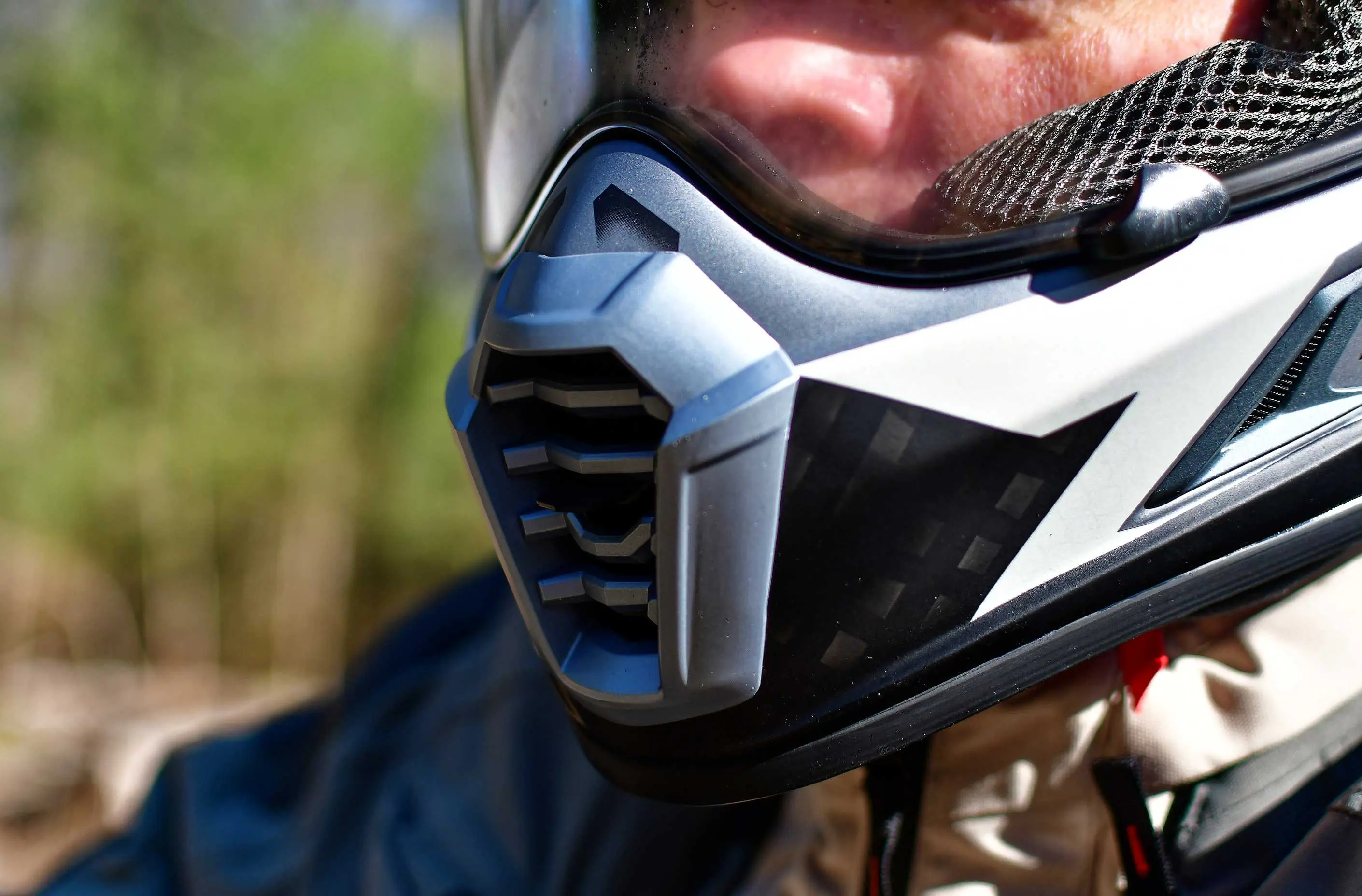
Inside a helmet, you can often see grooves across the interior, which channel air over top of your cranium. We quickly spotted channels inside the KLIM Krios Pro, plus the Koroyd material, which looks like the circular ends of side-by-side straws. A well-designed helmet can vent with minimal turbulence.
Massive ports are not necessarily needed for cooling. The type of riding you do will influence the size and quantity of vents.
On the KLIM Krios Pro, for instance, there’s an oversized mouth port. If you’re riding the Backcountry Discovery Route (BDR), moving slowly and off-road, you will need larger openings to breathe while working hard.
If the bulk of your riding is on open road and you’re going fast, you will want smaller vents. The Bell Race Star DLX Flex has smaller ports at the mouth, brow, and top of the helmet. At a higher speed, this helmet isn’t screaming with airflow that would deafen you. But thanks to the number of vents, the helmet is plenty cool for highway rides.
As far as breathability and aeration go, there’s no single helmet that’s perfect for all kinds of riding. MX riders typically ride with a helmet that has a peak and broad face opening for goggles, which also allows maximum cooling. But that type of helmet on the highway would roar with wind.
A touring rider might choose the Schuberth C5 because they want the advantage of a modular design without the noise, but that lid is not cool enough for slow-duty ADV routes.
Get the full-face motorcycle helmet that’s built to cool you off for 80% of the riding you do, and you’ll be happy.
Vision
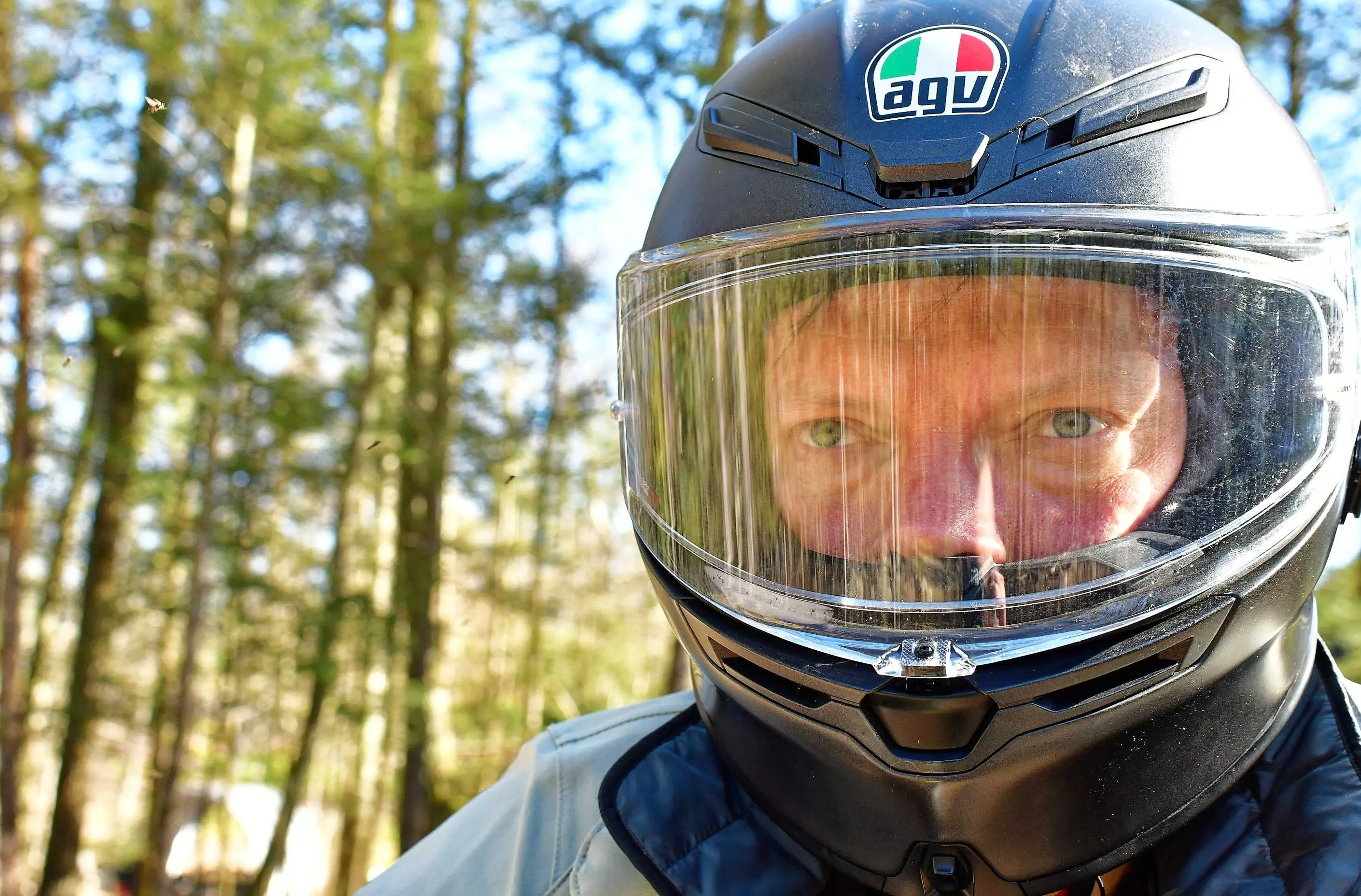
The size of the visor or lens is proportional to the helmet’s intended use.
You’ll want a larger visor (from top to bottom) for off-road riding because you need to see obstacles directly in front of you while you’re standing on the footpegs.
Ideally, the lid you pick for the street has a wider field of view. That way, you can spot a car in your blind spot or see approaching cross-traffic without needing to swivel your head too far.
Across various helmets, the benchmark for keeping a visor defogged is a technical insert called Pinlock. The Schuberth C5, AGV K6S, Shoei GT-Air II, Shoei Neotec 3, and KLIM Krios Pro (but not the Bell Race Star DLX Flex) use this attachment, which you place inside of the visor to prevent fogging.
Pinlock is pretty unique because the insert creates an airtight space between the inside of the visor and your eyes. This means fogging is prevented via a thermal barrier, the same way a dual-layer ski goggle works.
Pinlock inserts are treated to absorb moisture if it’s humid inside the helmet, like when you’re riding in the rain, and then release it back into the atmosphere when the humidity level drops. For instance, when you duck out of that storm, pop the visor, and stroll into an air-conditioned mini-mart for coffee.
The tradeoff? Pinlock inserts are delicate, so only rinse the surface with soap and water and let them air dry.
Safety & ECE 22.06 Standards
The new 2024 European Union (EU) safety standards for motorcycle helmets are a mega upgrade and arrived after 20 years with the prior regulations. Look for a full-face motorcycle helmet that passes the fresh, more stringent rules. You’ll see the tag: 2024 ECE 22.06. ECE stands for Economic Commission for Europe.
Now, the EU tests every single helmet model in each size. The impact tests include the visor, chin bar, and other components. For modular lids, like the Schuberth C5, the EU makes sure that the chin bar stays shut during multiple crash and deformation tests. That way, we know that the helmet remains protective in a hazardous event.
Helmets are put in a device where 630 Newtons (141 pounds) of pressure is applied from either side and front to back. The helmet cannot move more than 1.5 inches (40mm).
The EU also tests ventilation and audio. A helmet that blocks out too much sound won’t pass because you need to be able to hear your surroundings to be safe on a motorcycle. The protocols include testing peripheral vision.
Visors need to have a photochromic option, like the KLIM Krios Pro and the Bell Race Star DLX Flex. Those photochromic lenses need to be able to pass through enough light so that riders can safely see turn signals, brake lights, and stoplights, for instance.
For those visor tests? Examiners fire a steel ball at the shield at 180mph, in order to emulate a rock being kicked up from a tire. We wouldn’t want debris to pierce the face protection layer.
You can also look for a motorcycle helmet with the U.S. DOT (Department of Transportation) seal on the back, meaning that those designs comply with the federal standards for motorcycle helmets. We looked for moto helmets with approvals from the DOT and the EU.
Price & Value
Budget
Our lowest-priced helmet is the Fox Racing V3 Magnetic Helmet ($400), which is our top off-road helmet. With this design, you’ll find excellent compatibility with goggles and a hydration-compatible system.
This is a niche build, though, and if you don’t primarily ride dirt, it’s not your first choice. That’s where builds like the AGV K6S ($550) come in: an upgrade of the K6, one of the most well-rounded, protective, and functional options that comes in at a slightly lower price point.
Mid-Tier
In the $700 tier, designs mix in details like Pinlock compatibility and bonus photochromic visor — like with the KLIM Krios Pro ($750). But you might see dings like limited sizing and less breathability, which might be a deal breaker if you tend to need to push your bike around tough terrain.
Premium
In the $800-1,000 zone, helmets start to check all the boxes — like the Bell Race Star DLX Flex ($820), which has extremely easy-to-remove pads that are integrated with magnets. Plus, the pads are dual-density and ultra-comfortable, while the shell’s breathability is excellent. The visor is photochromic, so the shading adjusts with the environment. It also happens to be impressively quiet. All of this combines to create our top-rated motorcycle helmet.
Frequently Asked Questions
A full face motorcycle helmet needs to be snug. The lining and padding of motorcycle helmets compresses over time. Ideally, the helmet won’t move much even without the chin strap buckled. You shouldn’t be able to slide your fingers in and around the padding at the forehead.
Measure your head with a soft tape measure around your forehead, just above the ears and around the back of your head. That measurement should correspond with the correct lid on the manufacturer’s size chart.
Brands make helmets with varying densities of pads. If you’re on the cusp of medium and large, for instance, you can use a thinner pad to fit that medium or use a thicker pad to fit in the large.
Typically, the shells of motorcycle helmets are made out of a glass composite, carbon, Kevlar, or a combination of these materials. The biggest distinction regarding material is going to be weight.
Carbon fiber helmets are usually lighter. As a result they can be pricier. But the carbon fiber AGV K6S we tested is more affordable compared to our other top picks.
Full face motorcycle helmets in the $200-300 range tend to be made of heavier materials. That doesn’t default to lower degree of protection or safety. Though, there is a linear relationship between safety and cost, and that’s typically true for weight and cost, too.
Without question, a full-face motorcycle helmet is safer than a half-shell. Full-face motorcycle helmets are also safer than helmets with open ports for goggles. Goggle lenses aren’t as hard or impenetrable as a visor shield, because they need to deform to fit snugly against your face.
Modular helmets should be no less safe than a full-face motorcycle helmet that is fixed and non-modular. Though, usually having a hinge mechanism adds some bulk to the design, so modular options are going to be heavier than a straight full-face model.

The motorcycle industry suggests replacing your helmet every 5 years or immediately after a notable crash or impact. So far, every helmet in this guide has a 5-year manufacturer’s warranty, which should cover your product from defects during the practical life of the helmet. The 5-year recommendation is a result of the internal materials naturally deteriorating or compressing, rendering it less safe over time and use.
It’s not hard to understand why you should retire your helmet right away if you take a tumble in it. You might be tempted to continue riding with a helmet that doesn’t seem heavily damaged, but don’t forget that invisible damage to internal materials could compromise the level of protection that the helmet can provide in a subsequent crash.
Try to avoid setting or storing your helmet in precarious places like on your seat or hanging off your handlebars — bad or repetitive drops can have the same effects. Treat your helmet like the investment it is, and replace it per manufacturer recommendations.
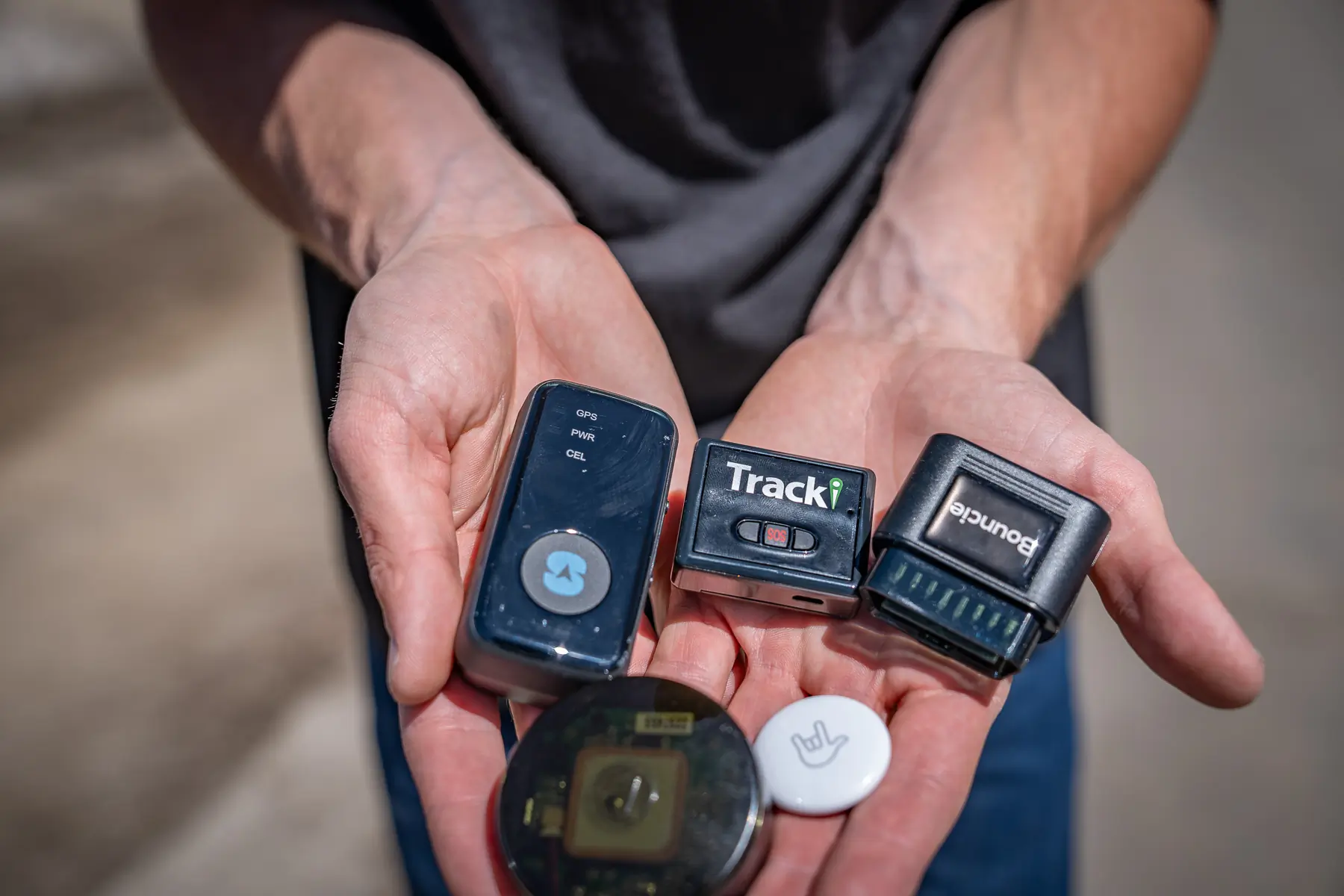
We tested a variety of GPS trackers to find the best options for tracing vehicles, property, and loved ones. Here are our top picks.

Southwest Colorado’s remote Alpine Loop Backcountry Byway takes adventurers through remarkable historic sites and rugged, out-of-this-world scenery.
Read the full article here