




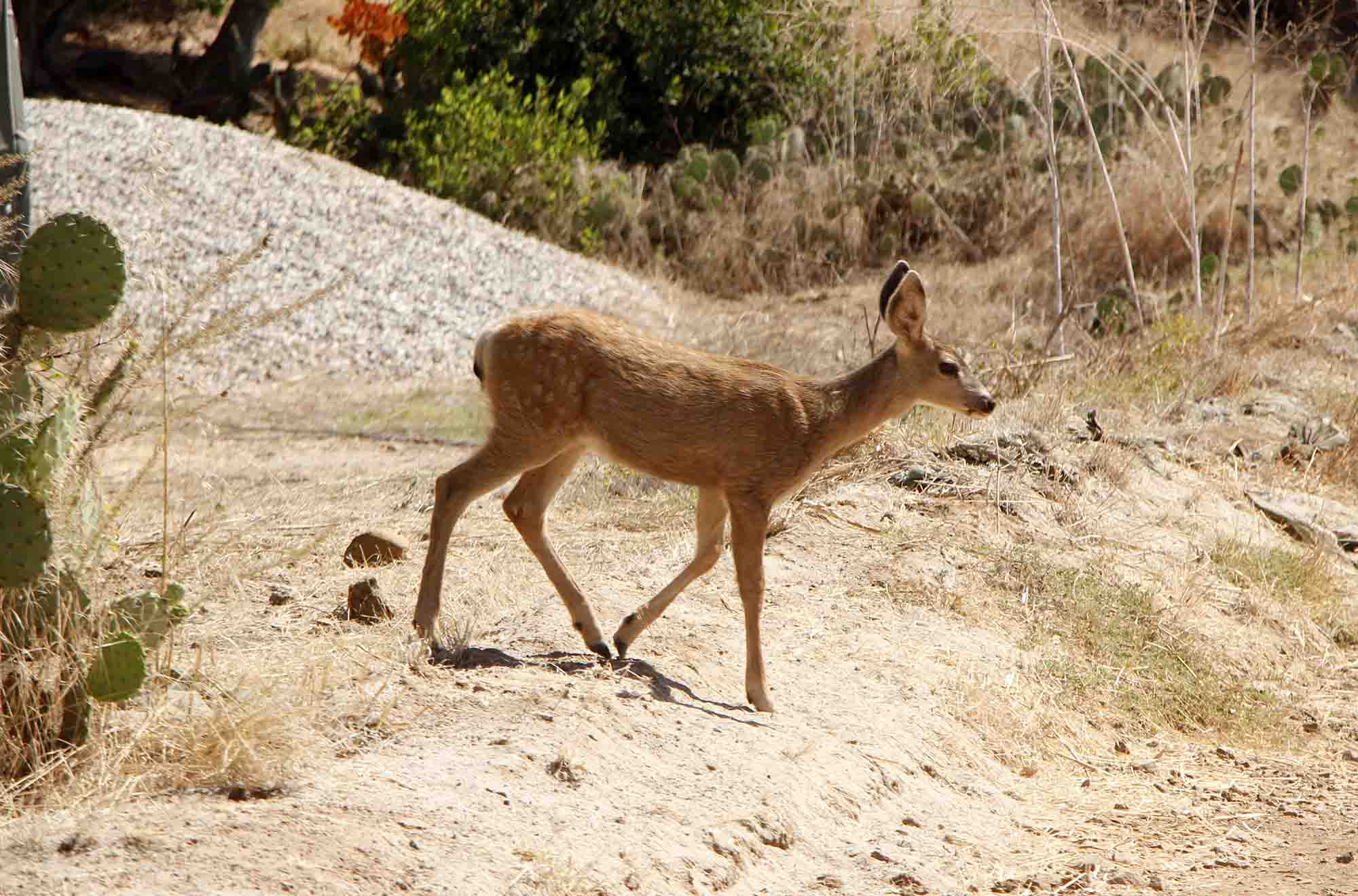
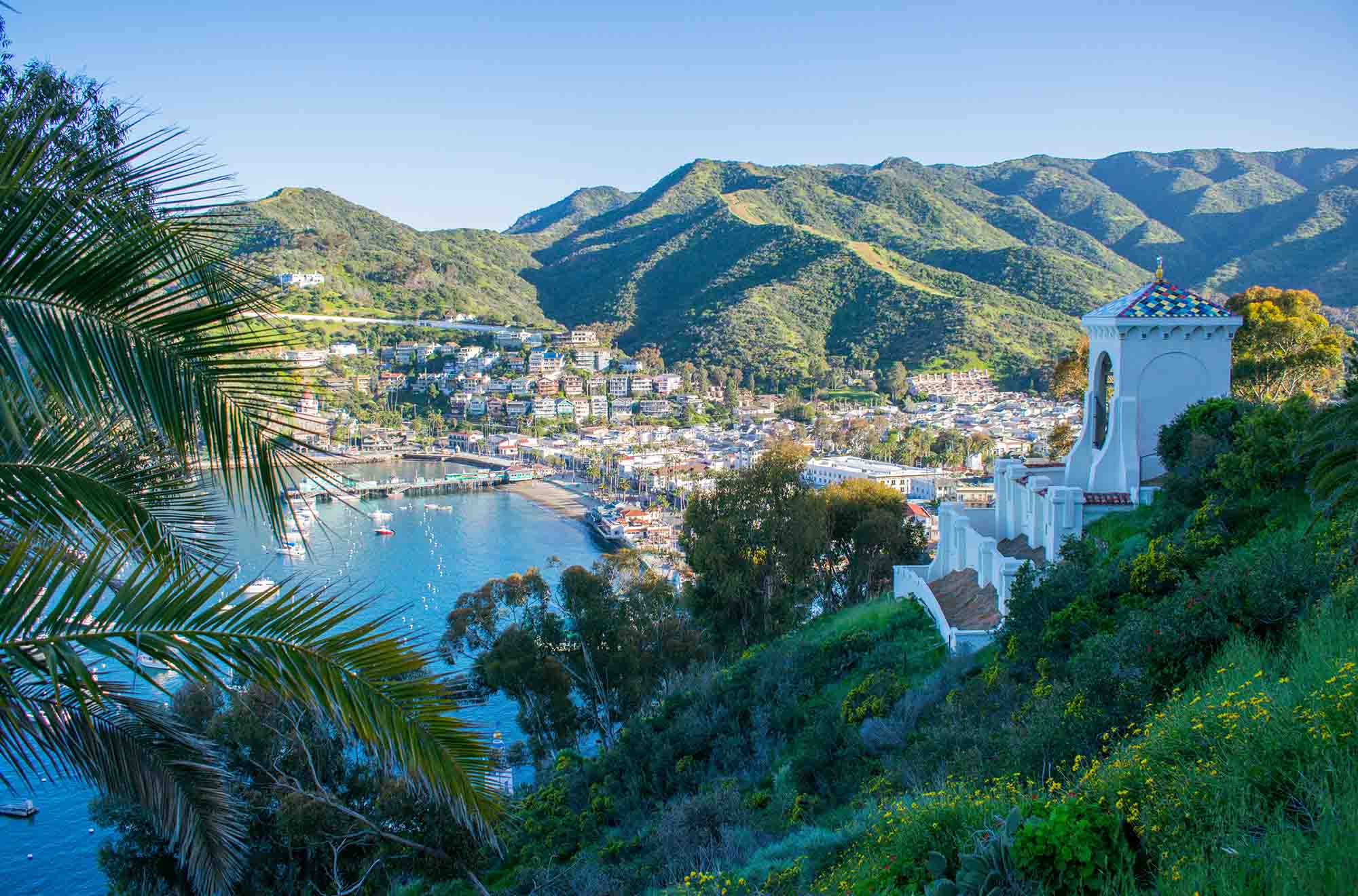
California’s Catalina Island is home to many unique species of plants and wildlife, but one of the island’s animals has posed problems for years. Since mule deer were brought to the island in the 1930s, the population has exploded, and thrown the ecosystem out of balance.
In response, the Catalina Island Conservancy (CIC), the nonprofit that manages the land, proposed to kill all of the island’s deer. This week, the California Department of Fish and Wildlife (CDFW) approved the plan, and hunting will begin this year.
History of Deer on the Island
Deer are not native to Catalina, and neither are any large herbivores. In a report, the CIC explained that the state brought them to the island in the 1930s for game hunting. The animal has no natural predators on the island, so their population quickly increased.
The population fluctuates depending on rainfall on the island, but it stood at 1,800 in 2024.
The Problems Deer Pose
The deer population feeds on the island’s plant life and shrubbery. This poses several issues. First, some of the plants they consume are extremely rare species.
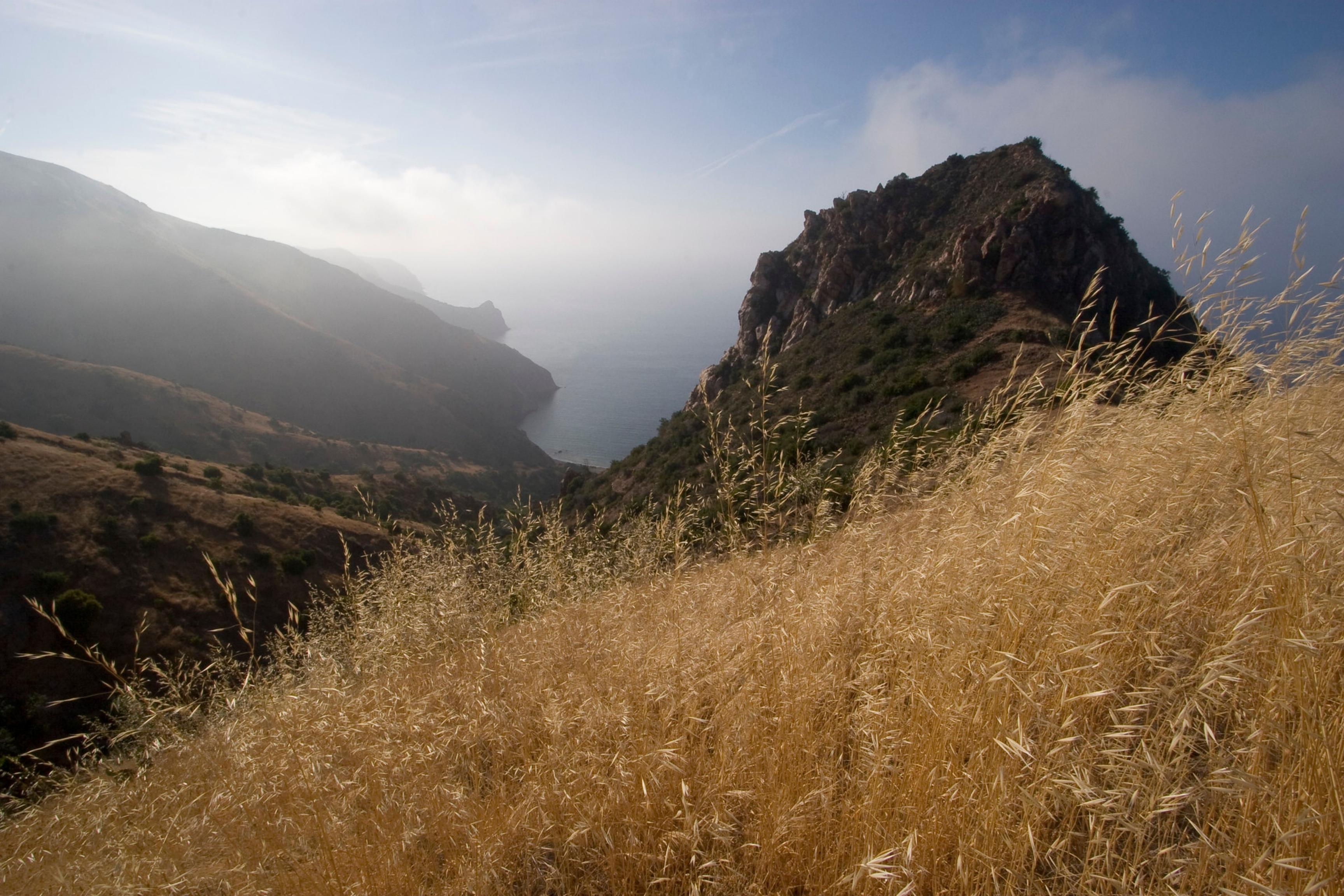
Second, by eating native plants, the deer leave room for invasive grasses to flourish. The native plants help slow wildfires and resist burns, but the invasive grasses do not. The deer eat the native plants, the invasive grasses flourish, and the landscape’s natural ability to protect against wildfires decreases.
Additionally, without native plants, “soil erodes and rainfall runs off instead of recharging the aquifer that provides freshwater to the town of Avalon [on the island],” the CIC explained in a press release. “As the deer attempt to survive, the herd is devastating the Island’s sustainability and biodiversity.”
“Catalina Island can have either a functional, biodiverse and resilient ecosystem or it can have deer. It cannot have both,” Scott Morrison, director of conservation and science for The Nature Conservancy in California, said.
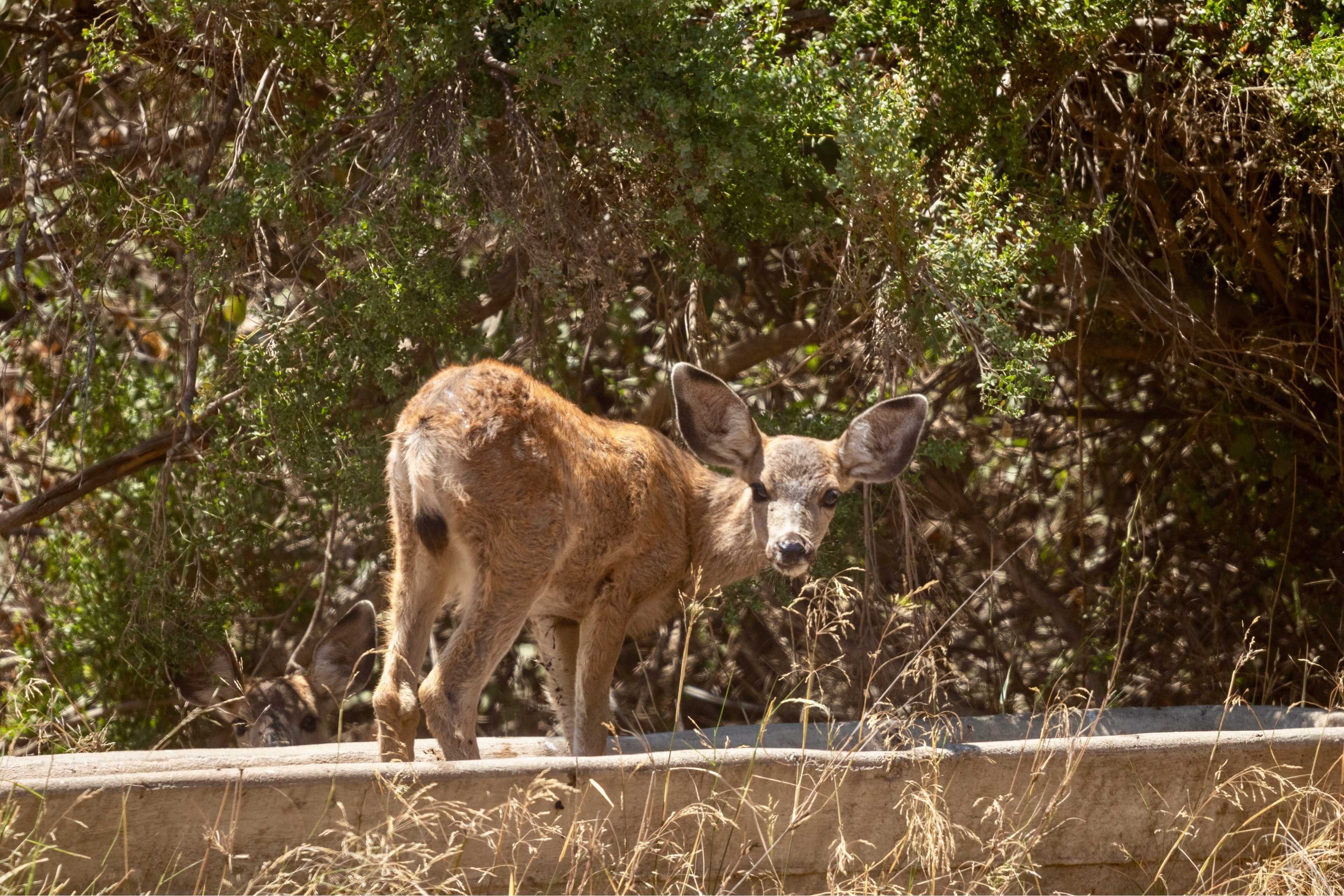
The deer themselves are unhealthy. The CIC notes that fawns are often found dead in the streets of Avalon and Two Harbors, the island’s two towns, due to a lack of food.
The 2024 hunting season was not enough to curb the population, according to the CIC. Hunters killed 379 mule deer out of 754 issued tags.
The Plan
The CIC has been working on a plan for this deer problem for years. It is part of the organization’s larger conservation plan, Operation Protect Catalina Island. In Nov. 2023, it proposed removing the deer by hiring sharpshooters to fire from helicopters. Controversy quickly erupted, and the nonprofit abandoned the idea.
The current plan, which CDFW recently approved, involves trained, supervised professionals shooting deer, which will take place over several years. In fall 2026, a separate recreational hunt for locals will occur. The intensely rugged and mountainous terrain of the island may pose logistical and operational challenges.
The meat will go toward feeding endangered birds in California’s Condor Recovery Program.
“Catalina is a treasure that will rebound much like the other Channel Islands as a result of restoring native habitats and removing the pressure from invasives like mule deer,” Lauren Dennhardt, senior director of conservation for the CIC, said. “It’s one of the most important investments we can make in Catalina’s future.”
Reaction to the Plan
Some local officials criticized the plan. In a memo, Los Angeles County Fire Chief Anthony Marrone said that removing deer would worsen wildfire threats, the opposite of what CIC claimed. Without deer, there will be more vegetation, which provides fuel for fires.
Supervisor Janice Hahn wrote an open letter to the CIC, opposing the deer removal. “[The plan] represents a drastic and inhumane approach. This plan disregards the deeply held values of many Catalina residents and visitors,” Hahn said.
“I continue to hear from my constituents who have lived on the island for decades and have come to cherish these deer. Mule deer have been part of Catalina’s landscape for nearly a century, and their presence has become an important part of the island’s identity.”
The plan does have support from several local stakeholders, professional organizations, conservation experts, and nonprofits, including the American Association of Wildlife Veterinarians, the California Native Plant Society, the Nature Conservancy, and the Ventura Land Trust.
Dirk H. Van Vuren, a professor of wildlife biology at UC Davis, supported the choice of complete deer removal, rather than just thinning the herd. “Reducing deer density will not solve the problem because the plant community is already damaged, and reduced deer numbers will only maintain that damage; also, island plants lack defenses against even low densities of herbivores,” he wrote in a letter.
“Hence, complete removal of introduced mule deer is the only way to conserve island plants and the island vertebrates that depend on these plants for habitat.”
What’s Next
The broader restoration plan, which includes seeding more native plants and managing invasive grasses, will start with a small, fenced 10-acre area on the island near its airport. Next, staff will work on a “high-priority” zone of 105 acres, before expanding to the entire island over several years.
Read the full article here