





Suppressors are a natural fit with pretty much any manually operated firearm – especially lever actions. In addition to making the rifle a lot quieter for both the user and the surrounding environment, suppressors can also help cut back on a lot of the stiff recoil that comes with the territory of shooting something like a 45-70 or a .44 magnum lever gun.
However, a lot of what makes a suppressor work with a modern lever gun used for hunting (or even just plinking) will come down to its specific use case, and of course, how well it actually works with the lever gun itself. Today, we’ll touch on a few key points that should help you decide what the best suppressor for your lever gun build is.
Caliber & Durability
I’ll be straight up with you: you can pretty much slap any caliber‑appropriate suppressor on your lever gun, and it’ll do its job just fine. I have been known to use my .45 caliber suppressor on my .22LR PRS gun simply because I like how it looks. It’s a pain in the ass to clean, but it works.
But if you’re like me, you’ll want to optimize that suppressor for the specific rifle, and therefore for the specific caliber and even the type of ammunition you plan to shoot most in that gun.
Most non‑rimfire lever guns these days are chambered in calibers with a bore diameter ranging from .358 up to .458, so at minimum, you’ll need a suppressor built to handle that size of projectile. If you’re going the budget‑conscious route and want one suppressor for multiple guns, you can pick an affordable big‑bore can and use it for everything from .22 LR up to .45‑70 without any real issues.
But lever guns aren’t gas guns, and that changes how we should think about durability and weight. Modern .44 Magnum and .45‑70 loads are pretty potent, and while it might be tempting to buy the absolute toughest suppressor out there, the more practical approach is to match the suppressor to your actual cadence of fire.
Lever guns are relatively slow in the grand scheme of things, and shooting a lot of .45‑70 or even .357 Magnum ammo can get expensive real quick. That means a lightweight suppressor is actually an easier decision in this case — it’ll still do its primary job of suppressing the rifle, but it won’t add a ton of extra weight or throw off the natural balance of the gun, which usually has a longer barrel (16″ and up) on a lever action.
So when it comes down to caliber and materials, in my opinion, you should optimize for the caliber you’re shooting most often, unless you’re only planning to buy one suppressor for your whole collection. And when pairing a suppressor with a lever gun, I’d lean toward lighter, modern designs and materials.
Something like the Anechox 45, a compact .45‑cal can that’s just under 7 inches long and around 9 ounces with a direct‑thread mount, would be my ideal choice for a dedicated .44/.45 lever gun. This is a setup that could still be used on .357 Magnum or smaller bores with only slightly reduced effectiveness.
Mounting & Fitment
Once you’ve picked a suppressor that matches your lever gun’s caliber and keeps the weight reasonable, the next big question you’ll have to ask yourself is how it actually attaches to the barrel. We touched on this in the previous section, but put simply, most modern lever guns (Henry Big Boy X, Marlin 1895, Rossi, and similar models) now come with threaded barrels, usually in a common pitch like 5/8×24 for .30‑30, .357 Magnum, .44 Magnum, and .45‑70.
For luddites like me, that’s great news, because it means you can run a direct‑thread suppressor or even a quick‑detach system without needing to send the gun off for custom work. If your lever gun isn’t threaded yet, that’s a simple job for a good gunsmith; it’s a pretty standard and affordable process, and it’s worth doing if you plan to run a suppressor long‑term on your heirloom lever gun.
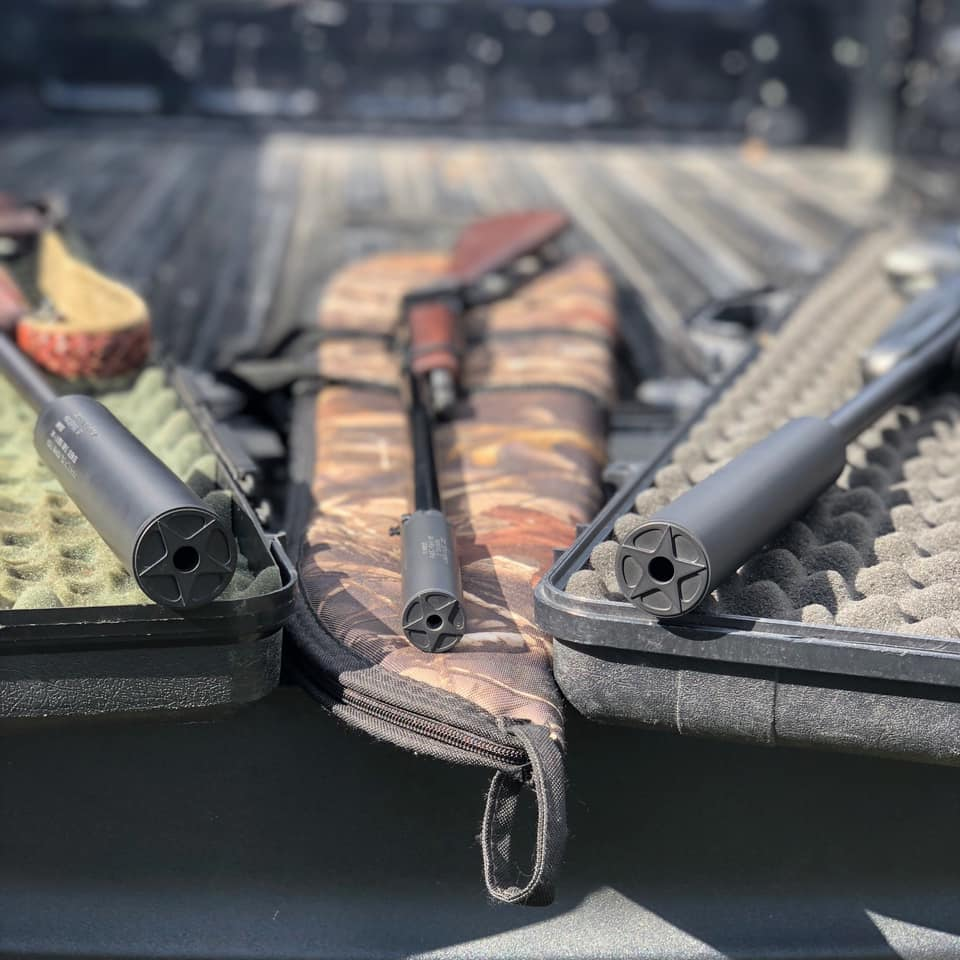
The two main (only) options are direct‑thread and quick‑detach (QD) mounts, and each has its place on a lever gun. Direct‑thread is simple, reliable, and usually the lightest and most common option. Using a direct thread on any gun, in general, helps keep the whole setup balanced and doesn’t add a lot of extra length. For a dedicated lever gun build where you’re mostly shooting that one rifle, direct‑thread is hard to beat in my opinion.
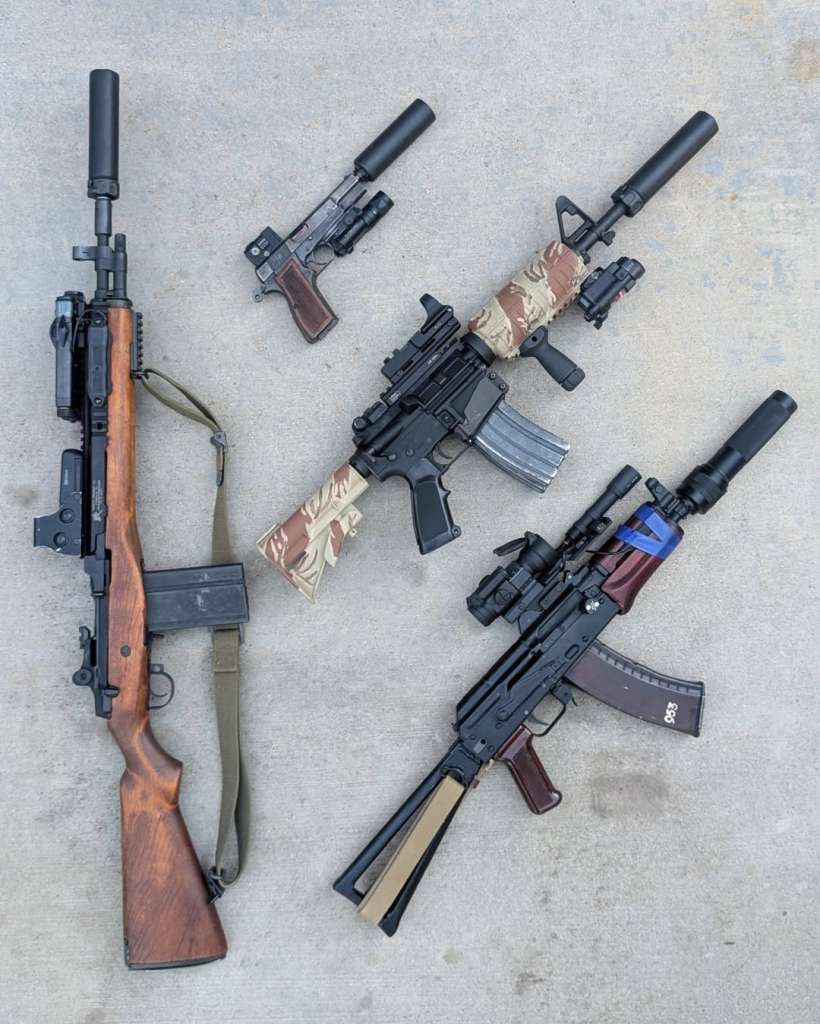
However, since we mentioned being ultra-frugal, one could, on the other hand, use a QD system like the ASR, HUB/Bravo, or similar, which would give you the flexibility to move the suppressor between your lever gun, AR, and pistol without constantly unscrewing and re‑timing the can. If you’re building a “one suppressor for the safe” setup, QD is the better way to accomplish it, although you’ll spend a bunch of extra money purchasing mounts (but not nearly as much as a whole other suppressor).
A shorter, lighter can keeps the balance closer to the action, which makes follow‑up shots faster and the whole gun more pleasant to shoot. If you’re not sure what thread pitch your barrel uses, take a quick look at the manual before you try to stuff your mount on it – cross-threading is a surefire way to ruin your gun and your suppressor mount.
Even though it probably accounts for only a few ounces on each suppressor setup, the mounting system you use is a small and often overlooked detail that makes a huge difference when you’ve got multiple guns and calibers to suppress.
Sound Performance
This is a touchy subject for some people, but I’ll be honest: when it comes to sound suppression, I think it matters most for high‑volume shooting — like an AR‑15 or PDW being used for training, where you’re putting hundreds of rounds downrange in a short period. That’s where a suppressor really earns its keep, protecting your hearing and keeping the range environment more pleasant.
But since the primary job of the suppressor is to suppress the sound, we at a bare minimum need to “tame” much more energetic calibers like .30‑30 and .45‑70 to a sufficient level of noise, especially on a lever gun that’s going to be used for hunting, ranch work, or casual plinking.
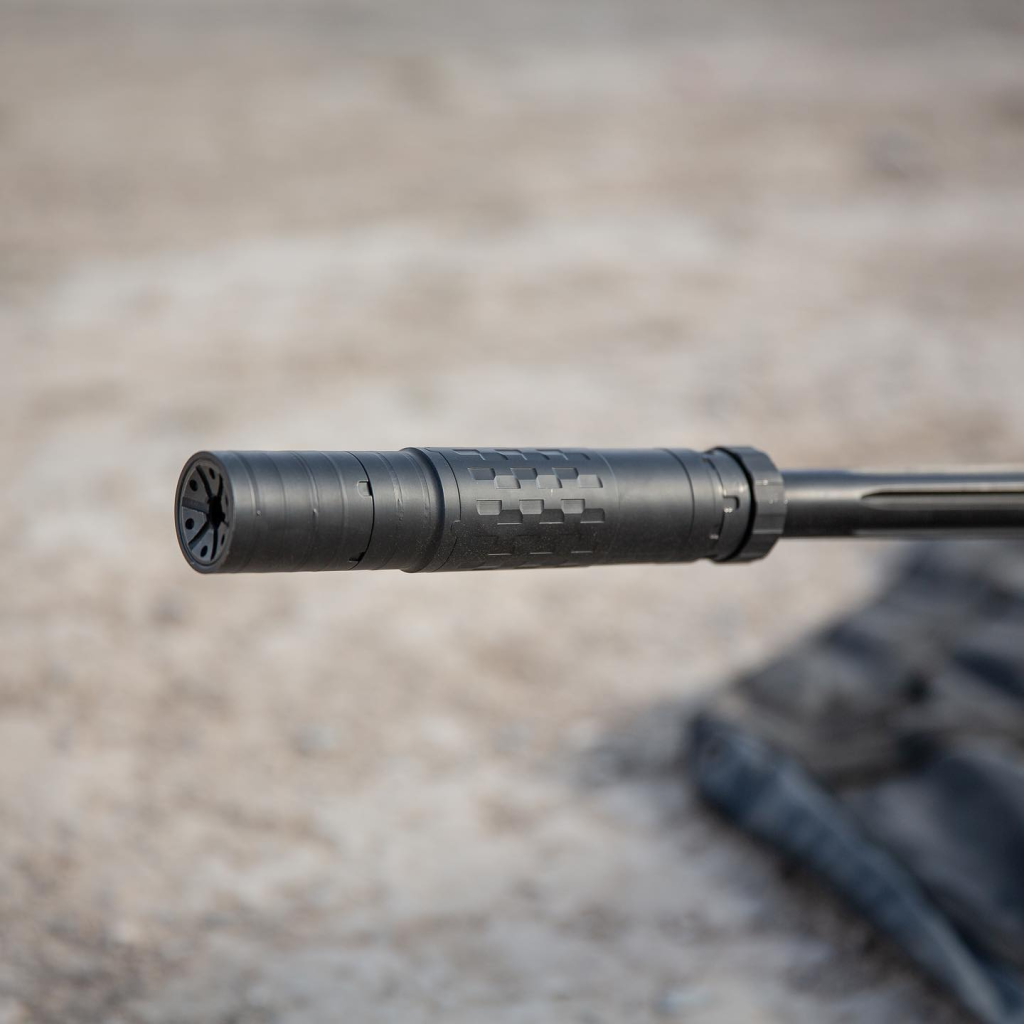
A lot of the sound from these calibers comes directly from the supersonic crack of the bullet as it flies through the air, not just from the muzzle. That means even with a good suppressor, a hot .30‑30 or .45‑70 load is still going to be loud — it’s not going to turn into a whisper, but it will go from a sharp, painful noise to a much more manageable one that is almost satisfying to listen to.
At this point, most of the suppression work is being done for the sole benefit of the shooter: less flinch, less fatigue, and a much more enjoyable experience, especially when you’re running a few dozen rounds in a session. A properly sized .30‑cal or big‑bore suppressor makes a big difference in both sound and muzzle blast, which matters a lot when you’re trying to stay on target and keep your hearing in good shape.
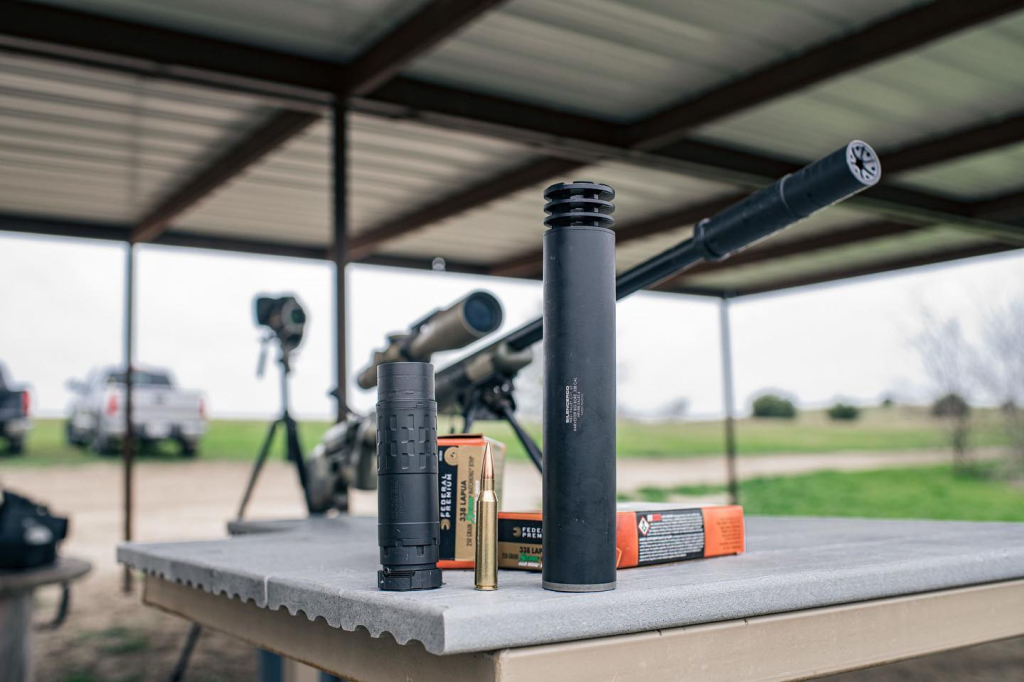
If you’re using subsonic ammo, however, you can often get away with a less optimized suppressor and still get a much better overall result in terms of suppression performance. That’s especially true on lever guns chambered in .357 Magnum, where subsonic .38 Special loads are common, terminally effective, and can often be easy to handload.
With subsonic ammo, the bullet isn’t breaking the sound barrier, so you eliminate that loud crack and are left mostly with the muzzle end of the gun, which the suppressor can handle much more effectively. That’s why a .357 lever gun with a good can and subsonic .38 Special can feel almost like a .22 in terms of noise and recoil: it’s dramatically quieter and much more pleasant for extended shooting sessions or when you just want to plink without the extra noise at the end of a stressful workday.
Closing Thoughts & My Recommendations
If there’s one thing I want you to take away from this article, it’s this: the “best” suppressor isn’t some magic unicorn that’s perfect for every gun and every situation. The best suppressor for your lever gun is the one that matches how you actually use it.
The caliber you shoot most, the cadence of fire, and what else you want to run it on later, in some cases. Even though the NFA Tax is going to zero, I still look at suppressors like investments since I’m literally signing paperwork, submitting fingerprints, and hoping to God that they won’t raise the NFA tax in a few years.
For most lever gun builds, that means a caliber‑appropriate, multi‑caliber suppressor that’s built tough enough for .30‑30, .45‑70, or .357 Magnum, but not so heavy that it ruins the balance of a classic lever action. I’d recommend you match the suppressor to your lever gun’s bore and pressure, then pick a mounting system (direct‑thread or QD) that fits your style.
Keep weight and length in mind, because a lever gun with a long barrel already has a certain feel, and a huge, heavy suppressor can make it muzzle‑heavy or unwieldy in your hunting/shooting situation in terms of movement. And finally, be realistic about sound: a good suppressor tames the muzzle blast and recoil, but supersonic loads are still loud; if you want real quiet, subsonic ammo is the way to go, and that should help narrow down the selection even further for you.
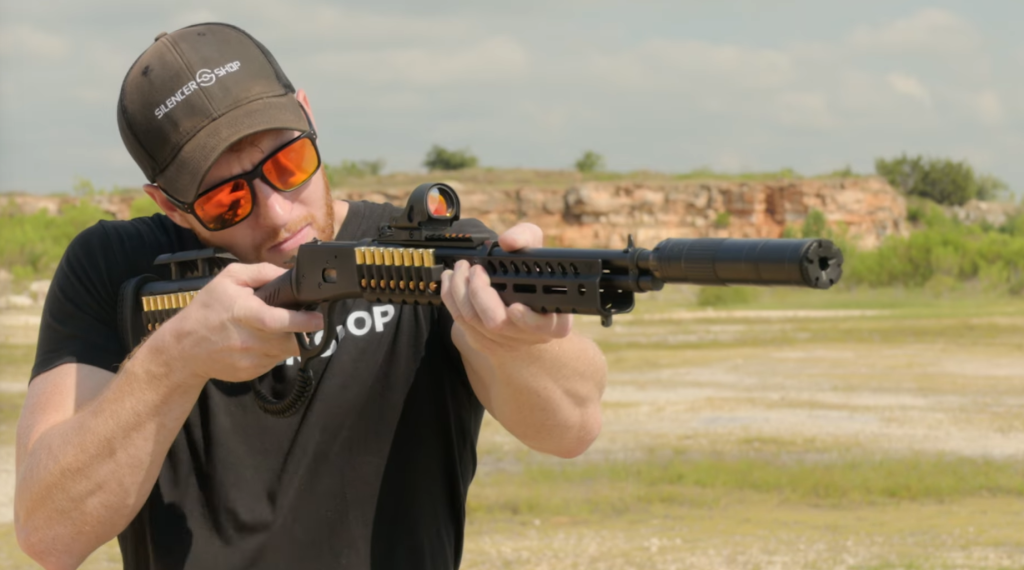
However, if you’re building a lever gun suppressor setup thanks to a timely Christmas present, here are a few solid starting points you can find on the Silencer Shop website that I think best fit different common lever gun roles:
- For a .30‑30 or .308 lever gun (deer hunting, general use):
A dedicated .30‑cal multi‑cal can like the SilencerCo Omega 36M is a great choice. It’s rated for everything from .223 up through .308 and .338 Lapua, so it handles .30‑30, 300BLK, and .308 lever guns while also being a great match for an AR‑15 or a 9mm pistol caliber carbine down the road. - For a .45‑70 or heavy .44 Magnum lever gun (big bore, truck gun, ranch defense):
A large‑bore multi‑cal suppressor like the SilencerCo Hybrid 46M is ideal. It’s built for .45‑70, .44 Magnum, and similar big bores, and it can also run on .308, .300 BLK, and most pistol calibers, making it a true “one can for the safe” option. - For a .357 Magnum lever gun (plinking, small game, subsonic .38 Special):
A .35–.46 caliber multi‑cal can, like the HUXWRX RAD 45 is a great fit. It’s rated for .357 Magnum, .44 Magnum, .45‑70, and most pistol calibers, so it’s quiet and soft‑shooting with subsonic .38 Special and can easily move to a 9mm pistol or PCC. - For a dedicated, lightweight lever gun build (minimal weight, maximum balance):
A compact, lightweight .30‑cal or .45‑cal suppressor with a direct‑thread mount is a great choice. Something like the Anechox 45 (around 7″ long and under 10 oz) keeps the rifle balanced and easy to handle while still giving excellent suppression on .44/.45 lever guns and decent performance on .357 Magnum. - For a .22 LR lever gun (plinking, small game, varminting):
A dedicated rimfire suppressor like the Faxon Twenty-Toucan is a perfect match. It’s a durable, full‑auto rated for multiple calibers, and designed specifically for .22 LR, .22 WMR, 5.7x28mm, and .17 HMR. This is another “do it all” suppressor that I’ve been using for quite awhile now and love having around since virtually all rimfire and 5.7 guns are threaded 1/2×28.
Now, ff you’re still not sure which suppressor fits your lever gun, and your other firearms, the Silencer Shop website has tools to help narrow it down based on your specific rifle, caliber, and even use case. Once you pick the right can, the next step is starting the NFA process — and once that paperwork clears, you’ll find that a suppressor turns a classic lever gun into a much more enjoyable, versatile, and hearing‑friendly platform.
Read the full article here